

There are certain rules that the universe seems to follow in our everyday world. We can observe how objects are affected by their immediate surroundings, and we can see cause and effect in action. We are accustomed to things occurring in a certain sequence. This is the type of science we learned at school and is known as classical physics. However, at the quantum level, it seems that a very different set of rules applies. Weird things start to happen in the world of quantum mechanics, where particles are connected even across incredible distances. In a recent quantum experiment, a team of researchers created particles of light that exist in 37 dimensions.
What Is Quantum Nonlocality?

One of the hardest concepts to try to wrap our heads around in quantum physics is entanglement. This means that two particles can be linked in a way that whatever happens to one particle affects the other one instantly, no matter how far apart they are. Now, according to classical physics, objects should only be able to influence each other if they are nearby. Yet, entanglement has shown otherwise, which is why Einstein referred to it as “spooky action at a distance.” Scientists call it quantum nonlocality, which stands in contrast to the classical physics concept of local realism.
Scientists have used the Greenberger–Horne–Zeilinger (GHZ) paradox to show how quantum mechanics breaks the rules of local realism. The GHZ state was named after the three people who developed it in 1989, David Greenberger, Michael Horne, and Anton Zeilinger. It can predict outcomes that defy classical theory, showing that when particles can only be influenced by being nearby, they produce mathematical impossibilities. However, in the quantum world, equations such as 1 = -1 seem to make sense. This means that you cannot use classical means to describe quantum properties.
The Quantum Experiment
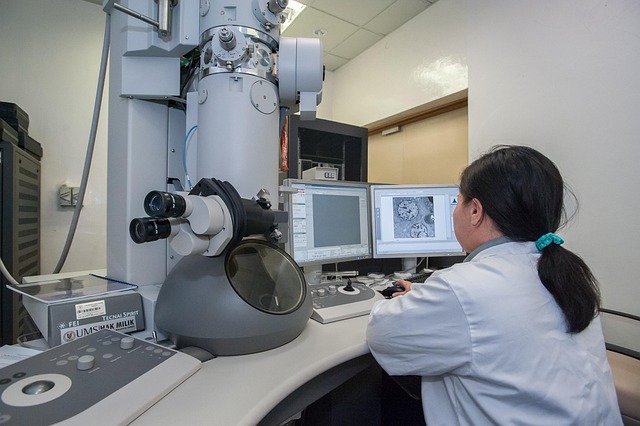
A team of researchers from Denmark and China wanted to try to find out just how “nonclassical” quantum physics could actually get. Their experiment produced particles of light called photons that existed in 37 dimensions. While humans exist in three dimensions, in addition to a temporal dimension, these light particles required 37 similar reference points. To achieve this, the scientists made use of a special laser light and a fiber-based photonic processor.
This forced the light to act in ways that had never been observed before. According to one of the study’s coauthors, Zhenghao Liu, “This experiment shows that quantum physics is more nonclassical than many of us thought. It could be that 100 years after its discovery, we are still only seeing the tip of the iceberg.” The researchers went on to say that the quantum experiment had helped to clarify some of the unknown aspects of quantum theory on a fundamental level. This could potentially open up possibilities for future technologies such as quantum computing.
Unraveling The Biggest Mysteries of Our Time

One of the biggest mysteries of our time is why classical physics and quantum physics struggle so hard to get along. Physicists have been trying to bridge the two theories for decades now, aiming to develop one unified theory of how everything works. However, it seems that the more we actually learn about the quantum realm, the further it is removed from the world we experience in our daily lives.
However, by better understanding these nonclassical properties, we increase our ability to revolutionize the way we use technology. For example, quantum computing works on principles such as nonlocality and entanglement to process information much faster than older systems. If we can learn how to control these high-dimensional photons, it could potentially result in major breakthroughs in fields such as AI, medicine, encryption, and finance. Incredibly, even after 100 years of studying quantum physics, we are still constantly learning more about how weird and powerful it really is.
The Bottom Line

For most of us, anything regarding quantum mechanics seems like a complicated topic that we have some vague understanding of. After all, we don’t really experience any of its effects on our own daily lives. However, these quantum experiments and discoveries are constantly helping to advance and reshape the world around us in many subtle ways. While we may not see much practical use for 37-dimensional photons in our own lives, these types of experiments prove that there is still so much for us to learn. The more we learn, the greater our chances of creating technologies and medical treatments that benefit us all in the long run. Quantum physics also shows us that just beneath the ordinary world we sometimes take for granted, the universe is working in mysterious ways we are only just starting to comprehend. The future looks very exciting indeed!
Read More: Scientists Measure the Speed of Quantum Entanglement, And It Defies Human Comprehension