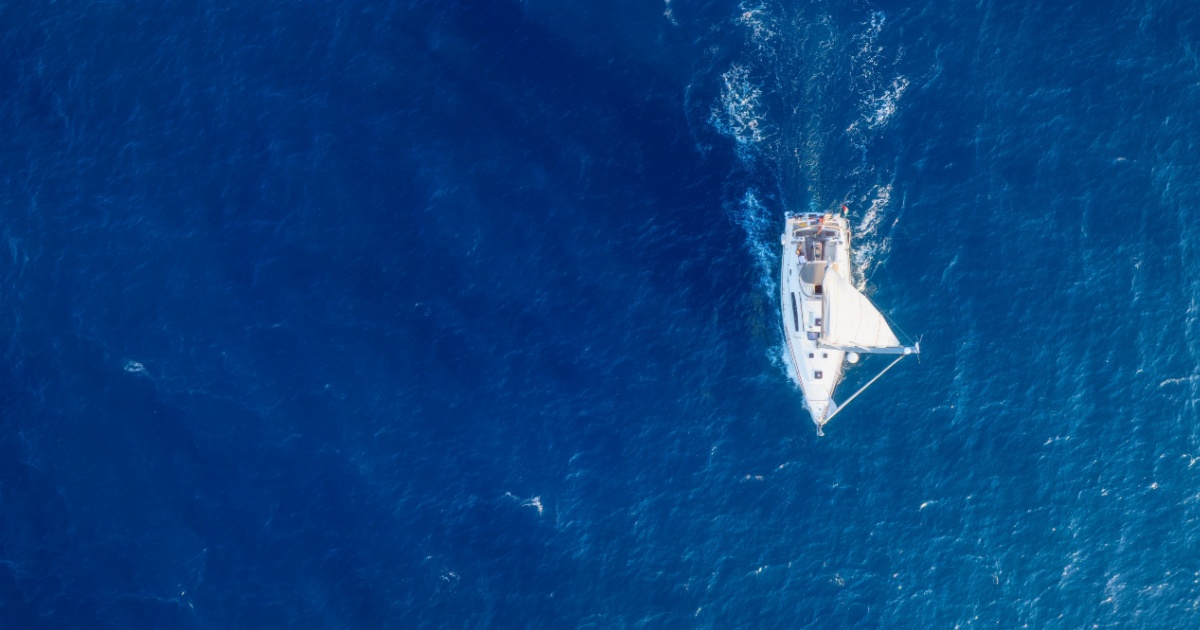
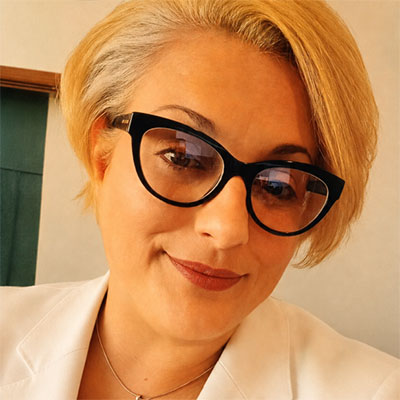
Suzanne Heywood set sail from Plymouth, England, at age 7 on the schooner Wavewalker with her parents and brother – a voyage her father promised would last three years and bring them home before she turned ten. She turned 17 before she ever stepped foot on English soil again. The journey that was meant to be sailing around the world as a family adventure became, by any honest measure, something closer to captivity.
Her father, Gordon Cook, sold the family home and hotel, assembled a crew, and set off to recreate the third and final voyage of Captain James Cook, the 18th-century explorer. The plan was tidy, romantic even – the family left Plymouth in 1976, covering what would become more than 47,000 nautical miles, mostly across the South Pacific, always moving, always nearly broke. Heywood has since turned that childhood into a memoir, Wavewalker: Breaking Free, published in 2023. But the facts she sets out in her essay for HuffPost – and across interviews given since – are difficult to read, and impossible to dismiss.
Her childhood offers a window into what happens when a parent’s dream becomes a child’s reality with no exit. The physical dangers were real and severe. The psychological toll was slower, quieter, and arguably more lasting. And the gender dynamics layered on top of all of it made Heywood’s experience categorically different from her brother’s, on the very same boat.
The Storm That Changed Everything
The Cook family set off from Plymouth in 1976 with the plan of retracing Captain James Cook’s third Pacific voyage. According to the Captain Cook Society, that original voyage ran from July 1776 to October 1780 – four years and three months. Gordon Cook intended to compress it into three. It took a decade.
One reason the timeline stretched so drastically was the disaster that struck barely months after departure. A few months after leaving England, the family was hit by an enormous wave when Gordon attempted to cross the Southern Indian Ocean with two novice crew members, a wife who disliked sailing, and his two small children. Heywood fractured her skull and broke her nose, and was forced to endure multiple head operations without anesthesia on a small atoll they eventually found in the middle of the ocean.
On the atoll there was a small French scientific base with a doctor, who said he had to operate because the swelling on her fractured skull threatened to cause brain damage. He performed seven operations without anesthetic, as none was available. Heywood went through all of them alone and screaming, because her father was too busy repairing the boat and her mother said she couldn’t stand the sight of blood.
The physical consequences of a head injury of that severity in childhood are well-documented. Skull fractures in particular can produce long-term cognitive, developmental, perceptual, physical, and behavioral complications in growing children. Heywood underwent seven surgeries for hers, without pain management, at an age when the brain is still in critical stages of development. She has said that the accident left her “very withdrawn as a child,” retreating into imaginary worlds as a way of coping with what had happened to her.
Isolated at Sea
No one outside the family knew where they were for most of the voyage, and no government showed any interest in what was happening to the children. There were no classmates, no neighborhood kids, no stable friendships – only the rolling cast of paying crew members her father took on to fund the trip.
Heywood was isolated as a child and struggled to get any formal education, though she somehow managed to teach herself by correspondence. Her parents, both trained teachers, told their children they had no time to teach them, and that keeping the boat sailing, supplied, and maintained was more important.
That kind of sustained social isolation during childhood carries well-established developmental costs. Isolated children have limited opportunities to learn social skills, norms, and communication that come from interacting with peers and receiving social feedback. A 2022 review published in Frontiers in Psychiatry found a strong association between childhood social isolation and both anxiety and depression in adolescents. The same research noted that social isolation is linked to elevated cortisol levels – cortisol being the body’s primary stress hormone – and worse cognitive development over time.
Removed from peers for years at a stretch, Heywood grew increasingly withdrawn. She created imaginary worlds to escape into, but the more difficult realization, as she grew older, was simply that she was trapped with no way out.
The Vote That Was Never Going to Count
The voyage was supposed to last three years. Because of the shipwreck in the Indian Ocean, it took four years just to reach Hawaii, the original end point. At that point the family held a vote. Heywood and her brother voted to come home. Her father and mother voted to keep sailing. Her father then announced that he held the casting vote, and they would continue.
Parental expectations have the strongest relationship to children’s academic outcomes compared with other parental beliefs, and the same principle applies more broadly to life decisions made on a child’s behalf. When a parent’s expectations are fixed, children rarely have the tools to resist them. Gordon Cook’s belief that the voyage was an education, an adventure, and a privilege overrode every other consideration – including the evidence accumulating around him that his daughter was suffering.
Behavioral problems including anxiety, depression, irritability, and inattention can surge during prolonged confinement. A 2020 rapid systematic review in the Journal of the American Academy of Child and Adolescent Psychiatry found that children and adolescents are more likely to experience high rates of depression and anxiety both during and after enforced isolation ends. Heywood’s years on Wavewalker qualify as prolonged confinement in every meaningful sense. She has described the boat as a place where she had “effective imprisonment” – her father’s freedom purchased at the cost of his children’s.
The Rules Were Different for the Girl
One of the more quietly infuriating threads running through Heywood’s account is the division of roles on the boat. While her brother was allowed to help out on deck, she was expected to cook and clean below for hours each day. In New Zealand, her brother was going to school while she, as the girl, had been told she had to care for him, cook and clean, and also run her father’s business by booking crew onto the boat. Whatever time was left over, she used to try to teach herself.
This was not incidental. Research shows that gender-stereotyped parenting in early childhood has an influence on children’s gender expectations later in life. In Heywood’s case, the stereotyping wasn’t subtle – it determined what she was allowed to do with her time, what skills she was permitted to develop, and what version of the future she was being prepared for. Her brother was being trained to navigate. She was being trained to cook.
Heywood ended up going further academically than her brother – earning a place at Oxford and later a PhD from Cambridge – not because the system supported her, but because she refused to accept the role she had been assigned.
Left Alone in New Zealand
The lowest point came in 1986. Zig-zagging around the South Pacific, Wavewalker had made several stops in New Zealand. In 1986, one stop stretched to nearly a year when her parents left Heywood, then 16, and her younger brother ashore alone. She kept house, ran the accounts of her parents’ business, and, using a correspondence course from a previous stop in Queensland, passed her senior year exams.
That year was, in her own words, the most difficult of all – alone, in a very isolated place, looking after her younger brother. She remained determined to educate herself, and started writing letters to universities she had heard of around the world, making up their addresses in the pre-internet era. Oxford University wrote back and asked her to send two essays. When she submitted them, Somerville College at the University of Oxford told her they’d interview her if she got herself back to England. After earning money picking kiwifruit, she had enough for a one-way ticket. She had no return option and no safety net.
The psychological research on adolescents in comparable situations is consistent. The Journal of the American Academy of Child and Adolescent Psychiatry review found that social distancing and enforced isolation are associated with increased stress and significant changes in youths’ routines and mental health, with adolescents facing family stressors showing especially pronounced patterns of anxiety and depression. Heywood was dealing with far more than distancing – she was managing a household, caring for a sibling, attempting a university-level education by correspondence, and processing the dawning realization that her parents had never prioritized her welfare.
Heywood has said she became depressed during that period in New Zealand and eventually called the country’s version of ChildLine, telling them she was really, really struggling. She was 16. She was alone. And she was still trying.
Read More: Psychology Explains Why Some Individuals Become Easy Targets for Mean People
What This Means for You
Years of childhood isolation don’t simply resolve when the circumstances change. Even after Heywood made it to Oxford, the social damage was visible. She found it very hard, initially, to make friends. She and the other students had almost nothing in common. It took about six months before she started to build a group of people who understood her. The social skills, the instincts for connection, the easy familiarity that most children absorb through years of peer interaction – all of that requires rebuilding from scratch, and it takes time.
After gaining a place at Oxford and completing a PhD from Cambridge, Heywood went on to work in the UK Treasury, then joined McKinsey, and now serves as COO of Exor, one of Europe’s largest holding companies. She holds board positions at major international companies and was appointed a CBE in 2024. She has said directly that she would not recommend this childhood to anyone, and that she escaped it – she didn’t graduate from it.
The Gap Between a Parent’s Story and a Child’s Experience
Her memoir and her subsequent interviews carry a consistent message for parents: the stories we tell about our choices are not the same as the experiences our children are having. Gordon Cook believed his children were living a privileged life. Heywood knew from the earliest years that something was deeply wrong. The gap between those two realities – a parent’s narrative and a child’s lived experience – is exactly where harm tends to live unnoticed, sometimes for decades.
Children who are denied stable social relationships, consistent education, and the right to voice objections that are taken seriously don’t simply adapt. They absorb losses that show up years later, in social confidence, mental health, and the ability to trust the adults around them. Heywood’s account makes that pattern impossible to look away from. So does the research on childhood isolation, which points to the same conclusion from a very different direction.
Disclaimer: This information is not intended to be a substitute for professional medical advice, diagnosis, or treatment and is for information only. Always seek the advice of your physician or another qualified health provider with any questions about your medical condition and/or current medication. Do not disregard professional medical advice or delay seeking advice or treatment because of something you have read here.
AI Disclaimer: This article was created with the assistance of AI tools and reviewed by a human editor.