
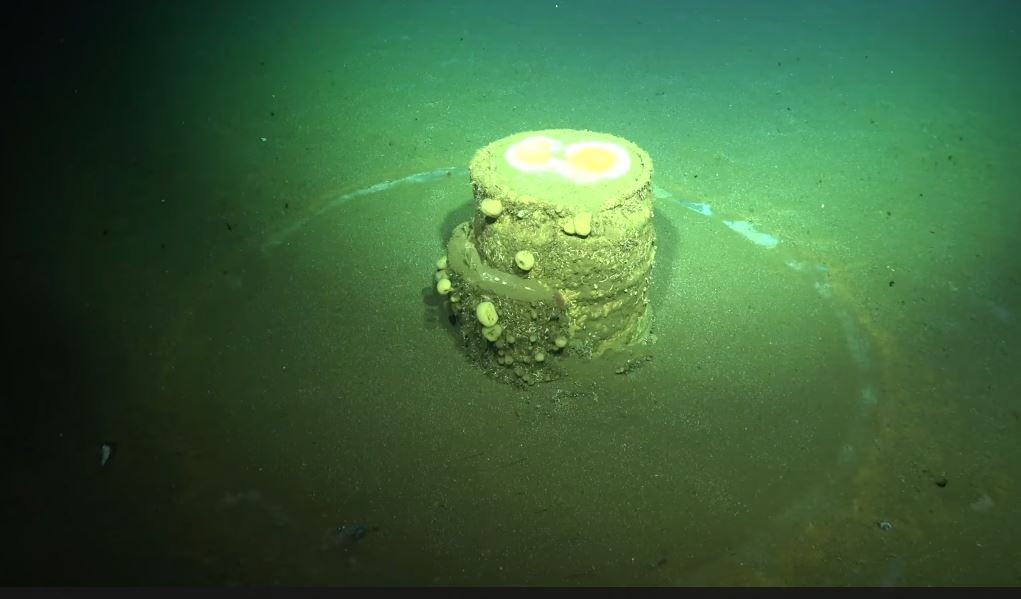
In the waters close to the southern Californian coast, companies had been dumping their toxic chemicals for decades. Across 14 different sites, barrels containing chemicals such as DDT can be found in great numbers, some of which appear to have hazardous material leaking from them. Many of these barrels are now surrounded by glowing rings, which a new study has likened to the extreme conditions near hydrothermal vents. According to the researchers, the mysterious rings on the sea floor are the result of alkaline waste interacting with magnesium in the water, forming a hard layer known as brucite.
What’s Causing the Mysterious Rings on the Sea Floor?
We don’t typically like to think about what happens to all the toxic waste produced by chemical companies. For many decades, it seems the companies themselves didn’t pay it much thought either, and neither did the government agencies tasked with approving where it was dumped. So, from the 1930s all the way through to the 1970s, many government agencies actually approved the dumping of these chemicals across 14 sites just off the coast of California. The prevalent thought at the time was that the solution to all this pollution was simply dilution.
They believed that these dangerous chemicals would simply be diluted by the sheer volume of the oceans. Yet, around half a million of these barrels are still in the ocean today, leaking the toxic sludge into the water surrounding them. Researchers from UC San Diego’s Scripps Institution of Oceanography recently used a remotely operated vehicle to explore these sites and found mysterious halos emanating from them. Their findings were subsequently published in the Proceedings of the National Academy of Sciences (PNAS) Nexus journal. According to the study’s authors, the results reveal our species’ disregard for the ecosystems of our oceans. Initially, the researchers expected to find large amounts of the pesticide DDT, which is now illegal to use in the United States.
However, they instead realized that these halos were the result of alkaline caustic waste forming an extremophile environment comparable to hydrothermal vents. According to the co-author of the study, Johanna Gutleben, “DDT was not the only thing that was dumped in this part of the ocean, and we have only a very fragmented idea of what else was dumped there. We only find what we are looking for, and up to this point, we have mostly been looking for DDT.”
The Formation of Brucite
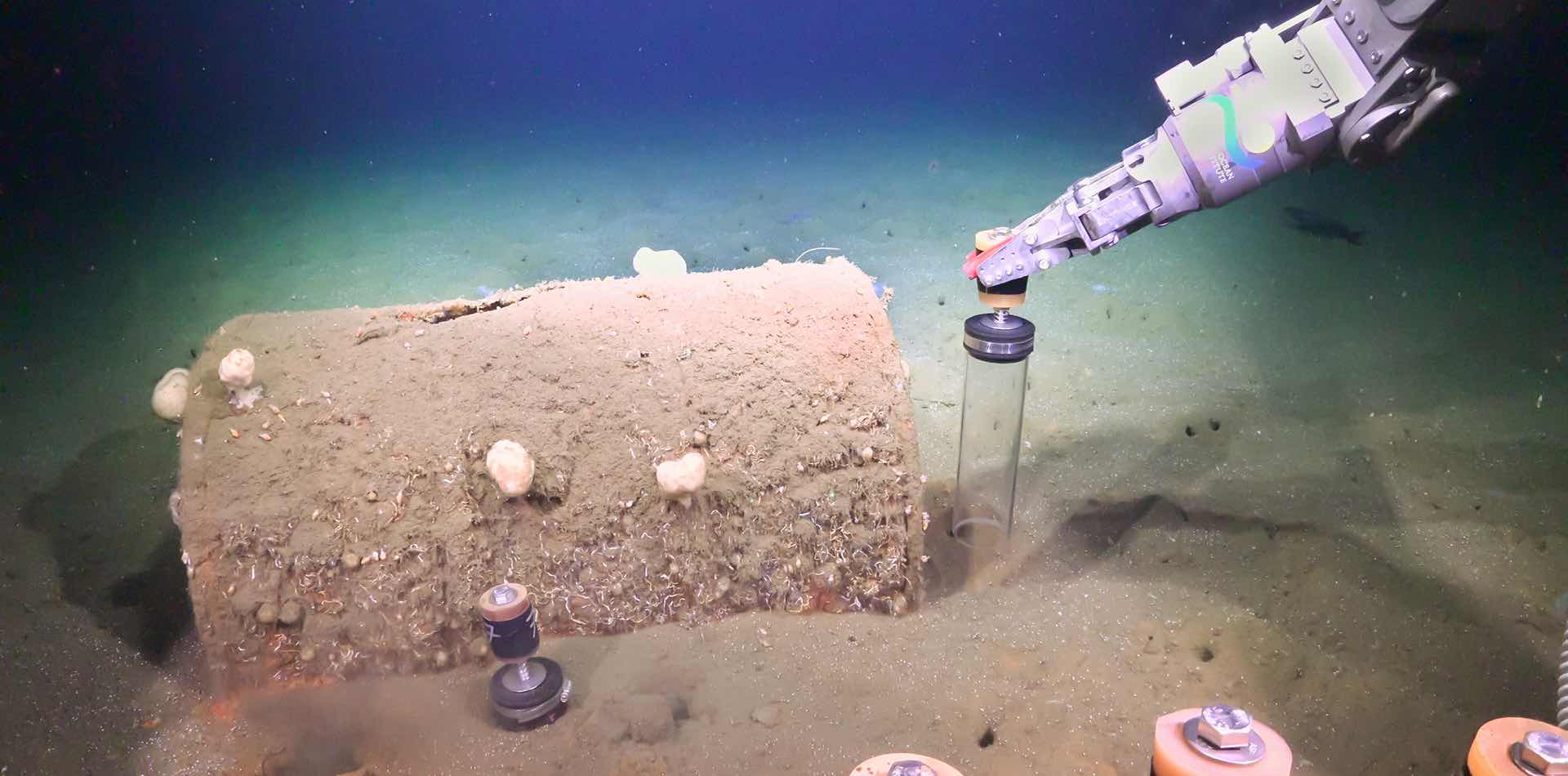
Yet it seems that no one was thinking about alkaline waste up to that point, which meant that they would likely have to start looking for other materials as well. According to the team, the halos formed a crust as thick as concrete, which proved difficult for the ROV to sample using coring techniques. Rather, the remotely operated vehicle had to rely on its robotic arm to break off pieces for the team to analyze further.
Their analysis revealed that when the barrels leaked the alkaline waste into the water, the magnesium present in the seawater interacted with the waste, creating the mineral form of magnesium hydroxide, called brucite. The outer edge of the halo is made from calcium carbonate, which is formed where the material meets the seawater.
According UC San Diego Today, the study’s co-authors, Paul Jensen, said “It’s shocking that 50-plus years later you’re still seeing these effects. We can’t quantify the environmental impact without knowing how many of these barrels with white halos are out there, but it’s clearly having a localized impact on microbes.” Additionally, cleaning up these barrels is no easy task, as they cannot just be hauled up off the ocean floor. Doing so would result in sediment plumes, which would likely spread the contamination even more. Some state that the best solution is to analyze the contaminated sediments and try to figure out what microbes could potentially break the chemicals down over time.
The Bottom Line
The researchers suggested expanding seafloor mapping that specifically targets halo signatures. After that, they should prioritize in-place containment and long-term monitoring, rather than trying to retrieve the barrels, which can potentially kick up contaminated plumes. At the moment, they don’t even seem to know how many of these barrels are actually out there. Furthermore, their contents also remain a mystery in many cases.
Therefore, coordinated surveys will be required before adequate interventions can be chosen. These types of issues don’t seem to be going away anytime soon, either. We are only now dealing with dumps that occurred decades ago, yet we are still contaminating our oceans and rivers daily. Not only do we need to address the mistakes of the past, but also need to change the current way we view and do things. The notion that “dilution is the solution to pollution” isn’t only wrong, but dangerous.
Read More: Where Did All the Ocean Plastic Go? Scientists Uncover Troubling Truth