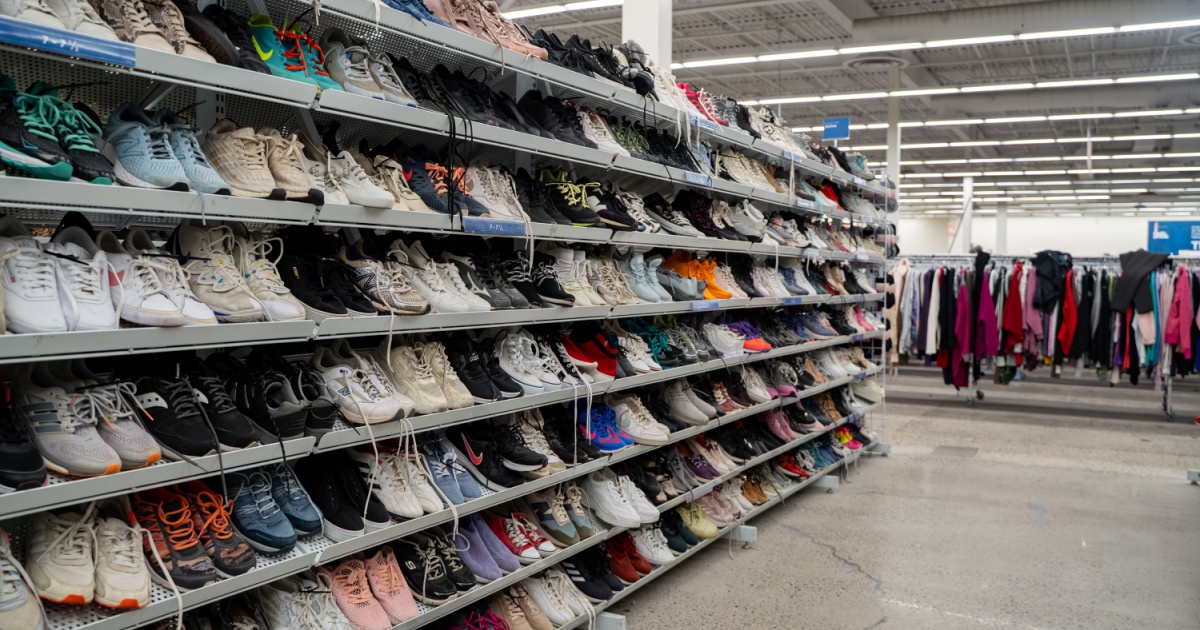

Buying a great pair of shoes at a fraction of the retail price is one of those small victories that feels almost too good to be true. And sometimes, it actually is. The thrift store boom has made secondhand shopping mainstream – stylish, even – and the footwear racks are always among the first to empty out. Vintage sneakers, barely-worn boots, brand-name heels for next to nothing. The appeal is obvious.
But quietly, podiatrists and microbiologists have been raising concerns that most thrift shoppers never hear. The warning isn’t about style or fit in the obvious sense. It goes much deeper, into the biology of what lives inside a worn shoe and what happens structurally when a shoe is broken in by someone else’s body. The question isn’t just whether secondhand shoes are a bargain. The question is whether they’re actually safe.
The answer, it turns out, is more complicated than a quick wipe-down can fix. And it applies to your clothes just as much as your footwear.
What’s Actually Living in That Used Shoe
Every shoe that’s been worn holds a record of its previous owner – not just in the shape of the sole, but in the microscopic environment inside. Fungi and bacteria left behind by a previous owner can linger deep within shoe materials, especially if the shoes were not cleaned or disinfected properly. The shoe interior is, almost by design, the perfect habitat for these organisms: warm, dark, and frequently damp.
The interior of a shoe remains dark and damp, making it an excellent breeding ground for fungal and bacterial issues. The concern isn’t theoretical. Wearing secondhand shoes increases the risk of infectious conditions such as athlete’s foot and nail fungus.
In the United States, tinea pedis (athlete’s foot) may be found in up to one in four people, according to a 2025 analysis published in the journal Microorganisms. That’s a staggering proportion of the population already carrying a fungal infection – and it’s one that can transfer easily through shared footwear. Fungal or bacterial infections like athlete’s foot can be contracted through minor cuts, skin fissures, or under the nail beds, and these issues can be very invasive and difficult to treat.
Toenail fungus deserves a particular mention here. Once you get a foot fungus, it can be really hard to get rid of – especially if it spreads to your toenails. Part of the reason is anatomy: your immune system’s defenses against invasive fungi are less effective in the feet and toes due to their poor blood supply. This means an infection picked up from someone else’s shoe can take months – sometimes longer – to clear, even with treatment.
The Problem Doesn’t Stop at the Foot
The microbial risk extends well beyond the shoe box. Research into secondhand clothing more broadly has revealed just how much biological material transfers between garments and skin. The skin is naturally coated in millions of bacteria, fungi, and viruses – collectively known as the skin microbiome – meaning every item of clothing we wear comes into close contact with these microbes.
Research has found that clothing can harbor many infectious pathogens, including Staphylococcus aureus (which causes skin and blood infections), bacteria such as Salmonella, E. coli, norovirus, and rotavirus, and the fungi that cause athlete’s foot and ringworm. Dr. Primrose Freestone, a Senior Lecturer in Clinical Microbiology at the University of Leicester, writing for The Conversation, explained that each person’s skin microbiome is uniquely adapted to them, and what is normal and harmless for one person can be disease-causing to another.
Parasites that can cause skin infections, such as dermatitis and scabies, have also been found on secondhand clothing. Secondhand germs can live on clothing for months, especially in humid places. That last fact matters because it dispels the common assumption that something simply sitting on a store shelf for a while has somehow “aired out.” It hasn’t.
Thrift store clothing could harbor bacteria such as Staphylococcus that might cause a staph infection, and fungi such as Rhizopus, which can cause infections like mucormycosis.
When Your Shoes Are Molded to Someone Else’s Feet
Infection is one concern. Biomechanics – how your body moves – is another, and in some ways the less obvious of the two. Each person’s feet have a unique shape, arch, and walking pattern, and shoes gradually adapt to these specifics, developing a wear pattern that matches the original owner’s gait.
When you step into a shoe that has been broken in by someone else, you’re effectively forcing your foot into a mold shaped by a completely different person’s body. Shoes that have been worn by someone else may have been shaped to fit their feet, which can lead to foot problems such as blisters, calluses, and corns. Shoes worn for a long time may also be damaged or deformed, affecting the way you walk and leading to pain in the feet, ankles, knees, hips, and back.
This isn’t a minor inconvenience. The foot is the foundation of the kinetic chain – the interconnected system of joints, muscles, and tendons that links your feet to your knees, hips, and spine. Wear patterns embedded in the midsole and outsole of a used shoe can subtly but consistently alter the way your body distributes weight with every step. Shoes are the first interface between the body and the ground, and they are worn not only to protect the feet but to modulate lower limbs’ biomechanics. A 2025 review published in Frontiers in Public Health confirmed that footwear design significantly influences gait and long-term locomotor health throughout life.
The practical upshot: someone else’s compression points and worn-down heel edges become your compression points and heel instability. Over time, this mismatch can cascade into chronic issues that have nothing obviously to do with shoes.
Children Are a Special Case
If the above applies to adults, it applies even more strongly to kids – and the consequences can be longer-lasting. Even if children wear their shoes a few times, those shoes mold to their unique foot structure. Putting another child’s foot into a shoe built for a sibling or friend can impact the still-developing feet in serious ways.
At birth, a child’s foot contains 22 partially developed bones, which grow and change for years. The most critical development period happens during the toddler years. Foot bones continue to grow until about the age of 18. A shoe that has been worn in by one child won’t provide neutral, supportive ground for a second child’s developing arch and gait.
Wearing secondhand shoes may result in abnormal foot growth and development. Over time, they may cause bunions and other foot deformities, as well as posture and back problems. These conditions can become chronic, leading to a lifetime of pain and discomfort.
Hand-me-down shoes are not recommended because they are molded to the previous wearer’s feet and gait. Most podiatrists agree: when it comes to children who are walking and beyond, secondhand shoes are a risk not worth taking. Most podiatrists advise buying new toddler shoes once children start walking.
How to Handle Secondhand Clothes and Shoes Safely
None of this means thrift shopping has to end. It does mean being thoughtful about what you buy and what you do with it before it touches your skin or goes on your feet.
For clothing, the fix is relatively straightforward. Dr. Freestone recommends washing newly purchased secondhand clothes with detergent at around 60°C (140°F). A hot wash will not only clean dirt from the clothes but also remove germs and inactivate pathogens. Cold water will not work as well to eliminate pathogens, so if a high-temperature wash isn’t possible, use a laundry disinfectant to kill any germs present. Keep secondhand items separate from your regular laundry until they’ve been thoroughly washed to prevent cross-contamination. For anyone wanting to understand how fungal pathogens like these spread from fabrics and surfaces to skin, learning more about foot fungal infections is a good place to start.
For shoes, the process requires a few more steps. Look for minimal wear and good sole condition, and sanitize with disinfectants or UV treatments for extra hygiene. Critically, replace the insoles to reduce the risk of fungal or bacterial transfer. The insole is the part of the shoe most saturated with sweat and skin cells from the previous owner – swapping it out removes much of the microbial load immediately.
Try the shoes on and walk around before committing – avoid anything that feels unstable, misshaped, or uncomfortable. If the heel cup has collapsed or the midsole shows visible, uneven compression, pass on them regardless of how good they look. No amount of cleaning addresses structural wear. If the previous owner kept the shoes dry and wore socks, the risk of infection is significantly lower – which is impossible to know for certain, but visible wear patterns can give clues.
Read More: What Your Feet Are Telling You About Your Health
What This Means for You
The message from podiatrists and microbiologists isn’t that secondhand shoes and clothes are inherently off-limits. The message is that most people treat them the same way they’d treat new items – slipping them on without a second thought – and that gap between habit and reality is where real health problems begin.
For adults buying secondhand footwear, the rule is simple: only consider shoes that show minimal structural wear, always replace the insoles, and disinfect thoroughly before wearing. If a pair has visible compression asymmetry, a collapsed heel, or flattened arch support, leave it on the rack. The few dollars saved aren’t worth months of foot pain or a stubborn fungal infection.
For parents, the calculus is even clearer. Children’s feet are in active development, and the risks of imposing someone else’s gait pattern onto growing bones are real and potentially long-lasting. New shoes, properly fitted to your child’s current measurements, are one of the better investments in their long-term physical health. For secondhand clothing across the board, a hot machine wash with detergent before first wear takes about an hour and eliminates the vast majority of the microbial risk. That one step is the difference between a smart, sustainable purchase and an unnecessary health gamble.
Disclaimer: This information is not intended to be a substitute for professional medical advice, diagnosis, or treatment and is for information only. Always seek the advice of your physician or another qualified health provider with any questions about your medical condition and/or current medication. Do not disregard professional medical advice or delay seeking advice or treatment because of something you have read here.
AI Disclaimer: This article was created with the assistance of AI tools and reviewed by a human editor.
Read More: Worrisome Levels Of BPA Found in Popular Clothing and Shoe Brands