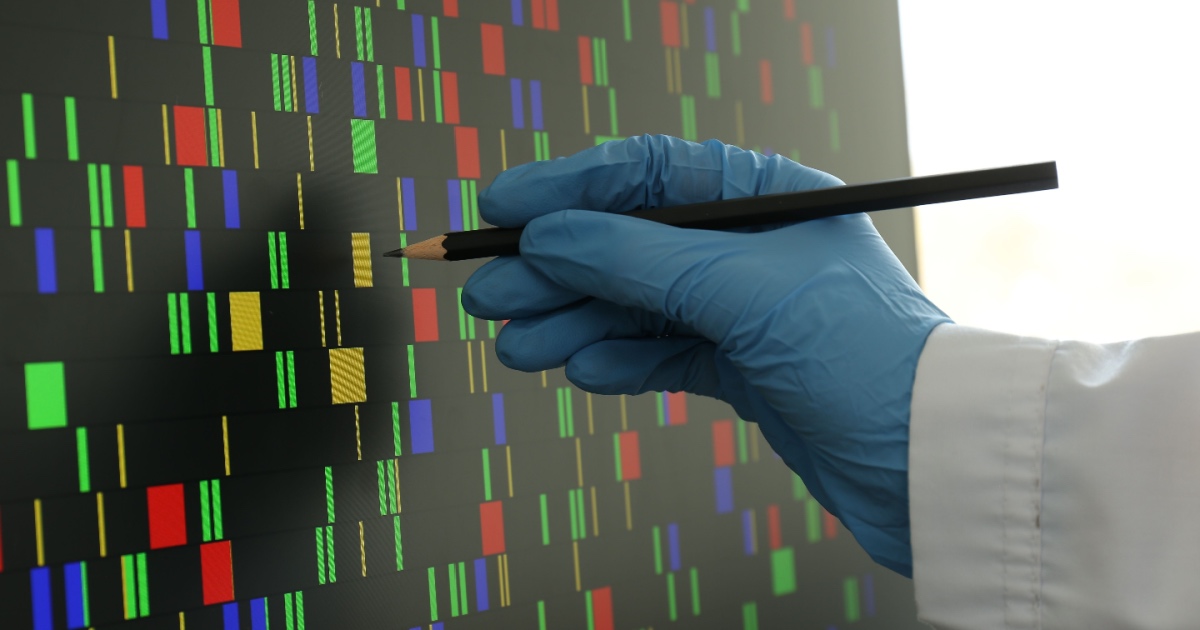

Most people carrying the low-activity variant of the MAOA gene – a sequence sometimes called the “warrior gene” – will never harm anyone. The same genetic variant has appeared in the profiles of convicted violent offenders and in routine population genetics studies. That contradiction is precisely what makes the science of the so-called serial killer gene so difficult to reduce to a headline.
The phrase entered public consciousness through true crime documentaries and courtroom dramas, but researchers have spent decades trying to map what, if anything, in human DNA correlates with psychopathic traits. What they’ve found is simultaneously more interesting and more sobering than the idea of a single switch that turns a person dangerous. The biology is real. The label is fiction.
Understanding the distinction matters not because it absolves anyone of responsibility, but because it fundamentally changes how we interpret personality traits, family history, and risk. Dr. Kristina Caudle, a developmental neuroscientist who has studied adolescent brain development and risk behavior, is among researchers who have cautioned that no single genetic marker has demonstrated the predictive power the popular label implies. Knowing what the science actually shows – rather than what the shorthand implies – is the only useful starting point.
What Psychopathy Actually Is (and Isn’t)
Psychopathy is not a formal clinical diagnosis; the term is often used to refer to symptoms of antisocial personality disorder, such as low empathy, manipulative tendencies, and a lack of remorse. The Diagnostic and Statistical Manual of Mental Disorders (DSM-5-TR) doesn’t use the term “psychopathy” as a standalone diagnosis, and neither does the American Psychiatric Association or the World Health Organization, which replaced categorical personality disorder labels in its ICD-11 classification with a dimensional model.
Instead, psychologists and psychiatrists use the term Antisocial Personality Disorder (ASPD). Its symptoms include impulsivity, lack of remorse, lying and manipulating for personal gain, violence or aggression, disregard for the law and social norms, a sense of superiority, and financial irresponsibility. Like other personality disorders, it exists on a spectrum from occasional rule-breaking to extreme criminal activity.
Prevalence figures help put the condition in perspective. A 2021 meta-analysis published in Frontiers in Psychology, which reviewed 15 studies covering more than 11,000 adults, found that psychopathy in the general population occurs roughly twice as often in males compared to females, with prevalence estimated at 7.9% in males versus 2.9% in females. Across the broader adult population, when measured using the gold-standard PCL-R assessment tool, psychopathy affects roughly 1% of people, but that figure climbs to between 15% and 25% among incarcerated offenders. That gap between the general population and the prison population has fueled the assumption that psychopathic traits are a direct pipeline to criminality. The data doesn’t support that.
The Genetics Behind the Serial Killer Gene Label
The heritability of psychopathic traits is real, and the twin study evidence is among the stronger data points. Research published in the Journal of the American Academy of Psychiatry and the Law found, based on a systematic review of 24 twin studies, that the heritability of callous-unemotional traits is likely between 36% and 67%. Identical twins were found to be twice as likely as non-identical twins to both carry psychopathic traits, with heritability of those traits estimated at around 50%.
But heritability figures don’t identify a single gene. Most psychological outcomes are caused by the combined effects of many hundreds or thousands of genes. Genes linked to psychopathy tend to be involved in neurotransmitter pathways, including COMT, which regulates dopamine metabolism, the dopamine receptor DRD4, and OXT, the oxytocin gene. The effects of each individual variant are typically very small – in one study, having two copies of a high-risk DRD4 variant increased psychopathy scores by less than 2%.
A 2025 paper in Frontiers in Psychiatry described psychopathy as “a neglected public health problem,” noting that heritability estimates range from 40% to 69% depending on the study population. The spread of those estimates reflects a genuine scientific challenge: the populations studied, the tools used to measure traits, and the ages of the participants all shift the numbers.
The ‘Warrior Gene’ Explained
Monoamine oxidase A, known as MAOA and often called the “warrior gene,” is an enzyme encoded by a gene on the X chromosome. It plays a critical role in regulating levels of several neurotransmitters, including serotonin, dopamine, and norepinephrine – all of which are vital for mood regulation, emotional responses, and stress management.
The low-activity variation of the MAOA gene earned its nickname because of its link to aggression. The gene plays a significant role in the metabolism of dopamine, serotonin, and norepinephrine, which regulate mood, impulse control, and emotional processing. Dysregulation of these neurotransmitter systems, stemming from MAOA genetic variants, has been associated with aggressive tendencies.
The interaction with environment is where the research becomes most consequential. A landmark 2002 study published in Science found that the MAOA gene may influence how childhood maltreatment affects the risk of later violent or antisocial behavior. Researchers reported that the low-activity MAOA variant alone did not predict aggression. Instead, the increased risk was observed primarily among people who carried the variant and had experienced severe childhood abuse or neglect. According to research from ZRT Laboratory reviewing the enzyme’s biochemical role, MAOA deficiency can result in dopamine hyperactivity, particularly when neurochemical balance is disrupted.
Scientists caution against oversimplifying the relationship between genetics and behavior, emphasizing that various environmental factors – including upbringing and personal trauma – also significantly influence aggression and antisocial behavior. The MAOA variant is carried by a meaningful portion of the general population who never commit violent acts.
What Happens in the Brain
The neuroimaging research on psychopathy adds a layer that genetics alone can’t provide. A 2011 study by researchers at the University of Wisconsin–Madison found that people with psychopathy showed weaker connections between two areas of the brain involved in processing emotions, making decisions and controlling behavior: the ventromedial prefrontal cortex and the amygdala. The findings suggest that differences in how these brain regions communicate may be linked to some traits associated with psychopathy, such as difficulty with emotional responses and decision-making.
A study published in Translational Psychiatry found that psychopathic individuals show diminished amygdala activity during aversive conditioning and facial emotion recognition. In practical terms, this means that emotional information – someone else’s fear, distress, or pain – doesn’t register with the same intensity in a psychopathic brain as it does in a neurotypical one.
Research published in Clinical Psychology Review found that people scoring higher on psychopathy measures displayed larger deficits in affective empathy – the felt, emotional response to another person’s experience – while cognitive empathy, the intellectual understanding of what someone else is feeling, varied more depending on which dimension of psychopathy was being measured. That distinction is practically important. Someone can understand that another person is suffering while remaining entirely unaffected by it.
The Signs People Actually Ask About
When people search for signs they carry the “serial killer gene,” they’re typically asking whether certain traits in themselves or someone they know map onto psychopathy research. The honest answer is that traits like low empathy, manipulativeness, pathological lying, impulsivity, and emotional shallowness do show up consistently in psychopathy literature – but carrying some of those traits doesn’t establish anything.
Researchers have broken the psychopathy construct into three domains: the grandiose-manipulative domain, characterized by superficial charm, egocentricity, and verbal manipulation; the callous-unemotional core, which involves lack of empathy and remorse along with short-lived emotions; and a daring-impulsive component involving irresponsibility, proneness to boredom, and novelty-seeking behavior.
Callous-unemotional traits represent the affective dimension of adult psychopathy, but they can be detected in childhood and adolescence. Several research studies have identified low empathy as a key early sign in children with persistent behavioral problems, more serious norm violations, and continued criminal careers in adulthood. This is distinct from ordinary childhood misbehavior. In studies of seven-year-old twins, callous-unemotional traits appeared to be strongly genetic, while more general antisocial behavior seemed to be more influenced by upbringing.
Critically, most children who score high for callous-unemotional traits early in life do not develop psychopathy.
Genes Do Not Equal Destiny
Aggression is a complex behavior involving synergistic effects of gene-gene-environment interactions – meaning the genetic component only becomes meaningful in combination with what happens to a person, not on its own. Research has consistently found that while brain abnormalities and genes linked with aggression may be necessary contributing factors, they are not sufficient causes on their own.
While the idea of a criminal gene is not scientifically supportable, there is growing evidence that some psychopathic behaviors have a grounding in genetic predispositions – but that grounding is probabilistic, not deterministic. Thousands of people carry MAOA-L variants and live entirely unremarkable lives.
Twin studies conducted on pairs raised apart who nevertheless exhibit similar psychopathic traits suggest there is a biological component to psychopathy – although usually environmental factors like childhood abuse need to be present to trigger real psychopathic behavior.
Read More: Myra Hindley and the Moors Murders: A Tale of Infamy and Horror
What This Means for You
The “serial killer gene” is a compression of genuinely complex science into a phrase that makes for a good headline and a poor understanding. Early identification of at-risk children showing callous-unemotional traits allows for intervention, and the evidence suggests that genetic predisposition is not a fixed outcome. A strong genetic liability, when combined with supportive parenting and a protective environment, does not automatically lead to elevated levels of callous-unemotional traits. Those traits can be detected in early childhood and may remain stable through adolescence, but a decrease following intensive and specialized treatment is possible.
For adults wondering whether their traits reflect genetics, the research does not support self-diagnosis based on a checklist. Psychopathy exists on a spectrum, and many traits associated with it – impulsivity, low anxiety, charm, reduced emotional reactivity – exist in people who function well within society and cause no harm to others. The meaningful question is not whether you share any traits with a psychopathic profile, but whether those traits are causing harm to you or the people around you. If the answer is yes, that’s worth discussing with a licensed mental health professional – not because genes are your fate, but because behavior, regardless of its origin, can change.
Disclaimer: The information provided here is for educational and informational purposes only and is not a substitute for professional psychological, psychiatric, or mental health advice, diagnosis, or treatment. Always seek the guidance of a licensed mental health professional, therapist, psychologist, or psychiatrist with any questions or concerns about your emotional well-being or mental health conditions. Never ignore professional advice or delay seeking support because of something you have read here.
AI Disclaimer: This article was created with the assistance of AI tools and reviewed by a human editor.
Read More: Inside the Life of America’s Deadliest Woman