

A 2022 Samsung UK workplace survey found that 92% of workers claim they make conscious efforts to use inclusive language – yet the average employee uses gender-biased language more than four times per working week. That gap between stated intention and actual behavior is the kind of thing most people would never believe applied to them personally.
The phrases most responsible for that gap aren’t the obviously offensive ones. Nobody in a 2026 office meeting is going to openly insult a colleague and expect no pushback. The language that does the most damage is the kind that sounds ordinary – the throwaway expressions we repeat without noticing because we’ve heard them our whole lives. These are the sexist phrases examples that slide past the filter precisely because they feel too mild to be worth mentioning.
Language is one of the most powerful mechanisms through which sexism and gender discrimination are perpetuated in society – and the phrases covered here are proof that this operates most effectively when no one feels they’re doing anything wrong. The research on this is consistent: a 2025 study published in Frontiers in Psychology found that sexist beliefs consistently predict negative attitudes and lower usage of gender-inclusive language, meaning the problem feeds itself. Changing the pattern starts with naming it.
1. “You Guys”

Calling a mixed group of people – or even an all-female group – “you guys” is so common that most people bristle at the suggestion it’s worth examining. The argument usually goes: “guys” is gender-neutral now. The problem is that it isn’t, and the evidence for that comes from the phrase itself. Nobody refers to an all-male group as “you gals.”
A preregistered replication study published in PLOS ONE found that job descriptions using gender-exclusive language negatively affected women, who reported higher anticipated workplace exclusion and perceived sexism, and lower job motivation and identification – fully replicating the original findings from a landmark 2011 study by Stout and Dasgupta. Women read gender-exclusive language as a signal that they are not the intended audience. “You guys” operates on the same logic: it treats male as the default and marks everything else as other. Using gendered terms like “businessman” or the default masculine pronoun to refer to people in general reinforces what researchers describe as a historical hierarchy where the male experience is taken as the norm, and female experience is marked as different.
The replacement isn’t complicated. “Everyone,” “folks,” “team,” or “all” carry the same conversational warmth with none of the exclusion. Much of Western culture was built on an assumption of male superiority, so it makes sense that our language reflects that – but reflecting on it is the first step to changing it.
2. “Man Up”
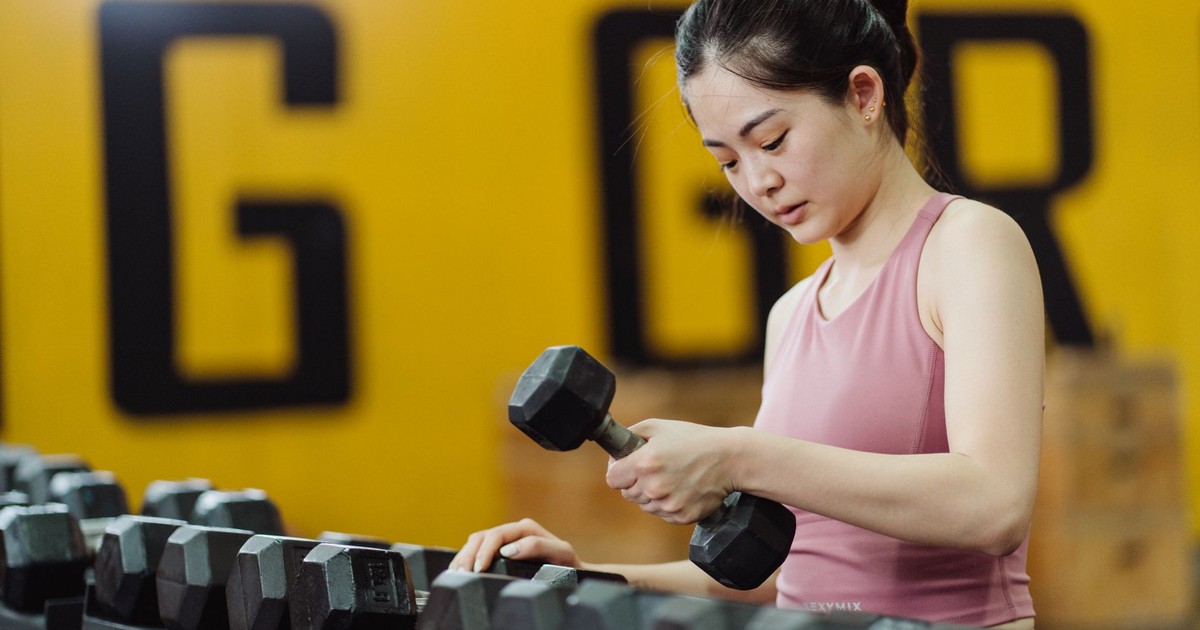
This one gets defended as harmless encouragement, a way to tell someone to push through difficulty. But look at the literal instruction: become more like a man. The clear implication is that to handle difficulty with composure is a male trait, and that defaulting to fear, distress, or vulnerability is the female alternative.
Telling someone to “man up” equates being a man with being strong, fearless, and confident, while declaring that showing normal emotions is unacceptable – and implicitly framing women as weak, over-emotional, and un-daring. That’s a lot of baggage packed into two words. The phrase also does real harm to men, locking them into an expectation that vulnerability disqualifies them from being taken seriously.
Both hostile and benevolent sexism reinforce established gender norms and stereotypes, with measurable consequences including negative impacts on mental and physical health for people on both sides of the gender divide. A phrase like “man up” belongs to that category because it punishes emotional honesty regardless of who uses it or who hears it. “Push through,” “you’ve got this,” or simply encouraging someone to keep going works just as well – without the built-in judgment.
3. “She’s So Bossy” (But He’s a Natural Leader)

Women in leadership positions are constantly aware of this double standard: a woman who leads a meeting is worried she’ll be called bossy; a man who does the same is called assertive. A woman who shares her feelings is called sensitive; a man who does the same is praised for emotional maturity. A woman who raises concerns is dramatic; a man who raises the same concern is sensible.
“Bossy” functions as a word specifically designed to penalize leadership behavior in women. It’s rarely applied to men. The same quality – directness, decisiveness, expectation of high standards – gets reframed depending on who’s displaying it. This isn’t a subjective perception; it shows up systematically in how women and men are described in professional settings. Research published in Nature Geoscience found that women applying for postdoctoral fellowships are about half as likely as men to receive excellent letters of recommendation. A 2016 study built on this, finding that letter writers use language that portrays female academic job applicants as less dynamic and excellent than their male counterparts.
The practical advice here is to check the word before you say it. If you’d call a man “decisive,” that’s the word to use for a woman doing the same thing. If the description would change depending on the gender of the person doing it, the word is the problem.
4. “She’s Being Hysterical”

The word “hysterical” has one of the more unsettling etymologies in everyday English. It traces back to ancient Greek thinking that a woman’s uterus could wander throughout the body, causing psychological problems including weakness, fragility, and general madness – a belief that was used for centuries to dismiss women’s emotional responses as medically suspect. Female hysteria was once the catch-all diagnosis for a woman with problems, and it didn’t disappear entirely from the Diagnostic and Statistical Manual of Mental Disorders until 1980.
Most people who use “hysterical” today aren’t thinking about Greek medicine. But the effect of the word is unchanged: it delegitimizes the emotional response of the person being described, usually a woman, and frames her feelings as evidence of irrationality rather than a valid reaction to a real situation. Saying a woman is “crazy” operates the same way – it discredits her and undermines her reactions or feelings.
A 2025 study in the European Journal of Education confirmed that gender stereotypes have measurable effects on cognitive processes in language comprehension and production, resulting in biased interpretation and recall. In other words, the words we use don’t just describe the world – they actively shape how we perceive the people those words are applied to. “Upset,” “frustrated,” or “strongly opposed” are factual. “Hysterical” is a verdict.
5. “She’s So Emotional” (As a Criticism)

Calling a woman “emotional” as a criticism is one of the most common sexist phrases examples in everyday conversation – and one of the hardest to push back on, because the speaker almost never thinks they’re doing anything wrong. They’re describing behavior, after all. The problem is that the same behavior in a man would typically be read differently. A man who raises his voice in frustration is “passionate.” A woman who does the same is “emotional.”
Research has found that gender bias in language used by parents and in school textbooks can cause children to develop sexist perceptions and behaviors, deepening the problematic outcomes of gender inequality in society. The lesson children absorb early is that male emotion is expression, while female emotion is a character flaw. That lesson gets carried into workplaces, relationships, and the phrases people use without thinking.
The presence of gendered exclusionary terms in language has proven to have various negative societal implications, including affecting how people perceive the attractiveness and suitability of certain careers. Describing a woman’s legitimate professional concern as “emotional” is a reliable way to ensure she’s not taken seriously. Research led by Michelle R. Hebl, Martha and Henry Malcolm Lovett Chair of Psychology at Rice University, found that even a single “doubt raiser” in a letter of recommendation was enough to cause faculty to evaluate a candidate more negatively – and such doubt raisers appeared more often in letters written for women than for men.
6. Sexist Jokes “Just for Fun”

The phrase isn’t usually spoken – it’s the implicit defense that follows. “It’s just a joke.” “Can’t you take a joke?” “You’re being too sensitive.” But a 2024 study published in the European Journal of Work and Organizational Psychology found that sexist humor, especially directed at women, remains prevalent, continuing to thrive even where formal anti-discrimination policies are in place.
Sexist humor is a form of subtle discrimination that communicates disparagement or degradation at the expense of women under the cover of a joke. The humor framing matters because it creates social pressure to laugh along and signals to anyone who doesn’t find it funny that they have the problem. The Samsung UK workplace survey found that women are made the target of sexist jokes almost three times more often than men (43% versus 15%), and gender-biased language causes 28% of workers to feel dismissed and undervalued, preventing them from contributing in meetings.
Both hostile and benevolent sexism carry the same potential consequences for women, including negative impacts on mental and physical health – and the benevolent, joking variety can actually be more corrosive because its targets face social pressure not to object. Humor is not a free pass. A joke built on the premise that women are incompetent, overly emotional, or out of place in a professional setting isn’t neutral entertainment – it encodes a belief and broadcasts it to everyone in the room.
Read More: 15 Women’s Health Myths That Can Be Harmful
What to Do With This

Language habits are genuinely hard to break, which is why the statistics on workplace gender-biased language are so consistent year after year. The average worker uses gender-biased language more than four times per working week, despite 92% claiming they make conscious efforts to use inclusive terms – a gap that exists not because people are dishonest, but because the phrases feel normal. That feeling is the whole problem.
The most practical change is also the simplest: when you catch yourself using one of these expressions, ask whether the word you’d choose would change if the person’s gender were different. If the answer is yes, change the word. “Assertive” instead of bossy. “Frustrated” instead of hysterical. “Everyone” instead of you guys. “Keep going” instead of man up. None of those swaps cost anything. What they avoid adding up to – across thousands of small interactions over years – is a workplace and a culture where women routinely feel less seen, less credible, and less valued than their male peers. Sexism in the workplace is associated with poorer mental and physical health outcomes for women, and everyday language is one of the channels through which that harm accumulates, one throwaway phrase at a time.
AI Disclaimer: This article was created with the assistance of AI tools and reviewed by a human editor.