

Our homes are more than just the places where we eat and sleep; they are physical extensions of our minds and are representative of who we are. The items we choose to keep, the way we organize our space, and the activities we engage in within our homes can offer surprisingly clear insights into who we are, and in many cases, how we think.
Signs of Intelligence Within Our Homes
No, of course we’re not saying that simply by having these objects in your home means you’re intelligent, or not having these means you are not. It is, of course, much more nuanced than that. No single object can definitively prove a person’s intelligence. This article aims to merely point out a home filled with certain items often points to a mindset that values curiosity, lifelong learning, and problem-solving. This isn’t about being a “genius” but rather about nurturing the kinds of behaviors that are consistently correlated with cognitive ability.
It is important to note here that curating your home in order to promote the previously mentioned values does not require you to be abundantly wealthy. In fact, there are plenty of examples of people throughout history who have gone on to be some of our world’s most important minds and voices who didn’t grow up in wealthy homes. Regardless of your income level, you can achieve a home that promotes the aforementioned curiosity, learning-centric, and problem-solving values. Here’s a look at some of the items and habits that may signal a highly intelligent person’s home, and what you can do encourage these intelligence-promoting values in your own home.
1. A Library, Not Just a Bookshelf

The most obvious sign of an intellectually engaged person is a home with an abundance of books. Research consistently shows a positive correlation between reading frequency and a person’s intelligence and vocabulary size. This isn’t just about reading textbooks; it’s about a deep and diverse engagement with printed material. Having a wide array of books reflects a person’s “openness to experience,” a key personality trait linked with higher intelligence. From literary fiction to historical texts to books on science and scientific journals, a varied collection shows a mind that is constantly seeking new information and different perspectives. Studies even suggest that print exposure, especially early in life, significantly improves verbal intelligence and reading comprehension.
Now, all of this said, how many of us can afford a library full of books or even have a home big enough to have a room dedicated to it? Not very many. Thankfully, there are many inexpensive ways to give you and your family this same opportunity without actually having a library at home. First of all, make use of your public library. Library cards are usually free or cost very little money. You can go as often as you want, read books there, and borrow books to have at home. When borrowing books, there is often a due date by which you need to return the book, giving you some motivation not to allow the book to sit and collect dust. Secondly, you don’t need to fill your home with the latest, greatest, brand-new books. There are plenty of used book stores and sales you can find, either in-person or online, where you can purchase books for a fraction of the cost of a new one.
2. Puzzles and Strategy Games

Rather than sticking yourself or your kids in front of the TV or the computer, look for games that challenge the mind for fun. This can be chess sets, a rubik’s cube, a 1000-piece jigsaw puzzle, or other strategy-based boredom games like Settlers of Catan. These aren’t just toys; they are tools for mental gymnastics.
Strategic games like chess are known to improve problem-solving, planning, and working memory, while puzzles are linked to fluid intelligence and cognitive flexibility. These activities require strong executive functioning – the mental skills that help us organize, plan, and execute tasks. These are often more developed in intelligent individuals. If you can’t afford to buy tons of games and puzzles, use your resources. A quick internet search and you will find hundreds of examples of games you can play with yourself, your friends, and your family that will give you a mental workout. These games usually don’t require much – sometimes a pencil and paper, sometimes nothing at all.
3. Creative and Technical Equipment
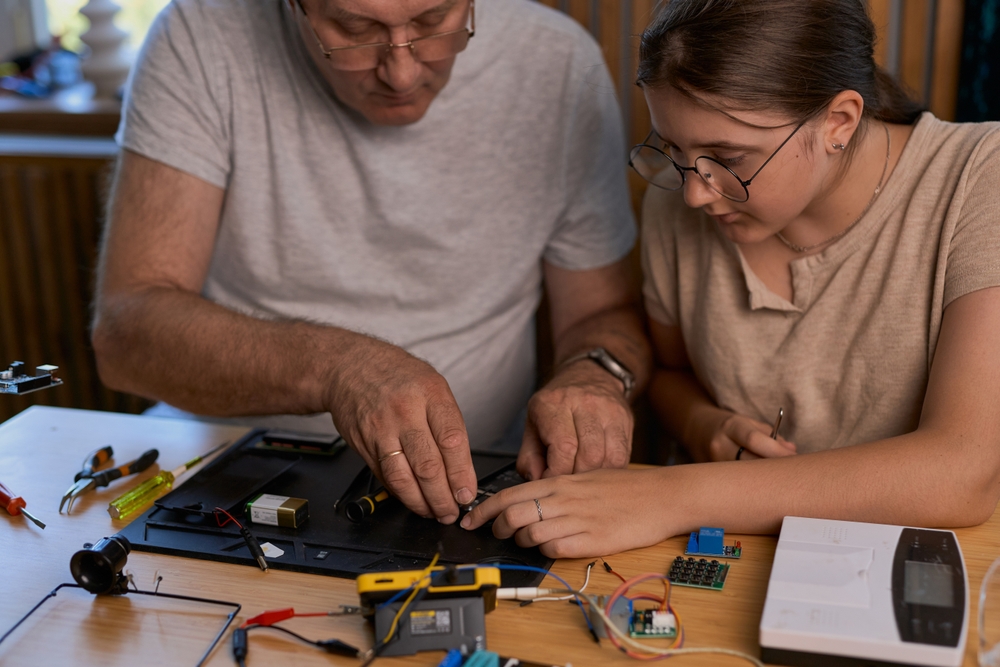
High intelligence is not limited to abstract thought; it often manifests as a desire to create and build. A home might contain a musical instrument, a well-organized art station, or a workbench with tools for coding or electronics.
Musical training is associated with enhanced IQ and spatial-temporal skills. Engaging in STEM (science, technology, engineering, and math) hobbies like programming or building things with electronics promotes logical thinking and creativity. Even something as simple as a journal or notebook filled with ideas and notes points to a person who is actively working on their metacognition, or the ability to think about their own thinking – a skill central to problem solving.
Again, just because you can’t afford a musical instrument or lessons on how to play it, doesn’t mean that this isn’t for you. For example, learning basic drumming skills doesn’t actually require a drum – it’s about learning to follow patterns and beats. You also don’t need to be able to afford state-of-the-art technology or tools to engage in programming or tinkering. In fact, it’s probably for the best if you don’t use those. Look for used items, things people are selling for cheap, old parts or tools that people don’t want anymore, and then get creative. It’s amazing what you can build or discover while still spending very little money.
4. Thoughtful and Curated Decor

The decor of a home isn’t just about aesthetics; it’s about a person’s relationship with the world. Highly intelligent people tend to be drawn to and appreciate complexity and abstraction in art and design. This can be reflected in everything from an abstract painting to a collection of geological specimens. Thoughtful decor, whether minimalist or eclectic, often indicates a high degree of intellectual curiosity and an appreciation for what is nuanced and interesting. The items on display aren’t just for show; they tell us a story and provoke thought, serving as a reflection of a person’s inner world.
Art and a beautifully decorated home sound to most of us like something reserved for the elite and wealthy, but it doesn’t have to be. You don’t need to spend thousands of dollars on paintings, sculptures, and other decorative items. Again, check out the online space, peruse garage sales, plant sales, and the like – it’s amazing what you will find people selling for very little or even giving away for free. If you want, you can even take a crack at creating your own art for your home. It doesn’t need to be a Picasso to be beautiful, thought provoking, and a statement of who you are.
5. Signs of Ongoing Learning
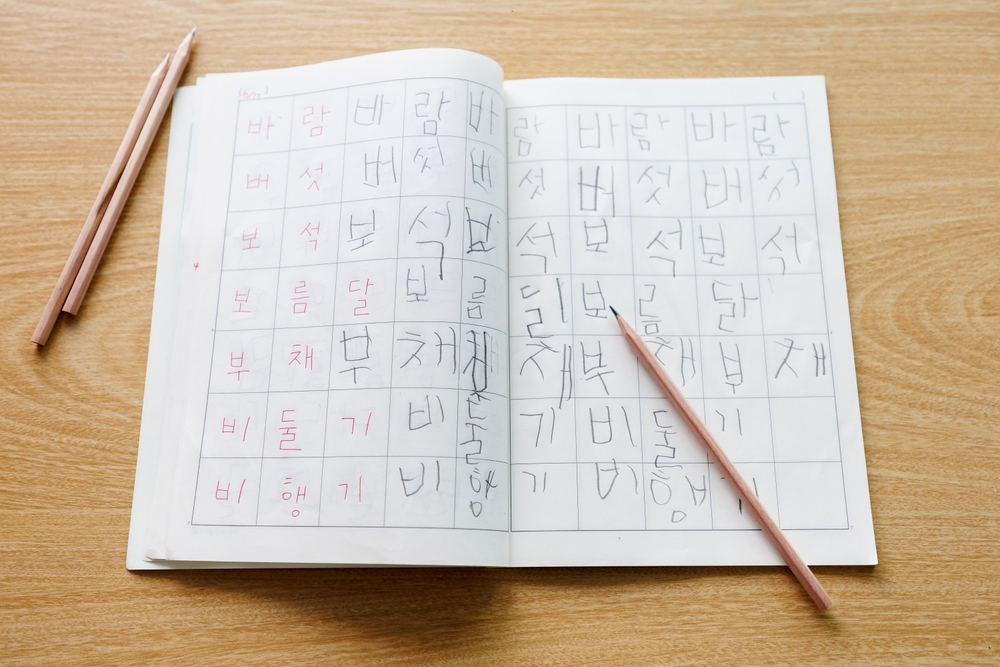
A home that is a perpetual classroom is a strong indicator of intellectual vitality. This could be a whiteboard covered in mind maps, a language-learning app on a tablet, or a collection of lecture notes from an online course. This is the mark of a “lifelong learner,” a trait linked to higher IQ and cognitive resilience as we age. Practices like mind mapping enhance working memory, while language learning is a powerful way to improve cognitive flexibility and executive control. The environment shows a person who sees learning not as a chore, but as a continuous and integral part of life.
Thankfully, there are so many resources available that are either inexpensive or free to use if you want to learn something new. YouTube is a haven for free learning resources of all kinds. Your local library will have plenty of books and resources for learning new skills – from language workbooks to how-to guides. There are also plenty of podcasts out there that are dedicated to teaching everything and everything. Don’t let financial resources be your excuse to stop learning new things.
Read More: Why Highly Intelligent People Tend to Have Messy Homes
6. A Space for Mindfulness and Reflection

Intelligence isn’t just about knowing things or processing external information; it’s about understanding the self. Emotional intelligence and a dedication to personal growth are important and underrated sides of intelligence. The presence of items that support introspection can be quite telling of a person’s dedication to this. This includes items like a yoga mat, meditation cushion or corner, or even just a well-worn journal. Journalling and meditation are both practices that enhance self-awareness and attention control. By creating a space for quiet reflection, a person is demonstrating a commitment to cognitive and emotional regulation – foundational domains of intelligence.
Building this kind of intelligence doesn’t require much time or money, either. It can be five minutes at the beginning or end of your day where you are journalling, meditating, or just reflecting on your day. There are a vast number of free resources to help guide you in journaling, meditating, yoga, and self-reflection. These resources can be tailored to adults as well as to children, so it is easy to get the whole family involved.
7. Evidence of Environmental Awareness

A highly intelligent person’s home often reflects a concern for the world outside their four walls. This can manifest as an array of thriving houseplants, a composting bin, or a meticulously organized recycling system. These habits are linked to future-oriented thinking and a sense of responsibility. Nurturing plants, for example, requires planning, patience, and a basic understanding of a living organism’s needs. These are all traits that align with higher cognitive ability. A person who actively works to reduce their environmental footprint demonstrates a capacity for long-term planning and an appreciation for complex, interconnected systems, which are hallmarks of sophisticated intellect.
This doesn’t need to be overly complex – it can be as simple as purchasing less throw-away items for your children’s school lunches, or organizing a carpool system with your coworker who lives in your same area, or a neighborhood garbage pick-up. Environmentally and community-minded people are those who show their capacity to think beyond themselves and act with the greater good of those around them in mind. This is free and available to everyone.
8. Indicators of Travel and Curiosity

The presence of travel-related items, from a globe dotted with pins to maps covering a wall or artifacts from other cultures, suggests a person who values broadening their perspective. Travel is a powerful way to enhance cognitive flexibility and creativity by exposing the mind to new sights, sounds, and ideas. Exposure to different cultures forces a person to question their assumptions, solve problems in novel ways, and adapt to unfamiliar situations. These experiences cultivate openness and complex problem-solving skills, making a home decorated with momentos of these adventures and a well-exercised mind.
Of course, travel – especially international travel – is not accessible to everyone. On top of that, there are plenty of people who travel and who don’t actually go with the purpose of really learning about and from other cultures. Luckily, you don’t actually have to go far to reap these benefits. Firstly, using the tools mentioned above, such as books, apps, and other resources, you can learn and expose yourself to as many other cultures as you want. Check out your community resources, as well. Immigration has meant that, likely, you can expose yourself to other cultures without even leaving your hometown. Look on your region’s website or neighboring regions’ websites to see what events are coming up. Get to know the people in your community, and not just those who are from the same background as you. There are so many ways that you can broaden your horizons without even leaving your own state, city, or town, so take advantage of those opportunities.
The Bottom Line
Ultimately, these items are not just possessions; they are artifacts of a curious and engaged mind. They reflect a person’s active pursuit of knowledge, creativity, and self-improvement. Our homes, in this way, serve as a map of our intellectual journey. They reveal that what we choose to surround ourselves with can say more about us than any resume ever could. Of course, just having these items in your home means nothing unless you are actively engaging with and using them. The brilliant thing is that you don’t need an abundance of financial resources, either. Most, if not all, can be free – it comes down to you and your dedication to constant growth and exploration that matters.
Read More: 11 Habits and Interests Intelligent People Tend to Outgrow Over Time