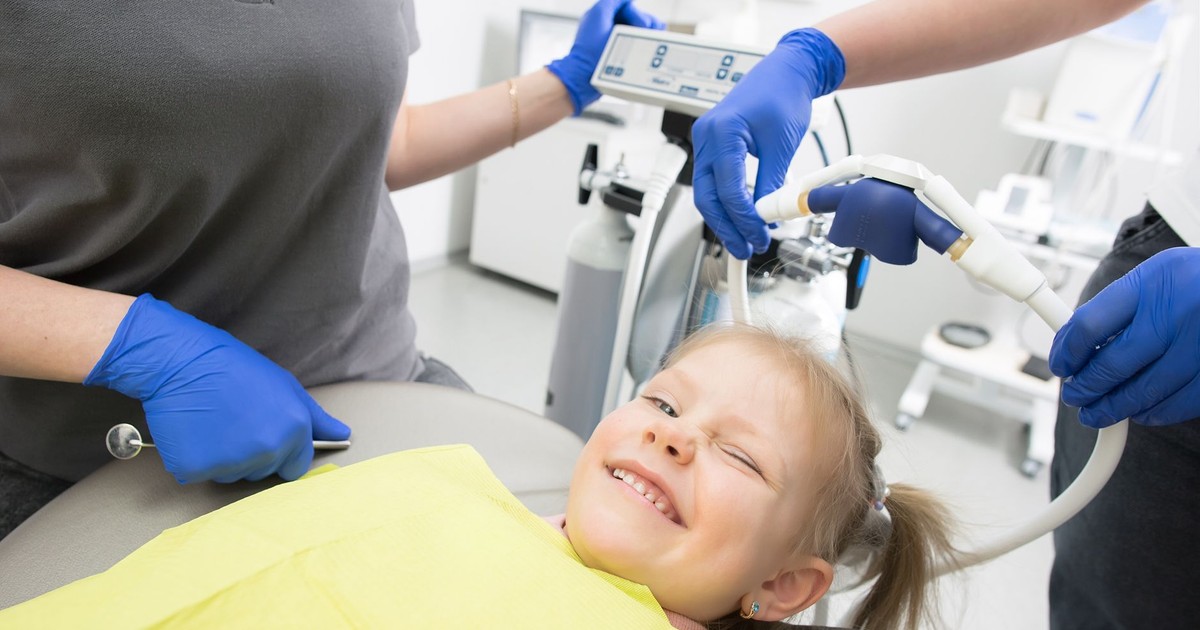

Most toddlers see a pediatrician several times before they ever sit in a dentist’s chair. For children in low-income households, that gap can stretch for years. By the time a cavity is caught, it’s often severe enough to require a filling, or worse, a procedure under general anesthesia. A liquid that takes roughly ten seconds to apply and can stop that decay in its tracks has existed for decades – just not, until now, with the large-scale US clinical data needed to change how American dentistry handles it.
Silver diamine fluoride, or SDF, is a solution made of silver, fluoride, water, and ammonia. It can arrest tooth decay in young children without injections, drilling, or sedation. The silver component acts as an antimicrobial agent, while the fluoride helps strengthen the remaining tooth structure. Dentists paint it directly onto a cavity using a small sponge-tipped applicator. The whole process, per tooth, takes about ten seconds.
Dentists have used SDF off-label in the United States since 2014, when it was FDA-cleared as a medical device to treat tooth sensitivity. Using it on children for cavity arrest is a different regulatory matter, and it has lacked the large US population clinical trial data on efficacy and safety needed for FDA approval as a drug to treat cavities. A major trial published in JAMA Pediatrics in 2026 may finally change that.
What the trial found
The Phase III trial enrolled 830 children younger than 6, recruited through dental offices, pediatric medical practices, Head Start and Early Head Start programs in Michigan, New York, and Iowa. The trial was led by Margherita Fontana, professor of dentistry at the University of Michigan School of Dentistry, and the results were published in JAMA Pediatrics in 2026. The study was funded by the National Institute of Dental and Craniofacial Research and began enrolling patients in 2018.
At six months, 54% of lesions treated with SDF had arrested, compared with 22.5% in the placebo group – more than double the placebo rate after a single application. The trial found no meaningful difference in pain or serious adverse events between the two groups, which is a key threshold for any treatment being considered for very young patients.
SDF may be especially valuable for very young children, older adults, people with developmental or physical disabilities, patients with severe dental anxiety, and others who cannot easily tolerate or access conventional dental treatment, according to Fontana. “This is a very effective and safe treatment – even in children as young as one,” Fontana said, as quoted by the University of Michigan.
How SDF actually works
Conventional cavity treatment requires removing decayed tooth structure before a filling can be placed – meaning a drill, usually an injection to numb the area first, and for very young or anxious children, often sedation. SDF is painted onto the cavity with no removal of tooth material whatsoever.
The American Dental Association explains that the silver functions as an antimicrobial agent, while the fluoride promotes remineralization of the damaged tooth surface. Together, they halt the bacterial process driving the cavity and harden what remains of the tooth structure.
The application takes approximately ten seconds per tooth. That speed and simplicity are part of what makes researchers interested in its potential in non-dental settings. A pediatrician’s office, a school nurse’s room, or a community health clinic could theoretically administer SDF – provided clinicians are trained to identify suitable cavities and have clear pathways for referring children to dentists afterward.
The treatment permanently darkens the decayed area of the tooth, which some families find cosmetically unacceptable. For baby teeth that will eventually fall out, this trade-off may be worth it. The 2026 trial only tested SDF on primary (baby) teeth in young children, so its role in permanent-tooth cavities remains a separate clinical question.
Why US children need this option
The CDC’s 2024 oral health surveillance report found that more than 1 in 10 children aged 2 to 5 have at least one untreated cavity in their baby teeth, and by ages 6 to 8, that figure rises to nearly 1 in 5. Untreated severe early childhood caries can cause pain, infection, and tooth loss that affects nutrition and quality of life.
General anesthesia in toddlers carries real risk. An overview published by Dimensions of Dental Hygiene noted that tens of thousands of young children in the US undergo restoration and extraction of teeth under general anesthesia annually – a figure that reflects both the severity of childhood decay and the limits of what conventional dentistry can offer very young patients.
Access to dental care is unevenly distributed, and that is where SDF could make a significant difference. The trial’s participants were recruited partly through Head Start programs and pediatric medical practices – settings that serve families with limited dental access. Children in these communities often see a pediatrician years before they ever visit a dentist. A treatment that a primary care provider could apply during a routine well-child visit, then refer the child to a dentist for follow-up, fills a gap that no filling or crown can reach.
Read More: Regrowing Teeth Is on the Horizon and May Represent the Future of Dentistry
The regulatory picture
SDF was cleared by the FDA as a Class II medical device in 2014 for treating tooth sensitivity. The FDA subsequently awarded SDF breakthrough therapy designation based on its ability to arrest cavities – a designation that signals the FDA recognizes the treatment addresses a serious condition and may offer advantages over existing therapies, but does not constitute approval for cavity treatment in children. For that, drug-level clinical trial evidence is required, and that is what the 2026 JAMA Pediatrics trial was designed to produce.
The Phase III SDF trial provides the clinical evidence needed for the FDA to consider a formal drug approval – a regulatory step that would standardize insurance reimbursement, expand who can apply the treatment, and broaden access for the children most likely to need it.
Dr. Amr Moursi, professor and chair of pediatric dentistry at NYU College of Dentistry and a co-principal investigator on the trial, stated that the results support FDA approval of SDF for managing arrest of tooth decay in young children, and that removing SDF from off-label status would lead to increased utilization by providers, enhanced payments by insurers, and more consistent product quality.
Some dental and pediatric practices already use SDF off-label. Without formal FDA approval for caries arrest, insurance reimbursement is inconsistent, provider training varies, and product quality standards have no regulatory anchor. Approval would change all three.
What this means for your child
If your child is under six and has a cavity, ask your dentist specifically whether SDF is an appropriate option. Not every cavity qualifies – SDF works best on active, cavitated lesions in baby teeth, and a dentist needs to assess the specific tooth, its location, and whether the dark staining would be a problem in a visible spot. For many children, especially those who are anxious, very young, or have multiple cavities that need interim management, it is a legitimate alternative to immediate drilling.
Applying the solution to the site of decay on baby teeth every six months may be sufficient until the teeth fall out naturally. For families waiting months for a pediatric dental appointment, or those whose children have had difficult dental experiences in the past, that matters. SDF won’t replace every filling or save every tooth, but getting something on those cavities quickly can reduce pain and prevent the kind of escalation that ends in an operating room.
Ask your child’s pediatrician or dentist whether SDF is available at their practice. Formal FDA approval for cavity arrest in children has not yet arrived, but the evidence base supporting SDF for young children is stronger than it has ever been, anchored by the 2026 JAMA Pediatrics trial data.
Disclaimer: This information is not intended to be a substitute for professional medical advice, diagnosis, or treatment and is for information only. Always seek the advice of your physician or another qualified health provider with any questions about your medical condition and/or current medication. Do not disregard professional medical advice or delay seeking advice or treatment because of something you have read here.
AI Disclaimer: This article was created with the assistance of AI tools and reviewed by a human editor.
Read More: People Often Make This Mistake Which Leads to Yellow Teeth, Dentist Says