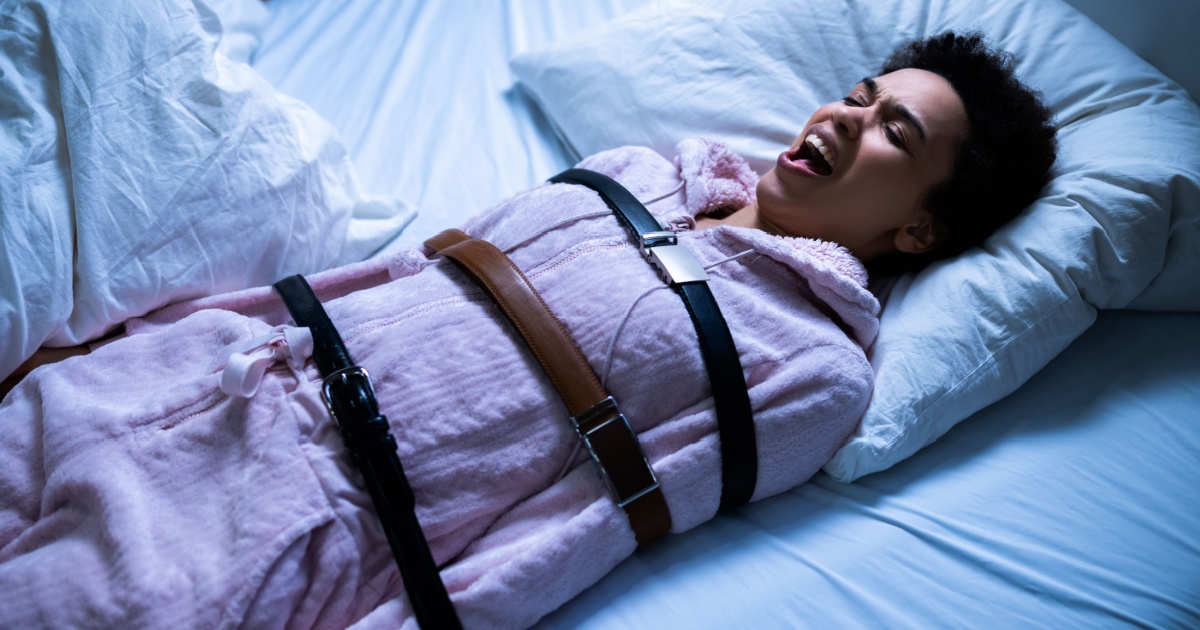

Sleep affects nearly every system in the human body – but few sleep experiences are as disorienting, or as poorly understood, as sleep paralysis. A large-scale systematic review published in Current Psychiatry Reports found that up to 8% of the general population has experienced at least one episode of sleep paralysis in their lifetime. That figure may sound modest, but applied to the current US population, it represents tens of millions of people. And for many of them, the experience comes without warning, without explanation, and without the reassurance that it’s completely normal.
Sleep paralysis is classified as a parasomnia – a category of sleep disorders involving abnormal behaviors or experiences that happen during the transition between sleep and wakefulness. According to Harvard Medical School’s health library, it occurs when a person regains conscious awareness while their body is still locked in the muscle-relaxation state the brain uses during REM (rapid eye movement) sleep. In simple terms: you’re awake, but you can’t move. For some people, it lasts a few seconds. For others, a few terrifying minutes.
This article covers the sleep paralysis facts and statistics according to psychiatry and sleep medicine research published through 2025 and 2026 – including how common sleep paralysis really is, why it happens, what it feels like in practice, and what the current evidence says about managing it.
What Percentage of People Experience Sleep Paralysis?
The most widely cited sleep paralysis statistics come from a systematic review of 35 studies covering a total of 36,533 participants. Aggregating across those studies, 7.6% of the general population, 28.3% of students, and 31.9% of psychiatric patients experienced at least one episode of sleep paralysis. The review, published in Sleep Medicine Reviews and frequently referenced in Current Psychiatry Reports, established what researchers now treat as the benchmark figure for how common sleep paralysis is in the general population.
Two minority groups found to have especially high rates – near 40% – were college students of Asian descent and psychiatric patients of African descent. Psychiatric patients overall were estimated to have lifetime prevalence rates over 30%, with particularly high rates among individuals with panic disorder. These disparities point to a condition that is far from evenly distributed. Stress, disrupted sleep, and underlying mental health conditions all appear to push rates higher.
Lifetime estimates vary across studies, with some placing the range between 8% and 50%. About 5% of people have regular episodes. Males and females are affected equally. That wide range is partly a measurement problem. A systematic review of 35 different studies estimated the lifetime prevalence of sleep paralysis in the general population at approximately 8%, ranging from 2% to 60%. One of the reasons for this wide range is the lack of standardized measures for identifying and measuring sleep paralysis. In other words, researchers are measuring the same thing in very different ways, which makes precise comparisons difficult.
A 2024 systematic review and meta-analysis published via the American Academy of Neurology’s Neurology journal, covering 76 studies from 25 countries with 167,133 participants, reported a global prevalence of 30% when data across all population groups – including psychiatric patients and students – was combined. The findings revealed that 30% of the population suffered from sleep paralysis, especially among psychiatric patients and students. Patients with PTSD and panic disorder were the majority to be affected. This broader figure reflects mixed populations and should not be read as the rate for healthy adults in the general community – but it does show just how prevalent the experience is globally.
What Is Sleep Paralysis and How Does It Work?
To understand sleep paralysis, you need a basic picture of what REM sleep actually does. REM sleep is the stage where vivid dreaming happens. During REM, the eyes move quickly and vivid dreaming occurs, but the muscles of the body are relaxed to reduce movement. This muscle relaxation is controlled by the brain and called REM atonia. The purpose of atonia is to keep you from acting out your dreams, and it typically ends when you wake up.
During sleep paralysis, however, you wake up suddenly from REM, regaining awareness even as your muscles are still in that relaxed, atonia state. For this reason, sleep paralysis can feel like temporary paralysis. Dr. Katherine Green, medical director of the University of Colorado Sleep Center and associate professor at the CU Anschutz School of Medicine, describes it this way: sleep paralysis is a lag between when your brain wakes up and when the muscle connection returns. “Many people have this experience and while it’s mostly benign, it can understandably be frightening,” says Green.
There are two types of sleep paralysis worth knowing. Isolated sleep paralysis occurs when it appears without any other signs of narcolepsy or other sleep disorders. Recurrent sleep paralysis involves multiple episodes over time and can be associated with narcolepsy. Narcolepsy is a neurological condition where the brain struggles to properly regulate the sleep-wake cycle – and people with narcolepsy are significantly more likely to experience sleep paralysis on a regular basis. According to a 2025 paper on narcolepsy and associated symptoms, sleep paralysis is closely associated with narcolepsy, with 30-50% of narcoleptics reporting it as a secondary symptom.
An episode of sleep paralysis can last from a few seconds to a few minutes. It usually ends on its own, or when someone moves or touches you or speaks to you. Making an intense effort to move can also end an episode. Eye movement and breathing remain intact throughout – the paralysis is not complete, and it is not dangerous in the way that choking or a seizure is dangerous.
Sleep Paralysis Symptoms: What the Experience Actually Feels Like
The defining sleep paralysis symptom is waking up unable to move or speak, despite being fully conscious. But that’s rarely where the experience ends. More than 75% of sleep paralysis episodes also include numerous bizarre and often terrifying hallucinations in addition to ongoing muscle paralysis. Researchers classify these experiences into three groups, including intruder hallucinations which involve a strong multisensory visual of an intruder in the bedroom and a feeling of a demonic presence in the space.
Harvard Medical School identifies the three main hallucination types clearly. Intruder hallucinations involve a sense of evil or a disturbing presence in the room, such as a bedroom intruder. Chest pressure hallucinations describe a sense of pressure on the chest, often accompanied by sensations of being choked or suffocated. The third category involves what researchers call vestibular-motor experiences – feelings of floating, spinning, or being dragged out of the body.
The chest pressure experience has a neurological explanation. When major muscles become paralyzed during REM sleep, breathing normally grows more shallow. Becoming aware of diminished breathing during an episode may explain the feelings of suffocation or pressure on the chest that people describe. As a person realizes they cannot move despite their alarming perceptions, their fear may escalate and trigger panic or a fight-or-flight response, which in turn may exacerbate the frightening content of their hallucinations.
People also report hearing sounds – humming, hissing, voices, and whispers. Imagined sounds such as humming, hissing, static, zapping, and buzzing noises are reported during sleep paralysis. Other sounds such as voices, whispers, screaming, growling, and roars are also experienced. It has also been known that people may feel pressure on their chest and intense pain in their head during an episode. These symptoms are usually accompanied by intense emotions such as fear and panic.
Historically, these experiences gave rise to folk explanations across dozens of cultures – demons sitting on the chest, witches binding sleepers, supernatural visitors. Research from the University of Colorado Anschutz School of Medicine notes that records describing similar sleep paralysis experiences go back more than 300 years. The experience is not pathologic, or concerning, or paranormal. It’s often the brain overlaying a story on top of the experience. That said, understanding the biology does not make the episodes feel less frightening in the moment – which is why education matters.
What Are the Main Causes of Sleep Paralysis?
The short answer is that researchers haven’t pinpointed one definitive cause – sleep paralysis appears to result from several overlapping factors rather than a single trigger. While there is no established direct causation between a risk factor and sleep paralysis from studies, research has found multiple factors to have some degree of association. These include anxiety disorders, poor sleep quality, consumption of alcohol, exposure to traumatic events, and a family history of sleep paralysis.
Sleep disruption is probably the most consistent contributor. Sleep paralysis can affect anyone, but certain groups are more at risk. People with irregular sleep schedules – such as shift workers or frequent travelers – are more prone to episodes, as are those who sleep on their backs. High levels of stress, anxiety, or trauma, as well as conditions like narcolepsy or PTSD, can also increase the likelihood.
Body position is a meaningful and often overlooked trigger. Sleeping on the back can make episodes of sleep paralysis three to four times more likely. This is because when lying on the back, less oxygen is taken in, which can increase awakenings during REM. Shifting to a side-sleeping position or using pillows to maintain posture often helps reduce episodes.
Genetics also play a role. Research has found a genetic component in sleep paralysis. The characteristic fragmentation of REM sleep, hypnopompic (waking), and hypnagogic (falling asleep) hallucinations have a heritable component in other parasomnias, which lends credence to the idea that sleep paralysis is also genetic. Twin studies have shown that if one twin of a monozygotic pair (identical twins) experiences sleep paralysis, the other twin is very likely to experience it as well.
Specific sleep disorders also raise risk significantly. Higher rates of sleep paralysis – 38% in one study – are reported by people with obstructive sleep apnea (OSA), a sleep disorder marked by repeated lapses in breathing. It is also more common in people with chronic insomnia, circadian rhythm dysregulation, and nighttime leg cramps. If you’re dealing with a sleep disorder already, it’s worth asking your doctor whether sleep paralysis might be connected. Pairing strategies for better sleep quality with natural approaches can also be a worthwhile first step while investigating root causes.
Is Sleep Paralysis a Sign of a Serious Mental Health Condition?
This is one of the most common questions people ask after experiencing an episode – and the answer is nuanced. For most people, sleep paralysis is not a symptom of serious mental illness. For most people, sleep paralysis is not considered dangerous. Though it may cause emotional distress, it is classified as a benign condition and usually does not happen frequently enough to cause significant health effects.
That said, there are real connections between sleep paralysis and certain mental health conditions that deserve attention rather than dismissal. About 10% of people have recurrent sleep paralysis, which can be a symptom of a more serious problem. If episodes are frequent, this may indicate a sleep disorder called narcolepsy. There are also serious mental illnesses that can involve sleep paralysis, including post-traumatic stress disorder (PTSD), bipolar disorder, and anxiety or panic disorders. These conditions can disrupt sleep patterns, making sleep paralysis more likely to happen.
The relationship with PTSD is particularly well documented. Trauma survivors frequently experience changes in REM patterns due to hypervigilance and nightmares. With PTSD and sleep paralysis, the body may remain stuck in a defensive state even while sleeping. The result is heightened fear responses, more intense hallucinations, and a sense of threat during episodes.
While isolated episodes of sleep paralysis are generally benign, recurrent episodes may warrant clinical attention, particularly when accompanied by distressing symptoms. If episodes are happening multiple times a week, disrupting your sleep significantly, or are accompanied by other symptoms like sudden muscle weakness during the day, excessive daytime drowsiness, or strong emotional reactions causing muscle collapse, see a doctor. Those additional symptoms may point toward narcolepsy, which is very treatable once properly diagnosed. It is important to differentiate sleep paralysis from other similar disorders, including narcolepsy, familial periodic paralysis, conversion disorder, and cataplexy. It also requires differentiation from the symptomatology of PTSD as well as other mental and psychiatric illnesses.
Who Is Most at Risk?
The data on sleep paralysis prevalence by population group is fairly consistent across studies. The prevalence of sleep paralysis in the overall population is estimated to be around 7.6%. Males have this condition at a slightly lower frequency than females. Sleep paralysis can begin at any age, but initial symptoms usually show up in childhood, adolescence, or young adulthood. After starting in the teenage years, episodes can occur more frequently in later decades.
Students and young adults are a particularly high-risk group – likely because of the irregular sleep schedules, chronic stress, and sleep deprivation that characterize student life. Although occurring in less than 8.0% of the general population, sleep paralysis is much more frequent in students and psychiatric patients. Reasons for these higher prevalence rates are unclear, but it is possible that both groups experience regular sleep disturbances, a factor making episodes more likely.
Racial and ethnic differences also appear in the data. One of the largest epidemiological reviews, comprising data from 35 studies, found that the lifetime prevalence of sleep paralysis was nearly 8% in the general population. Rates of sleep paralysis appear to be higher in non-White populations. Researchers have proposed several explanations for this – including higher rates of underlying stress, sleep disruption, and PTSD in some minority communities – though the mechanisms are not fully established.
Notably, onset typically occurs between the ages of 25 and 44. If you’re in that age bracket and have had the experience, you’re far from alone – and you’re squarely in the demographic where it tends to cluster.
What You Can Do About It
Sleep paralysis has no single cure, and in most cases it doesn’t require one. In most cases, sleep paralysis occurs so rarely that treatment is not needed. If the cause is known – for example, due to lack of sleep – correcting the cause by getting enough sleep often resolves the condition. That’s a key point. Treating the root cause is almost always more effective than chasing the symptom.
Practical steps that have evidence behind them include:
Fix your sleep schedule. Irregular sleep timing is one of the strongest modifiable risk factors. Aim to go to bed and wake up at the same time every day, including weekends. Shift workers should talk to their doctor about optimizing sleep timing around their schedule.
Sleep on your side. Given that back-sleeping significantly increases risk, changing your sleep position is one of the simplest practical interventions. Placing a pillow behind your back can stop you from rolling onto your back during the night.
Manage stress. Educational interventions significantly reduce sleep paralysis-related distress, especially in isolated cases. Sleep hygiene, stress management, and cognitive behavioral therapy (CBT) are effective non-pharmacological approaches.
Address mental health directly. If you live with PTSD and experience sleep paralysis, trauma-focused treatment – such as EMDR, Somatic Experiencing, or internal family systems (IFS) – can help. These approaches help the nervous system process stored trauma and reduce hypervigilance that can trigger nighttime awakenings.
During an episode: don’t panic. Dr. Katherine Green of the University of Colorado Sleep Center recommends giving your brain a couple of seconds to catch up and fully wake up, and knowing that episodes are short-lived. Focusing on breathing – slow, intentional breaths – can help interrupt the fear cycle. Trying to wiggle the toes or fingers tends to work better than trying to make a large movement.
For recurrent cases connected to a sleep disorder, treatment with SSRIs (a type of antidepressant that affects serotonin levels) and stimulants targeting REM regulation has yielded favorable outcomes. These are not first-line options for isolated sleep paralysis but may be considered by a doctor when episodes are frequent and tied to an underlying condition. Exploring foods that support healthy sleep is one low-risk complement to these strategies.
Read More: 9 Foods That Might Be Ruining Your Sleep
What This Means for You
Sleep paralysis is real, common, and well-explained by science – even when it doesn’t feel that way at 3am. One of the largest epidemiological reviews on the subject, comprising data from 35 studies, found that the lifetime prevalence of sleep paralysis was nearly 8% in the general population. If you have had this experience, you’re one of many millions of people who have. The biology is clear: your brain woke up before your body did. The hallucinations, the pressure, the sense of a presence – these are byproducts of dream-state machinery still running while conscious awareness has returned. They are not signs that something is permanently broken.
What you should take away from this: if episodes are rare and brief, focus on sleep hygiene – consistent bedtimes, side-sleeping, stress reduction. If they’re happening frequently, especially alongside other symptoms like excessive daytime sleepiness or emotional triggers causing sudden muscle weakness, that’s worth a conversation with your doctor. The prognosis for sleep paralysis is generally good. No studies have demonstrated any long-term consequences on the health of patients who experience sleep paralysis. While underlying risk factors may contribute to health-related issues, there is no reported independent association. The episodes reportedly come in waves, and the prognosis is good if the triggers are managed effectively in most cases. Know what it is. Know it will end. And if it keeps coming back, get it looked at.
Disclaimer: This information is not intended to be a substitute for professional medical advice, diagnosis or treatment and is for information only. Always seek the advice of your physician or another qualified health provider with any questions about your medical condition and/or current medication. Do not disregard professional medical advice or delay seeking advice or treatment because of something you have read here.
A.I. Disclaimer: This article was created with AI assistance and edited by a human for accuracy and clarity.
Read More: Just Minutes More Sleep and Exercise Linked to Lower Heart Risk