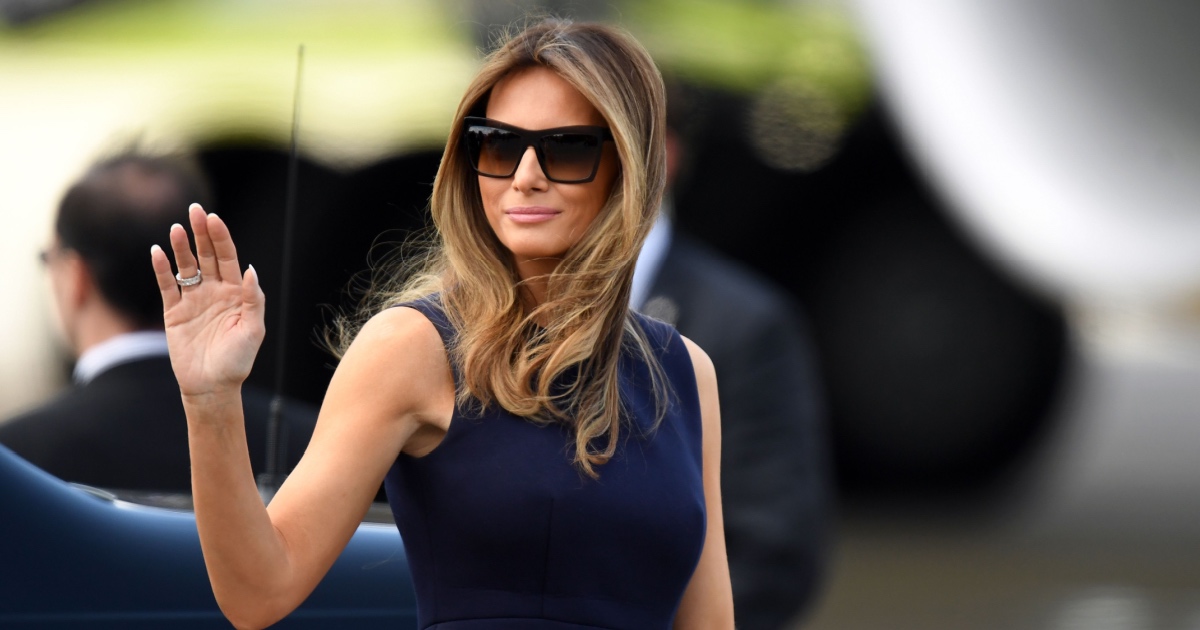

The woman who once helped plan a $26 million inauguration celebration is now pitching herself to television producers. Stephanie Winston Wolkoff spent eight years as one of Melania Trump’s closest friends, then less than a year as her unpaid White House advisor, then became one of the most controversial figures to emerge from that administration. Now, she’s trying to build something new – and she wants none of it defined by a friendship that ended badly.
Wolkoff, Melania Trump’s former top aide during the first term, is campaigning for her own reality TV show. She told Page Six on June 29, 2026: “Melania was one chapter of my life. It’s not my story.” For a woman whose public identity has been almost entirely shaped by her falling out with the First Lady, that’s a significant declaration. Whether the television industry agrees is another matter.
The backstory behind that statement stretches back more than two decades and runs through some of the most dramatic episodes of the Trump White House years. Understanding why Wolkoff is making this pivot – and why it’s generating headlines even now – requires going back to where the friendship started, how it collapsed, and what she did next.
From Vogue to the White House
Before her turn as a White House advisor, Wolkoff had worked as the director of special events at Vogue and the fashion director of Mercedes-Benz New York Fashion Week at Lincoln Center. She met Melania Knauss, then Donald Trump’s girlfriend, in 2003 while working for Vogue, and the two became friends. By the time Trump won the 2016 election, the two women had maintained a close personal relationship for over a decade. Wolkoff would later describe Melania as someone she stayed close to until she felt she had been “thrown under the bus.”
In 2016, Wolkoff created an event planning firm, WIS Media Partners, which was instrumental in organizing Donald Trump’s inauguration in January 2017. Her firm was paid $26 million for those services – about one-quarter of the total expenses of the inauguration. According to a 2020 CNN report, most of the money went to subcontractors, with a reported $1.6 million going directly to Wolkoff’s business. Wolkoff has consistently disputed the characterization that she personally received that sum. She said in response to the fallout: “Did I personally receive $26 million or $1.6 million? No,” describing the media coverage of WIS Media Partners’ deal as “completely unfair.”
A longtime friend of the First Lady, Wolkoff was hired as an unpaid advisor in 2017. Her role did not last long. In February 2018, after the $26 million payment to her event planning company received media scrutiny, Wolkoff resigned. The departure was painful on both sides. What followed made it permanent.
The Recordings, the Book, and the Lawsuit
The same 2020 CNN article reported that Wolkoff had released audio tapes of conversations she had recorded with Melania Trump in 2018 – conversations made without the First Lady’s knowledge. The move was incendiary. Melania’s response left no ambiguity about how she viewed it. Following Wolkoff’s release of the recordings, the First Lady responded by saying Wolkoff “hardly knew” her, adding: “This is a woman who secretly recorded our phone calls, releasing portions from me that were out of context, then wrote a book of idle gossip trying to distort my character.”
Wolkoff had published a tell-all memoir titled Melania and Me: The Rise and Fall of My Friendship with the First Lady, in which she criticized the Trump family. The legal consequences followed quickly. The Justice Department filed a civil suit against her in October 2019, alleging that she violated a nondisclosure agreement. That suit was dropped in February 2021 after President Biden assumed office.
For a period, Wolkoff’s name was almost impossible to separate from the Melania Trump controversy. Her public persona was defined by what she revealed and how she revealed it. The television pivot she’s now pursuing represents a deliberate attempt to rewrite that identity.
A Career Rebuilt Around Second Chances
Over the past months, Wolkoff has produced two fictional TV series: Gunslingers and The Trouble with Billy, according to Page Six. The latter stars William McNamara, who has the personal experience of losing his career and personal life at the height of his fame due to alcohol and drug abuse. The subject matter appears to be intentional. Wolkoff told Page Six: “I don’t want to be defined by politics or betrayal. I want to spend my time creating stories that remind us to look beyond the headline, believe in second chances, and never lose sight of the person behind the public image.” She added: “I know something about rebuilding life after your worst chapter, and I know no one should be defined by a single moment.”
The thematic through-line between The Trouble with Billy and Wolkoff’s own biography isn’t subtle. A story about a person who lost everything at the peak of their career and had to rebuild without the infrastructure that made them visible – that’s not just a TV pitch, it’s a personal statement. Her IMDb credits now list Gunslingers, The Trouble With Billy, and the Style Awards among her producing work.
The reality show angle is the new addition. In her Page Six interview, Wolkoff described the proposed reality TV show as something entirely separate from her time as a Melania Trump aide. That insistence on distance from the White House years is consistent – but whether producers or networks see it the same way remains to be seen. Wolkoff’s name still carries enormous recognition, and in television, recognition is currency.
What Melania Has Been Doing Instead
While Wolkoff pursues a new chapter in entertainment, Melania Trump has spent 2026 building a public profile that looks quite different from either her first term or the controversy years. On June 11, 2026, First Lady Melania Trump launched Fostering the Future Accounts, a new financial resource established in tandem with the U.S. Department of Treasury to empower foster youth to be fiscally autonomous upon reaching adulthood. According to CNBC, more than 400,000 children are in foster care in the United States, and many are considered financially vulnerable, per federal data. The initiative received pledges from twenty-three governors to set up Fostering the Future Accounts for children within their states’ care, according to The White House.
That initiative comes after a year that included a high-profile documentary that drew as much controversy as any project connected to Melania’s name since the Wolkoff fallout itself. The film Melania, directed by Brett Ratner, was released in the United States on January 30, 2026. Development started shortly after the 2024 presidential election, with bids coming from Amazon, Disney, Netflix, and Paramount Pictures. Amazon’s offer of $40 million was the highest price ever paid for a commissioned documentary. Melania retained editorial control and was heavily involved in the production. The film received overwhelmingly negative reviews from critics, who criticized its self-promotional nature, according to The Hollywood Reporter.
Read More: Melania Trump allegations
What This Means
The surface drama here – former aide wants TV show, First Lady unlikely to approve – is real but thin. The more substantive thread is what both women’s current moves reveal about public life after a public rupture.
Melania Trump, amid the controversy over the Amazon documentary and her polarizing favorability numbers, has pivoted hard toward policy work with identifiable human impact. The Fostering the Future Accounts program, whatever its political context, gives her a concrete legacy project separate from the personality coverage that has dominated her press for years.
Wolkoff’s move is mirror-image in structure: away from the political story, toward creative work that lets her speak through other subjects. She told Page Six: “I know something about rebuilding life after your worst chapter, and I know no one should be defined by a single moment.” That framing applies equally to the shows she’s producing and to the arc of her own career. The friendship that defined both women’s public narratives for years is, at least in Wolkoff’s telling, now just one chapter in a longer story. Whether television audiences find that story worth watching is the open question.
AI Disclaimer: This article was created with the assistance of AI tools and reviewed by a human editor.
Read More: Melania Promises Severe Consequences After the Truth Behind Barron Trump’s ‘Leaked Photo’ Revealed