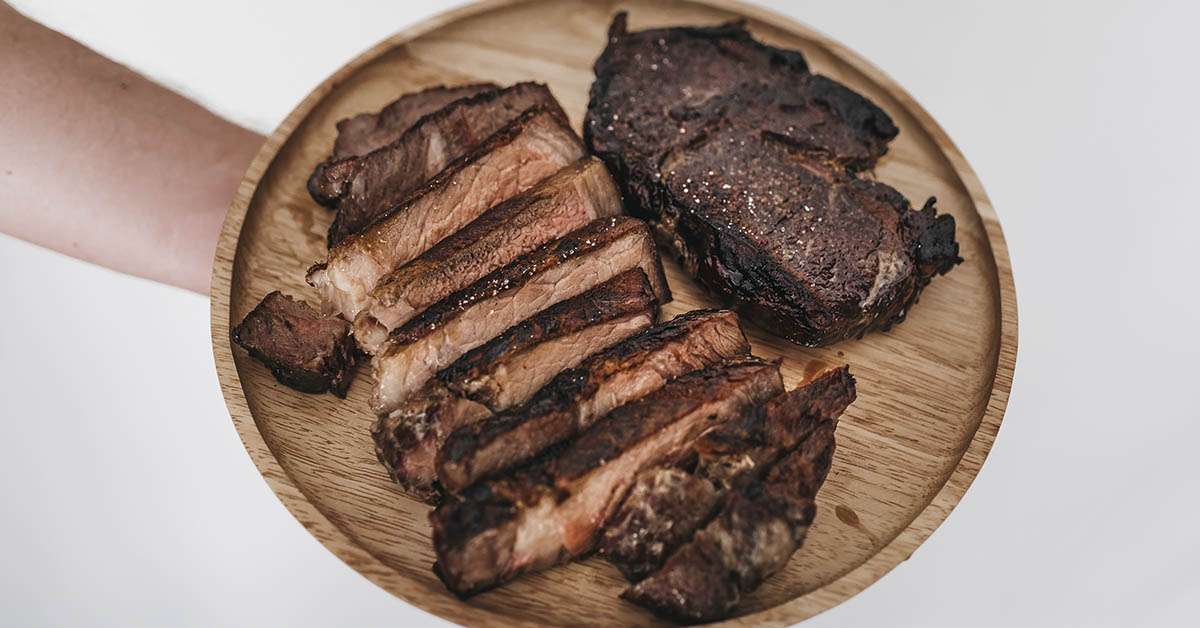
Reaching 100 sounds like a miracle, yet ultimately, biology still negotiates the deal. One new study asked whether meat eaters gain an edge in extreme old age. It also asked whether people who avoid eating meat lose that edge. The researchers did not study midlife habits or gym routines. They studied adults already aged 80 or older, when food choices can change quickly. Appetite can fall in months. Chewing can become painful. Shopping can become exhausting. Illness can also change food choices quickly. So diet labels can hide deeper issues in late life. A person may stop eating meat after dental pain. Another may avoid eating meat when nausea begins. In very old age, a diet label can follow frailty. It can also follow poverty or low support.
The team used the Chinese Longitudinal Healthy Longevity Survey in China. They compared centenarians with peers who died before reaching 100. They linked diet categories with the odds of reaching 100 by 2018. The headline looked like good news for meat eaters, yet the catch appeared in underweight participants. In people with adequate body weight, the association weakened. This article explains what the study found and what it did not prove. It also explains why weight status and muscle loss can dominate outcomes after 80. Throughout, meat eaters means people who include animal flesh foods, even if their intake varies. The result is most relevant for families supporting very old relatives. It is also relevant for clinicians managing frailty. It is less relevant for younger adults debating long-term disease risk. So, read the findings as nutrition guidance, not identity in late life.
What the centenarian study actually found
Image Credit: Pexels
Y. Li and colleagues published the analysis in The American Journal of Clinical Nutrition. They ran a prospective nested case-control study within a national cohort. The cohort was the Chinese Longitudinal Healthy Longevity Survey, launched in 1998. The analysis included 5,203 adults aged 80 or older. The primary outcome was living to age 100 by the end of follow-up in 2018. The team identified 1,459 centenarians and matched them with 3,744 non-centenarians. Participants were classified as omnivores or vegetarians, then split into subgroups. These labels describe reported intake during the study window, not lifelong identity. That distinction is crucial after age 80, because health shocks can change diet quickly. Chewing problems, swallowing issues, and fatigue can push people toward softer foods. Those shifts can create a vegetarian label without any long-term plan. Multivariable unconditional logistic regression models tested the associations.
Still, diet assessment in very old adults can be blunt. Portion size can vary with illness. Therefore, the diet groups likely include many different eating styles. The headline comes from a short abstract sentence. The authors wrote, “Relative to omnivores, vegetarians had a lower likelihood of becoming centenarians.” They reported an odds ratio of 0.81 with a 95% confidence interval of 0.69 to 0.96. They also reported a similar direction for vegans, with an odds ratio of 0.71. In the abstract view, pesco-vegetarians and ovo-lacto vegetarians did not show a clear difference. Then the catch appeared in BMI. The significant association appeared in participants with a BMI below 18.5. In that underweight group, the odds ratio was 0.72, yet it was 0.92 at BMI 18.5 or higher. This pattern suggests the diet label mattered most when reserves were low.
It also suggests a different question for meat eaters and vegetarians alike. How well did each person meet protein and energy needs, given their appetite and function? It also cannot show why someone avoided meat in later life. A person may reduce meat after swallowing trouble. Another may reduce meat when a caregiver stops cooking. Those pathways can make vegetarian status look risky. Therefore, treat the association as a signal to check nutrition, not as a mandate. One more detail helps keep expectations realistic. The study reported odds ratios, not absolute chances of reaching 100. A small odds shift can look dramatic in headlines.
Yet the real-world difference may be modest for many people. The analysis also grouped diets into broad categories. It did not confirm the exact grams of protein or total calories. It also did not capture how often someone switched diets. Those gaps matter after age 80, when diet can change within weeks. Another point is survivor bias. Everyone in the sample already survived into their 80s. That means earlier-life risks had already filtered the group. So the results speak to late-life survival, not lifelong prevention. In practice, the finding suggests a simple takeaway. When an older adult stops eating meat, check why. Check weight trend and strength, then adjust support. If eating meat stays comfortable, it can help maintain intake.
Why underweight status can override diet ideology
A BMI below 18.5 can signal shrinking reserves in late life. It can reflect low muscle mass and low fat stores. Those reserves protect the body during infection and injury. Underweight status can develop for many reasons. Illness can reduce appetite and taste. Dental problems can limit chewing. Some medicines can cause nausea. Social isolation can reduce the number of regular meals. When portions shrink, protein intake often shrinks early. Energy intake can also shrink, even when simple starches remain. Weaknesses then change daily life in practical ways. It can limit shopping, cooking, and even standing at a stove. It can also reduce the drive to eat, because fatigue makes meals feel like work. In that setting, a vegetarian label can reflect limitation, not ideology. Therefore, the apparent advantage for meat eaters may reflect ease of meeting needs. Frailty frameworks include unintentional weight loss and weakness as warning signs.
Clinicians also ask who buys groceries and who cooks. Transport barriers can cut food variety. These drivers can affect vegetarians and meat eaters alike. The World Health Organization uses a definition that fits this catch. The WHO states, “Malnutrition refers to deficiencies, excesses, or imbalances in a person’s intake of energy and/or nutrients.” In the oldest-old, deficiencies can dominate quickly. An elder can eat vegetables daily, yet fall short on energy. An elder can eat bread daily, yet fall short on protein. Diet labels then describe the menu, not adequacy. This helps explain why the AJCN subgroup signal clustered in underweight elders. Clinicians often look for red flags, such as rapid weight loss. They also ask about repeated falls and low strength. When they find risk, they focus on practical fixes that raise intake. They might add snacks between meals or enrich soups with oil or milk.
These steps help any diet group, yet they can be easier for meat eaters who accept animal foods. Older adults often eat less volume, so calorie density becomes strategic. Use spreads, sauces, or soups to add energy without large servings. Check hydration, too, because dehydration can reduce appetite. These steps support meat eaters and people avoiding meat. A simple home check can catch risk early. Track weight every 2 weeks using the same scale. Note loose rings, belts, or shoes, which can signal loss. Watch meal pace, because slow eating can mean chewing pain. Ask about constipation, since it can blunt appetite.
If taste changes after illness, add stronger seasonings and warmer foods. If fatigue blocks cooking, stock shelf-stable, higher-calorie staples. Peanut butter, hummus, and soy yogurt can help non-meat eaters. For meat eaters, soft minced meat in soups can boost intake. If swallowing becomes hard, ask for a swallow assessment. Also, review medications, because some reduce appetite. When weight keeps dropping, request a dietitian referral. Early support can prevent a crisis admission. A weekly strength check also helps. Can they rise from a chair without using their hands? If not, add gentle resistance work with medical clearance, and increase protein portions at breakfast and lunch most days.
Protein, muscle, and the late-life survival engine
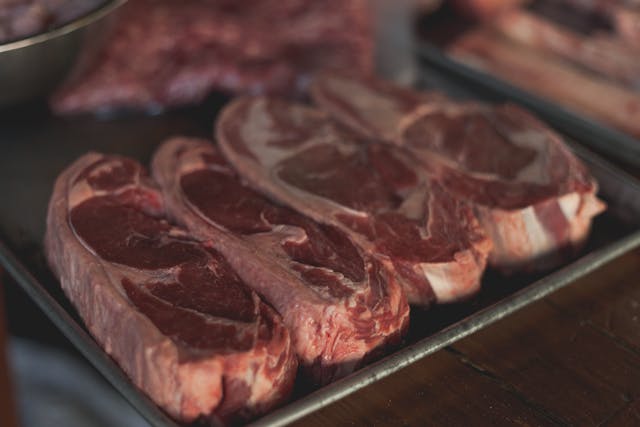
Image Credit: Pexels
Muscle supports walking, balance, and rising from a chair. It also supports breathing strength during acute illness. When muscle mass drops, frailty becomes more likely. Frailty increases disability risk and hospitalization risk. Hospitalization often reduces activity and disrupts meals. That combination can accelerate muscle loss. Therefore, maintaining muscle after 80 can support survival. Protein intake plays a central role because it supplies amino acids for repair. Energy intake also matters because low energy intake can force the body to break down tissue. This helps explain why meat eaters sometimes show an advantage in studies of very old adults. Eating meat can deliver protein in a small portion. That density can matter when appetite is small. Yet the same logic can support fish, eggs, dairy, tofu, or soy yogurt, depending on diet choices.
Older muscles may respond less to a small protein dose. Resistance training can improve that response. Therefore, food and movement work together. A National Academies chapter on older adults describes the debate on protein needs. It reports, “protein intakes greater than the RDA would lower the risk of frailty.” The chapter attributes that view to the PROT-AGE Study Group discussion. This quote does not say meat is required, but it explains why adequacy becomes urgent with age. Small meals make it harder to reach higher protein intake. Therefore, food form becomes as important as food type. Tender meats and slow-cooked dishes can help meat eaters. Dairy foods and eggs can help many vegetarians. Vegan diets can meet needs, yet they need planning and support. Some plant proteins are bulky, and bulk can limit total energy intake. Ready-to-eat tofu and nut butters can reduce effort and raise density.
When intake still stays low, clinicians sometimes recommend oral nutrition supplements. The same chapter notes that evidence remains mixed about the best distribution of protein across the day. Yet the direction of travel is clear, and many experts expect higher needs with age. When planning is hard, simple defaults help. Include a protein food at breakfast and at dinner. Add an afternoon snack if weight is falling. For meat eaters, that could be a small chicken sandwich. For vegetarians, that could be yogurt or cheese. For vegans, that could be soy yogurt or a tofu spread. Keep textures soft when needed, because comfort drives intake. Another practical point is timing after illness. Many older adults eat less during recovery. Muscle can drop quickly during bed rest. Therefore, add protein early during rebound weeks. Meat eaters can use smaller, more frequent portions. A few bites still contribute.
People avoiding eating meat can lean on soy, dairy, or eggs if they allow them. Hydration also supports intake, because dehydration can reduce appetite. Check for chewing and mouth dryness, since both reduce protein foods first. If dentures hurt, softer protein works better. Scrambled eggs, yogurt, and tofu often go down easily. For meat eaters, slow-cooked mince or shredded chicken can work. Pair protein with energy, because protein alone cannot rebuild reserves.
What observational diet research can and cannot prove
Observational nutrition research can identify signals across large groups. Yet it cannot remove all bias. Reverse causation is one major issue, because illness can change diet first. Confounding is another issue, because income and caregiving shape diet and survival. Measurement error also matters because diet tools can miss portions and cooking methods. Each limitation can distort associations. Therefore, the AJCN finding should not become a universal rule. It is best read as a clue about vulnerability. The abstract also reported an interaction test near conventional thresholds. It listed P-interaction = 0.08 for BMI groups. That suggests a possible difference by weight status. It also signals uncertainty, because the estimate could shift with different models. Even so, the direction matches what clinicians see. Thin older adults tolerate less stress. Therefore, small nutrition gaps can show larger survival effects in this group.
Longevity has stages across the lifespan. Later in life, falls, infections, and frailty can dominate. So it is risky to generalize this result to younger adults. Supporting evidence can still help evaluate plausibility. Coelho-Júnior and colleagues ran a systematic review and meta-analysis of observational studies. In their discussion, they wrote, “low protein intake is associated with frailty prevalence in older adults.” This aligns with the underweight interaction in the centenarian study. Underweight elders often eat too little protein and too few calories. That combination can reduce strength and recovery. Therefore, meat eaters may appear protected if they consume more protein and energy. Yet the same logic can apply to other protein sources. If a vegetarian elder consumes enough protein and energy, the risk could differ. The AJCN abstract also noted no clear difference for pesco-vegetarians and ovo-lacto vegetarians.
That detail fits a practical interpretation, because less restrictive diets can ease adequacy. It also suggests that strict vegan diets may need extra support in advanced age. The lack of a clear difference in pesco-vegetarians may fit a nutritional view. Fish, eggs, and dairy can deliver protein with less chewing. Vitamin B12 absorption can decline with age, so fortified foods can matter. These points do not prove causation. They simply describe why the study’s result has a believable pathway. Another limitation is the selection of who survives long enough to enter the analysis. People who reach 80 often differ in hard-to-measure ways.
Genetics, childhood nutrition, and infections can shape later resilience. Those factors can also shape food preferences and access. Residual confounding can remain even after careful adjustments. Diet misclassification can also occur, especially when memory declines. Some participants may report “vegetarian” while still eating meat sometimes. Others may stop eating meat only during illness. Competing risks also matter in late life. One diet might link to fewer heart deaths, yet more frailty deaths. A single odds ratio can hide that trade-off. Finally, culture shapes what “eating meat” means. Portion size and cooking methods vary widely across regions and households.
How to apply the finding in real life after 80
The most useful response focuses on monitoring and support. Families can track weight changes across months. Clinicians can ask about appetite change and chewing pain. If an elder becomes underweight, convenience becomes critical. Each meal needs more protein and more energy. For meat eaters, that may mean tender meat dishes and richer gravies. It may also mean stews and soups with minced meat. For vegetarians, it may mean full-fat dairy and egg-based meals. For vegans, it may mean tofu soups and fortified options. The best plan depends on what the person will actually eat. Many older adults eat less during heat waves or after infections. Some skip meals when they cannot shop. Others drink tea and forget food. A routine can help. Set regular meal times and keep easy foods within reach. For meat eaters, keep cooked chicken portions frozen. For non-meat eaters, keep yogurt or tofu portions ready.
The goal is consistency, not perfect variety. Support must match the barrier. If chewing hurts, switch textures. If fatigue limits cooking, use ready foods. If loneliness drives low intake, share meals when possible. These steps can change intake quickly. Harvard Health Publishing describes the muscle problem, stating, “As we age, we lose muscle, and research shows boosting protein may help increase strength.” This quote fits the centenarian finding in underweight elders. When weight drops, both protein and calories become urgent. Meat eaters often increase protein quickly by eating meat, yet it is not the only route. Some elders digest dairy better than meat. Some prefer fish or eggs. Some need oral nutrition supplements under medical guidance. The AJCN authors also point toward balance in their conclusion. They emphasize “a balanced, high-quality diet with animal- and plant-derived food composition.”
Read More: Avoid These 5 Diseases by 60, and You May Live to 100
That line supports a practical approach. Encourage produce for fiber and micronutrients, and add protein at each meal. Increase energy density when weight is falling, with textures the person can manage. On this topic, the important catch is simple. For the oldest-old, especially the underweight, adequate intake often beats ideology. Always adapt advice to the medical context. Some people with kidney disease need individual guidance on protein. Some people with swallowing problems need specialist input. However, the core principle remains stable for most older adults. Watch weight trend, watch strength, then adjust meals. If eating meat helps a person meet targets, it can be useful. If a person avoids eating meat for ethical reasons, use other dense proteins. The important catch from this study is not about winning an argument.
It is about protecting underweight elders from undernutrition and preventable decline. Recheck progress after a few weeks. If weight keeps falling, involve a clinician or dietitian. Early action can prevent a crisis admission. Also consider vitamin B12 and iron status, especially when someone stops eating meat late in life. The NIH Office of Dietary Supplements notes, “Vitamin B12 is found in foods of animal origin, including fish, meat, poultry, eggs, and dairy products.” If appetite stays low, fortified foods or supplements may be needed, with clinician guidance.
Disclaimer: This information is not intended to be a substitute for professional medical advice, diagnosis or treatment and is for information only. Always seek the advice of your physician or another qualified health provider with any questions about your medical condition and/or current medication. Do not disregard professional medical advice or delay seeking advice or treatment because of something you have read here.
A.I. Disclaimer: This article was created with AI assistance and edited by a human for accuracy and clarity.
Read More: This Unexpected Food Causes More Food Poisoning Than Meat