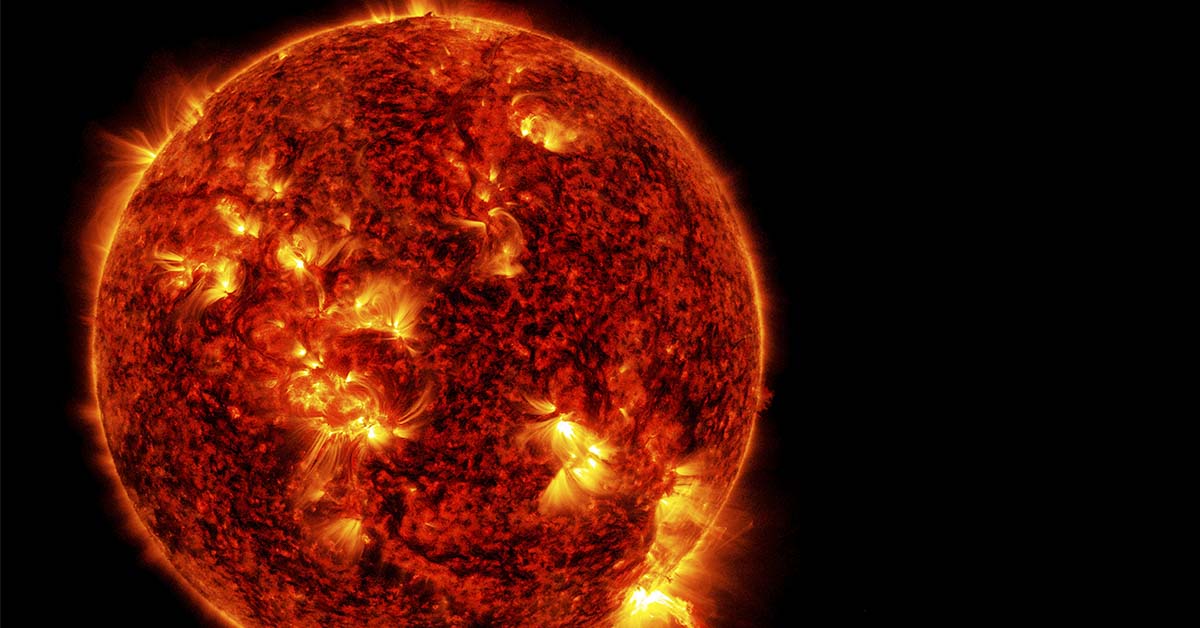

The sun is very active right now, currently surging toward the peak of Solar Cycle 25. During these cycles, solar storms happen more regularly and with greater force than usual. Newly released data indicate that these storms are puffing up the upper atmosphere of our planet. When this occurs, it creates extra drag on objects such as SpaceX’s Starlink satellites, significantly shortening their expected lifespans. This effect can be observed in the hundreds of Starlink reentries since 2020 and has already led to shutdowns in service. Considering there are more than 7,000 of these satellites orbiting Earth, should we be concerned?
The Effect Of Geomagnetic Storms on Starlink Satellites
Denny Oliveira, a scientist from NASA Goddard Space Flight Center, has been examining the effects of these storms. Speaking to New Scientist, he said, “We found that when we have geomagnetic storms, satellites re-enter faster than expected.” During this period, known as the solar maximum, the lifespan of a Starlink satellite can be reduced by up to 10 days.
According to Oliveira, this is the first time that so many Starlink satellites have re-entered at the same time, with 523 of them doing so between 2020 and 2024. Oliveira believes that at this rate, we will have satellites re-entering daily in a few years. For these scientists, it’s important to record these findings as it is the first solar maximum we have experienced in the “mega constellation era”.
We have already seen the effects play out in two different ways. The first has to do with the interruption of services. Starlink told its users to expect degraded service during an exceptionally bad storm in 2024. However, while a few links were unstable for a while, the network managed to keep working. The second involves outright losses. In early 2022, a geomagnetic storm hit straight after the launch of Starlink satellites to a very low altitude. However, the drag was so intense that many of them could not ascend to their orbits and reentered within mere days of launch.
Potential Risk of Falling Debris
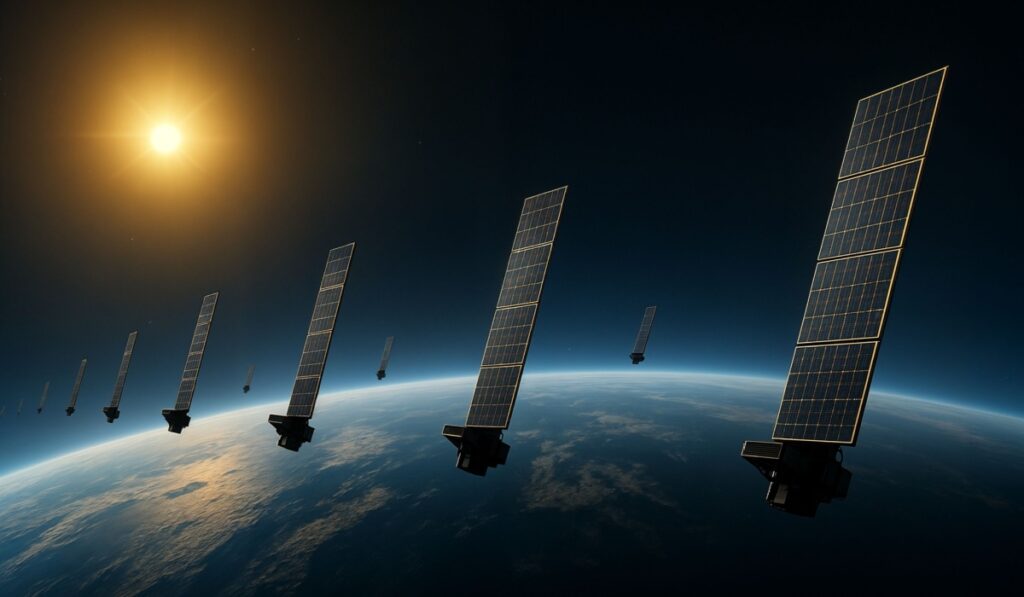
While the satellites are designed to burn up when reentering the Earth’s atmosphere, the researchers warn that when this process is accelerated, pieces may survive the reentry and fall back to Earth. In the very rare case that debris does fall to the ground, it is up to authorities and companies to retrieve them. However, there has only been one instance of this occurring so far, with pieces of a Starlink satellite retrieved from a farm in Canada last summer. Yet, with thousands of Starlink satellites still set to launch and more solar storms on the way, there is a good chance that many more could eventually enter the atmosphere in pieces in the future.
As these satellites are studied over time, patterns regarding the effects of space weather begin to emerge. The entire Starlink system is called a megaconstellation because it consists of thousands of linked satellites. They are all in different phases of their lifespan, so at any given moment, there is a good number of freshly launched craft, as well as optimal working height, and reentering satellites. This array of satellites at differing points in their lifespan, therefore, reveals patterns during episodes of solar storms.
The current tracking and prediction systems were developed when the solar activity was relatively calmer. These models assume that atmospheric conditions would remain predictable with gradual orbital decay patterns. However, during these intense geomagnetic storms, these predictions no longer apply. The research team concluded that “We clearly show that the intense solar activity of the current solar cycle has already had significant impacts on Starlink reentries.” When these predication models fail, it leads to a whole range of issues for satellite operators. Ground controllers are forced to try and track satellites that are descending faster than their systems can figure out.
The Bottom Line
All of this geomagnetic chaos comes at a time when SpaceX is planning to eventually expand to 30,000 Starlink satellites. If the lifespans of the satellite continue to be shortened by the solar storms, the company may be required to launch replacements way more often than planned. This is an issue, since Starlink’s economic model is only profitable if the satellites function at their optimum lifespan. Never before have we had so many satellites in orbit during such intense solar activity.
This provides researchers with new insight into the effects of these storms on the expected lifespan of the Starlink satellites. It has equally created new challenges for these ongoing space operations. Mission planners and engineers have entered uncharted territory, which will hopefully result in the development of novel solutions for the challenges presented. Yet, despite all these challenges, we take our next steps into an unknown future.
Read More: SpaceX Solves Starship Explosion Mystery — And the Cause Is Almost Too Embarrassing to Believe