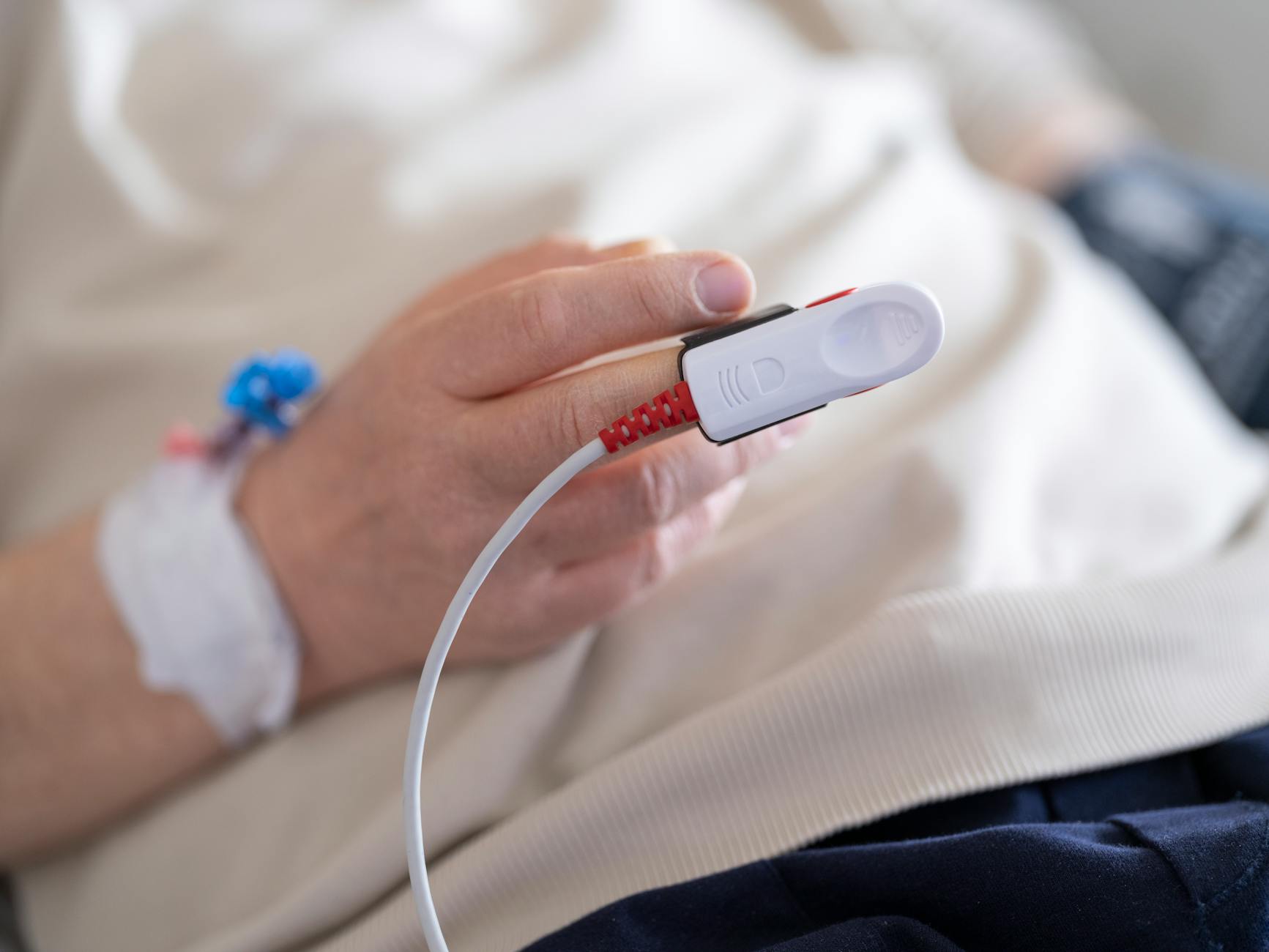

Every day, millions of patients have their blood oxygen levels measured with a small clip attached to a finger. Hidden within that seemingly simple technology is a 35-year-old flaw that has disproportionately affected patients with darker skin. A 17-year-old from Kitchener, Ontario, believes she has finally solved it.
Gurnoor Kaur, a Grade 11 student at Cameron Heights Collegiate Institute in Kitchener, won the Best Project Award for Innovation at the Canada-Wide Science Fair with her project titled Eigenpulse: Eliminating Demographic Bias in Pulse Oximetry and Remote PPG from First Principles. Judges at the Edmonton competition credited her work with fixing a 35-year-old problem in blood oxygen sensors that has led to higher mortality in patients with darker skin. The error wasn’t in the data feeding these devices. It was in the physics underlying them – and Kaur corrected it from first principles.
The 2026 Canada-Wide Science Fair drew 390 student finalists from across Canada, who presented 344 projects and competed for nearly $2 million in prizes. Kaur’s project stood out for what it found: the bias at the heart of pulse oximetry isn’t primarily a data problem. The fix required rewriting the underlying mathematics. A Grade 11 student did it.
The device she targeted is one of the most widely used tools in medicine. Pulse oximeters, the small sensors clipped to a finger or toe that use light to measure oxygen saturation in the blood, are ubiquitous in health care. The global pulse oximeter market was valued at $2.4 billion in 2022 and is expected to reach $5.4 billion by 2033. Every hospital, most clinics, and millions of homes have one. The problem is that for tens of millions of patients with darker skin, the reading can be quietly, dangerously wrong.
A 35-Year-Old Error in Teen Innovation Award Science
Pulse oximeters work by shining light through the skin at two wavelengths – 660 nm (red) and 940 nm (infrared) – and measuring the difference in light absorbance at those two wavelengths to estimate how much oxygen is in the blood. A few years after pulse oximetry was introduced in the 1980s, researchers noticed the devices were less reliable in Black patients. A 1990 paper in CHEST by Jubran and Tobin found pulse oximetry was almost two and a half times less accurate in Black patients.
That study found that pulse oximeters overestimated oxygen saturation to a greater degree in Black patients than in white patients. The reason is physical. The decreased accuracy in people with darker skin tones is linked to the failure to control for increased absorption of red light by melanin during device development and insufficient inclusion of people with darker skin tones during device calibration. The devices were built and tested largely on people with lighter skin, and that original bias was baked into the algorithms from the start.
In that 1990 paper, the authors deduced that pulse oximetry was less reliable in Black patients because calibration data were drawn largely from white subjects. According to a 2021 paper in Annals of Intensive Care – written by Tobin and Jubran, the same authors who made that original observation – in the more than three decades since those findings were published, manufacturers did not incorporate adjusted algorithms into their devices. A separate 2024 analysis found that even after the FDA issued guidance on the issue, only 25% of pulse oximeter clearance summaries mentioned diverse skin tone testing.
The clinical consequences of that inaction are documented and serious. A landmark 2020 study in the New England Journal of Medicine found that Black patients had nearly three times the frequency of occult hypoxemia – dangerously low blood oxygen that the device failed to detect – compared to white patients. Occult hypoxemia means the device showed a normal reading while the patient was actually in serious trouble.
Pulse oximeter readings help guide essential care decisions, like whether a patient in surgery or an intensive care unit needs lifesaving supplemental oxygen. When those readings are inflated, patients who are quietly deteriorating appear stable. Treatments get delayed. In critical care, that delay can be fatal. During the COVID-19 pandemic, inaccuracy in pulse oximetry contributed to delayed eligibility for therapies such as remdesivir and dexamethasone among Black and Hispanic patients. A 2022 study from Johns Hopkins found that Black and Hispanic patients were 29% and 23% less likely, respectively, to have their COVID-19 treatment eligibility recognized by pulse oximetry compared to white patients.
A 2026 systematic review in Frontiers in Anesthesiology confirmed the downstream damage: these oximetry errors in Black and Hispanic patients were associated with organ dysfunction and higher in-hospital mortality.
What Kaur Found That Others Missed
Most researchers working on this problem focused on the training data. The dominant theory was that if you fed the device’s algorithm more data from patients with darker skin, the readings would become more accurate. Kaur examined that idea, then went further – back to the underlying physics.
Kaur identified the source of the persistent reading error as a second pulsing signal, synchronized with blood flow but originating from a different part of the vascular system, that affects oxygen calculations differently in darker skin. This second signal had been overlooked. It operated at cardiac frequency – the same rhythm as the heartbeat – which made it nearly indistinguishable from the primary signal the device was designed to read. In patients with higher melanin concentrations, the interference from this second signal was significantly worse, pushing the oxygen estimate upward and masking true hypoxemia.
“There is a mathematical instability in current cardiac models,” Kaur explained, “and to be able to resolve that, you need to add a missing term.” Once she identified that instability, she built a method to correct it.
Her Eigenpulse project isolates and removes this signal from the measurement process, reducing demographic bias from 2.3 percent to less than 0.15 percent – a near-complete elimination of the bias achieved without any additional training data. No diverse dataset required. The fix was mathematical, not statistical.
The approach also produced two additional frameworks: one that separates the coupled vascular signals responsible for the interference, and a three-wavelength oximetry system that extends the correction across a broader range of skin tones. Any one of these alone would be a meaningful contribution. All three together, from a Grade 11 student, are extraordinary.
Racial bias in medical devices extends beyond the pulse oximeter – you can read more about how these hidden discrepancies affect everyday care in this piece on medical device bias, an area where documented gaps between device performance and diverse patient populations continue to drive worse outcomes.
A Second Device, Born From Personal Experience
Kaur didn’t arrive at this work from a textbook. The idea for her hospital monitoring system began when she created a device to help spot and treat hospital-induced delirium – a sudden state of confusion or disorientation people can experience while in acute care – after visiting her dad in the hospital.
Hospital-induced delirium is common and frequently missed. Kaur noted that nurses are often occupied with other responsibilities, meaning many cases of delirium go undetected. The consequences can be serious, particularly for older patients: delirium disrupts cognition, delays recovery, and can cause long-term cognitive decline.
Her detection system uses non-contact, camera-based monitoring to detect emotions, micro expressions, heart rate, and respiratory rate, eliminating the need for bulky sensors in hospitals. An integrated chatbot continuously converses with patients and runs reorientation techniques. Those techniques have been shown to decrease delirium risk by up to 50 percent. A 2017 study in Geriatric Nursing found that automated, scripted reorientation messages reduced the incidence of delirium in hospitalized patients – which Kaur built directly into her system’s function.
The delirium device and Eigenpulse are technically distinct, but they share the same logic: find the gap between what hospitals currently do and what patients actually need, then close it with physics and math.
Read More: Teen Develops Device to Detect Hospital Delirium Using Camera Technology
What This Means
Youth Science Canada’s executive director Reni Barlow put it plainly in the official awards announcement: “When a Grade 11 student identifies and corrects a flaw in medical technology that has contributed to preventable deaths for more than three decades, it demonstrates what young people are capable of when their curiosity is encouraged and supported.”
For patients, the practical takeaway is immediate. If you or someone you care for has darker skin and receives hospital care involving pulse oximetry monitoring, the device’s oxygen reading may overestimate actual blood oxygen levels. Asking your clinical team to confirm pulse oximetry readings with an arterial blood gas test – which takes a direct blood sample rather than inferring oxygen from light – gives a more accurate picture in cases where treatment decisions hang on that number.
Kaur has said her interest is in computational biophysics, and that she wants to use math and physics to model biological systems and understand how light interacts with them, to build better diagnostic and treatment tools that remove the biases and inequities currently found in health care. The FDA has been working toward updated device testing recommendations since 2020, according to Johns Hopkins Bloomberg School of Public Health.
The Math Is Already Done
The regulatory path forward remains slow. The FDA published draft guidance in January 2025 outlining recommendations for manufacturers to improve the performance evaluation of pulse oximeters across diverse skin pigmentations, but those are guidance documents, not mandates – and device makers are not required to adopt them on any fixed timeline. Experts have also raised concerns that federal funding cuts could further slow research into the problem.
Kaur’s correction doesn’t depend on any of that. The algorithm exists. It works in software. A device manufacturer could implement Eigenpulse without redesigning hardware. For the tens of millions of patients with darker skin who currently rely on pulse oximetry readings that may quietly overestimate their oxygen levels, that matters. The fix no longer requires waiting for regulators to act – it requires only that the people who build these devices choose to use it.
Disclaimer: This information is not intended to be a substitute for professional medical advice, diagnosis, or treatment and is for information only. Always seek the advice of your physician or another qualified health provider with any questions about your medical condition and/or current medication. Do not disregard professional medical advice or delay seeking advice or treatment because of something you have read here.
AI Disclaimer: This article was created with the assistance of AI tools and reviewed by a human editor.
Read More: This New Nasal Spray Could Transform Emergency Stroke Care