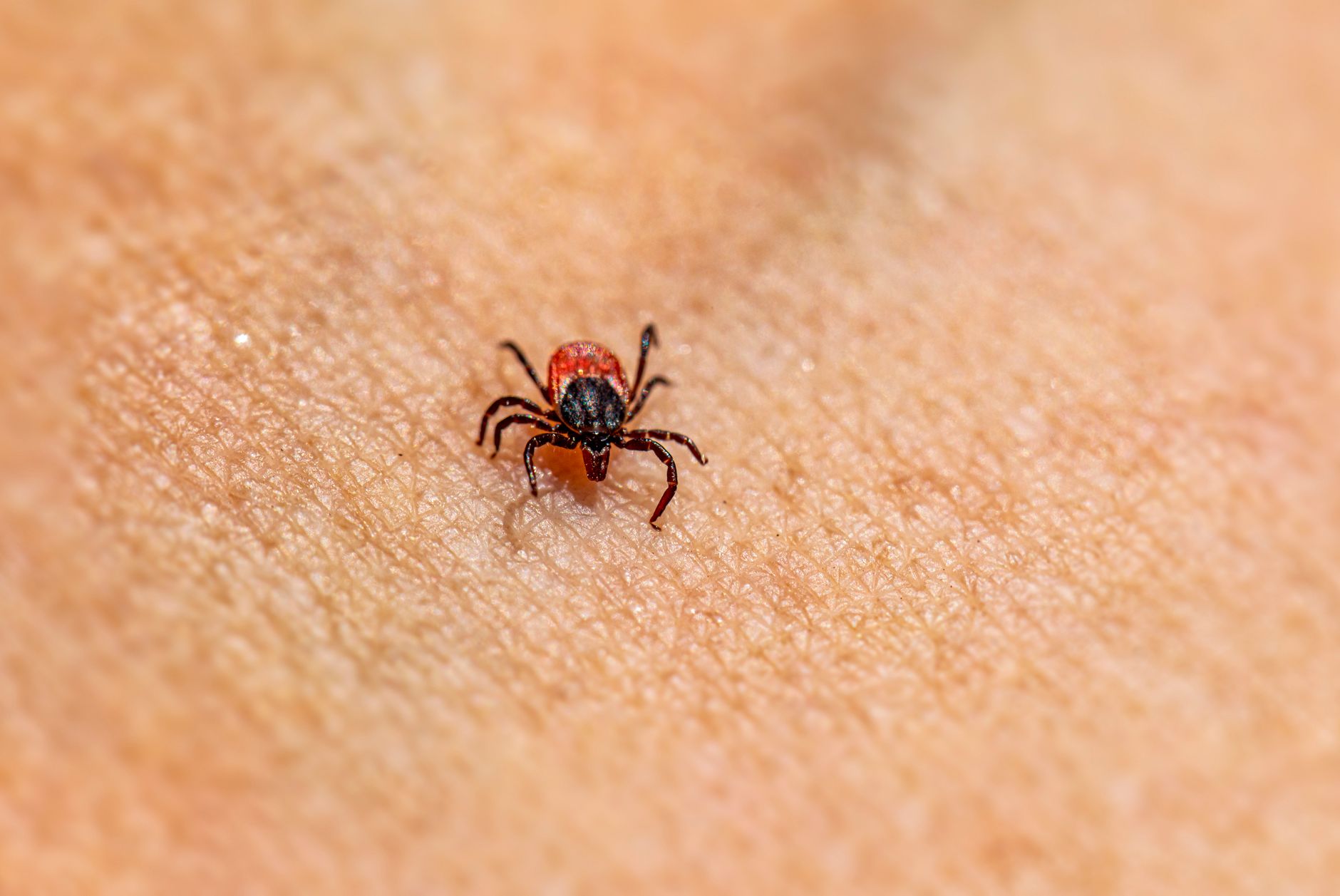

Something shifted this spring. People who walked through their own backyard, jogged a familiar trail, or let their dog roam a neighborhood park came home with a tick – and then headed to the emergency room. That scenario played out tens of thousands of times before May even arrived, at a rate that federal health officials say hasn’t been seen in nearly a decade.
This isn’t the kind of health alert you skim past. Ticks are small enough to go completely unnoticed for days, and the diseases some of them carry can be genuinely serious if caught late. What makes 2026 different isn’t just one bad week in one bad region. The data points to something broader, and the timing, arriving well before the usual summer peak, has alarmed the people paid to track these things.
Tick bite prevention has never mattered more than it does right now. Whether you spend your weekends hiking mountain trails or just mowing the lawn, what you do before and after going outside this season could make a real difference to your health.
The Numbers That Caught Everyone’s Attention
According to the CDC’s Tick Bite Tracker, emergency room visits for tick bites are currently higher than normal in many parts of the country. In all regions except the South Central United States, weekly rates are the highest for this time of year since 2017.
That single data point carries a lot of weight. To put it in concrete terms: according to UPI reporting on CDC data, emergency room visits for tick bites hit 105 cases per 100,000 ER visits in April 2026, compared to 68 in April 2025. That’s nearly double in just one year.
The rise came before the typical early-season peak. Last year, ER visits for tick bites topped out in May at 129 visits, meaning April 2026’s total was already closing in on last year’s peak month.
Geographically, the burden is not spread evenly. The Northeast recorded the highest rate of emergency department visits for tick bites in 2026, at 58 per 100,000 ED visits, followed by the Midwest at 40. Most tick bite cases were reported in the Northeast, with 80 cases, followed by the Midwest, with 56. Both regions include areas where tick-borne illnesses such as Lyme disease are a recurring concern during the warmer months.
Lab data backs up what the ER numbers show. According to WHYY reporting on the Pennsylvania Tick Research Lab, the lab at East Stroudsburg University recorded more than twice as many ticks in May 2026 compared to the same time in 2025. In Connecticut, the state’s Agricultural Experiment Station reported that more than 40% of submitted ticks tested positive for the bacteria that cause Lyme disease, according to WFSB coverage of the state lab warning.
Why 2026 Is Worse Than Usual
The surge isn’t random. Researchers have identified a clear set of reasons why ticks are more abundant and more active this spring, and climate is at the center of all of them.
Thomas Hart, an infectious disease microbiologist at the Johns Hopkins Bloomberg School of Public Health, told WBRZ News that the rise in tick bites can be traced to changes in climate and land use, allowing ticks to spread and come into contact with a greater number of people. Warmer, milder winters are favorable for tick survival, allowing them to reach the next year without freezing. Milder winters also help the animals that ticks feed on, including deer and mice, survive at greater population sizes, giving ticks a more abundant food source and expanding their ability to reproduce.
Ticks become active any time temperatures climb above 34 degrees Fahrenheit, and the number of days that threshold is crossed has increased across all 50 states. More warm days means more feeding opportunities, more reproduction, and more ticks overall.
There’s another layer to this. While this past winter was among the warmest on record, the Northeast, a historical hotspot for tick activity, saw higher snowfall. Greater snow cover keeps the ground insulated from cold air, protecting dormant ticks that shelter underground over winter from freezing temperatures. The result is more ticks surviving to lay eggs in the spring.
So far in 2026, most ticks observed in the Northeast have been large adult ticks. But in the weeks ahead, juvenile nymphs will become more common, and the emergence of nymphs, along with more people spending time outdoors, is among the reasons tick bites tend to peak in May. Nymphs are harder to spot and often remain attached longer, which increases the risk of infection.
What Ticks Can Actually Do to You
Most people know ticks can cause Lyme disease. Fewer people understand the full range of what a tick bite can set in motion.
According to the CDC’s 2026 press release on tick bite ER visits, an estimated 31 million people in the United States are bitten by a tick every year. Not every bite leads to illness, but the diseases that ticks carry range from the manageable to the life-threatening. Some ticks are infected with agents that cause Lyme disease, Rocky Mountain spotted fever, and alpha-gal syndrome.
Lyme disease is the most common of these. A May 2026 media briefing at Johns Hopkins Bloomberg School of Public Health confirmed that state health departments reported more than 89,000 cases of Lyme disease to the CDC in 2023, the most recent year for which numbers have been published, and that research suggests the actual number is likely closer to half a million due to significant underreporting. The same briefing noted that Lyme disease cases are on the rise across the US, driven partly by the climate-related expansion of tick habitat.
Early Lyme disease symptoms typically include fever, fatigue, headache, muscle aches, and swollen lymph nodes. In some cases, infected people develop a circular “bull’s-eye” rash. Left untreated, Lyme can cause facial paralysis, an irregular heartbeat, and arthritis.
Lyme isn’t the only concern. Rocky Mountain spotted fever is the most severe and most common rickettsial (a type of bacterial) infection in North America, according to the NIH’s reference database on the disease, and without prompt antibiotic treatment, mortality rates can reach 20 to 30 percent.
Then there’s a condition many people have never heard of. Alpha-gal syndrome is a red meat allergy that can be triggered after a tick bite. More than 110,000 suspected cases of alpha-gal syndrome were identified between 2010 and 2022, according to the CDC. What makes it particularly disorienting is that the allergy doesn’t develop immediately. Reactions, which range from hives to potentially life-threatening anaphylaxis (a severe, whole-body allergic reaction), can occur hours after eating red meat, long after the tick bite itself has been forgotten.
How to Actually Prevent Tick Bites
The good news is that tick bite prevention works, and the tools are accessible to everyone.
Cover up before you go out. Exposing as little skin as possible is one of the most effective passive defenses, which means wearing long-sleeved shirts, long pants, socks, and closed-toed shoes. Ticks start down at your feet and climb upward. If your pants are untucked, they get underneath the pant leg and head for the warm, concealed parts of the body where they prefer to feed. Tucking pants into socks is genuinely effective, even if it doesn’t look glamorous.
Treat your clothing with permethrin. This is one of the most powerful things you can do. According to the CDC’s tick prevention guidance, permethrin can be applied to boots, clothing, and camping gear and remains protective through several washings at a 0.5% concentration. Permethrin is not a skin product. Apply it to fabric, let it dry completely before wearing, and it works by killing ticks on contact.
Use a registered repellent on exposed skin. The CDC recommends using EPA-registered insect repellents when outdoors. Options that are proven safe and effective when used as directed include products containing DEET, picaridin, IR3535, oil of lemon eucalyptus, and 2-undecanone.
Walk in the center of trails. Ticks tend to perch on ankle-level vegetation with their upper legs outstretched, waiting to latch onto a passing dog or person. Staying in the middle of paths keeps you away from the brush where they wait.
Do a thorough tick check after coming inside. After outdoor activities, put your clothes in the dryer on high heat for about 10 minutes to kill any ticks that may have hitched a ride. Then check your body carefully. Pay attention to areas ticks prefer: behind the knees, around the waistband, in the groin, behind the ears, along the scalp, and under the arms. Ask someone to help check your back and scalp.
Don’t forget your pets. Dogs can bring ticks directly into your home without showing any signs of discomfort. Check them carefully after every outdoor excursion and speak with your vet about tick prevention products appropriate for their size and species.
If You Find a Tick Already Attached
Finding an attached tick is alarming, but the response matters more than the panic. Remove the tick as soon as possible. Do not wait to go to a healthcare provider just for the removal. Delaying tick removal to get help could increase your risk of a tick-borne disease.
Use clean fine-tipped tweezers and grasp the tick as close to the skin’s surface as possible. Pull with steady, even pressure straight away from the skin. Don’t twist or jerk the tick, which can cause the mouthparts to break off and remain in the skin. After removal, thoroughly clean the bite area and your hands with soap and water, rubbing alcohol, or hand sanitizer.
Do not use petroleum jelly, heat, nail polish, or other home remedies to try to make the tick detach. These methods don’t work and can actually delay proper removal.
The clock matters here. Removing an attached tick within 24 hours can help prevent Lyme disease transmission. The bacteria responsible for Lyme disease need time to migrate from the tick into the bloodstream, which is why prompt removal is so effective.
After removal, watch for symptoms over the following two to four weeks. If you develop a rash or fever within days to weeks after removing a tick, see a doctor. The ER is appropriate when symptoms develop after a bite, particularly fever, rash, facial drooping, joint pain, or any sign of anaphylaxis in the hours after eating red meat.
Read More: US States Where ER Visits for Tick Bites Are Spiking
What This Means for You
The data from 2026 is a genuine signal, not seasonal noise. The Northeast and Midwest often see high tick activity during spring and early summer, but risk varies widely by state, county, and even neighborhood. The highest-risk areas are often not deep in the woods but along the edges of daily life: where lawns meet brush, where pets walk through tall grass, where children play near leaf piles, and where hikers brush against vegetation along trails.
Experts at Johns Hopkins expect the problem to continue worsening, with more ticks spreading into more areas over time. Nicole Baumgarth of the Johns Hopkins Bloomberg School of Public Health put it plainly: “Unfortunately, it seems that we’re in for a very bad year. And of course, these numbers are only the tip of an iceberg.” That makes this spring a good moment to build habits that carry you through summer and every season after it. The protective steps aren’t complicated. They’re just easy to skip until someone in your household ends up in an emergency room.
The CDC’s message this year is direct: tick bite prevention starts before you go outside, not after you come back in. Treat your clothing, use a repellent, check your body and your pets when you return, and act fast if you find something attached. The window between exposure and infection is genuinely on your side, but only if you use it.
Disclaimer: This information is not intended to be a substitute for professional medical advice, diagnosis, or treatment and is for information only. Always seek the advice of your physician or another qualified health provider with any questions about your medical condition and/or current medication. Do not disregard professional medical advice or delay seeking advice or treatment because of something you have read here.
AI Disclaimer: This article was created with the assistance of AI tools and reviewed by a human editor.
Read More: 10+ Areas On Your Body Ticks Love To Bite