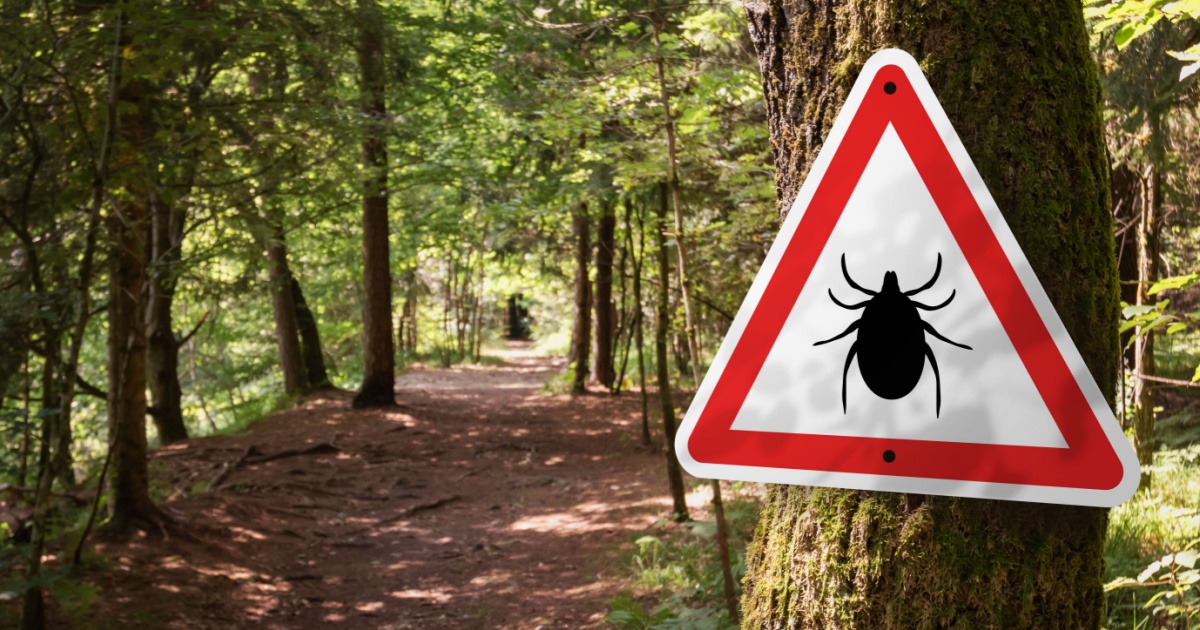

Spring is off to a strange start in more ways than one. Across the country, people have been heading to emergency rooms after noticing something small, dark, and surprisingly stubborn attached to their skin. Hospitals are busier with this particular complaint than they’ve been in years. And the season when things really get serious? It hasn’t even peaked yet.
Tick bites have always been a springtime concern, but the scale of what public health data is showing right now is notable. Emergency rooms from the Northeast to the Midwest are logging an unusually high number of visits, and doctors in several states are already issuing early warnings to their communities. Some experts who track these things professionally say the numbers are running ahead of schedule.
If you live in or near a wooded suburb, spend time in a yard that backs up to trees, or have kids or pets that roam outside, this is worth understanding. Not because panic is helpful, but because knowing where the risk is highest and what to actually do about it can make a real difference.
1. The Northeast: America’s Tick Epicenter
Emergency room visits for tick bites are higher than normal in many parts of the country right now, according to the CDC’s Tick Bite Tracker. But the Northeast is where the situation is most acute. New data from the tracker shows emergency room visits for tick bites in the Northeast reached 168 per 100,000 visits during the second week of April – the highest level for this time of year since 2017.
So far this year, most ticks seen in the Northeast have been large adult ticks, but in the weeks ahead, juvenile nymphs will become more common. The emergence of nymphs, along with more people spending time outdoors, are among the reasons tick bites tend to be highest in May. Worse, tiny nymphs are harder to see and often stay attached longer, leading to an increased risk of infection.
The numbers in this region are particularly concerning because of the density of Lyme-carrying blacklegged ticks. Michigan, which borders the Midwest-Northeast corridor, has seen Lyme disease cases increase by nearly 169% over the last five years, recording 1,215 cases in 2024 compared to 452 in 2020, according to state health data. In Connecticut, an unusually high 40% of submitted ticks tested positive for the bacteria that cause Lyme disease.
Researchers at Boston University have noted that ticks are appearing in unexpected places, including urban settings. “We have seen more incursion of ticks into urban landscapes,” said Cassandra Pierre, an infectious disease professor at Boston University’s Chobanian & Avedisian School of Medicine. This matters because it shifts the threat from something people associate only with hiking trails and camping trips to something that can happen during a walk in a city park.
2. The Midwest: A Fast-Climbing Second
In the Midwest, emergency room visits for tick bites skyrocketed in April. Overall, the Northeast is seeing the largest spike, but the Midwest is a close second, according to CDC data.
The Illinois Department of Public Health issued a warning about the tick season, urging residents to check themselves, their pets, and children for ticks after spending time in wooded areas, tall grass, and brush. This kind of regional health advisory, issued before the traditional peak of May, signals that officials are taking the data seriously rather than waiting for a clear seasonal pattern to emerge.
The Midwest warning is particularly relevant for people who associate tick risk with heavily forested vacation destinations. The CDC notes that people are actually more likely to find ticks in their own yards. For families with suburban homes in states like Illinois, Wisconsin, or Minnesota, the backyard is a genuine exposure zone, not just the woods on a hike.
Michigan has also seen anaplasmosis cases rise nearly fivefold over five years, with 82 cases reported in 2024 compared to 17 in 2020. Anaplasmosis is a bacterial infection spread by the same deer tick responsible for Lyme disease, and it can cause fever, severe headaches, and muscle pain serious enough to require hospitalization.
3. The Southeast, West, and South Central: Lower but Not Zero
Not every region is seeing the same alarming climb. In all regions except the South Central United States, weekly rates of ER visits for tick bites are the highest for this time of year since 2017. The South Central region is the one outlier holding relatively steady compared to prior years. Rates in the Southeast and West remain below 20 per 100,000 emergency visits.
That said, “lower” doesn’t mean risk-free. Rocky Mountain spotted fever, a serious tick-borne bacterial illness, is concentrated largely in North Carolina, Tennessee, Missouri, Arkansas, and Oklahoma, which account for over 60% of U.S. cases. Rocky Mountain spotted fever can progress rapidly and become life-threatening if treatment is delayed, so anyone in these states who develops a sudden fever and rash after spending time outdoors should contact a doctor promptly.
Some Northeastern states including Maine, Massachusetts, and Rhode Island are seeing above-average numbers of American dog ticks this year, and New York state is reporting a higher number of deer tick bites than last year. That uptick in New York is significant because, as a July 2025 CBS News report noted, a large driver of elevated emergency room visits is record-high tick populations in several states.
4. Why Tick Populations Are Growing
This isn’t a one-year blip. The data reflects a trend that has been building for years, and the primary driver is climate change. Experts note that while tick bites are more common in summer due to increased outdoor activity, evidence shows that people must now stay vigilant year-round because ticks are active even in winter, given warming driven by climate change.
Climate change has contributed to shorter, milder winters and longer, hotter summers, extending the period when ticks are active and increasing their survival. Deer ticks thrive when temperatures stay above 45°F, and those conditions now extend well beyond their historical window in many northern states.
There is also a host-population angle to consider. Several factors have helped tick populations expand, including unusually high numbers of mice in recent years, according to Scott Williams, a tick researcher at the Connecticut Agricultural Experiment Station. Mice are key reservoir hosts for the Lyme bacteria. More mice mean more infected ticks, which means more disease-carrying bites. Ticks like warm, humid weather, and more ticks are observed after a mild winter.
This increase is being attributed to tick season ramping up due to a rise in tick survival rates from last winter. New data from the CDC’s Tick Bite Tracker shows emergency room visits in the Northeast reached 168 per 100,000 visits during the second week of April, the highest level for this time of year since 2017, driven by ticks surviving the previous winter.
5. The Diseases Ticks Can Carry
The reason a tick bite warrants serious attention isn’t the bite itself. It’s what the tick might be carrying. There are at least 15 diseases known to be spread by ticks in the U.S., and many ticks spread more than one.
Lyme disease is the most familiar. It’s the most common tick-borne illness, with an estimated 476,000 people treated for it each year in the U.S., according to the CDC. Early Lyme often presents with a characteristic bullseye rash, fever, fatigue, and joint pain. Caught early and treated with antibiotics, outcomes are generally good. Left untreated, it can affect the joints, heart, and nervous system. You can learn more about the full range of Lyme symptoms in this overview of Lyme disease signs.
Beyond Lyme, the CDC is urging the public to protect against the serious diseases ticks can cause, including Lyme disease, Rocky Mountain spotted fever, and alpha-gal syndrome. Alpha-gal syndrome is worth knowing about. It’s a serious, potentially life-threatening allergy to alpha-gal, a molecule found in most mammals but not in people. After a tick bite triggers the condition, people can have an allergic reaction after eating red meat or being exposed to products containing alpha-gal. More than 110,000 suspected cases were identified between 2010 and 2022.
The CDC advises that if you find an attached tick, you should remove it as soon as possible and not wait to get to the ER. Removing an attached tick within 24 hours can help prevent Lyme disease.
6. What to Do Before You Go Outside
Protection against tick bites doesn’t require elaborate preparation. It requires consistent habits. Avoiding areas where ticks commonly live, like grassy, bushy, or wooded areas, is the standard first recommendation. But given that your own yard is a real exposure zone, avoidance alone won’t get you far.
Clothing is your first physical barrier. Wearing long sleeves, long pants, and socks creates a genuine obstacle. Tucking pants into socks and wearing closed-toe shoes removes gaps that ticks can use to access skin. Light-colored clothing makes ticks easier to spot before they attach.
For chemical protection, treating your clothing and gear with products containing 0.5% permethrin is one of the most effective steps you can take. Permethrin is applied to clothing, not skin, and it kills or repels ticks on contact. Research conducted by the University of Rhode Island and the CDC shows clothing treated with permethrin had strong toxic effects on ticks, and people wearing permethrin-treated sneakers and socks were 73.6 times less likely to be bitten by a tick than those wearing untreated footwear. For skin-applied repellents, the EPA maintains a searchable list of approved options, including DEET and picaridin.
Read More: How to Safely Remove Tick Eggs From Your Home and Yard
7. What to Do After You Come Inside
Coming inside doesn’t mean the risk is over. Ticks can travel on clothing, gear, and pets without being noticed immediately. A post-outdoor check is a habit worth making non-negotiable.
Run clothes through a dryer on high heat for at least 10 minutes to kill any ticks. If you need to wash them first, the CDC recommends using hot water, not cold or medium temperatures. This detail trips people up. A wash cycle alone won’t reliably kill ticks. The heat of the dryer is what does the job, so tumble dry first if the clothes aren’t visibly soiled.
Then do a full-body check. Check your body immediately after coming inside. Be sure to check under your arms, in and around your ears, inside your belly button, behind your knees, in and around your hairline, between your legs, and around your waist. Ticks gravitate toward warm, protected spots on the body, which is exactly why they’re so easy to miss. A shower after being outdoors also helps wash off any unattached ticks and gives you a moment to do a visual check of your whole body.
If you do find an attached tick and aren’t sure how long it’s been there, or if you know it has been attached for more than 24 hours, a doctor can remove it and may prescribe preventive medication to reduce the risk of Lyme infection. If you remove it yourself, use fine-tipped tweezers, grab as close to the skin as possible, and pull up with steady, even pressure. Use fine-tipped tweezers to grab the tick as close to your skin as you can and pull up with even pressure. Don’t twist while pulling. After removal, clean the area with soap and water, then watch for any rash, fever, or muscle pain over the next 30 days.
What This Means for You
Tick bites typically spike in May, but as CDC Lyme disease expert Alison Hinckley says, “the data are telling us now is the time to take action.” The window between now and peak season is actually the best time to build the habits that will protect you through summer, not after the first bite sends someone in your household to the ER.
The key takeaways are straightforward. If you’re in the Northeast or Midwest, your risk right now is meaningfully higher than in recent years. Treat your outdoor clothing with permethrin before your next hike or yard session. Do a tick check every time you come inside, including on your pets and children. Know what Lyme disease, Rocky Mountain spotted fever, and alpha-gal syndrome look like. And if you find an attached tick that you can’t date, don’t hesitate to call your doctor. Because not every bite results in an infection, it will take time for experts to know whether this early surge translates into a wave of illnesses, but early prevention is the clearest tool available right now.
AI Disclaimer: This article was created with the assistance of AI tools and reviewed by a human editor.
Read More: 10+ Areas On Your Body Ticks Love To Bite