Why Your Tire Warning Light Isn’t Telling You What You Think It Is
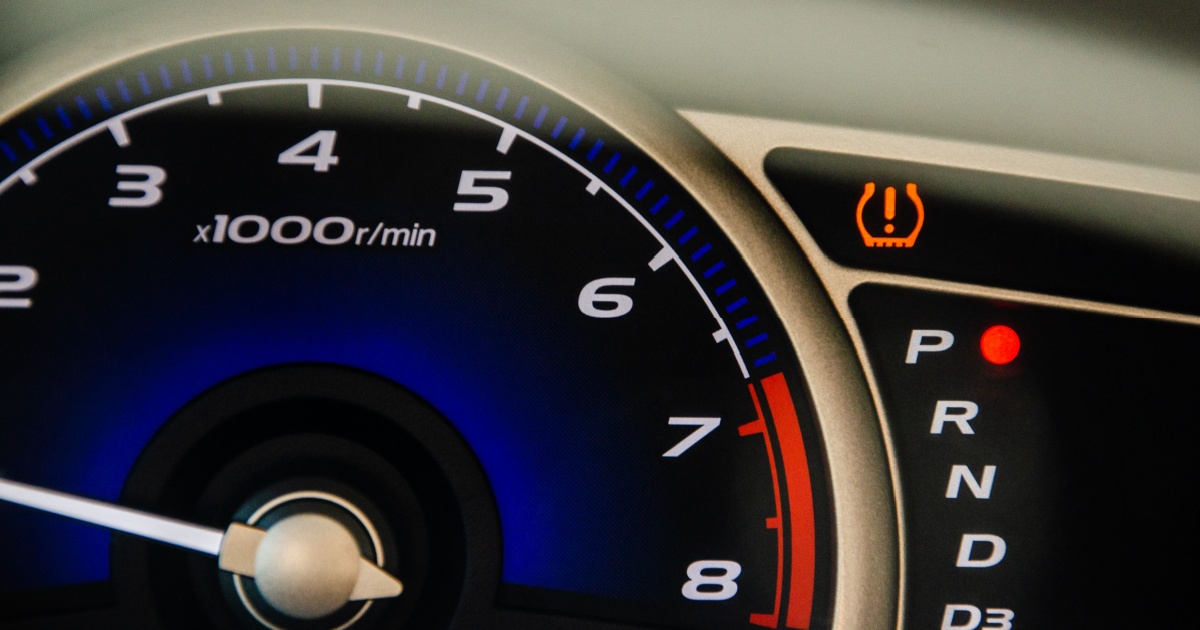
That little yellow light glowing from your dashboard – the one that looks vaguely like a horseshoe with an exclamation point inside it – doesn’t get nearly the respect it deserves. Most drivers see it, assume they need a quick stop at an air pump, and move on. Some ignore it for days. A few dismiss it entirely because all four tires look fine at a glance.
Here’s the problem: that assumption is incomplete, and sometimes dangerously so. The tire warning light on your dashboard can mean several very different things, and understanding which one you’re dealing with changes how urgently you need to act and what you actually need to do about it.
The system behind that light has a history rooted in real tragedy, a technical structure that most drivers have never been told about, and some meaningful limitations that the automotive industry has been quietly working around for decades. Once you understand what this system can and cannot do, you’ll never look at that little yellow icon the same way again.
What the TPMS Actually Is – and Why It Exists
The tire pressure monitoring system, universally known as TPMS, monitors the air pressure inside the pneumatic tires on your vehicle and reports real-time information to the driver using either a gauge, a pictogram display, or a simple low-pressure warning light.
The system didn’t appear because automakers decided to be helpful. It exists because of a federal mandate triggered by a catastrophe. The Firestone recall of the late 1990s, linked to more than 100 deaths from rollovers following tire tread separation, pushed the U.S. Congress to pass the TREAD Act, which mandated TPMS in all light motor vehicles under 10,000 pounds. According to the NHTSA, the act affects all U.S. light motor vehicles sold after September 1, 2007.
The final rule established a new federal motor vehicle safety standard requiring installation of a TPMS capable of detecting when one or more of a vehicle’s tires is significantly under-inflated. It requires the system to warn the driver when any tire is 25 percent or more below the manufacturer’s recommended inflation pressure.
The safety math behind that mandate is sobering. In 2023, a total of 646 people died on the road in tire-related crashes, according to the NHTSA tires page. A separate NHTSA study found that vehicles driving on tires underinflated by more than 25 percent are three times more likely to be involved in a crash related to tire problems than vehicles with properly inflated tires.
NHTSA projected that once all new light vehicles were equipped with compliant TPMS systems, approximately 119 to 121 fatalities would be prevented each year.
That’s the why. Now for the how – and this is where things get more complicated than most drivers realize.
Two Very Different Systems Behind One Warning Light
Your TPMS uses electronic sensors to measure tire pressure either directly or indirectly – known as direct TPMS and indirect TPMS. Both trigger the same warning light. But they work in fundamentally different ways, and that distinction matters enormously when the light comes on.
Direct TPMS
Direct TPMS systems work by mounting pressure-level sensors inside each tire. When a sensor reads that its tire’s pressure has dropped more than 25 percent below the calibrated PSI, the TPMS light will appear on your dashboard. Depending on your vehicle, you might even see a pictogram depicting which tire is low and the current pressure of the other tires.
A direct TPMS setup uses sensors placed inside each tire to measure their individual pressure. Such systems are usually accurate to within 1 PSI.
Each direct TPMS sensor contains a pressure cavity that tracks changes in air pressure in real time, powered by a tiny battery, microcontroller, RF transmitter, and a temperature sensor. That battery has a finite lifespan. TPMS sensors most often need to be replaced because their batteries have reached the end of their five-to-ten-year lifespan, though they can be damaged sooner by road conditions. Most sensor models have built-in, non-replaceable batteries, so the only solution is to replace the whole sensor.
For cost reference, the average price for a direct sensor can range from $45 to $65 for most common vehicles, though some specialized vehicles have sensors that cost considerably more.
Indirect TPMS
Instead of a pressure sensor at each wheel, indirect TPMS works by measuring wheel speed through the Anti-lock Braking System’s sensors. Your vehicle’s computer tracks and compares the rate of revolution across all four tires to see if one wheel is spinning faster than the others. A tire that is underinflated will have a shorter diameter compared to properly inflated tires, resulting in a faster spin rate. When the wheel speed sensors detect this, the ABS signals your onboard computer to activate the TPMS warning light.
Vehicle manufacturers developed indirect tire pressure monitoring systems as a more affordable way to comply with the TREAD Act, relying on existing sensors in the brake system rather than adding specialized TPMS sensors to each wheel assembly.
The key practical difference: if you have an indirect system and the light comes on, you must check each tire’s pressure with a tire gauge to determine which one is leaking or needs air. The system tells you something is wrong, but not exactly where.
What the Light Actually Means When It Comes On
This is the core of what most drivers get wrong. The warning light is not a single message. It’s a signal with multiple possible meanings, and decoding which one applies to your situation determines your next move.
Steady Light: Pressure Is Low
When the TPMS light is on, it most likely means the system is performing exactly as designed: alerting you that your tire pressure is outside the recommended range. With a direct TPMS, the light will warn the driver when the air pressure in any tire drops at least 25 percent below the recommended cold tire inflation pressure, which is noted on the placard on the driver’s side doorjamb.
Your first action is simple: use a tire gauge to check all four tires, inflate as needed to the PSI listed on the door sticker, and drive a few miles. Once the affected tire is inflated, the TPMS light should turn off on its own after a few miles of driving. If it doesn’t, the tire may have an air leak.
Flashing Light: The System Itself Has a Problem
If your tire pressure light is flashing instead of staying solid, it means the TPMS itself has an issue, not the air in your tires. The most common causes are aging TPMS sensors or modules, or weak batteries made worse by cold weather.
Your vehicle is also equipped with a TPMS malfunction indicator to indicate when the system is not operating properly. Under the federal standard, a combined low tire pressure and TPMS malfunction telltale is required to flash for a period of at least 60 seconds but no longer than 90 seconds upon detection of a system fault after the ignition is activated to the “On” position.
A flashing light is the more dangerous scenario, because the system will not alert you accurately to low pressure until it’s repaired – meaning you could lose air without warning. Don’t just keep driving and assume the problem will resolve itself. Check all four tires manually and schedule a diagnostic.
The Cold Weather Effect
Tire pressure can decrease about 1 PSI for every 10 degrees the temperature drops. The air inside the tire contracts in the cold, causing it to take up less space and reducing pressure – no air is actually escaping.
Cold weather can confuse the TPMS since tire pressure naturally changes with the ambient air temperature. The light may turn on during a cold morning commute and then turn off on its own after the tires warm up. Colder temperatures cause the air in your tires to contract, which reduces the pressure. Driving warms up the rubber and can increase the pressure, which is why the light may turn off after driving for a bit.
If this happens regularly through the colder months, the practical fix is simple: check your tire pressure on cold mornings and inflate to the door-sticker PSI. Don’t wait for the light to do the work.
Overinflation Can Trigger It Too
Most drivers associate the TPMS light with low pressure, but it can also signal the opposite. According to CARFAX, overinflation could also be an issue, as overinflated tires deform slightly, affecting how the treads meet the ground and causing premature treadwear and possible tire failure. If you’ve recently filled your tires and the light stays on, check the pressure with a gauge. Too much air is not better than too little.
The Critical Blind Spot TPMS Won’t Tell You About
This is where the TPMS earns its limitations disclaimer, and why depending on it exclusively can give you a false sense of security.
The warning light is only triggered when one tire has 25 percent less air than the others. If all four tires are losing air at a similar rate, the light will not warn you that all the tires are low. This happens more commonly than people realize, particularly during seasonal transitions when all four tires contract at the same rate in cold weather. You could be driving on tires that are meaningfully underinflated – enough to affect handling and fuel economy – with no warning light at all.
Even with a direct system, you will only be warned when tire pressure decreases to 25 percent below the recommended PSI. A tire that is only 20 percent underinflated can cause potential damage and safety issues, the same CARFAX source notes.
TPMS specifically monitors tire pressure only. It doesn’t assess the overall health of your tires, such as tread depth or structural integrity. Regular inspections by a professional are necessary to evaluate these aspects.
Only 19 percent of consumers properly inflate their tires, according to NHTSA – which means four out of five drivers are leaving money and safety on the table, in part by over-relying on a system that can only flag extreme under-inflation.
After a Tire Rotation or New Installation
One scenario that catches many drivers off guard: a recent tire rotation or replacement can sometimes trigger a TPMS warning light even when the tire is actually fine. TPMS sensors are located on the wheel rims and can be inadvertently damaged during tire service. Using replacement tires that lack TPMS sensors or have incompatible sensors forces the vehicle’s TPMS system into a relearning process, often illuminating the warning light.
You will need to get your system recalibrated when you rotate, replace, or repair your tires, as it’s common for the sensors to change position or become disconnected during the process. A quick reset or recalibration by a technician is usually all it takes. This isn’t an emergency – but don’t ignore it, either.
If you want to go deeper on how vehicle safety systems interact with everyday maintenance decisions, this guide to ignition key safety covers some of the less obvious habits that affect your car’s longevity.
The TPMS warning light is a useful early-alert system with real, documented safety benefits. But understanding its limits is just as important as knowing when to act on it. The federal standard itself states plainly that the TPMS is not a substitute for proper tire maintenance, and that it is the driver’s responsibility to maintain correct tire pressure – even when under-inflation hasn’t reached the level that triggers the light.
Use this as your framework going forward. A steady light almost always means low pressure: check each tire with a gauge, inflate to the PSI on your driver’s door sticker, and drive a few miles. If the light doesn’t go off, you likely have a slow leak or a faulty sensor. A flashing light that appears for 60 to 90 seconds and then stays solid signals a system malfunction. The system can’t protect you until it’s repaired, so don’t put that visit off. A light that appears on cold mornings and disappears after the car warms up may simply reflect normal pressure contraction, but don’t let that become an excuse to skip your monthly pressure check.
Properly inflating your tires can save you as much as 11 cents per gallon on fuel, and well-maintained tire pressure can extend the average tire life by 4,700 miles. That little yellow light is worth understanding fully – not just enough to silence it.
AI Disclaimer: This article was created with the assistance of AI tools and reviewed by a human editor.