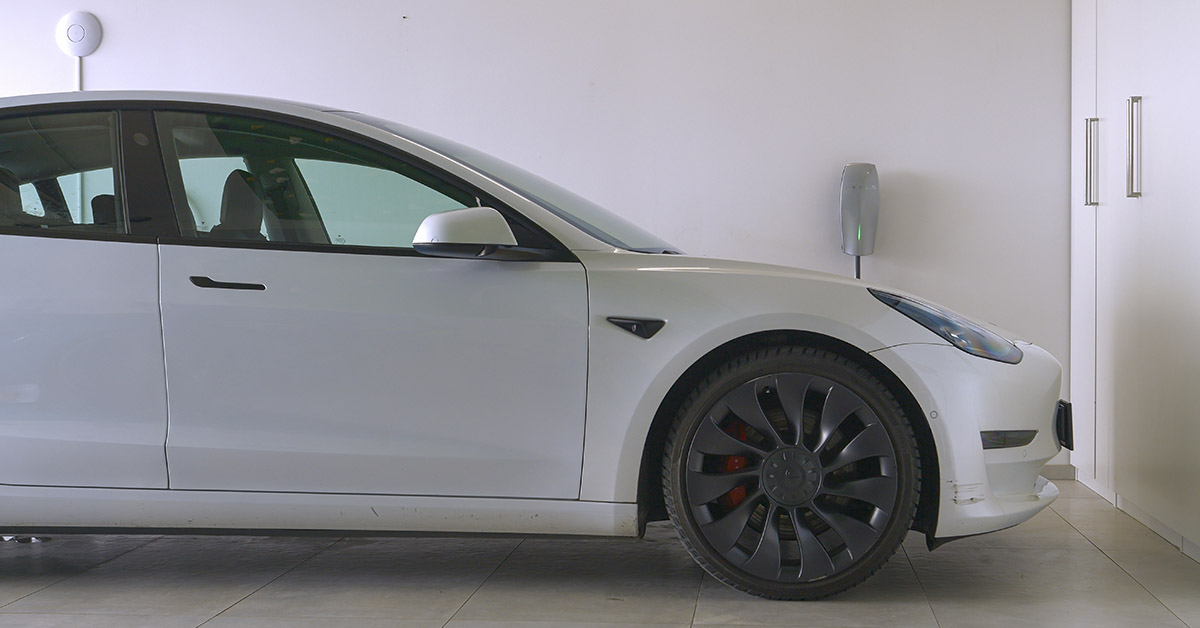

When Mac and his wife pulled up their electricity bill after a month of charging two Teslas in their Florida driveway, they weren’t sure what to expect. They’d heard the warnings. Two electric vehicles, roughly 500 miles a week each, a Florida summer, and an air conditioner that never seemed to rest. The math, in theory, should have been alarming. The reality was something else entirely.
Their story became one of the more widely shared EV case studies of recent years, not because it involves cutting-edge technology or an elaborate solar setup, but because it’s simply two ordinary people tracking their household electricity bill before and after going electric. The numbers they found challenged nearly every assumption the average driver brings to the EV debate.
What their data reveals matters well beyond one Florida household. As electricity bills climb nationally and car buyers wrestle with whether switching to electric is worth it, real-world stories like theirs provide the kind of grounded evidence that no spec sheet or manufacturer estimate can replace.
One Household, Two Teslas, and a Real Electricity Bill
According to LadBible, the couple tracked exactly what it cost to charge both EVs at home in Florida. The man behind the Mac’s Tech Toy Box YouTube channel documented the impact of running his Tesla Model Y and his wife’s Tesla Model 3 Long Range on their energy bill. He and his wife each rack up roughly 500 miles every week, so their charging routine is intense by any standard.
He and his wife clock around 500 miles a week, with Mac charging his vehicle five to six times a week and his wife slightly less. Due to the size of his Model Y, he admitted it was being charged most nights of the week, more often than his wife’s car.
The Baseline: Before Any Tesla
In the first five months of living in their home without any EVs, their electricity bill averaged $225 a month. Mac explained this averaged out some highs and lows, given they were living in Florida during the latter summer months. That $225 baseline included heavy air conditioning use, meaning the pre-EV figure wasn’t unusually low. It was a real, Florida-summer electricity bill.
One Tesla Added: The First Surprise
After Mac bought his Model Y, there was a period before his wife’s Model 3 arrived when only one Tesla was charging at home. The result surprised even him. The bill actually went down to $214, from the $225 it had been prior. That result ran counter to what most people would predict. A large SUV charging five or six nights a week somehow pushed the monthly bill lower, not higher. One plausible explanation is that the cooler months reduced air conditioning demand during that initial period.
Both Teslas Charging: The Peak Bill
The real test came when both vehicles were charging simultaneously through the warmer months. Mac noted that with both vehicles charging at their normal habits, his bill was $267.32 – quite an increase from the $214 with just one car, but only slightly more expensive than the original average of $225 before he got any EV.
He also noted their numbers come with a summer asterisk, because hotter weather means the home AC runs more, which bumps the electricity bill up anyway. So some portion of that jump from $214 to $267 almost certainly reflects Florida summer air conditioning, not purely the second vehicle.
The Gas Comparison That Changes Everything
The electricity numbers alone tell an interesting story. But the real context comes when you factor in what the couple used to spend on fuel. Mac revealed that across both him and his wife they’d spend on average around $320 a month on gasoline for two vehicles. When that $320 is combined with the $225 pre-EV electricity bill, the total household energy cost for running two gas cars came to roughly $545 a month. The two Teslas brought that to $267.32 total, working out to just over half the previous cost.
That’s a monthly saving of roughly $278 compared to the gas-car era, every month, without solar panels, without special rate plans, without any additional optimization.
Why These Numbers Make Sense
Mac and his wife’s experience isn’t a fluke. It lines up with the broader economics of EV ownership when home charging is the primary method. A 2020 Consumer Reports study showed that EV drivers tend to spend about 60 percent less each year on fuel costs compared to drivers of gas-powered cars. Annual savings for average drivers typically range from $1,200 to $1,500, varying significantly by region and local electricity rates.
A Tesla typically uses 4,000 to 6,000 kWh annually for average driving. For context, the average U.S. home consumes about 10,500 kWh per year, meaning a Tesla adds approximately 38 to 57% to household electricity consumption. Two Teslas both driven heavily, as in Mac’s case, would push that addition higher. Yet Mac’s bill barely moved from his pre-EV baseline. Part of that is Florida’s relatively low electricity rate compared to states like California or Hawaii. Residential electricity rates in Florida generally fall below or near the national average, though monthly power bills are higher due to climate-driven high usage.
The biggest factors affecting Tesla electricity usage are temperature (cold weather reduces efficiency by 20 to 40%), driving speed (consumption increases exponentially above 65 mph), terrain (hills increase consumption by 15 to 25%), and driving style (aggressive acceleration reduces efficiency by 20%). In Florida’s flat terrain, Mac and his wife avoided at least two of those efficiency penalties.
The broader research on long-term EV ownership costs backs up this kind of real-world arithmetic. A study from Atlas Public Policy, conducted on behalf of the NRDC, showed that for every major type of vehicle, owning an EV will save car owners money over a seven-year span, the average amount of time a driver keeps a new vehicle. Depending on the model analyzed, EV drivers generally spend about 40 to 65 percent less annually on fuel costs than gas-powered vehicle drivers.
Maintenance savings compound these numbers too. Beyond electricity costs, EVs can save an average of $400 to $600 per year in maintenance, as they require no oil changes and fewer brake pad replacements due to regenerative braking.
The Grid Behind Your Charger: A Bigger Picture
Mac’s story sits against a rapidly evolving national electricity backdrop. In March 2026, a new industry-led coalition called Utilize launched specifically to address the most urgent challenges facing the U.S. energy system: growing electricity demand and rising power bills.
The coalition’s founding members include Carrier, Google, Renew Home, Sparkfund, SPAN, Verrus, and Tesla, representing a broad cross-section of distributed energy providers, large electricity customers, and grid-enabling technology companies.
The U.S. electric grid operates at just 53% of its total capacity on average, according to a Duke University analysis. The core argument behind Utilize is straightforward: electricity costs are driven by the ratio of grid infrastructure cost to the electricity sold over it. If the grid sits idle most of the year, built to handle a few peak-demand hours that rarely come, consumers pay more per kilowatt-hour than they need to.
To illustrate the magnitude of the opportunity, Utilize will release new, independent research conducted by The Brattle Group, which will show that U.S. consumers could save over $100 billion over ten years on their electricity bills due to system utilization improvements. For EV owners charging at home, lower grid-level rates mean even lower monthly charging costs over time.
The Most Cost-Effective Electric Vehicles in 2026
Understanding what Mac and his wife experienced in Florida is one thing. Choosing the right EV to replicate those savings requires knowing which vehicles are genuinely the most efficient to run. A car that uses 23 kWh per 100 miles can cost roughly 25 to 30% less to run than one that uses 30 kWh per 100 miles at typical U.S. power rates. That gap compounds meaningfully over years of ownership.
Based on March 2026 national averages of $3.58 per gallon for regular gasoline and $0.18 per kWh for residential electricity, the cost differences between driving gas and driving electric are substantial.
Here are the most cost-efficient EVs available to U.S. buyers in 2026, ranked by their EPA energy consumption rating.
1. Lucid Air Pure
The most efficient EV available as of March 2026 is the 2026 Lucid Air Pure, rated at just 23 kWh per 100 miles. Lucid’s engineers worked to make a large, heavy vehicle this efficient, and the result is a 146 combined MPGe rating – the best figure of any vehicle on sale today. For maximum range, the Lucid Air Pure leads at 410 miles EPA range with approximately 385 miles real-world. The trade-off is price: the Air Pure starts at over $70,000, making it a premium commitment. For buyers who cover very high annual mileage, the per-mile charging cost is the lowest available in any current production vehicle.
2. Tesla Model 3 (Standard RWD)
For 2026, the Tesla Model 3 Standard RWD is the most efficient and affordable version of the compact sedan, cheaper than the 2025 version by $5,500, and one of the best value-for-efficiency options on the market. It’s rated at 24 kWh per 100 miles with 18-inch wheels. The refreshed 2026 Model 3 is still one of the easiest ways to get top-tier efficiency without stepping into full luxury pricing, with rear-wheel-drive trims scoring the best MPGe and miles-per-kWh figures.
This is the same model Mac’s wife drives. Her real-world results in Florida align closely with what the EPA figures would predict for a high-mileage driver in a warm climate.
3. Tesla Model Y (Base RWD)
The Tesla Model Y’s base RWD variant is new for 2026. Compared to the Model 3, the Model Y’s taller shape adds more interior room but also increases aerodynamic drag, reducing efficiency slightly. It is still rated at 24 kWh per 100 miles with 18-inch wheels, tying the Model 3 for second on the efficiency chart despite being a larger vehicle. Despite its larger profile, the Model Y remains highly efficient, with Tesla’s aerodynamic shaping and energy-management software maintaining strong efficiency in a practical family vehicle.
4. Hyundai Ioniq 6 (Long Range RWD)
The Ioniq 6’s streamlined design and highly optimized drivetrain make it one of the most energy-efficient vehicles on the road. Its low drag coefficient helps convert electricity into miles with minimal loss. For most U.S. buyers, the Hyundai Ioniq 6 Long Range RWD stands out as a top overall pick, delivering 361 miles of EPA range and 18-minute 10-to-80% DC fast charging. The Ioniq 6 approaches 120 MPGe while still offering a practical body style. For buyers who want efficiency in a more accessible price range, this is one of the strongest options available.
5. Toyota bZ (2026)
The 2026 Toyota bZ XLE with front-wheel drive is rated at 26 kWh per 100 miles, placing it solidly on the EPA consumption chart. Toyota’s electric crossover enters 2026 with upgrades aimed at efficiency, performance, and usability, featuring improved aerodynamics, enhanced battery management, and updates to thermal management and battery conditioning that help the vehicle maintain efficiency in varied temperatures while improving fast-charging performance.
6. Chevrolet Equinox EV
For budget-focused buyers, the Chevrolet Equinox EV at $34,995 is the strongest sub-$35,000 full-size EV available in 2026. It doesn’t top the EPA efficiency charts, but it delivers a competitive combination of price, practicality, and running costs that is hard to beat in its segment. Despite the removal of tax credits raising the upfront cost of EVs, the Equinox EV still shows higher savings than its gasoline counterpart over seven years.
7. Kia Niro EV
The 2026 Kia Niro EV is a capable all-electric crossover offering utility, convenience, and a refined driving experience. The vehicle offers an EPA-estimated all-electric driving range of 253 miles on a full charge. For the most efficient EVs, annual electricity costs often land in the $500 to $650 range at average U.S. rates when charging primarily at home. The Niro EV sits comfortably within that bracket, offering compact crossover versatility without a significant efficiency penalty. The 2026 Niro EV comes in two trim levels – Wind and Wave – both equipped with a heat pump to preserve range in cold weather. That heat pump is a practical feature worth noting for buyers in climates that see genuine winters, as it meaningfully reduces the cold-weather range penalty.
A Note on Real-World vs. EPA Figures
Every efficiency number above comes from EPA testing, which is conducted under controlled conditions. EPA range figures are produced under controlled lab conditions at 75°F with minimal climate control – not how most Americans actually drive, and real-world figures consistently run 8 to 18% lower.
Cold weather below 32°F can reduce Tesla range by 20 to 40%, while temperatures above 95°F decrease efficiency by 10 to 15%. For Florida drivers like Mac, the warm climate actually works in their favor. Highway speed is the other key variable. Above about 65 mph, aerodynamic drag ramps up quickly, which is worth factoring in for regular highway commuters.
Public charging stations, especially at high-speed DC fast chargers, tend to be more expensive than charging at home. Charging at home overnight is by far the cheapest option – roughly three times cheaper than using a DC fast charger on a road trip. Mac’s savings are largely a product of home charging discipline. Drivers who rely heavily on public fast chargers will see narrower margins.
Read More: Tesla Faces Allegations of Tampering with Customer Odometers to Dodge Warranty Claims
What This Means for You
Mac and his wife’s Florida electricity experiment delivers a lesson that holds up under scrutiny: two high-mileage EVs, charged at home, can cost less per month to fuel than a single average gas car. Their combined electricity bill with two Teslas running at 500 miles each per week peaked at $267.32 in a Florida summer, still within striking distance of their pre-EV electricity baseline of $225, and roughly half the combined energy cost of their gas-car era.
The efficiency rankings for 2026 reinforce this picture. The most efficient electric cars of 2026 don’t just go farther on a charge – they cost less to run, are easier to live with, and often hold their value better, especially on the used market. The Lucid Air Pure leads on raw efficiency, but for most buyers the Tesla Model 3 or Model Y, Hyundai Ioniq 6, or Chevrolet Equinox EV will deliver the best combination of upfront cost and long-term savings. One important update for 2026 buyers: the $7,500 federal Clean Vehicle Credit expired on September 30, 2025 under the One Big Beautiful Bill Act, so pricing should be evaluated without that assumption.
The practical guidance is straightforward. If you drive regularly, charge primarily at home, and live in a state with reasonable electricity rates, the monthly arithmetic of EV ownership is likely more favorable than you expect. A 2025 study from Atlas Public Policy, conducted on behalf of NRDC, found that when weighing the total cost of ownership across five popular vehicle classes, owning an EV is cheaper in four of five categories. Mac and his wife weren’t trying to make a point. They were just paying attention to their bills. And the bills told the story.
AI Disclaimer: This article was created with the assistance of AI tools and reviewed by a human editor.
Read More: Tesla Sued Following Fatal Cybertruck Fire That Reduced Victim to Ashes