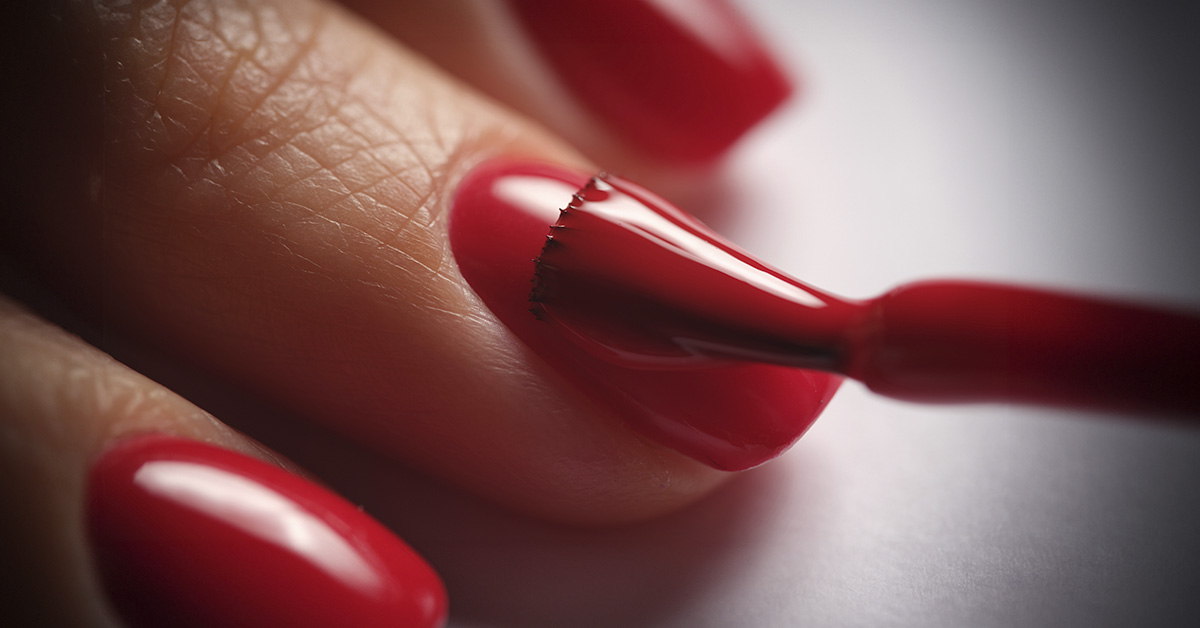

Modern liquid nail polish was launched in the 1920s and has continued to evolve ever since. However, the latest iterations seem to boast about being “nontoxic” and “natural” compared to traditional brands. Moreover, the European Union recently banned trimethylbenzoyl diphenylphosphine oxide (TPO), a common ingredient in gel nail polishes. This may leave people concerned about potential toxins and side effects of their favorite nail polish products. Experts weigh in on whether or not the public should be concerned.
Are There Toxins in Nail Polish?
To start off, it’s important to note that “nontoxic” branding is typically part of a marketing strategy. Advertisers have taken note of the increasing interest in health, wellness, and nontoxic living, and work to capitalize on it. That’s why there’s an uptick in products being marketed as “natural,” “eco-friendly,” “clean,” or “toxin-free.” But under scrutiny, some of these labels become meaningless. And that includes some of the lists of toxic-free nail polish ingredients. Certain brands push the idea that their products are “free” from certain toxins found in other nail polish brands. However, some of these ingredients, such as parabens and acetone, were never used in nail polish to begin with. In these cases, these “toxic-free” claims are as illuminating as the gluten-free labels on egg cartons at the supermarket.
“The Toxic Trio”
However, these lists are not all just misleading wellness-washing. There are certain nail polish ingredients scientifically linked to negative health effects. These include: formaldehyde, toluene, and dibutyl phthalate. Formaldehyde is a carcinogen that has been linked to asthma and neurotoxicity, among other negative effects. However, most nail polishes don’t include the carcinogen-form of formaldehyde. Instead, they include formaldehyde resin, which is still a contact allergen that can cause itching and swelling.
Toluene (also known as toluol or methylbenzene) is a petrochemical solvent recognized by the U.S. Occupational Safety and Health Administration (OSHA) as hazardous to human health, with documented effects on the central nervous, respiratory, and reproductive systems, as well as skin and eyes. It was spotlighted in the 1990s in a lawsuit issued by the environmental consumer group As You Sow against the Cosmetics, Toiletries, and Fragrance Association. The suit settled when companies agreed to halve the concentration of toluene in their products. But after all of the bad press, many nail polish manufacturers elected to entirely exclude the ingredient from their formulas.
Dibutyl phthalate, the third of this “toxic trio,” is a plasticizer that is considered an endocrine disruptor, according to PubChem, which can cause reproductive harm and birth defects. It has also been linked to skin, eye, and respiratory irritations. However, experts are unsure if the levels of dibutyl phthalates in nail polish are enough to cause these reactions.
Nevertheless, Dr. Dana Stern, a dermatologist who specializes in nail issues, believes people should be aware of the potential harms. “Where there is smoke, there is fire,” she says to the Cut. “We know that these chemicals are associated with risks, but it’s difficult to quantify the risks.” Stern also warns of other dubious ingredients like camphor, triphenyl phosphate, xylene, and ethyl tosylamide.
Read More: What Causes Thick Toenails and How Can You Treat Them?
How to Safely Choose Nail Polish Products

Keep in mind, some of these chemicals and toxins are not included in mainstream nail polish products anyway, so it’s important to read the label to find out. Also, brands boasting to be “3-Free” may have swapped toluene, formaldehyde, and dibutyl phthalates, for other chemicals that may not be much of an improvement since many are not thoroughly tested for safety, according to Healthline.
Major companies typically comply with FDA or E.U. regulations. Some brands maintain lists of product ingredients on their websites. If they don’t, you can contact the company directly since they are legally obligated to provide the list when asked. However, nail polish ingredients are not regulated by the Food and Drug Administration or the Federal Trade Commission (aside from color additives, which are regulated by the FDA). So as long as the product is safe when used as directed and labeled properly, they can use any ingredient (within reason). If something is being marketed for being “clean” or “non-toxic,” know that companies are allowed to use these buzzwords without proving the claims to a third-party.
The body could absorb the ingredients of nail polish through the pores on the nail plates, the skin around the nails, and through inhaling the vapors. However, it’s unclear if the amount of nail polish absorbed in the skin is enough to cause unwanted side effects, such as contact burns, dermatitis, nausea, dizziness, etc. However, inhaling the vapors of these products might pose the most immediate risk, which is why it’s recommended to apply nail polish in well-ventilated areas. For that reason, individuals who work in nail salons should be even more diligent about proper airflow. If you are still concerned about the effects of nail polish, skip it during your next manicure.
Read More: E.U. Bans Some Gel Nail Polish – Here’s Why the US Isn’t Following