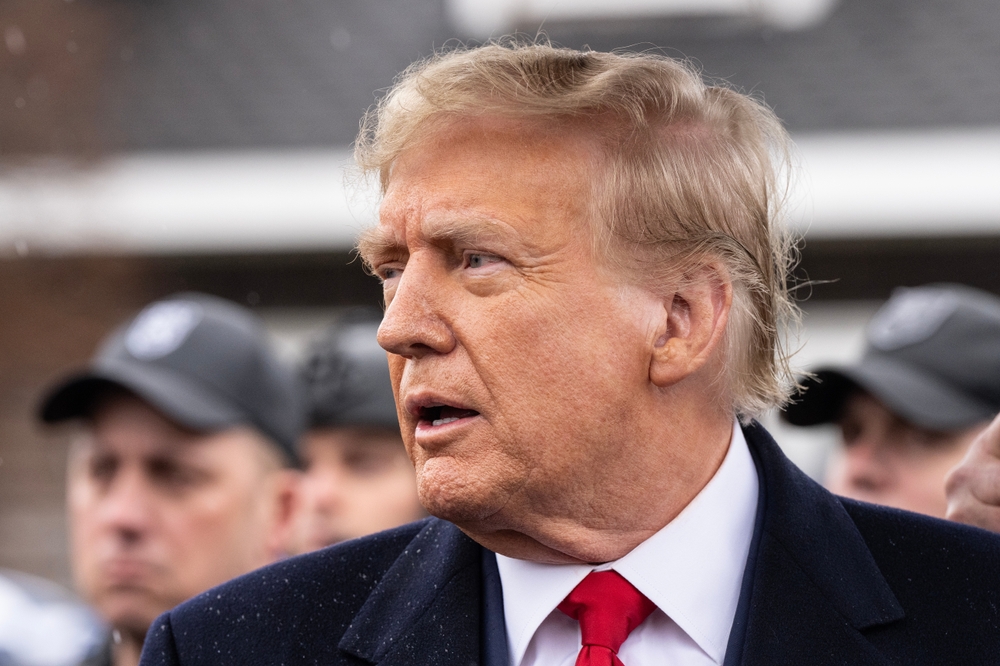

President Trump took 325mg of aspirin daily – four times the low-dose amount his own doctor could justify prescribing for cardiovascular prevention – and his White House physician put it in writing. That detail, buried in a three-page medical memo released at 10:44 p.m. on a Friday night, sparked more questions than it answered. And the aspirin dose was only part of what doctors found odd.
The May 2026 physical at Walter Reed National Military Medical Center was Trump’s third in 13 months. That frequency alone raised concerns about his health among independent physicians who reviewed the public record. The White House framed the visit as routine. Trump posted on Truth Social immediately after leaving that “Everything checked out PERFECTLY.” Three days passed before a formal report appeared – and what that report contained, and what it left out, set off a wave of medical scrutiny unlike anything seen in recent presidential history.
The scrutiny has two distinct threads running through it simultaneously. One concerns what is visible on Trump’s body. The other concerns what is happening in the policy arena his administration controls, specifically the FDA’s handling of a particular label that carries his name in the public conversation: the Trump black box warning controversy around COVID-19 vaccines. Together, they have pushed questions about presidential health – medical, regulatory, and constitutional – to a level of intensity that is unlikely to subside.
What the Physical Actually Showed
The memo from White House physician Dr. Sean Barbabella, a U.S. Navy captain specializing in emergency and tactical medicine, said Trump demonstrated “strong cardiac, pulmonary, neurological and overall physical function,” attributed the bruising on his hands to frequent handshaking and aspirin therapy, and noted “slight lower leg swelling” that it characterized as improved from last year. The White House said the report reflected test results from the past year and consultations with 22 specialists.
Trump takes 325mg of aspirin daily for cardiovascular protection. That figure matters for several reasons. It is four times higher than the 81mg low-dose aspirin typically used for cardiovascular disease prevention. Cardiologist Dr. Jonathan Reiner, a professor at George Washington University’s School of Medicine, told CNN that 325 milligrams of aspirin each day carries no additional medical justification for daily use at that level.
The aspirin question goes beyond bruising. The U.S. Preventive Services Task Force recommends against initiating aspirin for primary prevention of cardiovascular disease in adults 60 or older who don’t already have an established cardiovascular condition. Trump is 80. All prescription NSAIDs, including high-dose aspirin regimens, carry FDA black box warnings for serious cardiovascular thrombotic events and life-threatening gastrointestinal adverse effects.
Trump was diagnosed with chronic venous insufficiency last year after experiencing mild swelling in his lower legs. Chronic venous insufficiency – a condition where damaged veins struggle to return blood to the heart, causing fluid to pool in the legs – is not rare. It affects between 10% and 35% of U.S. adults, and prevalence increases significantly with age. But independent physicians noted that its presence in a president is not something to simply note and move on from. Dr. Anish Agarwal, an emergency medicine physician who reviewed Trump’s reported condition, noted that leg swelling linked to chronic venous insufficiency is “not that dangerous” on its own, but “could be a sign of other things going on.” Left untreated, chronic venous insufficiency is usually progressive and leads to postphlebitic syndrome and venous ulcers.
The Black Box Warning That Isn’t About Trump’s Medication
The phrase “Trump black box warning” entered public discourse primarily through a different channel: the FDA’s reported consideration of placing its most stringent warning on COVID-19 vaccines. Black box warnings – formally called boxed warnings – are the highest safety-related warnings that the FDA can assign to a medication or medical product. They are reserved for risks serious enough that medical studies indicate a significant chance of life-threatening or permanently disabling adverse effects.
CNN reported in December 2025 that the FDA intended to place a black box warning on COVID-19 vaccines, describing it as the latest move by Trump’s health officials to undermine a vaccine that had been a standout success of his first term. The plan shocked outside experts, who said there was no scientific basis for the warning.
Dr. Aaron Kesselheim, who runs the Program on Regulation, Therapeutics and Law at Harvard University, noted that such warnings are typically preceded by public notification that the FDA is examining a safety question, followed by an advisory committee of independent experts publicly vetting the safety data. Neither of those steps appeared to have been taken. Dr. Robert Hopkins, medical director of the National Foundation for Infectious Diseases, said adding a black box label to COVID vaccines “would be an unprecedented action by the FDA and would likely result in significant reduction in use of the product.”
FDA Commissioner Marty Makary subsequently denied the reports. According to Bloomberg, he stated the agency had “no plans to put that on the COVID vaccine,” while acknowledging that an internal recommendation for the warning had been formally made – but that FDA leadership had indicated the original data may not transfer to the current annual dosing context. As of early 2026, more than 400 medications approved for use in the U.S. carry black box warnings. Vaccines with such labels are, as Peter Chin-Hong, an infectious disease physician and professor of medicine at the University of California, San Francisco, noted, “exceedingly rare.”
What Transparency Actually Looks Like – and What’s Missing
A black box warning is the FDA’s strongest safety alert on a drug label, highlighting serious or life-threatening risks that require close monitoring or special precautions. That definition matters in both directions in this story: when the label is being proposed for a vaccine that hundreds of millions have received safely, the standards for applying it carry enormous weight. The same logic applies to presidential health disclosures – the standards for what counts as meaningful transparency matter.
The formal medical report took three days to release and arrived at 10:44 p.m. on a Friday night. While it was more comprehensive than some past readouts, the memo from White House physician Sean Barbabella did not settle persistent questions about visible bruising on Trump’s hands, swollen ankles, and his alertness during some public events.
There is no legal requirement for presidents to divulge their health records or status. Sara Rosenthal, a bioethicist at the University of Kentucky who studies presidential health, noted that “just like any other patient, presidents get to choose what’s disclosed about their health.” That discretion has visible consequences. Presidents have unencumbered access to excellent preventive care and daily contact with White House physicians. But daily access to excellent care is not the same thing as a transparent account of what that care finds.
Jonathan Reiner, former Vice President Dick Cheney’s heart doctor, wrote publicly that the report left unanswered questions – including why there have been repeated CT scans of the heart during Trump’s checkups, and whether the medical team addressed his daytime fatigue and sleepiness. Trump himself acknowledged at one point that he had closed his eyes during a Cabinet meeting, explaining to The Wall Street Journal that it was “very relaxing.” Trump has also exhibited signs of fatigue on several occasions when he appeared to doze off at public events.
Read More: Trump’s health report: doctors say key data is missing
Age, Risk, and What the Brain Does at 80
Trump, who turned 80 in June 2026, is the oldest person to take the oath of office and the second oldest president in U.S. history after Joe Biden, who left office at 82. His age is not a diagnosis. But it is a biological fact with well-documented implications.
The major threats to a long and healthy lifespan include heart disease, stroke, cancer, diabetes, and Alzheimer’s disease, with risk rising exponentially with advancing age. Processing speed – the brain’s ability to take in and respond to new information quickly – drops by around 20% at age 40 and by 40% to 60% by age 80 compared to younger adults. That’s a population-level average, not a guarantee for any individual, but it frames what questions are reasonable to ask of any 80-year-old in a high-pressure role.
The cognitive test most commonly cited in this context is the Montreal Cognitive Assessment, a 30-point screening tool. The MoCA takes approximately 10 to 15 minutes to administer and is designed to detect mild cognitive impairment, meaning measurable decline in memory, attention, or executive function. A score of 26 or above is considered normal; according to the original validation data, the test detects mild cognitive impairment with approximately 90% sensitivity and 87% specificity at the standard cutoff. Trump has repeatedly cited cognitive test results as evidence of his fitness. What those results cannot confirm is worth knowing: a perfect 30 out of 30 confirms the absence of detectable deficit – it does not certify peak executive function.
The constitutional mechanism for addressing a president’s incapacity, Section 4 of the 25th Amendment, provides for instances of contingent presidential disability by allowing the Vice President and a majority of Cabinet members to declare a President unable to perform his duties. It has never been invoked since ratification in 1967.
What This Means for You
The practical question for most adults reading this is not political. The medications and conditions appearing in Trump’s health reports – high-dose aspirin, chronic venous insufficiency, cardiovascular imaging, cognitive screening – are the same ones that affect millions of Americans in their 60s, 70s, and 80s.
If you’re in that age group and taking daily aspirin without a confirmed cardiovascular diagnosis, talk to your doctor about the current U.S. Preventive Services Task Force guidance. The recommendation against starting aspirin after 60 for primary prevention reflects real bleeding risks that increase with age – the same risks visible as bruising in Trump’s case. Chronic venous insufficiency, meanwhile, is common and manageable, but it requires consistent treatment; compression stockings, leg elevation, and regular monitoring are first-line approaches because the condition does tend to worsen without them.
The broader takeaway from the public debate about medical transparency is genuinely useful for anyone navigating their own health care. Reassuring language from a doctor – “excellent health,” “fully fit,” “no abnormalities” – is not the same as actual numbers. Ask your physician for specific values: your LDL, your blood pressure reading in digits, your bone density score, your A1C if relevant to your risk. The difference between “your cholesterol is fine” and “your LDL is 98 mg/dL” is the difference between a reassurance and a data point you can track over time. One is a headline. The other is information.
Read More: The Government’s Own Report Contradicts Trump’s Social Security Promise
Disclaimer: The author is not a licensed medical professional. The information provided is for general informational and educational purposes only and is based on research from publicly available, reputable sources. It is not intended to constitute, and should not be relied upon as, medical advice, diagnosis, or treatment. Always consult a licensed physician or other qualified healthcare provider regarding any medical condition, symptoms, or medications. Do not disregard, avoid, or delay seeking professional medical advice or treatment because of information contained herein.
AI Disclaimer: This article was created with the assistance of AI tools and reviewed by a human editor.