

When a president’s doctor releases a health report and calls it “excellent,” most people take that at face value. After all, who would question a physician’s assessment of the most powerful person in the country? But when that report is reviewed by independent cardiologists, vascular surgeons, and other specialists, something quietly extraordinary happens. The questions they ask reveal just as much as the answers they don’t get.
President Donald Trump’s May 2026 physical at Walter Reed National Military Medical Center generated headlines the moment he left the building. On his way home, he posted that “Everything checked out PERFECTLY.” Three days later, a formal report followed. What that report contained, and what it conspicuously left out, set off a wave of scrutiny from doctors who were not convinced the full picture was being shared.
This is a conversation that goes well beyond partisan politics. Experts who study presidential health note that the frequency of medical checkups for a man Trump’s age is not unusual; it’s part of a standard strategy to catch problems while they’re still treatable. The issue isn’t how many tests were run. It’s what happened to the results.
1. The Report Took Three Days to Appear, Breaking From Prior Practice

Trump visited Walter Reed for what the White House described as preventive medical and dental checkups, and posted on social media immediately afterward that everything went “PERFECTLY.” The White House, however, did not release a written report from his doctors at that time.
The written report wasn’t published until May 30, three days after the examination on May 26. According to CNN’s coverage of the physical, that delay marked a departure from how Trump’s previous physical exams had been handled, where written summaries were released much closer to the examination date.
The timing alone raised eyebrows. For decades, administrations have released selected results from presidential physicals as a matter of standard practice, but the results are filtered through the White House and must be approved by the president, raising questions about what the public does and doesn’t get to see. The three-day gap between the exam and the release only deepened those questions.
There is no constitutional or legal requirement for presidents to publicly share their medical records, and presidents, like all Americans, are covered by medical privacy protections under HIPAA. That legal reality, however, has not stopped health experts from arguing the public interest in a sitting president’s health is uniquely high. According to a 2026 report from STAT News, S. Jay Olshansky of the University of Illinois-Chicago, who has studied the health of past presidents, argues the public deserves to see more than White House medical summaries that “may be subject to editorial discretion,” saying that “nothing should be hidden.”
2. Cardiac Test Results Cited But Not Actually Shared

This is the criticism physicians returned to most consistently. The report cited results from a coronary CT angiography, an echocardiogram, and an AI-enhanced electrocardiogram, but omitted the specific metrics physicians said they would expect to see from those tests. There was no calcium score, no description of arterial plaque, and no CAD-RADS score, which would assess arterial narrowing.
CAD-RADS, or the Coronary Artery Disease Reporting and Data System, is a standardized grading system used by cardiologists to classify how severe coronary artery disease is based on imaging results. Without it, a reported “all clear” carries little clinical weight, because it tells a reviewing doctor almost nothing about the actual state of the arteries.
The report simply stated there was “no arterial obstruction or structural abnormalities,” language doctors said could mean only that there is no total blockage, not that the arteries are clean. There is a meaningful clinical difference between “no complete blockage” and “healthy arteries,” and critics argued the report blurred that line deliberately or carelessly. The memo didn’t specify how much plaque was revealed by the carotid ultrasound, even though most people have at least some buildup, or whether there was narrowing of the arteries, multiple doctors noted.
3. Doctors Called the Overall Picture Suspiciously Rosy

Taken together, doctors said the Trump report painted an oddly perfect picture with suspiciously little supporting evidence. According to The Daily Beast, vascular surgeon Dr. William Shutze said “that report is almost too good to be true for somebody of his age” and described it as “a filtered narrative.”
That reporting captured what several physicians said publicly: a report referencing multiple advanced cardiac imaging tools that provides no actual numbers from those tools is unusual by clinical standards. Presidential medical summaries have long walked a line between transparency and brevity, but physicians reviewing Trump’s latest disclosure said this one leaned unusually far toward reassurance without evidence.
This is not the first time a Trump medical report has strained credulity. During the 2016 campaign, his personal physician declared that Trump would be “the healthiest individual ever elected to the presidency,” and that doctor later said Trump had dictated the letter himself. That history, physicians noted, makes independent scrutiny of current reports more necessary, not less.
4. A Significant Weight Gain That Contradicts the “Excellent Health” Claim
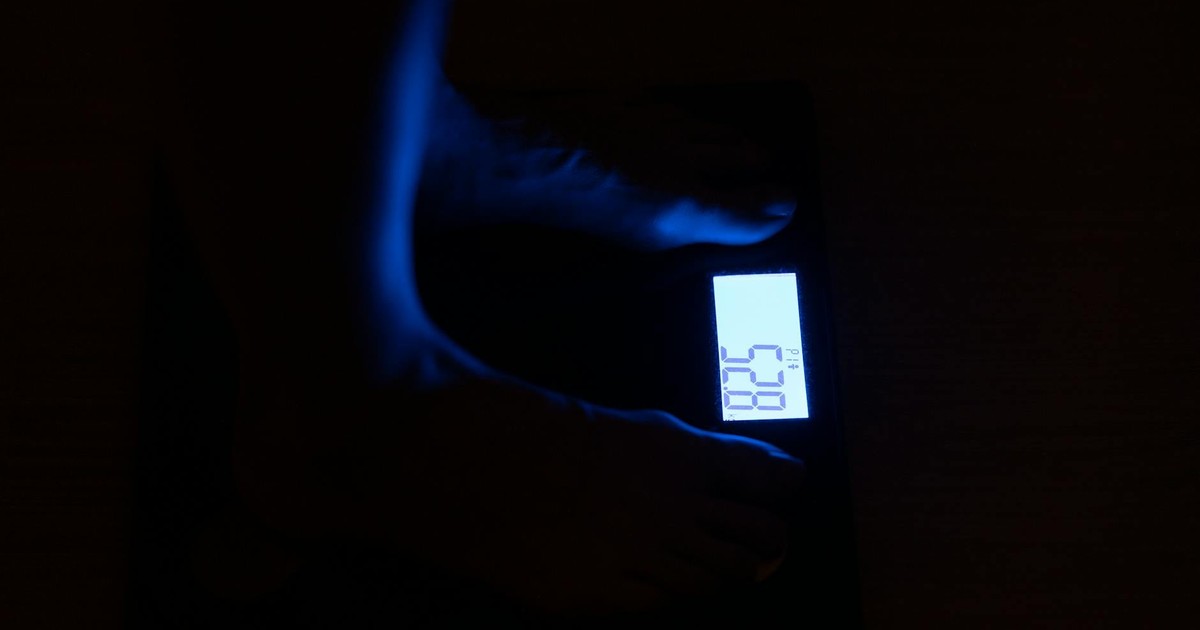
Trump was counseled to increase physical activity and lose weight, with the report putting his weight at 238 pounds, 14 pounds more than an April 2025 physical. Gaining 14 pounds in 12 months is a clinically notable change for a nearly 80-year-old patient, particularly one already being advised to continue working on weight loss.
The report showed that the president had gained 14 pounds since a physical exam in April 2025, weighing 238 pounds and nearing the threshold of clinical obesity. For context, clinical obesity in adults is typically defined as a body mass index of 30 or above. At 6 feet 3 inches and 238 pounds, Trump’s BMI sits very close to that threshold, according to standard BMI calculators.
An AI-enhanced electrocardiogram estimated his cardiac age “to be approximately 14 years younger than his chronological age,” a headline-grabbing finding. But a peer-reviewed validation study cited by independent medical analysts noted that ECG-based heart age is “underestimated in older adults aged 70 and over,” meaning the below-chronological-age result for a nearly 80-year-old may partly reflect a known pattern in the algorithm rather than exceptional heart health. Doctors who commented on the finding publicly were not impressed. As The Daily Beast reported, cardiologist Dr. Jonathan Reiner of George Washington University said that when he discussed the AI claim with cardiology colleagues, the reaction was uniform: “Everyone laughed.”
5. Triglycerides Nearly Doubled and Resting Heart Rate Climbed
Two specific numbers in the report drew less media attention but caught the eye of physicians tracking year-over-year trends. According to The Daily Beast’s review of the full report, Trump’s triglycerides (a type of fat found in the bloodstream that rises with poor diet, weight gain, and reduced physical activity) climbed from 56 to 104 mg/dL in one year, nearly doubling. While 104 mg/dL still falls within the normal range, which runs below 150 mg/dL, the rate of increase over a single year is the detail physicians pointed to.
His resting heart rate also moved in the wrong direction, rising from 62 to 73 beats per minute over the same period. A resting heart rate between 60 and 100 beats per minute is considered normal, but a lower resting heart rate generally reflects better cardiovascular fitness. An increase of 11 beats per minute in one year, in a patient already being counseled to exercise more, represents a measurable decline in one commonly tracked cardiac metric.
Taken alongside the weight gain, these numbers sketch a trajectory. No single figure is alarming on its own, but together they point toward reduced physical activity and worsening metabolic markers, which runs directly counter to the “excellent health” headline. You can read more about how diet drives cardiac risk factors and what that means for long-term heart health.
6. A New Vascular Diagnosis With Unexplained Improvement

Trump was diagnosed with chronic venous insufficiency last year after experiencing mild swelling in his lower legs. Chronic venous insufficiency (CVI) is a condition in which the veins in the legs struggle to return blood to the heart efficiently, leading to swelling, aching, and in more severe cases, skin changes or ulcers. It’s not uncommon in older adults, but it does require management.
The report noted “slight lower leg swelling” and claimed improvement, but did not explain what may have led to that change. Trump had previously indicated reluctance to use compression socks, a standard treatment, and doctors said spontaneous improvement without intervention would be unusual. The White House said the condition can fluctuate, which is technically true, but physicians noted the absence of any explanation for the improvement left clinically relevant questions open.
Dr. Jonathan Reiner, former Vice President Dick Cheney’s heart physician and a professor of medicine at George Washington University, raised further questions in public commentary. According to reporting by The Daily Beast, Reiner challenged the White House explanation for incomplete medication disclosures, writing in a post on X that the official defense was simply “not true,” and asking: “What medications were omitted?” He had also previously flagged concerns about Trump’s daytime fatigue and sleepiness, noting that the president had exhibited “severe daytime somnolence” and had repeatedly been observed falling asleep in public settings. Daytime fatigue in a patient with venous insufficiency and elevated resting heart rate could point to several conditions that would warrant further investigation in standard geriatric care.
7. PSA Results and the Biden Comparison That Doctors Keep Raising
Trump’s physical included a prostate-specific antigen score, reported at 1 ng/mL, elevated from prior scores but still well within a healthy range. PSA is a blood protein produced by the prostate gland. Elevated levels can signal inflammation, an enlarged prostate, or prostate cancer, and routine testing is one of the primary ways the disease is caught early.
The Biden comparison is one doctors raise frequently in this context, and it carries real weight. Trump’s predecessor, Joe Biden, did not include a PSA test in his White House physicals. Shortly after leaving office, Biden was diagnosed with an aggressive form of prostate cancer that had spread to his bones, a cancer physicians said would almost certainly have been detected sooner with routine screening.
According to CBS News reporting on Biden’s diagnosis, Biden’s last known PSA test was in 2014, over a decade before his cancer was found. His cancer carried a Gleason score of 9, placing it in Grade Group 5, the most severe category. The contrast with Trump’s report, which at least includes a PSA result, is one point where physicians gave the current report partial credit. The question they raised is whether the year-over-year increase in that PSA score, even while still within normal range, would be monitored closely going forward, and whether future reports would track that trend transparently.
Read More: Trump’s Advanced Age and Threats to His Life Serve as Reminders of His Own Mortality
What This Means

The debate over the Trump health report isn’t only a political story. It’s a window into something most health-conscious adults over 35 should think about for themselves: the difference between a clean-sounding report and a genuinely informative one. When a doctor tells you your cardiac imaging showed “no abnormalities,” ask for the actual numbers. What was the calcium score? What did the plaque description say? What was the CAD-RADS classification? No calcium score, no description of arterial plaque, and no CAD-RADS score would be considered incomplete by most cardiology standards, yet many patients accept exactly that level of detail without question.
The same applies to the trend data. A triglyceride level that doubles in a year, a resting heart rate that climbs by 11 beats, a 14-pound weight gain in 12 months: none of these are necessarily alarming in isolation, but they tell a story about direction. Clinicians track trends precisely because what a number is today matters less than where it’s heading. Ask your doctor not just what your numbers are, but how they compare to last year. Ask whether anything has moved in the wrong direction. Demand the kind of specificity that was conspicuously missing from a report that a sitting president presented to the world as proof of perfect health.
An Axios-Ipsos poll found that more than 70% of Americans believe that most politicians aren’t honest about their health, and nearly three-quarters support a legal requirement for the sitting president to release medical records. That public sentiment reflects something deeper than frustration with one politician. It reflects a growing understanding that reassuring language and actual clinical data are not the same thing, whether you’re the leader of the free world or a patient sitting in your own doctor’s office. Just like any other patient, presidents get to choose what’s disclosed about their health, says bioethicist Sara Rosenthal of the University of Kentucky, who studies presidential health. Questions about transparency have become more acute as America elects aging presidents, she notes, adding that “we can expect very little disclosure about the true health status of any president unless they’re in perfect health.” The same dynamic, on a smaller scale, plays out in every exam room. Ask for the data. Read the numbers. Don’t settle for “all clear” when “all clear” hasn’t actually been defined.
Disclaimer: This information is not intended to be a substitute for professional medical advice, diagnosis, or treatment and is for information only. Always seek the advice of your physician or another qualified health provider with any questions about your medical condition and/or current medication. Do not disregard professional medical advice or delay seeking advice or treatment because of something you have read here.
AI Disclaimer: This article was created with the assistance of AI tools and reviewed by a human editor.
Read More: Trump Dementia: What’s Behind the Health Concerns in 2026