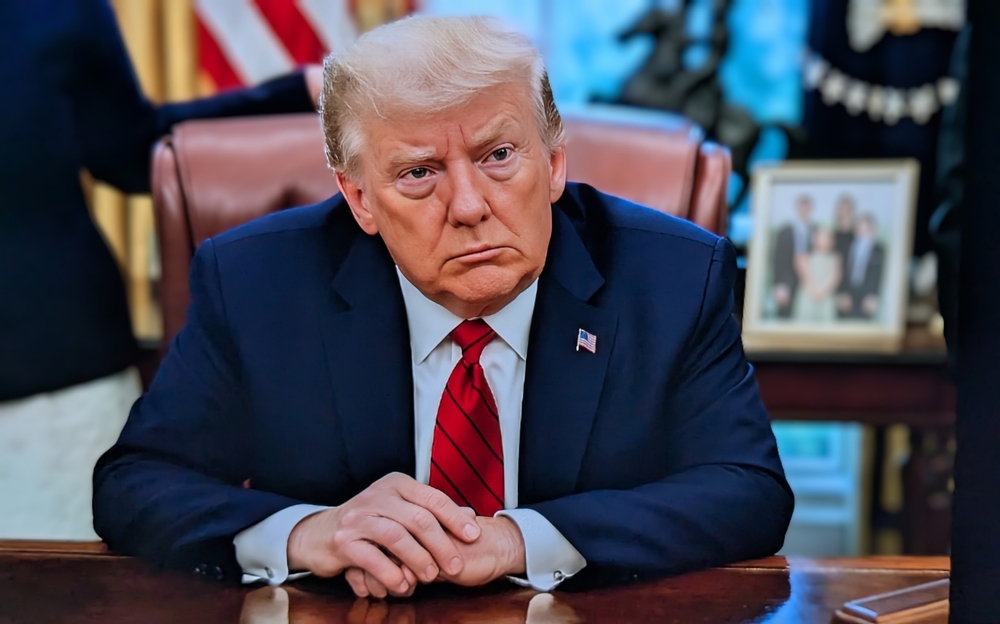

There is no sitting U.S. president who has made a more vivid public argument for his own vitality than Donald Trump – and yet, in the spring of 2026, that argument has grown harder to sustain. He is days away from turning 80. He is the oldest person ever to hold the office. And on May 26, 2026, fresh from a routine checkup at Walter Reed National Military Medical Center, he posted on Truth Social that everything had checked out “PERFECTLY.” For many Americans, the word rang a little hollow.
The scrutiny surrounding the Trump mortality age question is not new. What is new is the frequency of medical visits, the volume of disclosed ailments, and something few would have predicted: the president himself has begun acknowledging, in small but telling ways, that his time is not unlimited. A remark about not being able to match his parents’ 63-year marriage. A quip at an East Room event: “I don’t know how long I’ll be around.” These are not the words of a man who believes his own press releases.
For anyone watching closely, the past year has offered an unusual window into the physical and political reality of governing at the edge of human life expectancy. Medical records have been released, then partially walked back. Visible symptoms have prompted official explanations that raised as many questions as they answered. And two assassination scares have added a grimmer dimension to an already serious conversation. Whether you view Trump through a political or a purely human lens, the facts on the table are striking.
The History-Making Age Question
Donald Trump is the oldest person ever inaugurated as U.S. president, having taken the oath of office at 78 years and 7 months old. He turns 80 next month, making him the oldest person to assume the presidency, just ahead of former President Joe Biden, who was 82 when he left office in January 2025. No president in American history has entered the White House this deep into the normal human lifespan.
To understand what that means in practical terms, some basic statistics are useful. U.S. life expectancy at birth in 2023 was 78.39 years, recovering from pandemic-era declines. Trump has already exceeded that figure. But that does not mean his statistical risk is trivial. By age 80, the annual chance of dying in the United States rises to 4.23%, meaning that in any given year, roughly one in 24 men at that age does not survive it. For a sitting president, that number carries obvious national consequences.
There is a counterpoint worth understanding. For a male who has already reached 79, statistical life expectancy is actually higher than the average calculated at birth, because he has already survived the risks associated with younger ages. A 79-year-old man in the U.S. can, on average, expect to live well into his mid-80s, provided he has access to world-class healthcare. Trump certainly does. And his family history offers some reason for optimism: his father lived to 93, and his mother, Mary Anne MacLeod Trump, lived to 88. Genetics matter, and Trump frequently cites this. Still, longevity odds are averages, not guarantees.
Historically, the presidency has not been as hazardous to health as popular belief suggests. A study of presidents found that 23 of the 34 who died from natural causes lived longer, and in many instances significantly longer, than what was statistically predicted for them at the time of their inauguration. Yet the cautionary tales are real. William Henry Harrison was elected in 1841 at age 68 and died just 32 days into his first term, making his the shortest presidency in U.S. history.
What the Medical Record Actually Shows
The 79-year-old president spent more than three hours at Walter Reed on May 26 for preventive medical and dental checkups. It was his fourth publicly disclosed medical exam since returning to office for a second term. After the visit, Trump said he aced his annual physical and posted on Truth Social: “Just finished my 6 month physical at Walter Reed Military Medical Center. Everything checked out perfectly.”
His physician, Navy Capt. Sean Barbabella, declared Trump to be in exceptional health and fully fit to execute the duties of president, and noted that Trump achieved a perfect score on a cognitive assessment during his April 2025 exam. The cognitive test in question is the Montreal Cognitive Assessment, or MoCA. The MoCA is a tool that healthcare providers use to screen for mild cognitive impairment and early dementia, and a score of 26 or higher out of 30 is considered normal, while scores ranging from 18 to 25 may indicate mild cognitive impairment. A perfect 30 is the best possible result, and Trump has consistently boasted about it. At a White House event celebrating small business owners, however, he signaled some impatience with the process: “I think I’m done with those days. I’m tired of taking that test,” Trump said.
Beyond the cognitive screenings, the trail of disclosed ailments tells a more complicated story. The White House said swelling in his ankles, revealed last summer, was a result of chronic venous insufficiency, a common issue related to age. Chronic venous insufficiency is a condition where the veins in the legs struggle to push blood back up toward the heart efficiently. The condition usually affects people over age 50, and the risk increases the older you get. It affects approximately 10% to 35% of adults, with prevalence increasing significantly with age.
Then there is the matter of the hands. Trump told The Wall Street Journal in an interview published in January 2026 that he takes a higher dose of aspirin than his doctors have recommended, blaming that for the visible hand bruises that have generated renewed questions about his health. His physician confirmed Trump takes 325mg of aspirin daily for cardiac prevention, considered at the high end of dosage for this purpose. That is four times higher than the recommended 81mg low-dose aspirin used for cardiovascular disease prevention. Cardiologist Dr. Jonathan Reiner, a professor at George Washington University’s School of Medicine, told CNN that 325 milligrams of aspirin each day is not a very high dose, but there’s no medical reason to take that much on a daily basis. Since 2022, the U.S. Preventive Services Task Force has recommended that anyone over 60 not start taking a daily dose of aspirin to prevent cardiovascular disease if they don’t already have an underlying problem, and said it’s reasonable to stop preventive aspirin in people already taking it around age 75.
After Trump visited Walter Reed in October 2025, he told reporters he had undergone an MRI, but refused to say why or what part of his body was imaged. It wasn’t until several months later that officials confirmed the procedure was actually a CT scan, intended to definitively rule out any cardiovascular issues, according to White House physician Dr. Sean Barbabella. The scan results were declared normal. Presidents are not legally obligated to release anything about their health, so everything they do disclose is by choice. Several presidents before Trump were found afterward to have concealed medical issues in office.
For readers who want to understand how common medications can affect brain function as we age, this overview from the National Institute on Aging offers useful context on a related topic.
The Fitness Question Nobody Can Fully Answer
In his report on Trump’s physical a year ago, Dr. Barbabella praised the president’s “active lifestyle” and his “frequent victories in golf events.” Since then, however, Trump has conceded he rarely works out, quipping during an event on the new presidential fitness test that he spends “about one minute a day max” on exercise. Dr. Philip Lee, commenting without access to Trump’s full records, noted that as people get older, the risks of heart attacks and strokes increase, but that many people who are active in their eighties maintain busy schedules and do fine, and that a packed schedule is “actually really good” for overall health.
On the cognitive fitness side, the public debate intensified in 2026. A statement from more than 30 neurologists, psychiatrists and other medical experts, who acknowledged they had never examined Trump, said he was mentally unfit to serve and warned of an “increasingly dangerous decline” based on what they described as “objectively observable signs of serious medical concern.” The White House pushed back sharply, calling the claims politically motivated. A Washington Post/ABC News/Ipsos poll conducted in April found that less than half of U.S. adults think Trump has the mental sharpness or physical health to serve effectively as president.
A Reuters-Ipsos poll found 61 percent of Americans agreed that Trump has “become erratic with age,” with even 30 percent of Republicans agreeing with that sentiment.
The medical community is not unanimous. The Goldwater Rule, established in 1973 by the American Psychiatric Association, prohibits psychiatrists from offering opinions on someone they have not personally examined. That ethical boundary is exactly why the group of 36 doctors who broke from it drew such attention – and such controversy. Many physicians strongly disagreed with their approach, even if they shared underlying concerns.
Read More: Doctors Say Trump Has ‘Psychosis’ — Here’s What the Evidence Actually Shows
Security Threats and the Weight of Mortality
The Trump mortality age discussion cannot be separated from the security picture surrounding him. On Saturday, May 24, 2026, the Secret Service shot and killed a man who the agency said fired at officers at a checkpoint near the White House while Trump was inside, a reminder of the security danger the president faces. According to GDELT data, reported assassination attempts worldwide have risen by more than 30 percent over the past decade globally.
People who have spoken to Trump say his personal safety is never far from mind, even as he attempts to avoid it becoming a debilitating fixation. Iran, the country he is currently at odds with, has previously plotted to assassinate him. Repeated attempts on Trump’s life by would-be assassins and his advancing age appear to be reminders that everything could change in an instant, and even as he and his aides downplay physical deterioration, the president has allowed brief glimpses into his thoughts on earthliness.
Those glimpses have become more frequent. When hosting King Charles III at the White House last month, Trump referenced his own parents’ lengthy marriage and then turned to Melania: “That’s a record we won’t be able to match, darling. Sorry, just not going to work out that way.”
What This All Means
The story of a nearly 80-year-old man leading the most powerful nation on earth is more than a political story. It is a vivid, high-stakes illustration of a question that aging families across America quietly grapple with every day: at what point does age become a clinical variable that genuinely changes the risk picture, and who gets to say so?
The statistical reality is clear. Risk rises steeply after 79. Conditions like chronic venous insufficiency, increased bruising from blood-thinning medications, and the gradual shift in cognitive screening scores are not unique to any one person – they are common features of aging that millions of Americans manage in their own lives and in the lives of their parents. What makes the presidential case unusual is not the biology but the scrutiny, the access to elite care, and the consequences if something goes wrong.
For those of us not running the country, the more actionable takeaway is this: the factors that most reliably predict longevity and cognitive health at 79 are the same ones that mattered at 59 and 69. Regular cardiovascular screening, appropriate medication management, and maintaining honest, transparent communication with your doctors are the levers most within your control. A regular conversation with your physician about which medications you are taking, at what dose, and whether they still make sense for your age, can matter far more than any social media post claiming a clean bill of health. Presidential press releases are not a substitute for that conversation, and neither is a post saying everything checked out perfectly. The biology does not negotiate.
AI Disclaimer: This article was created with the assistance of AI tools and reviewed by a human editor.
Read More: Trump’s Refrigerant Rule Won’t Fix Grocery Prices. Here’s What’s Really Going On