
At the 2025 G7 Summit in France, Trump appeared unable to hold up his own hand during a handshake with French President Emmanuel Macron – a moment that sparked immediate concern online. Most critics framed it as a diplomatic curiosity. One clinician saw something different.
Hilary Shae is a licensed speech-language pathologist specializing in concussion recovery, holding the CCC-SLP credential – the Certificate of Clinical Competence in Speech-Language Pathology awarded by the American Speech-Language-Hearing Association. She gives professional examinations of his seemingly deteriorating cognitive and physical health. After reviewing footage from the G7 gathering in Évian-les-Bains, she suggested that “something has changed” with Trump after noticing numerous worrying signs. Her concerns extended well beyond the handshake. She identified what she described as a cluster of simultaneous physical and speech changes – the kind of pattern, she argued, that a clinician trained in neurological communication disorders would recognize as meaningful.
In her clinical estimation, an inability to walk straight ahead resembles a tendency common in patients dealing with major cognitive decline. “It is very common for people who have dementia and cognitive decline to no longer be able to walk in a straight line,” she explained. Speech-language pathologists occupy a formal clinical role in assessing exactly these kinds of changes. She noted that brain deterioration can affect visual-spatial processing, depth perception, and proprioception – the brain’s ability to track where the body is in space. Shae has not personally examined Trump, and her observations are drawn from public video – a limitation she has acknowledged.
What Trump’s G7 Appearance Showed, According to Shae
Shae noted the odd interaction with Emmanuel Macron, when Trump appeared unable to hold up his own hand during a handshake, and seemed “unable to turn his body” and had “no idea what was going on.” She also flagged his movement off Air Force One. She noted his “ability to go down stairs” while exiting the aircraft, suggesting his mobility was worse than usual and seemed to require “singular focus” on the task.
These motor observations connect to a broader body of research on aging and the brain. Carolyn Aldwin, Chair of the Department of Human Development and Family Sciences at Oregon State University, told Slate that Trump was a much better speaker in the 1990s and now “has really severe language problems.” Researchers studying age-related motor changes have found that older adults increasingly rely on cognitive brain processes for motor control due to structural and functional declines – meaning walking, turning, and navigating stairs can become tasks that demand active mental concentration rather than automatic physical coordination. A 2019 study in Ageing Research Reviews found that age-related changes in motor cortical regions can precipitate exactly the kind of motor declines Shae described, including reduced coordination and balance deficits.
The Speech Patterns That Raised Flags
The most clinically specific portion of Shae’s analysis concerned Trump’s speech at the G7. She identified potential signs of dysarthria – a condition, typically following a stroke, in which changes in coordination and muscle control can lead to speech that has a “breathiness, misarticulations” and sounds more “unintelligible.” She argued this was noticeable in a clip of Trump speaking at the summit, in addition to odd jaw movements and signs of excess saliva, and she also noted signs of respiratory issues.
“He required such frequent breaths that he had very, very short phrases, and the phrases were not typically on an actual phrase ending,” she explained. “They weren’t at an appropriate place… It seems like it’s breath-related, and part of dysarthria can be the muscle control and coordination for breathing as well.”
Speech-language pathologists are trained to assess precisely this territory. Shae’s CCC-SLP credential represents the field’s standard of clinical competence for evaluating neurological communication disorders. Research published in a 2025 paper in Alzheimer’s & Dementia found that “changes in speech and language functions have shown to be early symptoms of AD Alzheimer’s disease] pathology.” A [2026 study in Measurement confirmed that linguistic and acoustic features – including word-finding errors, decreased syntactic complexity, and slowed speech rate – are now recognized as measurable markers of cognitive impairment.
The Sleeping Pattern That Concerned Her Most
Shae concluded: “All of this, everything that’s happened kind of in the beginning of June, tells me that there’s been a significant change in the last couple of days. He’s been sleeping more frequently… falling asleep at the NBA Finals, falling asleep at the UFC championship.”
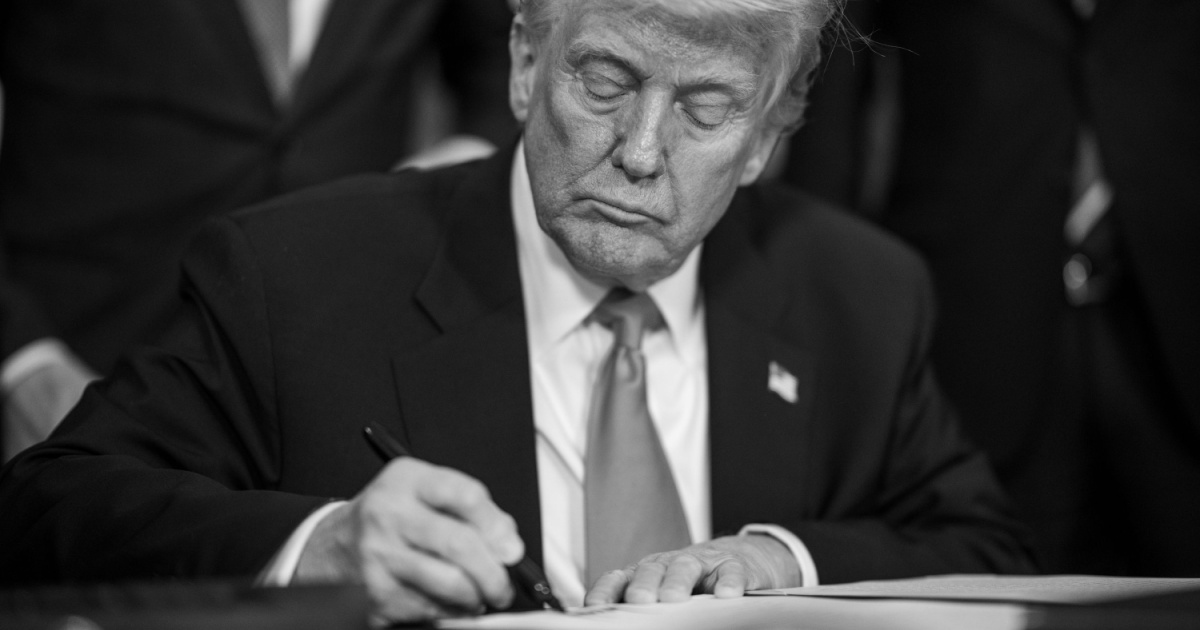
Those incidents were widely reported. Trump made a high-profile appearance at Game 3 of the NBA Finals at Madison Square Garden, and video quickly spread appearing to show him nodding off courtside. He also appeared to doze off in the front row of his own UFC birthday celebration – coverage from Alternet of UFC Freedom 250 on the White House South Lawn shows Trump seated beside UFC chief Dana White with his eyes closed and his head slumping to one side. The White House dismissed the narrative, and some supporters argued he was simply looking down at a monitor positioned before his seat.
Shae identified these episodes through a specific clinical lens: sundowning behavior associated with dementia. She explained that what made these incidents more notable was the fact that Trump was surrounded by noise and commotion – circumstances under which a person with healthy cognitive function would struggle to nod off. She described sundowning as confusion and agitation tied to a deteriorated suprachiasmatic nucleus – the brain’s internal clock – causing disrupted circadian rhythms.
Excessive daytime sleepiness does have multiple possible explanations. The Sleep Foundation notes that conditions such as neurological disorders, mental health issues, and sleep disorders like obstructive sleep apnea can all cause excessive daytime sleepiness – and Trump has been publicly reported to use a CPAP machine for sleep apnea. Attributing sleepiness to any single cause from video footage alone has real clinical limits. Shae’s concern is about the sleepiness as one piece of a broader pattern that accelerated within a short time window, not the sleepiness in isolation.
Shae added: “There’s one final thing that I want to point out – while it’s somewhat dementia-related, I think it’s much worse – it’s that he seems to have zero awareness of his surroundings, absolutely none. There just seems to be nothing behind the eyes. Just no awareness whatsoever.”
What the Official Record Says and Trump’s Cognitive Decline Concerns
Trump’s official medical record tells a different story – at least on paper. Trump was declared to remain in “excellent health” and “fully fit” to be Commander-in-Chief by his physician following a physical at Walter Reed National Military Medical Center, the first of his second presidential term. Cognitive function, assessed using the Montreal Cognitive Assessment (MoCA), was recorded as normal with a score of 30 out of 30.
A more recent checkup in May 2026 produced similar conclusions. Trump’s doctors assessed his cognitive and physical performance as “excellent.” His weight was recorded at 238 pounds – 14 pounds higher than at his April 2025 visit – and his neurological exam, including screening for cognitive function, came back within normal limits with a score of 30 out of 30. His physician noted Trump is taking medication for cholesterol control and cardiac prevention.
The White House previously attributed the visible discoloration and apparent bruising on Trump’s hands to frequent handshaking, aspirin use, and minor soft-tissue irritation. Cleveland Clinic’s guidance on chronic venous insufficiency – a condition Trump was diagnosed with in 2025 – describes it as characterized by swelling in the lower legs and ankles, particularly after prolonged standing. Aspirin’s contribution to bruising is also well-established: it inhibits platelet function and reduces the blood’s ability to clot, which means even minor friction can produce visible discoloration on the skin.
The White House’s official position, delivered by Trump’s physician, Navy Capt. Dr. Sean Barbabella, is that the president is in exceptional health. No diagnosis of dementia or stroke has been formally disclosed.
Cognitive assessments like the MoCA are designed to detect mild impairment and early dementia, but they don’t capture motor coordination, breath control during speech, or the moment-to-moment awareness that Shae is assessing from video. They are different tools measuring different things. A score of 30 out of 30 on a paper-based cognitive screen is real data – so is the footage Shae is analyzing. They don’t cancel each other out.
Public opinion has been shifting regardless. A Washington Post/ABC News/Ipsos poll conducted in late April 2026 found that 59 percent of U.S. respondents indicated Trump does not have the mental sharpness to lead the country, while 55 percent said he is not in good enough physical health to serve. Among Republicans and Republican-leaning independents, CNN reported that the percentage who are “very confident” in Trump’s mental fitness dropped from 75 to 66 percent.
Read More: Trump Dementia: What’s Behind the Health Concerns in 2026
What This Means
Aging, cognitive assessment, and the question of how we evaluate fitness in high-stakes roles are not abstract concerns – the Alzheimer’s Association’s 2025 projections estimate that people ages 65 and above living with Alzheimer’s will grow to 12.7 million by 2050. The public conversation around Trump’s cognitive decline reflects how many families are already navigating these questions with parents, spouses, and partners – not just with public figures.
Observable changes in speech, motor function, and alertness over a short period of time are worth taking seriously at any age. Formal cognitive testing remains the clinical gold standard, but research published in the American Journal of Speech-Language Pathology confirms that speech-language pathologists are formally recognized as clinicians responsible for assessing cognitive disorders that affect communication – making Shae’s framework, if not her conclusions, clinically grounded. If you notice rapid changes in a loved one’s speech pattern, gait, or alertness – especially over days rather than months – those are the kinds of changes worth discussing with a physician rather than waiting for a formal scheduled evaluation.
Disclaimer: The author is not a licensed medical professional. The information provided is for general informational and educational purposes only and is based on research from publicly available, reputable sources. It is not intended to constitute, and should not be relied upon as, medical advice, diagnosis, or treatment. Always consult a licensed physician or other qualified healthcare provider regarding any medical condition, symptoms, or medications. Do not disregard, avoid, or delay seeking professional medical advice or treatment because of information contained herein.
AI Disclaimer: This article was created with the assistance of AI tools and reviewed by a human editor.