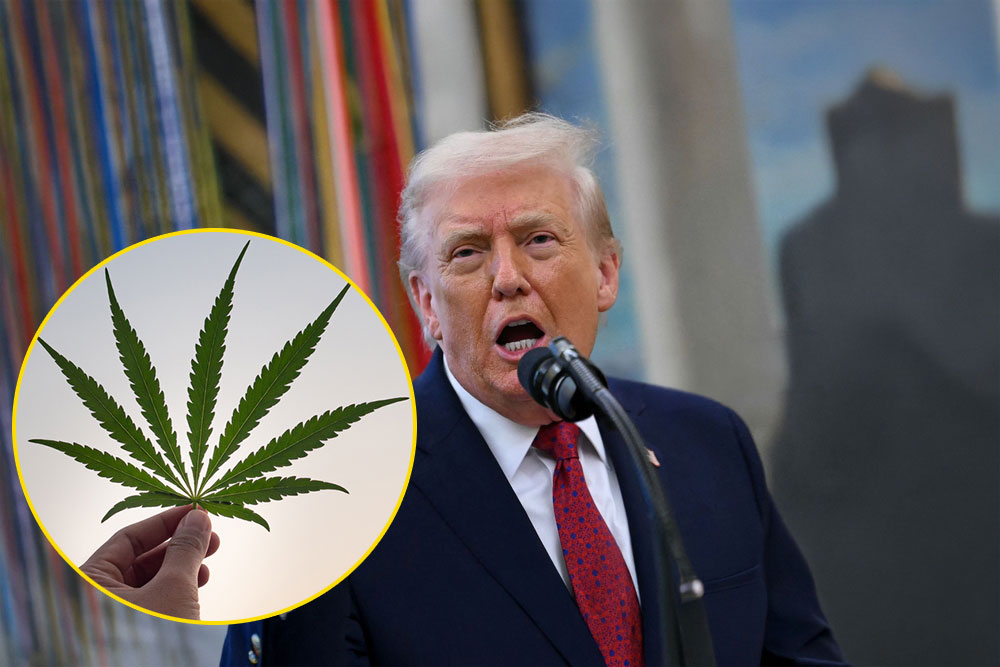

Federal drug policy rarely changes fast. For more than half a century, marijuana sat in the same legal category as heroin and LSD, federally classified as one of the most dangerous and medically worthless substances known to science. Millions of patients used state-legal cannabis to manage pain, nausea, seizures, and PTSD, all while the federal government officially maintained that there was nothing medically valuable about the plant. That position has now shifted in a meaningful way, even if the story is more complicated than any single headline can capture.
In April 2026, the U.S. Department of Justice and the Drug Enforcement Administration took action that had been discussed, delayed, and debated through multiple administrations. Acting Attorney General Todd Blanche signed an order moving specific categories of marijuana from Schedule I to Schedule III under the federal Controlled Substances Act, effectively acknowledging at the federal level that medical marijuana has legitimate therapeutic uses. For patients, researchers, and dispensary operators, this changes the playing field, though not in every way people might hope.
What the order actually does, and what it quietly leaves untouched, may surprise you.
What the DEA’s Schedule III Order Actually Does
In accordance with Trump’s 2025 Executive Order, the Justice Department and DEA announced an order immediately placing both FDA-approved products containing marijuana and marijuana products regulated by a state medical marijuana license in Schedule III of the Controlled Substances Act.
Among the drugs currently classified as Schedule III are ketamine, anabolic steroids, and Tylenol with codeine. That’s a very different neighborhood from heroin and ecstasy. Schedule III drugs are defined as those “with a moderate to low potential for physical and psychological dependence,” a description that many scientists and physicians have long argued fits cannabis far better than a Schedule I designation ever did.
Schedule I is the strictest classification and includes drugs that have “a high potential for abuse and the potential to create severe psychological and/or physical dependence.” Other Schedule I drugs include heroin, LSD, and ecstasy. The DEA has maintained that classification for marijuana since the inception of the Controlled Substances Act in 1970.
Acting Attorney General Todd Blanche placed both FDA-approved drug products containing marijuana and medicinal marijuana products subject to a qualifying state-issued license in Schedule III under his authority to reschedule drugs to carry out the United States’ obligations under the Single Convention on Narcotic Drugs.
Who Is, and Isn’t, Covered by the New DEA Reclassification
This is where the details matter enormously, and where a lot of headlines have been imprecise.
The order noted that “any form of marijuana other than in an FDA-approved drug product or marijuana subject to a state medical marijuana license remains a schedule I controlled substance, and those who handle such material remain subject to the regulatory controls, and administrative, civil, and criminal sanctions.”
In plain terms: only FDA-approved marijuana products and state-licensed medical marijuana are rescheduled to Schedule III; recreational marijuana, unlicensed activity, and synthetically derived THC remain in Schedule I.
A full rescheduling of marijuana to Schedule III could have significant implications for a large swath of state-licensed businesses that grow, make, and sell cannabis for recreational use as well as others not subject to the order. For now, however, the industry is split into two tiers, and other businesses, especially operators that hold both an adult-use and medical license, remain in a state of limbo.
The FDA-approved marijuana products currently affected include Epidiolex, Marinol, Syndros, and Cesamet, all available by prescription.
What Does Marijuana Rescheduling Mean for Patients?
The most direct impact for patients with state-licensed medical marijuana access is a shift in what federal law officially recognizes. For decades, a Schedule I label carried one definitive legal claim: that the substance has no accepted medical use in the United States. Marijuana’s classification as a Schedule I controlled substance reflected a finding that marijuana has a high potential for abuse and no currently accepted medical use in the United States. Moving it to Schedule III dismantles that claim for medical products.
What this does not do is legalize marijuana for recreational use at the federal level. The move would not legalize the drug at the federal level, but shifts cannabis from its current status as a Schedule I substance to Schedule III under the Controlled Substances Act framework. Patients who use cannabis legally in their state are not suddenly protected from federal prosecution, and nothing in the order changes the federal-state conflict that has shaped cannabis policy for years.
The practical gains for patients are more indirect. Rescheduling clears the path for more and better-funded medical research on marijuana’s effects, side effects, and optimal use, which means doctors will eventually have more rigorous evidence to work with when making recommendations. Another real-world implication of rescheduling is the acceleration of medical research on cannabis. “Research has long been hampered by federal illegality,” said cannabis attorney Brian Vicente.
One area where patients may eventually feel an indirect benefit is insurance coverage. While no insurer is required to cover cannabis under this rescheduling, the formal federal acknowledgment of medical utility creates a policy foundation that advocates have long argued is a prerequisite for any future coverage discussions. Some private insurers and pharmacy benefit managers have pointed to Schedule I status as a blanket reason to exclude cannabis from formularies entirely. That rationale no longer holds for state-licensed medical products. It does not mean coverage will materialize quickly, but the legal barrier that made coverage discussions almost impossible has been partially cleared.
How the DEA Reclassification Affects Medical Marijuana Dispensaries
State-licensed dispensaries face both immediate financial relief and a new set of federal compliance obligations they’ll need to navigate carefully.
The tax change is significant. Consistent with marijuana’s classification as a Schedule I controlled substance, Section 280E of the Internal Revenue Code disallows taxpayers from taking tax deductions and claiming tax credits attributable to marijuana businesses. This means that licensed dispensaries have been paying federal taxes on gross revenue rather than net income, unlike virtually every other legal business in the country. Section 280E is the single most punishing provision in the federal tax code for cannabis operators, routinely pushing effective tax rates above 70%.
The reclassification would exempt cannabis companies from IRS Code Section 280E, allowing them to deduct standard expenses like rent and payroll for the first time, and opens the door for banking access that was previously barred.
For state-licensed medical marijuana operators, the rescheduling opens the door to DEA registration through an expedited pathway that leverages existing state regulatory infrastructure, potentially reduces or removes the punitive effects of Section 280E, and reduces duplicative federal compliance obligations.
There is an important caveat on the tax front. The final order did not address state and local taxes, which are not directly affected by this decision, and further guidance from the Internal Revenue Service, such as transitional rules for 2026, is still needed. If a dispensary sells both medical marijuana and adult recreational marijuana, it is uncertain how Section 280E would apply. Dispensary operators should consult a tax advisor before making any changes to how they file.
On the regulatory side, recognizing that 40 U.S. states have now legalized the sale and use of marijuana for medical purposes under state law, the order establishes a new expedited federal registration pathway for entities holding state medical marijuana licenses. State licensees may submit their existing state credentials as conclusive evidence of state-law authorization when applying for DEA registration.
A DEA registration will automatically suspend upon suspension, revocation, or expiration of the underlying state license. That means maintaining state compliance isn’t just a state requirement anymore. It’s now a federal one too.
For dispensaries wanting to stay operational without interruption, timing matters. Entities that submit applications within 60 days of publication, by June 22, 2026, may continue operating under their state licenses during the pendency of review, and the DEA has committed to processing those early applications within six months.
Will Marijuana Rescheduling Make It Federally Legal?
No, and it’s worth being clear about why. Rescheduling marijuana from Schedule I to Schedule III, without other reforms, may not significantly change things for people who purchase and use marijuana. Marijuana would still be a federally controlled substance, meaning its manufacture, distribution, and possession would still be illegal under the Controlled Substances Act.
What rescheduling does accomplish is lower the criminal penalties associated with certain types of cannabis handling and formally recognize medical utility. It removes one of the most stigmatizing designations in federal drug law. But possession, cultivation, and sale outside of state-licensed medical programs remain federal offenses.
The bigger question is what comes next in the formal rulemaking process. The new hearing, beginning June 29, 2026, will provide a timely and legally compliant pathway to evaluate broader changes to marijuana’s status under federal law. That hearing would consider moving all marijuana, including products sold through adult-use state programs, from Schedule I to Schedule III. Under the prior administration, a 2024 Federal Register rulemaking notice was published on May 21, 2024, followed by a notice of hearing on August 29, 2024. Upon further review, the DEA withdrew the prior notice of hearing and terminated those proceedings in order to move more efficiently toward the completion of marijuana’s complete redesignation.
DEA Administrator Terry Cole stated that the agency is “expeditiously moving forward with the administrative hearing process, bringing consistency and oversight to an area that has lacked both.”
Read More: Can Marijuana Gum Treat Pain?
What This Means for You
If you are a patient who uses state-licensed medical marijuana, this order does not immediately change your day-to-day access or legal status at the state level. What it does signal, meaningfully and for the first time at the federal level, is that cannabis has accepted medical value. That’s a legal and symbolic departure from 55 years of federal policy saying otherwise. Over time, it should open doors to better clinical research, which translates to better information for you and your doctor.
If you use cannabis in a state with only adult recreational programs, not medical ones, this order does not cover your products. Recreational cannabis stays in Schedule I until the broader June 2026 hearing process reaches a conclusion. Watch that hearing closely, because its outcome will determine whether this targeted medical rescheduling becomes the floor of a larger federal shift, or remains a two-tier system that creates confusion for the foreseeable future.
For now, the most concrete takeaway is this: the federal government has officially acknowledged that marijuana has medical uses. That acknowledgment took more than five decades to arrive. Whether it leads to broader reform depends on what happens in federal hearing rooms over the next several months.
Medical Disclaimer: This information is not intended to be a substitute for professional medical advice, diagnosis, or treatment and is for information only. Always seek the advice of your physician or another qualified health provider with any questions about your medical condition and/or current medication. Do not disregard professional medical advice or delay seeking advice because of something you have read here.
A.I. Disclaimer: This article was created with AI assistance and edited by a human for accuracy and clarity.
Read More: Two Cannabis Compounds Show Great Potential for Reversing Fatty Liver, Study