Federal Court Rejects Trump’s Bid to Restore His Name to Kennedy Center
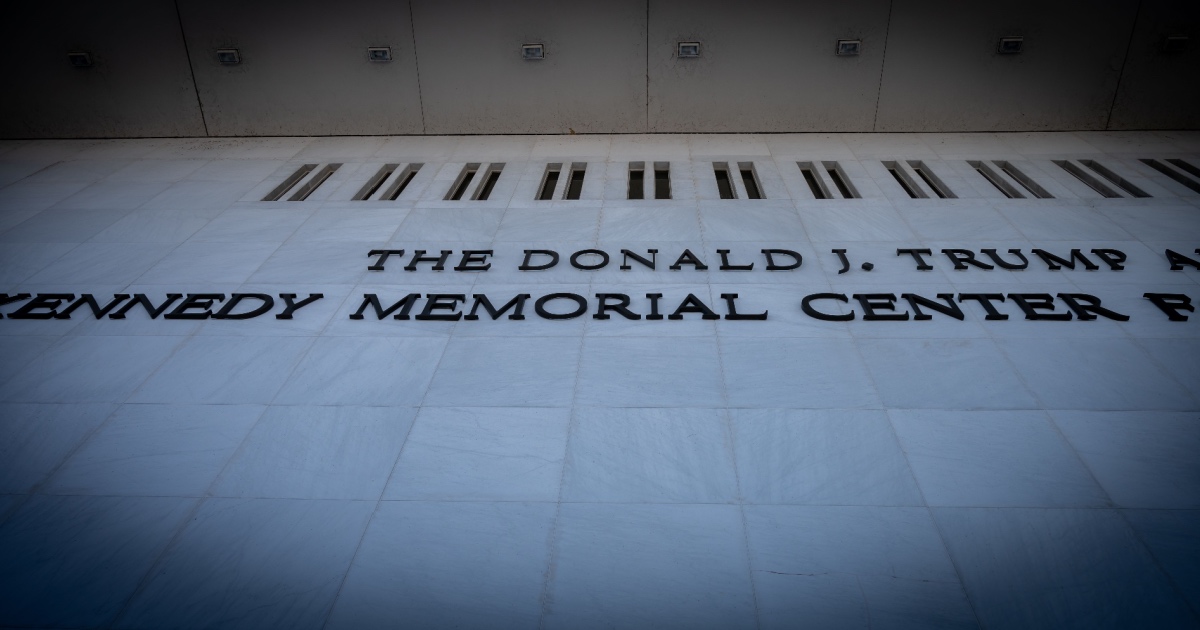
At around 3 a.m. on June 13, 2026, workers arrived at one of Washington’s most recognizable buildings and began chiseling letters off its facade. The name they removed hadn’t been there long – just a few months – and a federal court had already ruled it was never legally placed there to begin with. By daylight, scaffolding and black tarps covered the front of the John F. Kennedy Center for the Performing Arts, hiding the spot where Donald Trump’s name had briefly appeared. Nearly a month later, those tarps are still there.
On July 8, the Trump demand was rejected yet again. A federal appeals court rejected President Donald Trump’s bid to restore his name to the Kennedy Center as he challenges a lower court’s order that stripped his name from the Washington performing arts landmark. The ruling was the second time the administration had tried and failed to halt the removal at the appellate level. The case is still ongoing, but Trump’s name is off the building, off the website, and out of any trademark filings – and it’s staying that way for now.
The legal question at the center of all this is simpler than it sounds. U.S. District Judge Christopher R. Cooper ruled in May that the Kennedy Center must drop the Trump branding because the venue’s board of directors changed its name without securing the necessary congressional approval. The center’s founding law delegates the ability to name it to Congress, and Cooper wrote that the law “makes crystal clear that the Center is to be named for President Kennedy.” That law is Public Law 88-260, a 1964 federal statute that established the Kennedy Center as a living memorial to the 35th president.
How Trump’s Name Got There in the First Place
When President Donald Trump was named chairman of the Kennedy Center’s board in February 2025, backlash from ticket buyers, slated performers, and certain board members – including Shonda Rhimes – was swift. Trump had replaced the previous board of trustees shortly after taking office, installing his own appointees and becoming board chair himself. After Donald Trump’s handpicked board voted to rename the storied institution in December 2025, Rep. Joyce Beatty brought suit to halt the renaming.
The vote itself was contentious from the start. In December, Beatty called in virtually to a Kennedy Center board meeting hosted at the Palm Beach home of a fellow board member and major Trump donor, and was shocked by a measure that hadn’t been on the agenda: a bid to rename the arts complex after Donald Trump. When Beatty tried to object, her line was muted, and the board went on to approve the renaming. That decision was later characterized as unanimous, but Beatty – along with the other non-Trump-appointed board members, known as ex officios – hadn’t been allowed to vote.
The new signage renamed the building “The Donald J. Trump and The John F. Kennedy Memorial Center for the Performing Arts.” The following day, fresh lettering went up on the building’s exterior. The speed of that move would later become significant: it meant the renaming had been planned well in advance and carried out without the congressional authorization the 1964 law requires.
The Case Against the Renaming
On December 22, 2025, Congresswoman Joyce Beatty, an ex officio trustee, filed suit in the U.S. District Court for the District of Columbia against President Donald J. Trump, Kennedy Center officials, and members of the Board. Beatty, a Democrat from Ohio, serves on the Kennedy Center board by virtue of her congressional seat. Her lawsuit argued not only that the renaming was illegal, but that she had been actively prevented from opposing it.
In February 2026, in the wake of declining ticket sales and without any warning, Donald Trump announced that the Kennedy Center would shut down, ostensibly for renovations. At that point, Beatty amended her lawsuit to also prevent the Center’s unlawful closure. The planned shutdown was set to begin July 5, 2026, and was framed by the administration as a two-year renovation project. Critics saw it as an attempt to effectively shutter a venue that had become a legal and political liability.
On May 29, 2026, Judge Cooper sided with Beatty on the core issues. He ordered, among other things, the removal of Trump’s name from the facade of the John F. Kennedy Center for the Performing Arts and all other similar physical signage, as well as the deletion of his name from the official website and the withdrawal of any trademark applications that included Trump’s name. Cooper also blocked the planned two-year closure. The administration appealed, and the July 8 ruling was the result of that appeal.
What the Appeals Court Actually Said
A three-judge panel said Trump and the Kennedy Center’s board, in their motion to stay the lower court’s order, failed to show they would be “irreparably injured” without his name being restored. “Since that removal has already occurred,” the panel on the U.S. Court of Appeals for the District of Columbia Circuit said, “a stay would not avert those harms (even assuming they would qualify as irreparable).”
The Justice Department had argued that removing Trump’s name from the building would threaten fundraising at the center, contributing to what lawyers described as financial decline. The panel also said Trump and the board failed to provide any “specific facts and evidence” that the center’s fundraising efforts would be harmed if Trump’s name is not included. The appeals court treated the executive director’s supporting declaration as legally insufficient, noting it was factually unsupported.
The court also brushed aside a separate argument that the Kennedy Center could be forced to refund donations if Trump’s name was not restored, noting that the claim had never been presented to the lower court. Arguments raised for the first time on appeal are generally forfeited under federal procedural rules, and the panel applied that standard here.
The three judges who comprised the panel included a Trump appointee. Specifically, Circuit Judges Robert Wilkins and Patricia Millett, both appointed by former President Barack Obama, were joined on the panel by Trump-appointee Circuit Judge Gregory Katsas. The ruling was unanimous.
The Real Cost of the Takeover
The legal dispute has unfolded against a backdrop of steep decline at the institution itself. On January 9, 2026, the Washington National Opera announced it would leave the center; artistic director Francesca Zambello, who had led the company for 14 seasons, said she was “deeply saddened to leave the Kennedy Center.” The Opera had been in residence at the Kennedy Center since 1971.
The wave of artist cancellations had begun even earlier. One of the first performers to cancel was a touring production of the musical Hamilton. In a statement on X in March 2025, producer Jeffrey Seller said he opposed the Trump administration’s ousting of many Democratic board members. Actress and writer Issa Rae followed suit, canceling her sold-out March performance via Instagram. Musician Béla Fleck and soprano Renée Fleming – a Kennedy Center honoree – also either canceled appearances or withdrew from advisory roles. One presenter cited “significantly lowered ticket sales, frequent refund requests, and a decline in donations” in canceling the remainder of their season at the Terrace Theater.
The Kennedy Center Honors, which Trump personally hosted in December 2025, drew a fraction of its usual audience. The 48th Kennedy Center Honors telecast drew the smallest audience ever for the event. According to Nielsen data reported by Deadline, the broadcast averaged 3.01 million viewers – down 26% from the 4.1 million viewers in 2024, which itself had been one of the lowest-rated shows in recent years. (Preliminary reports had put the number even lower, at 2.65 million, before final Nielsen figures were released.)
These were the very fundraising and financial conditions the administration claimed Trump’s name would help reverse. The appeals court found no evidence to support that theory.
The July 8 ruling was not a final judgment on the merits of the case. The appeal continues, and Trump’s legal team can still argue before the D.C. Circuit that the original removal order was wrong. But for now, and for the foreseeable future, the building carries only the name Congress gave it in 1964.
Norm Eisen and Nathaniel Zelinsky, attorneys representing Beatty in the matter, said in a joint statement: “The D.C. Circuit’s decision means Donald Trump’s name will remain off the Kennedy Center for the foreseeable future, exactly as the law requires, and as Congress intended when it established it.”
Beatty herself was direct about what she wanted to see next. In a statement, she said: “Today’s ruling again affirms that this administration’s efforts to rename the Kennedy Center were unlawful. His name no longer desecrates this sacred memorial, which belongs to the American people. Now it is time for the Trump administration to accept this, comply with the law, and take the tarps down.”
The administration’s position after the May ruling had been defiant. In the wake of the judge’s ruling in May, Trump said he would order the Commerce Department to transfer management of the Kennedy Center to Congress. The Kennedy Center filed an appeal shortly thereafter. That appeal is now 0 for 2 in the D.C. Circuit.
The Building Stays Dark – For Now
The Kennedy Center case is, at its core, a dispute about whether a president can unilaterally rename a federally established institution without an act of Congress. Two courts, including a panel that included a judge Trump himself appointed, have now answered that question the same way.
The 1964 law that created the Kennedy Center is specific: it names the institution, designates it as a living memorial to President Kennedy, and reserves the power to change that designation to the legislative branch. The administration’s argument was never about the text of that law. It was about whether the courts would stop a sitting president from doing what he wanted with a building his appointees controlled. So far, they have.
For the Kennedy Center itself, the legal victories have not resolved the operational crisis. Ticket sales remain depressed, marquee artists have stayed away, and the building’s signature facade is still hidden behind scaffolding a month after Trump’s name came down. The court has prevented a two-year closure, but it cannot compel a board chaired by the president to schedule performances or book talent. That tension is heading back to Judge Cooper before July is out.
AI Disclaimer: This article was created with the assistance of AI tools and reviewed by a human editor.