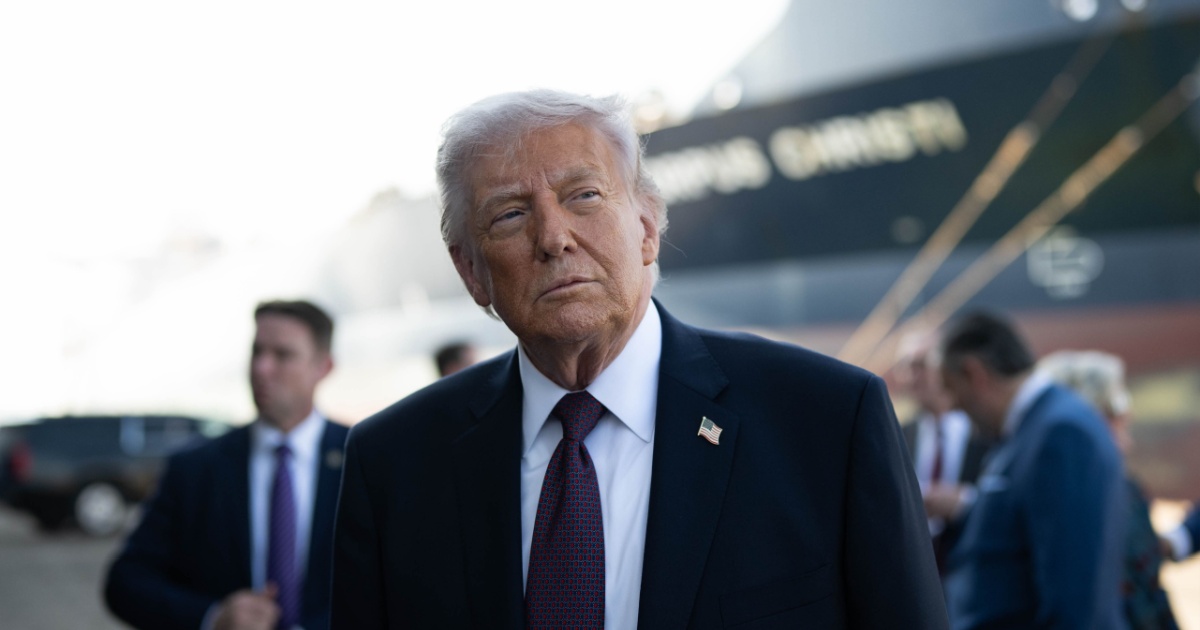

At a conference where he was making his 10th consecutive appearance, Donald Trump delivered a warning that has followed him into every news cycle since: ‘Americans who don’t respect the president are going to have a problem.’ The crowd at the Faith and Freedom Coalition’s annual policy event in Washington cheered. Online, the blowback was instant – and the critics came armed with receipts.
Trump addressed the Faith and Freedom Coalition’s 2026 Policy Conference in Washington, D.C., on June 26, marking his 10th appearance at the “Road to Majority” event. The speech covered familiar ground – border security, religious liberty, economic growth – but one passage cut through everything else. Trump told the audience that roughly 18 months ago, America faced massive shortages across uniformed services, including police and firefighters, because those in the jobs felt ashamed of their country and its leaders. Then came the line that landed everywhere at once.
“You have to respect the President,” Trump said. “If you don’t respect the President, you’re going to have a problem. You’re going to have a problem.” He framed it not as a political threat, but as the root cause of a national crisis he claimed to have fixed. The military recruiting numbers, he argued, proved his point. The critics arguing the double standard proved something too.
Trump told the crowd there are now waiting lists to join the military – that the country went from “the worst recruitment numbers ever” in one year to “the best recruitment numbers ever.” On the raw data, he has a case. The broader context, however, is more complicated. You can see the clip below.
Trump: You have to respect the president. If you don't respect the president, you're going to have a problem pic.twitter.com/k1kQBktLq5
— Acyn (@Acyn) June 26, 2026
The Recruiting Rebound Is Real – and Bigger Than One Factor
According to the Defense Department, the U.S. military achieved its best recruiting numbers in 15 years in fiscal year 2025, with each service exceeding its goal and all reserve components, with the exception of the Army Reserve, also hitting their targets. The numbers are specific and striking. According to the MOAA, the Army had a goal of 61,000 recruits and hit 62,050; the Navy had a goal of 40,600 and hit 44,096; the Air Force had a goal of 30,100 and attained 30,166; the Space Force had a goal of 796 and hit 819; and the Marine Corps met its goal of 26,600 recruits, according to the Defense Department.
The challenge preceding this surge had been described as the worst recruiting crisis since the end of the draft in 1973. In fiscal year 2023, none of the Army, Navy, or Air Force hit their recruitment goals. The reversal, by any measure, is dramatic.
Pentagon officials drew a direct line between the political shifts of the 2024 presidential election and the surge in recruiting, according to the Washington Times. “If you look at the data from November, from the election of President Trump and then Secretary Hegseth’s confirmation thereafter, the numbers that we’ve seen during that time period have been historic,” Pentagon spokesman Sean Parnell said in a statement.
Independent analysts offered a more layered picture. Recruiting rebounded significantly following years of struggles tied to the COVID-19 pandemic, a strong civilian job market, and declining interest among younger Americans – with the upturn actually beginning before the 2024 election, according to reporting from the American Homefront Project. Pay increases also factored in. Military branches expanded recruiting efforts and increased enlistment incentives, including larger signing bonuses and new programs designed to attract recruits. According to a 2025 analysis from USAFacts, pay for a new enlistee with less than two years of experience rose from just under $22,000 in 2022 to $27,828 in 2025.
The underlying pool of eligible recruits, meanwhile, remains a structural challenge that no president fully controls. Katherine Kuzminski, director of studies at the Center for a New American Security, has noted that only about 23% of youth are eligible based on service standards to serve in the military, with an even smaller share actually interested in signing up. A 2026 report from Military.com put it more precisely, noting that roughly 77% of Americans aged 17 to 24 are ineligible to serve without a waiver.
The Question of Respect the President – and Who Gets It
Trump’s claim that disrespect for the president caused the recruiting slump is a political argument, not a documented causal one. But the reaction it sparked was less about the logic and more about the messenger. For critics, a president issuing a public warning about respect for the office carries a different weight when that president has spent years doing the opposite toward his predecessors.
In 2011, four years before he launched his own run for the White House, Trump latched onto the long-running “birther” conspiracy theory that President Barack Obama was not born in the United States, disputing the validity of his birth certificate. In response, Obama produced his long-form certificate to show that he was, in fact, born in Hawaii. Trump eventually conceded that Obama was born there, later promoting similar theories about Senator Ted Cruz and former Vice President Kamala Harris being ineligible to be president.
The attacks on Obama did not stop there. Earlier in 2026, Trump shared an AI-generated video on his Truth Social platform that depicted Barack and Michelle Obama as apes, drawing widespread criticism across the political spectrum before the post was taken down. The White House initially defended the post before attributing it to a staffer error, according to CNBC. The episode drew bipartisan condemnation before the post was quietly deleted.
The treatment of Biden followed a similar pattern. Biden’s office announced on May 18, 2025 that he had been diagnosed with an aggressive form of prostate cancer that had already spread to his bones. At a May 30, 2025 Oval Office press conference – about two weeks after the diagnosis was made public – Trump called Biden “a somewhat vicious person” and told reporters not to feel sorry for him, according to Forbes. Prior to that press conference, Trump had called his predecessor “scum” on social media and shared a post that referred to Biden as a “decrepit corpse.”
A new wave of Trump attacks on Obama arrived during his second term, as Newsweek noted in a June 2026 analysis. In a late-night burst of 55 social media posts in May 2026, Trump accused Obama of serious misconduct without evidence, including resharing a message that described him as a “traitor” and called for his arrest.
Read More: Trump’s Actions in 2026 Are Igniting Anger at Home and Across the World
What the Confidence Numbers Actually Show
If respect for leadership drives civic participation, the data on police and law enforcement offers a useful comparison point. Public confidence in local police rose to 74% in 2024, up from 71% in 2023 – a meaningful shift after years of decline following the racial justice protests of 2020. Among Black Americans, confidence in local law enforcement climbed from 59% in 2021 to 64% in 2024, and overall satisfaction with police-community relations reached 76% in 2024 after dipping to 74% the year before. These are real changes in public attitudes toward uniformed institutions – and they predate Trump’s second term.
Trump’s argument at the Faith and Freedom Coalition implied a clean before-and-after, with November 5, 2024 as the dividing line. He said the shift started “on that beautiful day, November 5th” – Election Day – and that recruiting numbers began improving before he even had the chance to act. The Washington Times reported that the blockbuster recruiting figures bolster the argument that the administration’s approach – specifically the push to roll back what critics view as left-wing policies inside the Pentagon – is resonating with young Americans. Courtney Manning, who has researched military recruitment and readiness with the American Security Project, credited both increased visibility of the military and wider job trends as parallel factors in the recruiting surge.
Where the Criticism Lands
The double-standard criticism that followed Trump’s “respect the president” remarks draws from a documented record. Spending years questioning a predecessor’s citizenship, posting AI-generated dehumanizing content targeting a former president and his wife, and publicly mocking a predecessor at the time of a cancer diagnosis all sit squarely in the public record. When a sitting president demands institutional respect, that record does not disappear from view.
The military recruiting numbers are real, and analysts broadly agree the causes are multiple: pay went up, the civilian job market softened, recruiting infrastructure expanded, and the political climate shifted. Whether presidential respect is the primary engine of that turnaround is a claim the data can neither confirm nor rule out. What the numbers do show is that the military is in measurably better shape than it was two years ago.
Voters heading into midterm season are left to weigh a genuine policy result against a genuine credibility question – and to decide how much weight they give each side.
AI Disclaimer: This article was created with the assistance of AI tools and reviewed by a human editor.
Read More: Veiled Message From Pope Overshadows Trump’s July 4 Festivities