
A Quick Overview:
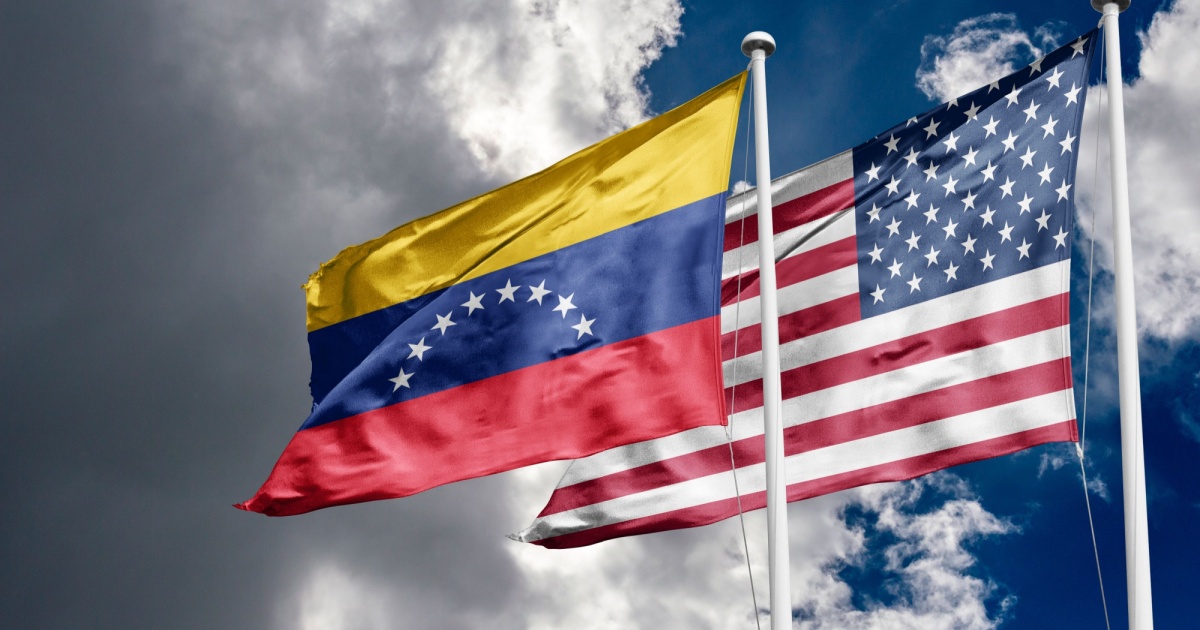
On May 12th, President Donald Trump announced that he is “seriously considering” making Venezuela the 51st state of the United States, citing the country’s enormous oil wealth as his primary motivation. The statement comes roughly five months after a U.S. military operation captured Venezuelan President Nicolás Maduro and brought him to New York to face narcoterrorism charges. Venezuela’s acting president, Delcy Rodríguez, has flatly rejected the idea. The proposal is the latest in a series of territorial ambitions Trump has publicly floated during his second term, following similar overtures toward Canada and Greenland. Constitutional scholars and international law experts broadly agree that such an annexation would face insurmountable legal, political, and diplomatic obstacles.
Barely five months after ordering a military operation that extracted a sitting head of state from his own capital city, President Donald Trump has floated a proposal that would have been unthinkable in any recent American administration: turning a sovereign South American nation into the 51st state of the United States. The remark, made in a phone call on Monday, May 12, 2026, was relayed publicly by Fox News correspondents and immediately ignited a firestorm of reactions from Caracas to Washington.
The announcement caught a few close observers entirely off guard. Trump had already tested the rhetorical boundaries of American expansionism throughout his second term, repeatedly suggesting that Canada and Greenland should join the Union. Venezuela, though, carries a different weight and a different history. It is a country that U.S. forces actively invaded, whose elected head of government is currently sitting in a federal detention facility in New York, and whose oil resources are now flowing under terms dictated in large part by Washington.
What follows from here will shape not just U.S.-Venezuela relations, but the direction of American foreign policy under Trump more broadly. The oil, the law, and the chain of events that led from a pre-dawn military strike to a presidential phone call suggesting statehood all point toward one conclusion: this story is far from over.
The Statement That Stopped Newsrooms
Trump told Fox News correspondent John Roberts on Monday that he was now “seriously considering a move to make Venezuela the 51st state.” Roberts reported that Trump told him directly he was “serious about beginning a process to make Venezuela the 51st state,” also claiming that “Venezuela loves Trump” and noting there was $40 trillion in oil in the country.
A White House spokesperson described the bilateral relationship in glowing terms, saying that “relations between Venezuela and the United States have been extraordinary” and that oil was “starting to flow.” The spokesperson did not provide details about what Trump’s plan to make Venezuela a part of the United States would actually look like.
This was not a casual aside. Trump has repeatedly characterized the Venezuela operation as a strategic success, and the statehood comment fits a pattern of second-term expansionism that has alarmed both allies and legal experts. Trump floated Venezuelan statehood as his administration continues to work with the country’s acting president after dictator Nicolás Maduro was captured by U.S. forces and brought back to the United States to stand trial on narco-terrorism charges.
How Venezuela Got Here: Operation Absolute Resolve
On January 3, 2026, the United States launched a military operation in Venezuela, codenamed Operation Absolute Resolve, beginning around 2 a.m. local time. U.S. Armed Forces bombed infrastructure across northern Venezuela to suppress air defenses while an apprehension force attacked Maduro’s compound in Caracas. Maduro was captured during the operation and taken to New York to face drug trafficking charges. He has pleaded not guilty. Maduro and his wife, Cilia Flores, were transported by U.S. forces to face their trial in Manhattan federal court.
President Trump announced in the aftermath that the U.S. was “going to run the country, until we can do a safe, proper and judicious transition” of power.
The Rise of Delcy Rodríguez
With Maduro in U.S. custody, Venezuela needed a leader. Venezuela’s military recognized Vice President Delcy Rodríguez as the country’s acting head of state. Defense Minister Vladimir Padrino Lopez issued a statement endorsing a Supreme Court ruling that appointed Rodríguez as acting president for 90 days. Rodríguez, next in the presidential line of succession, had served as Maduro’s vice president since 2018, overseeing much of Venezuela’s oil-dependent economy as well as its feared intelligence service.
A stalwart of both the Chávez and Maduro governments, Rodríguez had previously served as foreign minister and oil minister. Since taking over from Maduro, she has overseen a thawing of relations with Washington while under heavy pressure to meet Trump’s demands for access to the country’s vast fossil fuel reserves. Trump has repeatedly praised Rodríguez, who has passed reforms opening Venezuela’s mining and oil sectors to foreign companies, notably from the U.S.
While on Air Force One, Trump largely avoided committing to new elections in Venezuela, indicating he would instead focus on “fixing” the country and allowing U.S. oil companies access to its petroleum reserves. “I think we’re looking more at getting it fixed, getting it ready first, because it’s a mess. The country is a mess,” Trump said.
The Oil Imperative: Why Venezuela Matters So Much
Trump’s $40 trillion oil figure, while not a standard industry metric, reflects a real underlying truth about Venezuela’s extraordinary resource endowment. According to the OPEC Annual Statistical Bulletin 2025, Venezuela holds approximately 303 billion barrels of proven oil reserves, ranking it first in the world and accounting for roughly 17% of total global reserves. The U.S. Energy Information Administration corroborates that figure, placing Saudi Arabia a distant second at 267 billion barrels, followed by Iran and Canada.
The strategic stakes extend beyond raw volume. China has deep economic ties to Venezuela, backing PDVSA (Venezuela’s state oil company) financially and embedding itself in mining operations producing critical minerals used in advanced weapons systems. Iran reportedly established drone manufacturing facilities on Venezuelan soil while Russia deployed military advisers. From Washington’s perspective, Venezuela had become a strategic outpost for rival powers in the traditional U.S. sphere of influence.
Yet realizing Venezuela’s oil potential is far from simple. Unlike Saudi Arabia’s light crude, Venezuelan oil generally requires costly, specialized refining to remove sulfur and other impurities. When Maduro’s predecessor, Hugo Chávez, took office in 1999, Venezuela’s crude output was approximately 3 million barrels per day. By the time Maduro’s grip on power had fully weakened, production had dropped below 0.5 million barrels per day in 2020.
The rebound since Maduro’s capture has been striking. Venezuela’s oil exports rose 14% to 1.23 million barrels per day in April 2026, the highest in more than seven years, fueled by more sales to the United States, India and Europe. The April average is the highest monthly volume since late 2018, before U.S. sanctions were imposed on Venezuela’s energy industry. Since Trump took major military and economic action on Venezuela in early January, the United States has become the top destination for Venezuelan oil, with around 445,000 barrels per day exported to America in April, according to Reuters. Chevron said that the increased oil imports from Venezuela are helping mitigate rising fuel costs due to the war in Iran.
For further context on how Trump’s approach is reshaping global energy and foreign policy calculus, see our earlier article: Trump sparks outrage with “world would die” claim.
Venezuela’s Response: A Flat Rejection
Rodríguez wasted little time firing back at Trump’s statehood comment. According to The Daily Wire, she said: “That would never have been considered, because if there is one thing we Venezuelan men and women have, it is that we love our independence process, we love our heroes and heroines of independence.” Rodríguez added that her government would continue to work with the United States in “a diplomatic cooperation agenda.”
According to the Associated Press, Rodríguez was speaking at the International Court of Justice in The Hague on the final day of hearings in a dispute between her country and neighboring Guyana over the massive mineral- and oil-rich Essequibo region. She used the occasion to restate Venezuela’s commitment to its own sovereignty on the world stage.
The rebuke carries a particular irony. Rodríguez has, by necessity, been cooperating extensively with Washington since Maduro’s capture. Trump left Maduro’s vice president in place as Venezuela’s interim leader, and she allowed the U.S. to declare control over Venezuela’s oil resources “indefinitely” amid market transitions. Yet even a leader working closely with the Trump administration draws a hard line at the prospect of her country ceasing to exist as a sovereign nation.
According to the Miami Herald, one poll from the Venezuelan firm Meganálisis in March found that while the public was initially happy to be rid of Maduro, the majority now feel that Trump’s action had little to do with democracy or the well-being of the Venezuelan people and more to do with handing control of the country’s nationalized oil reserves to American companies, which Trump stated as his primary objective after ousting Maduro.
The Constitutional Reality: What Statehood Actually Requires
Beyond the political theater, the constitutional bar for admitting Venezuela as a state is formidably high. The Constitution appears to provide only general guidance to Congress on how to admit new states. The relevant provision permits Congress to admit new states and precludes admitting states within states except as approved by the state legislatures. As Article IV, Section 3 specifies: “New states may be admitted by the Congress into this union.” Venezuela’s government and people would first have to agree to give up their national sovereignty and seek admission.
Historically, new states have entered the Union from U.S. territories rather than independent foreign countries. For Venezuela to become a U.S. state, Congress would have to pass a law via the Admissions Clause of the Constitution, which would then require the president’s signature. Former territories, such as Alaska and Hawaii, also held referendums for residents to vote on statehood before they became part of the union.
The Congressional Research Service outlines the key factors Congress would weigh in any statehood debate, including: whether there is popular support for a status change within the territory, whether that support is sufficient for Congress, and whether altering political status serves the national interest. Any change in territorial political status, including statehood admission, would require congressional approval via a statutory change.
The U.S. has not added a new state since Hawaii in 1959. That 67-year gap speaks to just how extraordinary any statehood process would be, let alone one involving a sovereign nation the U.S. recently invaded.
Trump’s Expanding Territorial Ambitions
Venezuela is the latest addition to what has become a recurring theme of Trump’s second term: the suggestion that American borders should expand. During his presidency, Trump has expressed interest in acquiring Greenland, Canada, the Panama Canal, the Gaza Strip, and Cuba.
Canada
At a dinner in Florida in late November 2025 with former Canadian Prime Minister Justin Trudeau, Trump suggested that Canada should give up its sovereignty and join the United States, even calling Trudeau the “governor” of the “Great State of Canada” on social media. Former prime minister Justin Trudeau warned that Trump’s rhetoric was not a joke; in February 2025, he insisted there was “not a snowball’s chance in hell” Canada would join the U.S. Current Prime Minister Mark Carney told Trump directly that Canada “is not for sale, won’t be for sale, ever,” emphasizing that the two countries deal with each other as sovereign nations.
An Angus Reid poll showed that 90% of Canadians are against being annexed by the United States.
Greenland
Trump has said as far back as 2019 that he wants the U.S. to buy Greenland, a massive Arctic island that is an autonomous territory of Denmark. His stated rationale centers on national security: while the Danish territory has said it is seeking independence from Copenhagen but is not inclined to join the U.S., Trump has voiced a strong desire to secure Greenland amid increased Russian and Chinese presence in the Arctic. “If you look at Greenland right now, if you look at the waterways, you have Chinese and Russian ships all over the place, and we’re not going to be able to do that,” Trump told reporters.
Cuba
During the 2026 Cuban crisis and American blockade of the island, Trump stated, “I do believe I will have the honor of taking Cuba.” When questioned by a journalist, Trump clarified “in some form,” going on to say, “whether I free it, take it, I think I can do anything I want with it.” The following day Trump stated, “we will be doing something with Cuba very soon.”
Venezuela: Prior Signals
Trump first hinted at making Venezuela the 51st state in a Truth Social post in March when he wrote, “Good things are happening to Venezuela lately! I wonder what this magic is all about? STATEHOOD, #51, ANYONE?” While Trump claims that Venezuelan statehood is a serious consideration inside the Oval Office, the president has often suggested that the United States would take over foreign countries or territories. The March post followed Venezuela’s victory over Italy in the World Baseball Classic semi-finals, giving the comments an initially playful tone that has since taken on more serious dimensions.
Read More: 590,000 People Paid $100 for a Trump Phone – and Got This Email Instead
Broader Context: A Pattern of Expansionist Rhetoric
Analysts have increasingly framed Trump’s territorial statements not as random provocations but as part of a coherent, if contested, strategic worldview. The foreign policy of the second Trump administration has been described as imperialist and expansionist in its approach to the Americas, and isolationist in its approach to Europe, espousing a realist “America First” agenda. Former U.S. ambassador to NATO Ivo Daalder stated that under Trump’s administration, the rules-based international order has effectively ceased to exist.
Writing in Foreign Policy, columnist Howard French described the core tension as an “extremely foolhardy geopolitical paradigm shift” that weakens U.S. commitments to long-standing allies in favor of the notion that dominating the Western Hemisphere is sufficient for American security.
According to a joint Washington Post-ABC News-Ipsos poll conducted in April 2025, 68% of Americans think that Trump is serious about trying to take control of Greenland, and 53% think he is serious about Canada. No comparable public polling on Venezuela statehood sentiment had been published at the time of writing.
The Brookings Institution has described Trump as fundamentally “testing, and in important respects reshaping, the foundations of the postwar order” by redefining what counts as security and treating long-standing relationships as transactional rather than as real commitments.
The Venezuela Oil Calculus in Global Context
Rebuilding Venezuela’s oil industry is the work of a decade, requiring hundreds of billions of dollars in investment and technological transfers. The crude oil in the Orinoco Belt is not just heavy, but extra-heavy: so viscous it cannot flow through a pipeline without being partially processed first. Reuters reported Valero preparing to import up to 6.5 million barrels in March 2026, bound for Gulf Coast refineries, while Chevron, the only U.S. major still producing in Venezuela, has been ramping shipments and supplying other refiners.
That technical dependency cuts directly to the heart of Trump’s strategy: by removing Maduro, installing a cooperative interim leader, and reopening Venezuela’s oil sector to U.S. companies, Washington has effectively gained the economic leverage it wanted without formal annexation. The U.S. Treasury Department is currently managing the proceeds from Venezuelan oil sales in specialized accounts. That level of financial control over a sovereign country’s primary export revenue already raises profound questions about the boundary between partnership and de facto annexation.
Key Takeaways
1. Trump’s declaration is not legally actionable without Congress and Venezuelan consent. According to the Constitution, Trump cannot legally declare Venezuela the 51st state without congressional approval or Venezuela’s consent. The prospect of both materializing simultaneously strains credibility, but legal scholars note the statement cannot be entirely dismissed as pure theater, given the military action already taken.
2. Venezuela’s acting government has rejected statehood, but remains in a dependent position. Rodríguez has publicly refused to countenance annexation while simultaneously cooperating with Washington on oil policy. She vowed to hold new elections “sometime,” but declined to provide any official timeline.
3. The oil picture is compelling but complicated. Despite possessing approximately 303 billion barrels of oil, Venezuela’s ability to fully leverage these reserves is challenged by political instability and the technological complexity of extracting extra-heavy crude, which requires a longer and more expensive refining process than most crude grades.
4. This is part of a sustained expansionist pattern. Venezuela joins Canada, Greenland, Cuba, Gaza, and the Panama Canal on a list of territories Trump has publicly suggested bringing under U.S. control. Many have compared Trump’s comments about these territories to statements made by Russian President Vladimir Putin about Ukraine and Chinese leader Xi Jinping about Taiwan.
5. The international legal consensus is clear, even if enforcement is not. Wars of conquest are prohibited under the UN Charter and international customary law. Officials in the United Nations, the U.S., and other countries, as well as international law experts, said the January raid violated the UN Charter and Venezuela’s sovereignty. Any move toward formal annexation would trigger an even more acute legal and diplomatic crisis.
6. The last U.S. statehood admission was 67 years ago. The process through which Hawaii and Alaska entered the Union in 1959 involved decades of territorial governance, population consent, and congressional deliberation. Venezuela is an independent nation of approximately 30 million people with its own military, judiciary, and socialist political tradition. The procedural and political gap between a phone-call comment and actual statehood is enormous.
What This Actually Means
Whether Trump’s Venezuela statehood remark is the opening bid in a long geopolitical strategy, a negotiating tactic to maintain economic leverage over Caracas, or simply a reflection of a president who has found that few things command attention like suggesting the redrawing of a map, one thing is not in doubt: the United States already holds extraordinary influence over Venezuela without annexing it. Washington controls the oil revenue. U.S. companies are extracting the crude. The Treasury manages the accounts. In practical terms, the question of whether Venezuela is a state or a partner may matter less than it appears on paper.
What does matter, concretely, is the precedent. Every time Trump floats territorial expansion and faces no decisive political or legal consequence, the boundary of what is considered normal foreign policy shifts further. For Americans watching this unfold, the most useful question to ask is not whether Venezuela will become the 51st state in the next news cycle. The more relevant question is what kind of relationship the U.S. wants with the rest of the Western Hemisphere, and whether the current approach, military capture, oil leverage, and statehood rhetoric, is building that or burning it down.
AI Disclaimer: This article was created with the assistance of AI tools and reviewed by a human editor.
Read More: Is Trump Rewriting the Rules on Who Gets to Be American?