
Something about Matthew James Sullivan’s story doesn’t add up cleanly. A decorated Air Force veteran. A Bronze Star for valor on the battlefield. A man who held top-secret posts at three of the most secretive intelligence agencies in America. And then, at 39, he was gone – found dead at his home in Virginia, months before a congressional hearing where he had agreed to tell lawmakers what he claimed to know about one of the most closely guarded subjects in the federal government.
Two years passed before the cause of death was officially revealed. Now that it has been, the questions aren’t quieter. They’re louder.
Sullivan’s case surfaced publicly in April 2026, and it arrived at a strange moment – one already charged with congressional investigations, FBI statements, and a list of scientists and defense researchers whose deaths and disappearances have drawn attention from the White House down. Whether the story ultimately proves to be a tragedy, a coincidence, or something darker, it cuts to questions that matter: Who gets to know what the government knows? What happens to the people who try to bring that knowledge out?
A Soldier With Extraordinary Access
Sullivan earned a Bronze Star for valor in Operation Enduring Freedom and later worked for the Air Force Intelligence Agency, National Air and Space Intelligence Center, and the National Security Agency, according to his obituary. That’s three of the most sensitive corners of American intelligence – each one a world where the information you carry doesn’t leave you when you go home at night.
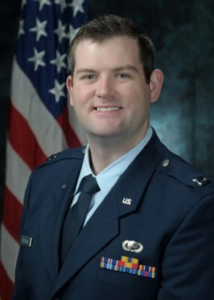
According to the NYPost, he died at his home in Falls Church, Virginia, on May 12, 2024, at the age of 39. According to the Northern District Office of the Chief Medical Examiner, the cause of death was an accidental drug overdose involving a mixture of alcohol, alprazolam, cyclobenzaprine, and imipramine. Alprazolam is the generic form of Xanax, used to treat anxiety. Cyclobenzaprine is a prescription muscle relaxant. Imipramine is an older medication sometimes prescribed for anxiety and depression. Together with alcohol, the combination proved fatal.
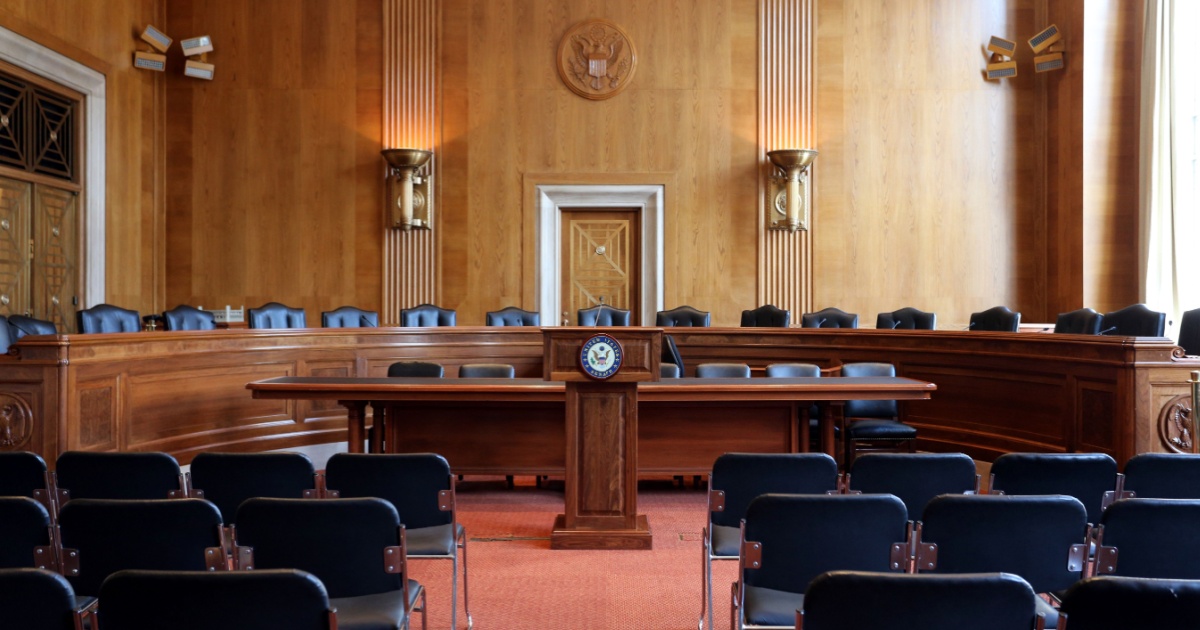
The official finding is straightforward: accidental. But the timing is what has drawn scrutiny. At the time of his death on May 12, 2024, Sullivan had been scheduled to be interviewed by lawmakers in the coming weeks. He never made it to that meeting, or to the congressional hearing planned for the following November.
What Sullivan Was Prepared to Say
Sullivan was said to have been part of what insiders call the legacy UFO program – described as the US government’s crash retrieval program – and was set to appear in Congress in November 2024 to personally discuss what he knew about UFOs in the federal government’s possession. These are the claims of unnamed sources and associates. No government agency has publicly confirmed the existence of any such program.
Sullivan was said by associates to be preparing explosive evidence on so-called “legacy” UFO operations when he was found dead. Rep. Eric Burlison confirmed that David Grusch, the former intelligence officer who had testified publicly about UFOs, had been helping Sullivan prepare to come forward before Sullivan died.
That connection matters. In 2023, David Grusch – an Air Force and intelligence community veteran – testified before Congress that the United States was in possession of UFOs and non-human “biologics,” sending shockwaves through Washington and beyond. Grusch told lawmakers he was informed of “a multi-decade UAP crash retrieval and reverse-engineering program” during his work examining classified programs, and said he was denied access to those programs when he requested it. UAP stands for Unidentified Aerial Phenomena – the current official term for what most people still call UFOs.
The former intelligence officer also told the congressional panel that he and several colleagues had been the targets of what he called “administrative terrorism,” and that he had at times feared for his life since coming forward. Before his public testimony, Grusch had written a letter in May 2022 to the Intelligence Community Office of the Inspector General claiming he faced harsh reprisals after reporting evidence of UFOs, and further claimed he received credible death threats.
According to sources, a version of Grusch’s 2022 complaint to the Intelligence Community Office of the Inspector General referenced concerns tied to Sullivan’s death. What exactly that reference contained has not been made public.
A Funeral Speech That Raised More Questions
At Sullivan’s memorial service, one moment stood out to those who already knew the questions surrounding his work. Retired Major General David Abba, a former director of special programs who later led the Department of Defense Special Access Program Central Office, described Sullivan as someone who carried “the burden that a select few in this nation have of truly understanding what’s going on.”
That phrase – from a man who ran some of the Pentagon’s most restricted programs – has been interpreted very differently depending on where you stand. To Sullivan’s supporters and to those who believe the government holds classified knowledge about UFOs, it was a rare admission. To skeptics, it reflects the kind of language that attaches itself to any high-ranking intelligence figure who has died young.
What is not in dispute is the weight of Sullivan’s credentials. He fit every profile of a credible insider: a Bronze Star recipient, a veteran of sensitive programs at the National Air and Space Intelligence Center, the Air Force Intelligence Agency, and the NSA.
Congress Raises the Alarm
The case did not stay quiet inside intelligence circles. Sullivan’s death has been described as a matter of “grave concern” by Rep. Eric Burlison, a Missouri Republican, who referred the matter to the FBI due to what he called “implications for national security.”
In a letter addressed to FBI Director Kash Patel dated April 16, 2026, Burlison wrote that Sullivan “was preparing to provide testimony to Congress” and that “the sudden and suspicious circumstances surrounding his death raise significant concerns about potential foul play and the safety of other individuals involved in this matter.”
The medical examiner’s ruling of accidental overdose is worth holding alongside those words. The gap between Burlison’s public characterization and the medical examiner’s conclusion is not small – calling a death suspicious carries very different weight than an accidental overdose involving a mix of prescription drugs and alcohol. Still, the congressman has put his name on a formal referral to the FBI, and that referral is now on record.
Burlison has also stated publicly that the Intelligence Community Inspector General assessed a report tied to Sullivan’s case as “credible and urgent,” using statutory language under the Intelligence Community Whistleblower Protection Act. The ICIG, for its part, said it “can neither confirm nor deny the existence of any ongoing or potential investigations.”
The Bigger Pattern
Sullivan’s case has surfaced in the middle of a broader, unresolved story. The House Oversight Committee announced in April 2026 that it would investigate reports of the deaths and disappearances of scientists and researchers who had access to sensitive scientific information.
A nuclear physicist and MIT professor was fatally shot outside his Massachusetts residence. A retired Air Force general went missing from his New Mexico home. An aerospace engineer disappeared during a hike in Los Angeles. These are among at least 10 individuals connected to sensitive US nuclear and aerospace research who have died or disappeared in recent years.
The FBI is leading the effort to look for possible connections into the cases of these missing or deceased scientists and staff who worked at sensitive nuclear or space technology laboratories, according to senior law enforcement officials. Investigators close to the individual cases have said they see no links between them so far.
Journalists and colleagues of those named have rejected claims of a coordinated pattern, with one medical sociologist describing the tendency to connect these deaths as an example of apophenia – the human tendency to perceive meaningful links in unrelated events. That is a genuine and important caution. The human brain is extraordinarily good at finding patterns even where none exist, and fear can drive that process faster than reason.
At the same time, the FBI investigating is not nothing. President Trump mentioned the situation last week, saying: “I just left a meeting on that subject, so pretty serious stuff.” Representatives James Comer of Kentucky and Eric Burlison of Missouri stated: “If the reports are accurate, these deaths and disappearances may represent a grave threat to U.S. national security and to U.S. personnel with access to scientific secrets.”
For anyone following the USS Stein naval mystery and other cases where official explanations have fallen short under public scrutiny, Sullivan’s story will feel familiar: credentialed insiders, classified knowledge, and an institution reluctant to say much at all.
The Whistleblower’s Dilemma
The Sullivan case, whatever its ultimate explanation, illustrates a real and documented problem: the people most likely to know things the public would want to know are also the people who face the greatest consequences for speaking.
National security analyst Marik von Rennenkampff noted that Sullivan had provided information to David Grusch, and described Sullivan as “a very, very close friend of David Grusch’s and one of those key witnesses that Grusch based his inspector general complaint on, which was deemed credible and urgent and that triggered notifications to Congress.”
The core facts about how Sullivan died are not in dispute: a fatal mix of prescribed drugs and alcohol in a private residence, examined by a local medical examiner and categorized as an accidental overdose. What remains contested is what that finding means in the context of the world Sullivan was operating in – one where a previous public witness reported death threats, and where a formal complaint about reprisals apparently referenced Sullivan by name.
The cases cited in the broader missing scientists narrative span several years and involve unrelated circumstances, including natural death, homicide, suicide, and missing-person reports. That variety is exactly what makes the pattern hard to interpret. It also makes it hard to dismiss entirely.
Read More: 17 Conspiracy Theories That Actually Turned Out to Be True
What This Means for You
Two things can be true at the same time. Matthew James Sullivan’s death may have been exactly what the medical examiner says it was: a tragic accident involving a dangerous combination of substances. And it may also be true that the circumstances surrounding his death – his intelligence background, his pending testimony, his connections to the Grusch complaint – deserve more scrutiny than a local medical examiner’s office can provide.
A local medical examiner’s office does not have the tools, the clearance, or the mandate to investigate whether a prospective congressional witness with access to some of the nation’s most sensitive programs was targeted. That is precisely why Burlison’s referral to the FBI exists – not to prove a conspiracy, but to ensure the right level of scrutiny is applied.
The broader question for anyone following this story isn’t really about UFOs. It’s about accountability. As House Oversight Chair James Comer put it, lawmakers want “to know everything that these agencies know” about what happened to the individuals on the list, because “the Committee is concerned with this fact pattern and seeks to understand where U.S. national security or American scientific personnel are at risk.” That’s a reasonable thing to want to know – regardless of how you feel about the more extraordinary claims at the edge of this story. The investigation is ongoing, no conclusions have been drawn, and the public deserves honest answers when they arrive.
A.I. Disclaimer: This article was created with AI assistance and edited by a human for accuracy and clarity.
Read More: ‘Alien Technology’? Scientists Investigate Unusual Spherical UFO