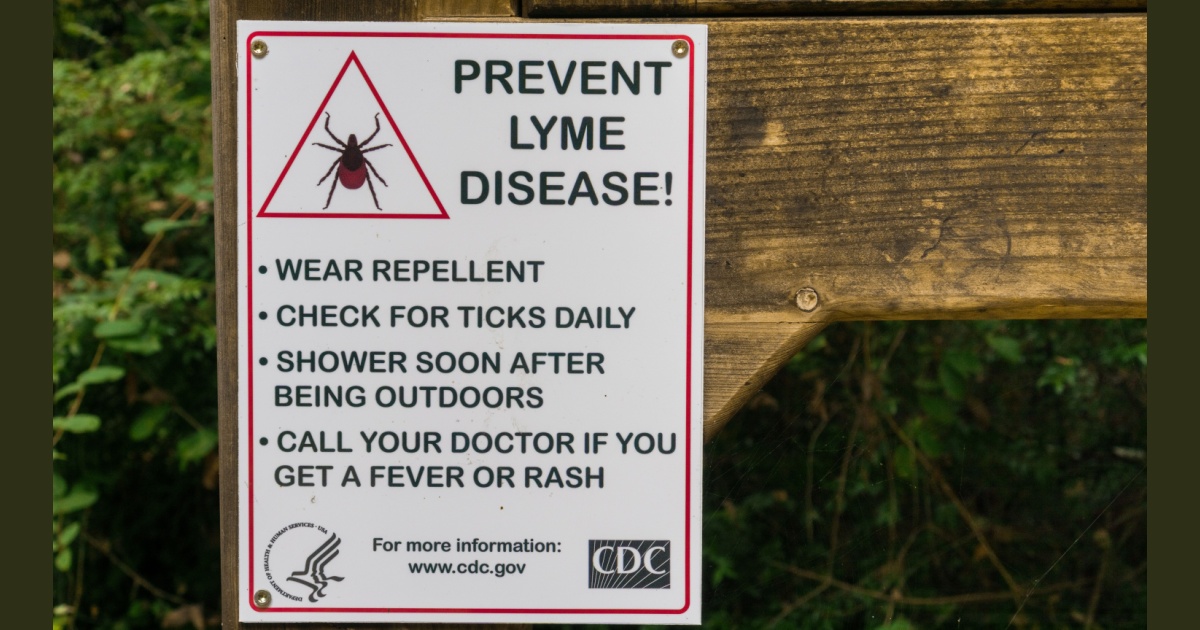

Something is different about tick season in 2026. Emergency rooms from Maine to Minnesota are filling up with people who walked through their own backyard, hiked a familiar trail, or let their dog off the leash in a park – and came home with an unwanted passenger. Doctors who work those ER shifts say they’ve seen this kind of surge before, but not quite like this. Not this early in the spring, and not this widespread.
The numbers are not just elevated. They’re the highest they’ve been in nearly a decade, and federal health officials aren’t waiting until the peak of summer to sound the alarm. The warning has already gone out. Whether most Americans have truly heard it is another question.
For the tens of millions of people who spend time outdoors, this is not an abstract public health story. It’s a practical one. Where are ticks most active right now? What diseases do they actually carry? And what does it take to protect yourself, your kids, and your pets in a season that health authorities are already calling extraordinary? This report pulls together what the federal data shows, what state-level health officials are saying, and what you actually need to do about it.
A Quick Tick Primer
Visits to emergency rooms for tick bites are higher than normal in many parts of the country right now, according to the CDC’s Tick Bite Tracker. In all regions except the South Central United States, weekly rates of ER visits for tick bites are the highest for this time of year since 2017. Ahead of Lyme Disease Awareness Month in May, the CDC is urging the public to protect themselves and their families from tick bites, and the serious diseases they can cause, including Lyme disease, Rocky Mountain spotted fever, and alpha-gal syndrome.
Every year, an estimated 31 million people in the United States are bitten by a tick. Lyme disease is the most common tick-borne disease in the country, with an estimated 476,000 patients treated for it each year. This report details the regional breakdown of ER visit rates, the tick species driving exposure across different states, the diseases at stake, and the evidence-backed steps every American should take right now.
The 2026 Surge: What the CDC Data Shows
National ER Visit Rates
Emergency room visits for tick bites were up more than 25% in April compared to the same month last year, according to the CDC. In all regions except the South Central U.S., weekly rates of ER visits for tick bites are the highest for any April since 2017 – and that does not include visits to urgent care or people who don’t seek treatment at all.
In the Northeast, emergency department visits increased by 40% this April in comparison to last April, CDC data shows. The Pennsylvania Tick Research Lab at East Stroudsburg University reports it has tested 55% more ticks submitted for analysis this year compared to 2025 – a year that was itself higher than normal.
Regional Breakdown
The CDC’s surveillance data, analyzed by region, paints a clear geographic picture of where the burden is heaviest in 2026:
The Northeast has recorded the highest rate of emergency department visits for tick bites in 2026, at 58 per 100,000 ED visits, followed by the Midwest at 40. The Southeast reported 21 visits per 100,000, while the West and South Central regions saw lower rates of 16 and seven, respectively.
The CDC says ER visits for tick bites are now at their highest levels since 2017. The Midwest currently ranks second among U.S. regions for the highest rate of tick-related emergency visits, signaling that the problem extends well beyond the traditionally high-risk Northeast corridor.
For readers in Alabama and surrounding states, more than 200 Alabamians have visited the emergency room after a tick bite so far this year, according to the Alabama Department of Public Health. That number this early in the season has not been seen in years. Epidemiologist Jasmine Kennedy with ADPH said the typical peak tick season is late summer to early fall, but because of the milder winter and warmer temperatures, ticks came out earlier this year.
Why Is This Happening Now?
Climate, Wildlife, and an Earlier Season
This is not a random fluctuation. Experts say a combination of mild winters, wetter weather, and booming wildlife populations has created ideal conditions for ticks to thrive this year. Warmer temperatures have allowed more ticks to survive through winter and emerge earlier than usual, while a surge in white-footed mice – one of the primary hosts for blacklegged ticks – helped fuel population growth.
Climate change plays a significant role. As average temperatures get warmer, ticks thrive and are spreading to new parts of the country. The bugs are surviving winters in larger numbers and staying active for more of the year.
Climate trends are also extending tick season in many parts of the country. Researchers say ticks remain active for longer periods when winters are less severe and humidity levels stay high, increasing the chances of human exposure.
The Biology of Why You Don’t Feel the Bite
One of the most dangerous aspects of tick exposure is that you often don’t know it’s happening. Adult deer ticks are only the size of a sesame seed, and the nymphs that emerge in May and cause most cases of Lyme disease are even tinier – the size of a poppy seed or pencil tip. They have developed specialized proteins that work at the bite site to suppress their victims’ immune system and nerve sensitivity. The bite of a deer tick is usually painless, which makes it easier for ticks to feed on their host and transmit disease.
That makes it easier for the ticks to feed on victims for the 24-plus hours believed necessary to transmit Lyme disease. By the time many people notice a tick, it may have already been feeding for hours.
Where Ticks Are Found: A State-by-State Guide
The CDC’s tick distribution maps identify which species live where across the United States. The agency stresses that these are general distribution maps, not disease-risk maps – even though a specific tick species is found in a region of the United States, it does not necessarily mean it transmits a specific disease in that area, because disease transmission is influenced by multiple factors beyond mere tick presence.
The Northeast and Upper Midwest: Blacklegged Tick (Deer Tick) Country
States most affected: Maine, New Hampshire, Vermont, Massachusetts, Connecticut, Rhode Island, New York, New Jersey, Pennsylvania, Delaware, Maryland, Virginia, Wisconsin, Minnesota, Michigan
The blacklegged tick (Ixodes scapularis) is widely distributed across the eastern United States. The greatest risk of being bitten exists in the spring, summer, and fall. Adult ticks may also be searching for a host any time winter temperatures are above freezing.
This tick transmits a wide range of pathogens, including Anaplasma phagocytophilum (anaplasmosis), Babesia microti (babesiosis), Borrelia burgdorferi and B. mayonii – both of which cause Lyme disease – B. miyamotoi (hard tick relapsing fever), and Powassan virus.
Areas in the Northeast and Midwest are expected to see some of the heaviest tick activity, particularly for blacklegged ticks that can carry Lyme disease. Connecticut, the state that gave Lyme disease its name, is already seeing significant activity in 2026. According to the Connecticut Agricultural Experiment Station, which runs Connecticut’s tick testing program, an average of 30 tick submissions per day are being received for testing, and greater than 40% have tested positive for Lyme disease spirochetes.
For a detailed breakdown of Lyme disease symptoms to watch for after any tick exposure in these states, this guide to Lyme disease signs covers both the acute and chronic stages of the disease.
The South and Central States: Lone Star Tick Territory
States most affected: Texas, Oklahoma, Arkansas, Missouri, Kansas, Tennessee, Kentucky, North Carolina, South Carolina, Georgia, Florida, Alabama, Mississippi, Louisiana
The lone star tick (Amblyomma americanum) is widely distributed in the Northeast, South, and Midwest. White-tailed deer are a keystone host for this tick. Since the 1940s, conservation measures and relocation of deer have led to increased numbers and range of white-tailed deer populations in the Eastern United States – and the lone star tick has followed.
This species is of growing national concern not only because of the infections it can cause, but because of a lesser-known consequence that is expanding rapidly: alpha-gal syndrome. In the United States, the lone star tick is most often associated with alpha-gal syndrome (AGS). Most reported cases of AGS in the United States occur in South, East, and Central states – the areas where most lone star ticks are found.
The Pacific Coast: Western Blacklegged Tick
States most affected: California (particularly northern California), Oregon, Washington
The western blacklegged tick (Ixodes pacificus) is found along the Pacific coast of the United States, particularly northern California. Larvae and nymphs often feed on lizards, birds, and rodents, while adults more commonly feed on deer. This tick can also transmit Lyme disease, though at lower rates than its eastern counterpart.
East of the Rockies: American Dog Tick
States most affected: Most states east of the Rocky Mountains, with limited populations west of the Rockies
The American dog tick (Dermacentor variabilis) is widely distributed east of the Rocky Mountains and also occurs in limited areas west of the Rockies. It transmits tularemia and Rocky Mountain spotted fever. The highest risk of being bitten occurs during spring and summer.
Multi-Region: Asian Longhorned Tick
As of 2024, the Asian longhorned tick (Haemaphysalis longicornis) has been found in Arkansas, Connecticut, Delaware, Georgia, Illinois, Indiana, Kentucky, Maryland, Massachusetts, Missouri, New Jersey, New York, North Carolina, Ohio, and Pennsylvania, among other states. This invasive species, first detected in the U.S. in 2017, is being closely monitored by public health authorities.
The Diseases at Stake
Lyme Disease
Lyme disease is the most reported tick-borne illness in the United States, and 2026 is tracking to be a significant year for transmission. Symptoms, diagnosis, and treatment information is available on the Mayo Clinic’s Lyme disease page. Early symptoms typically include fever, fatigue, headache, muscle aches and pains, and swollen lymph nodes. In some cases, infected people develop a circular “bull’s-eye” rash. Left untreated, Lyme can cause facial paralysis, an irregular heartbeat, and arthritis.
Removing an attached tick within 24 hours can help prevent Lyme disease. Early treatment with antibiotics is effective. The challenge is that many people are bitten without realizing it, and symptoms can take days to weeks to appear.
The Johns Hopkins Lyme and Tickborne Diseases Dashboard offers interactive maps showing the geographic spread of tick-borne disease cases, including Lyme, by county.
Rocky Mountain Spotted Fever
Rocky Mountain spotted fever (RMSF) is caused by bacteria transmitted by the American dog tick in most of the eastern U.S., and the brown dog tick in the Southwest. It can be rapidly fatal if not treated promptly with the antibiotic doxycycline. Despite its name, RMSF is most commonly reported in the Southeast and South Central states.
Alpha-Gal Syndrome: The Red Meat Allergy No One Expects
One of the most striking – and still widely misunderstood – consequences of a tick bite is alpha-gal syndrome (AGS). AGS is a potentially life-threatening allergy that can occur after a tick bite, with red meat, dairy, and other products triggering mild to severe reactions.
Symptoms usually appear 2 to 6 hours after eating red meat or dairy products – a delay that makes the connection to diet (and to a tick bite weeks or months earlier) extremely difficult to recognize. More than 110,000 suspected cases of AGS were identified between 2010 and 2022. Cases of AGS are not nationally notifiable to the CDC, and the actual number of people affected is not known, but as many as 450,000 people may be impacted.
Research from Virginia Commonwealth University adds even sharper context. Researchers found a 100-fold increase in positive test results for alpha-gal antibodies between 2013 and 2024. As one researcher put it, “Alpha-gal syndrome has gone from a medical curiosity to a major public health issue in just a decade.” Cases are now appearing “far beyond the Southeast, including in the Northeast and Midwest.”
The CDC’s alpha-gal syndrome page confirms there are currently no vaccines to prevent AGS, and that the most effective protection is preventing tick bites in the first place.
What the CDC Is Telling You to Do
The CDC’s official April 2026 advisory lays out a clear set of actions. Alison Hinckley, PhD, an epidemiologist and Lyme disease expert with the CDC’s Division of Vector-Borne Diseases, stated directly: “Tick season is here and these tiny biters can make you seriously sick. The good news is you have options to help prevent tick bites when you spend time outdoors: You can wear EPA-registered insect repellent and permethrin-treated clothing, do tick checks, and remove attached ticks as quickly as possible. These simple steps can go a long way in protecting you and your family from diseases spread by ticks. And if you develop a rash or fever in the days to weeks after a bite, or after being in an area with ticks, seek medical care promptly.”
Before You Go Outside
The CDC advises treating clothing and gear with 0.5% permethrin and using EPA-registered repellents such as DEET, picaridin, IR3535, oil of lemon eucalyptus, para-menthane-diol, or 2-undecanone. Permethrin can be used to treat boots, clothing, and camping gear, remaining effective through several washes.
When outdoors, hikers are advised to stick to the center of trails and wear light-colored clothing that makes it easier to spot ticks.
After You Come Inside
After being outdoors, the CDC recommends checking clothes, gear, and pets; drying clothes on high heat for at least 10 minutes; showering within two hours; and removing any attached ticks as soon as possible.
When performing a full-body check, be sure to check under the arms, in and around the ears, inside the belly button, behind the knees, in and around the hair and hairline, between the legs, and around the waist.
Removing a Tick Correctly
If a tick is found attached to the skin, the removal method matters. Grab it and pull it straight out – not to the side. Do not use heat, lighter fluid, alcohol, or anything else. Then wash the area with soap and water.
Many popular “home remedy” tick removal methods circulating online are not only ineffective – they actively increase disease risk by agitating the tick and causing it to release more saliva. For a full breakdown of what works and what doesn’t, including which viral videos to ignore, this tick removal guide explains the correct technique and the dangers of doing it wrong.
For Your Yard
Property owners should clear leaf litter from their yards, mow their lawns regularly, and keep wood piles stored in sunny areas. Creating a “tick-free zone” by keeping grass mowed and removing leaf litter, brush, and weeds from the edges of lawns – and checking pets for ticks – can help prevent ticks from latching on.
What to Do if You Find a Tick on Your Pet
To properly check pets for ticks, perform routine inspections, especially during warmer months when ticks are most active. Look for ticks in areas such as the ears, armpits, skin folds, toes, and groin by thoroughly combing through the fur and feeling for any small, firm bumps. After removing a tick from a pet, it is advised to place the tick in a sealed container for identification by a veterinarian.
When to Go to the ER – and When Not To
If you find an attached tick, remove it as soon as possible – do not wait to get to the ER. Removing attached ticks within 24 hours can help prevent Lyme disease. The ER is appropriate when symptoms develop after a bite: particularly fever, rash, facial drooping, joint pain, or any sign of anaphylaxis (a severe allergic reaction) in the hours after eating red meat.
Read More: Why You Should Never Flush Ticks Down the Toilet
What This Means for You
The 2026 tick season is not a normal year. Federal surveillance data confirms it is the worst spring on record for tick-related ER visits since 2017, driven by earlier tick emergence, milder winters, and expanding wildlife populations across the country. The Northeast carries the heaviest burden, but the Midwest, Southeast, and even the West are all showing elevated rates. If you live anywhere in the continental United States and spend time outside, this season applies to you.
The diseases ticks transmit are serious and, in some cases, permanently life-altering. Lyme disease affects an estimated 476,000 Americans every year. Alpha-gal syndrome – the red meat allergy triggered by tick bites – is now documented in the hundreds of thousands and spreading well beyond its traditional Southern range. Rocky Mountain spotted fever can be fatal within days without prompt treatment. None of these are rare edge cases anymore.
The protective steps are well-established, affordable, and genuinely effective. Treat your clothing with 0.5% permethrin before outdoor activities. Use an EPA-registered repellent containing DEET, picaridin, or one of the other approved active ingredients every time you step outside. Do a thorough tick check – including your scalp, behind the ears, and behind the knees – within two hours of coming inside. Shower promptly. Put your clothes in the dryer on high heat for at least 10 minutes. Check your pets every single day during tick season.
If you find an attached tick, remove it immediately with fine-tipped tweezers, pulling straight out with steady pressure. Do not use heat, petroleum jelly, nail polish, or any home remedy. Monitor yourself for fever or rash over the following days and weeks. If symptoms develop, tell your doctor about the bite. Given the current surveillance data, your doctor needs to know.
The season is here. The CDC has made that clear. What you do every time you step outside in the coming weeks is what determines your outcome.
Disclaimer: This information is not intended to be a substitute for professional medical advice, diagnosis or treatment and is for information only. Always seek the advice of your physician or another qualified health provider with any questions about your medical condition and/or current medication. Do not disregard professional medical advice or delay seeking advice or treatment because of something you have read here.
AI Disclaimer: This article was created with the assistance of AI tools and reviewed by a human editor.
Read More: 5 Ways to Make Sure You Don’t Get Lyme Disease This Summer