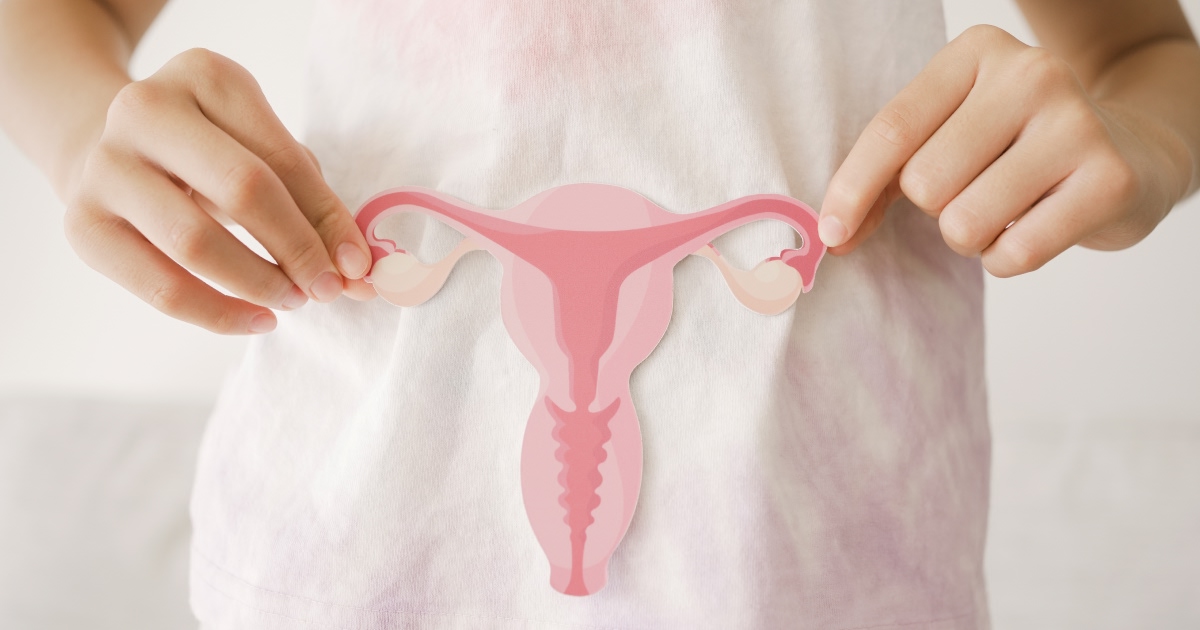

Cheryl Urban had two healthy pregnancies, felt she was done having children, and donated her uterus to a stranger, Chelsea Jovanovich. In a TODAY story published February 7, 2023, Jovanovich shared how the rare transplant gave her the opportunity to become a mother after being born with Mayer-Rokitansky-Küster-Hauser syndrome, or MRKH, a congenital condition in which the uterus does not fully develop. Jovanovich had her first child, Telden, in 2021 using the transplanted uterus and later welcomed a second child.
Urban and Jovanovich had been strangers when their paths crossed through the Penn Medicine uterus transplant program. After having her own two children, Urban said she became interested in uterus donation after seeing a news story about the procedure in June 2019. She signed up for Penn Medicine’s living donor program the following day. After extensive testing, she learned she was an exact match for a woman waiting for a uterus, although she did not initially know the recipient was Jovanovich. Their surgeries took place in February 2020.
The two women eventually met, and Urban later held the baby who had grown inside the same uterus that had carried her own children. Penn Medicine described the meeting as a profound moment between two women who had once been strangers.
The surgery lasted the better part of a day. Urban walked away having given something no other organ donor can offer: the specific biological capacity to carry life.
Uterus transplantation is performed to allow a woman without a functional uterus to carry her own biological child. The donor’s surgery is major, the risks are real, and pregnancy after transplant requires IVF and careful monitoring rather than occurring naturally.
Who Actually Needs a Uterus Transplant
Among women who have contacted U.S. transplant programs to inquire about becoming a recipient, nearly all report uterine absence as their reason: either congenital absence or prior surgical removal through hysterectomy. The underlying cause, in many cases, is a condition most people have never heard of.
Mayer-Rokitansky-Küster-Hauser (MRKH) syndrome is a congenital disorder characterized by aplasia – meaning absence or severe underdevelopment – of the uterus and upper part of the vagina in females with normal secondary sex characteristics and a normal female karyotype (46,XX). A woman with MRKH has functioning ovaries, produces eggs, and experiences normal hormonal development. She simply has no uterus. The diagnosis is often made during adolescence following investigations for why menstruation hasn’t started, and the condition occurs in roughly 1 in 4,500 to 1 in 5,000 women.
MRKH is the most common reason women seek a uterus transplant in the United States, but it isn’t the only one. Acquired uterine factor infertility – meaning a uterus that no longer functions or has been removed – can result from conditions like uterine fibroids, Asherman’s syndrome (scarring of the uterine cavity), pelvic infection, postpartum hemorrhage, or treatment for gynecologic cancers. Absolute uterine factor infertility affects approximately 1 in 500 women of childbearing age.
For most of history, those women had two paths: adoption or gestational surrogacy – which remains illegal in many countries. Uterus transplantation opened a third option, but it remains genuinely rare.
How Uncommon This Uterus Transplant Procedure Really Is
As of the end of 2024, 91 uterus transplants had been performed worldwide, according to the second registry report of the International Society of Uterus Transplantation (ISUTx), published in Human Reproduction in April 2026. Programs in the United States are highly selective, and the gap between the number of women who inquire and the number who actually undergo the procedure is substantial.
In the United States specifically, as of May 2024, 48 uterus transplants had been performed and 33 live births recorded. Penn Medicine’s uterus transplant program in Philadelphia, where Chelsea Jovanovich received her transplant, had performed six uterus transplants as of May 2025, resulting in eight births.
The numbers are small by any standard, and deliberately so. A uterus transplant requires an extensive application process involving medical screening, psychological evaluation, and blood compatibility testing – not a referral and a phone call.
Pregnancy After a Uterus Transplant Is Not Spontaneous
Pregnancy after a uterus transplant does not happen naturally. Because uterus transplantation does not involve transplanting the fallopian tubes, success depends entirely on IVF to create embryos for transfer. The temporary nature of the graft means IVF must be optimized for maximum efficiency and safety.
Recipients create embryos before their transplant surgery, freeze them, and then – after a recovery period of several months to a year – undergo embryo transfer into the transplanted uterus. If the embryo implants successfully, the pregnancy proceeds under close monitoring. Because sensation in the transplanted uterus may be impaired, meaning the recipient may not feel contractions, every baby born from a uterus transplant is delivered by cesarean section. Pregnancies are classified as high-risk and managed accordingly throughout.
Once a recipient has completed her intended family – typically one or two children – the transplanted uterus is surgically removed, at which point immunosuppressive medications are no longer needed. This planned removal is what makes uterus transplantation fundamentally different from other organ transplants: it was always meant to be temporary.
Recipients must take immunosuppressive drugs – medications that prevent the body from rejecting the new organ – throughout the entire period the uterus is in place. Known side effects of immunosuppression in this context include nephrotoxicity (kidney damage), bone marrow toxicity, diabetes, and an increased risk of certain malignancies. More immediately, side effects can include hair loss, tremors, and headaches – all of which Jovanovich experienced during her pregnancies.
What Living Donation Actually Involves
Donating a uterus is major surgery. The procedure requires removing the entire uterus along with its complex vascular connections – blood vessels that must then be reattached in the recipient.
Living donor surgery typically lasts between 6 and 11 hours, and the most common operative complication is urinary tract injury. More serious documented complications in living uterine donors include ureter and bladder injury, perioperative bleeding, and infection.
Surgical technique has improved over the past decade. Robotic-assisted living donor hysterectomy reduced major operative morbidity from 25% to 12.5% compared with open surgical approaches, though the procedure still carries meaningful risk. At Johns Hopkins, the donor surgery is performed via a minimally invasive robotic approach.
Penn Medicine’s program notes that full recovery following hysterectomy for the purpose of uterus transplant can take up to 6 weeks, with living donors typically spending 4 to 5 days in the hospital after surgery. After discharge, donors face follow-up care to monitor for delayed complications, and they will never be able to become pregnant again.
Who Can Donate – and Who Programs Look For
Programs are highly selective about living donors, for good reason. Donors must be pre-menopausal but have completed childbearing, and must have had at least one successful pregnancy and live birth – the requirement for a prior pregnancy serves as evidence that the uterus functioned well. According to Johns Hopkins’ uterine transplant program, potential donors must be between the ages of 30 and 50, in good general health, with a BMI under 30, and no history of diabetes, cancer in the last five years, HIV, hepatitis B or C, gonorrhea, or chlamydia.
Penn Medicine’s program similarly specifies that a woman between 30 and 50 years old who is in good health overall, has had children, and has completed her childbearing is eligible to be considered as a living uterus donor.
The age requirement for completed childbearing isn’t arbitrary. Programs need donors whose uteruses have proven functional, and who are far enough along in life that they are certain they won’t want to become pregnant again. Donating a uterus is irreversible. Unlike donating a kidney, there is no remaining organ with the same function.
Cheryl Urban fit that profile when she donated to Chelsea Jovanovich. She had completed two successful pregnancies, felt genuinely ready, and wanted to give someone else an experience she described as one of the best of her life. The friendship between donor and recipient that followed was genuine, but it grew from an act that carried real surgical risk, months of recovery, and a permanent change to Urban’s body.
The Current State of Uterus Transplant Programs
Uterus transplantation is still performed almost exclusively within clinical research trials, though programs at a small number of U.S. academic medical centers are now beginning to offer it as a standard service. The application process is extensive: medical screening, psychological evaluation, blood compatibility testing, and often a lengthy waitlist. With 91 uterus transplants performed worldwide through 2024, the procedure remains experimental and carries meaningful risks for both donor and recipient.
Around 3 to 5% of diagnosed female infertility cases worldwide are due to uterine dysfunction, a figure that illustrates how many women could theoretically benefit from the procedure relative to how few transplants have been performed.
For women considering whether to donate, the motivations that programs look for are similar to those that drove Urban: genuine altruism, a clear sense that childbearing is complete, and realistic expectations about the surgery and recovery involved. Programs conduct independent psychological evaluations of living donors specifically to ensure no one is feeling coerced and that the decision is fully informed.
Living donor uterus transplantation carries higher hysterectomy-related risks compared to conventional hysterectomy, and raises ethical considerations that transplant teams take seriously. Potential donors deserve that honest baseline before making the decision.
What to Do If You’re Considering Donation or a Transplant
Uterus transplant programs accept inquiries from both potential recipients and potential donors. The first step is almost always an initial phone or online screening, not a surgical consultation. Major programs – including those at Penn Medicine, Johns Hopkins, and Baylor University Medical Center in Dallas – accept inquiries from prospective donors and recipients.
For potential donors, the honest question to sit with is this: are you prepared for a surgery that could last most of a working day, a hospital stay of several days, up to six weeks of recovery, possible complications, and the permanent end of your ability to carry a pregnancy? If the answer is yes, and the motivation is solid, those programs want to hear from you. The gap between women who need this procedure and women who can provide it remains very real.
Where the Field Stands
For women who may be eligible as recipients, the current statistics offer cautious optimism. As of May 2024, 33 live births had been recorded from 48 uterus transplants performed in the United States. The field is still young, the numbers are still small, and the procedure is still not routine – but for women who have had no other viable path to carrying a child, those numbers represent a meaningful development.
Chelsea Jovanovich now has two sons. Cheryl Urban has the knowledge that she made that possible, and a friendship that has lasted years. The surgery between them was extraordinary, and neither part of that exchange was easy. For any woman weighing the decision to donate, that honest version of the story is the right place to start.
Disclaimer: This information is not intended to be a substitute for professional medical advice, diagnosis, or treatment and is for information only. Always seek the advice of your physician or another qualified health provider with any questions about your medical condition and/or current medication. Do not disregard professional medical advice or delay seeking advice or treatment because of something you have read here.
AI Disclaimer: This article was created with the assistance of AI tools and reviewed by a human editor.
Read More: When Sperm Meets Egg: Scientists Observe a Flash Signaling Life