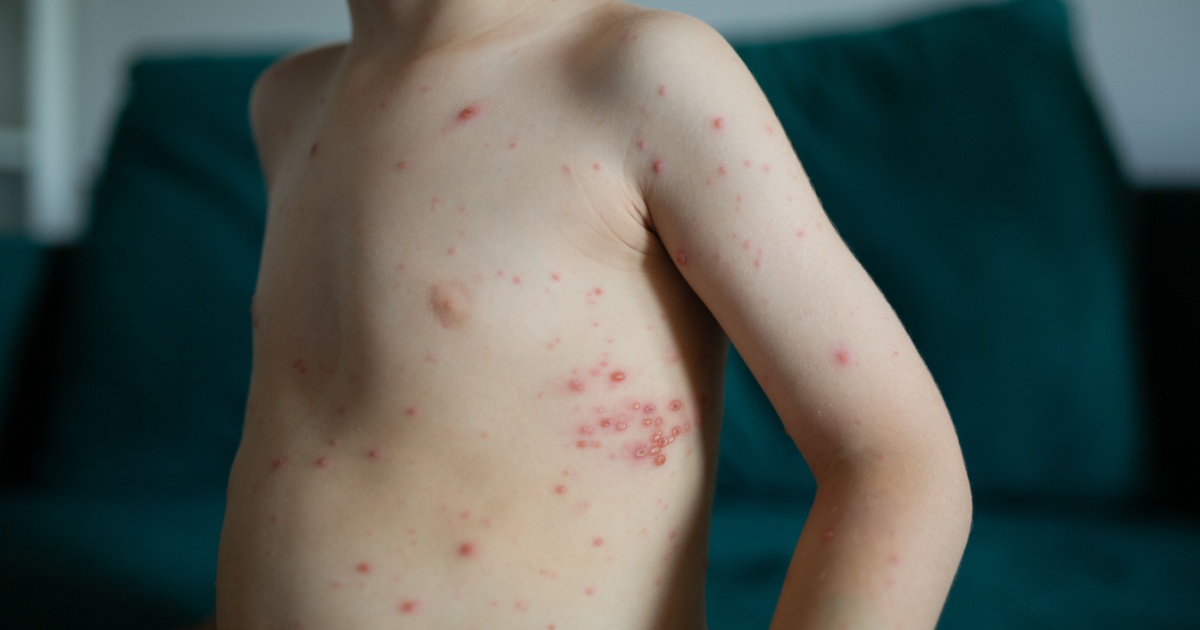

Most adults over 35 carry a quiet passenger they haven’t thought about in decades. It arrived during childhood, announced itself with spots and fever, then seemed to disappear entirely. But it didn’t leave. The varicella-zoster virus, which causes chickenpox, never fully exits the body. Instead, it retreats deep into the nervous system and waits. For most people, it waits quietly for the rest of their lives. For others, it eventually stirs again, and a growing body of research suggests the consequences of that stirring may reach much further than a painful rash.
Scientists have spent years trying to understand why some people develop dementia while others, equally old and equally exposed to the typical risk factors, do not. Genetics explains some of it. Lifestyle explains more. But a portion of dementia cases has remained stubbornly unaccounted for. Now, researchers are increasingly focused on something hiding in plain sight: the role of viruses that have been living inside us since before we were in middle school.
The connection between a childhood illness and late-life cognitive decline sounds implausible at first. But the biology behind it is specific, increasingly well-documented, and, in some ways, unexpectedly actionable.
The Virus That Never Really Left
The varicella-zoster virus (VZV) is a neurotropic virus, meaning it has a particular affinity for nervous tissue. After the initial chickenpox infection resolves, it establishes lifelong latency in the human body. When it reactivates, it causes herpes zoster, commonly known as shingles, and has been implicated in the development of dementia.
More than 99% of adults aged 50 and older worldwide have been exposed to varicella-zoster virus. That’s a remarkable number of people carrying a latent neurotropic virus into their 50s, 60s, and beyond. A person’s risk for herpes zoster and the complications it brings, including hospitalizations, sharply increases after age 50. That’s because the risk for herpes zoster rises as VZV-specific cell-mediated immunity (the branch of the immune system that uses T-cells to recognize and contain infected cells) declines. That decline can result from age alone, or from medical conditions and medications that suppress immune function.
Shingles, caused by the varicella-zoster virus, presents as a painful rash, and it’s estimated that about 1 in every 3 people in the United States will develop the illness in their lifetime. Most people associate it with that one painful episode they or someone they know went through. But the real concern, researchers are now discovering, may not be the rash at all.
How the Virus Reaches the Brain
Understanding how VZV could contribute to dementia requires a brief look at what the virus actually does when it reactivates. It doesn’t simply surface on the skin and stay there.
VZV can directly invade the brain and cause inflammation. Previous studies have reported viral replication in the cerebral arteries, and VZV DNA has been detected in the cerebrospinal fluid of patients with shingles who showed no obvious central nervous system symptoms. This means the virus can be active in the brain and spine without the person ever knowing it.
When VZV reactivates, it can promote neuroinflammation, with generation of misfolded proteins and the accumulation of amyloid plaques and neurofibrillary tangles composed of hyperphosphorylated tau protein. These are the same features that define Alzheimer’s disease pathology. VZV may also infect astrocytes (the brain’s support cells) directly, promoting the production and aggregation of amyloid in the surrounding tissue.
There’s also a vascular angle. VZV can invade arterial walls and induce vasculopathy, a form of blood vessel disease, which can subsequently contribute to dementia. Reactivations of VZV have been linked to a pattern of cerebrovascular disease similar to that seen in Alzheimer’s disease, including small- to large-vessel disease, ischemia, infarction, and hemorrhage.
And then there is a third, more indirect route. VZV may reside latently in the brain itself and, on reactivation, cause direct damage. Alternatively, shingles could induce neuroinflammation that then triggers reactivation of herpes simplex virus type 1 in the brain, another virus long implicated in Alzheimer’s disease.
These are not one-off theoretical proposals. They are supported by converging evidence from multiple independent research teams working on different aspects of the same problem.
What Large-Scale Studies Are Finding
The clearest evidence came from a major 2025 study published in Nature Medicine, which analyzed health records from more than 100 million people in the United States. The analysis demonstrated a consistent relationship between VZV reactivation and dementia, after controlling for nearly 400 measured characteristics covering demographics, socioeconomic factors, comorbidities, medications, and healthcare-seeking behavior. The study also found that recurrent shingles was associated with an even higher risk of dementia compared to a single episode.
Separately, a 2024 nationwide cohort study published in Alzheimer’s Research & Therapy found that individual herpes simplex virus (HSV) and VZV infections were both associated with an increased risk of all types of dementia, including Alzheimer’s disease and vascular dementia. Patients who experienced both HSV and VZV infections faced an even higher risk, and the co-infection group showed the shortest time between viral infection and a dementia diagnosis, an average of just over four years.
A 2025 systematic review and meta-analysis from the University of British Columbia, published in Human Vaccines & Immunotherapeutics, pulled together studies spanning nearly three decades. The research notes that infections may cause dementia partly by allowing pathogens to cross into the central nervous system through an inflamed and weakened blood-brain barrier, activating immune cells that then generate neuroinflammation, causing critical damage as the body attempts to clear the invading microorganism.
Importantly, these findings hold across different countries, different research methods, and different populations. That consistency is what has pushed this from an interesting hypothesis to a serious area of scientific focus.
The Shingles-Dementia Link Is Stronger Than First Thought
For years, the stumbling block in interpreting these studies was the possibility of confounding. People who get vaccinated against shingles also tend to be health-conscious in other ways. They exercise more, eat better, see their doctors regularly. How do you separate the vaccine effect from those behaviors?
An unusual public health policy in Wales helped answer that question. Researchers from Stanford Medicine analyzed the health records of Welsh older adults and discovered that those who received the shingles vaccine were 20% less likely to develop dementia over the next seven years than those who did not. The vaccination program began September 1, 2013, and specified that anyone younger than 80 on that date was eligible for the vaccine for one year. These rules, designed to ration a limited vaccine supply, meant that just a few weeks’ difference in birth dates determined who had access. That design is about as close to a controlled trial as public health research gets.
The results didn’t stop there. Among Welsh adults in the study, receiving the shingles vaccine reduced the probability of being newly diagnosed with dementia by 3.5 percentage points over a seven-year period, compared with those who did not receive it.
A second study published in late 2025 in Cell then asked whether vaccination could help people already living with dementia. The researchers found that vaccination may help prevent mild cognitive impairment, a brain disorder that often progresses to full-blown Alzheimer’s. Vaccinated individuals were less likely to be diagnosed with mild cognitive impairment within nine years of vaccination. The shingles vaccine also appeared to have benefits for those who already had Alzheimer’s disease or another form of dementia. Stanford’s Dr. Pascal Geldsetzer, senior author, noted: “That means that the vaccine doesn’t just have a preventive potential, but actually a therapeutic potential as a treatment, because we see some benefits already among those who have dementia.”
Separately, research presented at IDWeek 2025 and covered by CIDRAP analyzed electronic health records from more than 174,000 adults across 107 U.S. health systems. Adults who received the shingles vaccine had a 50% lower risk of vascular dementia, a 27% lower risk of blood clots, a 25% lower risk of heart attack or stroke, and a 21% lower risk of death, compared to those who received a different vaccine.
Who Is Most at Risk
Not everyone who had chickenpox will go on to develop shingles. And not everyone who develops shingles will develop dementia. But some people face a steeper risk curve than others.
People with conditions that compromise the immune system face a heightened risk of shingles reactivation. These include solid organ or bone marrow transplant recipients, people with cancer (especially leukemia or lymphoma), those living with HIV, and people taking immunosuppressive medications, including steroids.
Age is its own independent risk factor. The risk of shingles also increases as you get older. The chance for complications, including nerve pain, also increases with age. About half of Americans aged 85 years and older have had at least one case of shingles.
The frequency of reactivation also matters for brain risk. The Nature Medicine analysis found that recurrent shingles episodes were associated with greater dementia risk than a single episode, meaning people who experience shingles more than once may face compounding effects on brain health over time. A 2024 narrative review found that around 1 in 10 people with shingles will experience a recurrence.
Read More: Shingles: The Virus That Sleeps For Decades and Strikes Without Warning
What You Can Do Now
The research doesn’t call for panic. It does call for attention, particularly if you’re over 50 and haven’t yet spoken to your doctor about the shingles vaccine.
The risk of shingles and its serious complications increases with age, which is why in the United States, two doses of the shingles vaccine are recommended for adults 50 and older. In adults 50 to 69 years old with healthy immune systems, Shingrix was 97% effective in preventing shingles; in adults 70 years and older, Shingrix was 91% effective. The brain-protective effect may be a significant added benefit, though researchers are careful to note that the mechanisms are still being studied and further confirmatory trials are underway.
If you’ve already had shingles, vaccination is still recommended. The CDC recommends 2 doses of Shingrix separated by 2 to 6 months for immunocompetent adults aged 50 years and older, whether or not they report a prior episode of herpes zoster. The CDC also recommends 2 doses of Shingrix to prevent shingles in adults aged 19 years and older who are or will be immunodeficient or immunosuppressed because of disease.
Beyond vaccination, immune health matters for keeping VZV latent and controlled. Practicing healthy lifestyle behaviors may also help reduce the chances of a reactivation, given that a weakened immune system is a major factor in developing shingles. Chronic stress, poor sleep, a sedentary lifestyle, and certain medications all affect immune surveillance, the system that keeps the virus dormant.
What This Means for You
Dementia affects more than 55 million people worldwide, with an estimated 10 million new cases every year. Decades of research have largely focused on amyloid plaques and tau tangles in the Alzheimer’s brain. But with no decisive breakthroughs in prevention or treatment, some researchers have begun exploring other avenues, including the role of certain viral infections. The shingles vaccine wasn’t designed to protect the brain. The fact that it appears to do so anyway is one of the more unexpected findings to emerge from dementia research in recent years.
If you’re over 50 and haven’t had the two-dose shingles vaccine series yet, that conversation with your doctor is worth having. Not just to avoid a painful week or two of rash and nerve pain, but potentially to protect the brain that’s been quietly housing this virus for decades. Staying on top of your immune health, managing chronic stress, and getting adequate sleep are all things within your control. None of them are a guarantee. But they’re a reasonable response to what the science, right now, is telling us.
Disclaimer: This information is not intended to be a substitute for professional medical advice, diagnosis, or treatment and is for information only. Always seek the advice of your physician or another qualified health provider with any questions about your medical condition and/or current medication. Do not disregard professional medical advice or delay seeking advice or treatment because of something you have read here.
AI Disclaimer: This article was created with the assistance of AI tools and reviewed by a human editor.
Read More: Alzheimer’s: Newly Identified Risk Factor Worst in These US States, According to Map