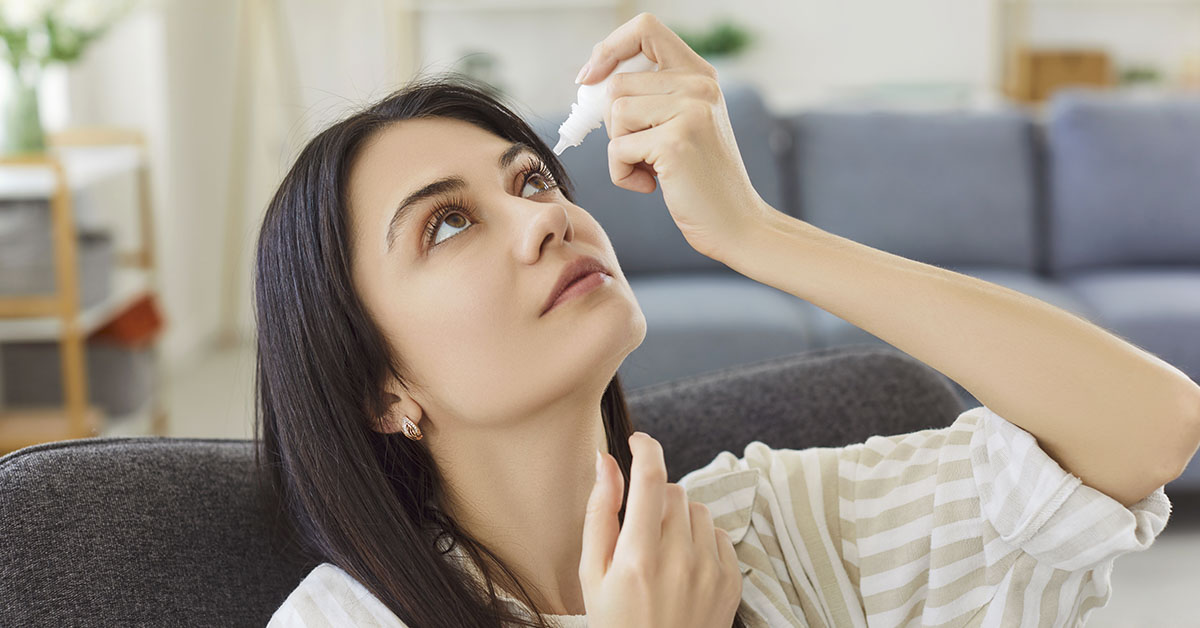

If you are currently pushing your phone a little farther away to read this article, you are not alone. Known as presbyopia, it is a normal change in vision that occurs for most of us in our 40s. In mid-2025, the U.S. Food and Drug Administration approved a once-daily prescription eye drop called Vizz for adult presbyopia. It is the first aceclidine ophthalmic solution to reach the market for this purpose, with data revealing significant improvement without affecting distance vision. In this article, we will find out more about this condition and how a new eye drop may be able to address it safely and effectively. We will also explore other emerging treatments for age-related blurry near vision.
What Is Presbyopia?

Presbyopia is the name given to the age-related loss of an individual’s clear close-up vision. The eye’s internal lens needs to change shape to focus on near objects. With age, that lens stiffens, and the tiny focusing system cannot function as effectively at certain distances from the object. The standard symptoms of this condition include blurry small print, eye strain, and headaches after reading. You may start to notice that menus and phone messages are easier to read when you hold them farther away. None of this means your eyes are diseased. In fact, presbyopia is a refractive error, like nearsightedness or farsightedness, and it affects everyone eventually. It usually starts to become more noticeable in the 40s, growing increasingly worse through the 50s. The good news is that there are multiple ways to manage it, including glasses, contact lenses, pharmacologic drops, and surgery.
Visit your health practitioner for a comprehensive exam, so that they can diagnose you and check for other age-related issues. If you currently have presbyopia, you are most likely doing small workarounds without even really thinking about them. You may perhaps stretch your arms to read a label, crank up your phone’s font sizes, or need brighter lighting. After computer time, you might feel a dull ache around your eyes or a mild headache. Some people find themselves repeatedly taking readers on and off during the day. This can be annoying for quick tasks like checking a notification, reading a recipe. Since the change is mechanical, lifestyle tweaks will not reverse it, but they can make close-up visual tasks easier. Simple steps help, such as using dedicated reading lights and following the 20-20-20 break rule to reduce eye strain.
The Traditional Options for Presbyopia Treatment
Long before drops arrived, presbyopia was traditionally well-handled with optical tools. Reading glasses are inexpensive and effective, although some people dislike carrying them or putting them on and off all day. Multifocal glasses or progressive lenses correct distance and near vision at once, which many adults find convenient. Contact lens options include monovision, where one eye is set for distance and the other for near vision, and multifocal contacts that distribute focus across zones. If you want a more permanent solution, your doctor can discuss surgical options such as laser reshaping. However, all of these choices have trade-offs in clarity, depth of focus, night vision, cost, and reversibility. Your usual prescription, the kind of work you do, and how much blur you can tolerate will shape what works best. Many people mix options. For example, they wear contacts most days and keep a pair of readers for very tiny print.
The Arrival of Vizz

Vizz is an age-related blurry near vision treatment with aceclidine 1.44%. The breakthrough eye drop treatment received FDA approval in July 2025 as a once-daily therapy for adult presbyopia. It is the first and only aceclidine-based product approved for this use. In company and trade coverage, Vizz is described as preservative-free and packaged in single-dose vials. It was approved on the strength of late-stage trials that revealed improved near vision without loss of distance vision at key time points. The trial reports noted that the onset occurs within about 30 minutes for many users, and the benefits can last up to ten hours. Because it is prescription-only, an eye care professional must evaluate whether Vizz suits your eyes and lifestyle. The good news is that national distribution to clinics began in late September 2025, which means you can get it as soon as you have seen your practitioner.
Vizz works by gently shrinking the pupil for several hours. A smaller pupil creates a pinhole effect that increases depth of focus. Think of it like narrowing a camera aperture so more of the scene looks in focus from near to far. Aceclidine activates muscarinic receptors in the iris sphincter muscle to constrict the pupil. The labeling describes Vizz as a “predominantly pupil-selective miotic”. That selective profile is important because it helps improve near vision without creating a myopic shift that would blur distance vision. The main goal is functional near-vision clarity for up-close tasks, while keeping distance-vision reliable during the period of effect. As with any miotic agent, the smaller pupil can make dim environments feel darker. Therefore, learning how your eyes respond across different lighting conditions is important.
Read More: Natural Ways to Support Eye and Vision Health
Results of the Clinical Studies

In the company’s late-stage studies, many people experienced clearer vision up close, and their distance vision remained unchanged when checked at set intervals after using the drops. About 7 out of 10 people hit the main goal a few hours after using the drops. Many noticed clearer near vision in about 30 minutes, and for a lot of users the effect lasted up to 10 hours. These results suggest that once-a-day use makes sense. Your experience may differ based on your lighting, your current glasses or contacts, and how your eyes handle a smaller pupil. Trial results are averages, so ask your eye doctor to help you test everyday tasks like reading your phone or working on a computer.
As more people use the drops, doctors will learn more about how fast they start working and how long it lasts. It was found that the most common side effects were mild and temporary. They included brief instillation site irritation, headache, eye redness, and dim or dark vision. However, these effects generally resolved on their own. Because the pupil is smaller for several hours, low-light activities may feel darker or less comfortable. It is wise to learn your response at home before relying on the drops for tasks such as driving at night. Like other miotics, aceclidine carries cautions for people with certain retinal conditions. Therefore, a dilated retinal examination prior to use is a prudent step your clinician may recommend. If you suddenly see bright flashes, lots of new “floaters,” or a dark curtain blocking part of your vision, get urgent eye care right away.
How to Use Vizz Properly

Vizz is indicated for adults who want better near vision during the day without relying on reading glasses. People with otherwise healthy eyes and stable distance vision are typical candidates. However, if you have a history of retinal tears or lattice degeneration, your clinician will first consider those factors. People with active eye inflammation or uncontrolled glaucoma should not use the product. If your job or hobbies require extended time in dim environments, discuss whether the small-pupil effect will be acceptable.
Also consider timing your dose so that the peak effect aligns with tasks under good lighting. A personalized assessment that includes a dilated exam and a review of your medical and medication history will help set you up for realistic expectations. The FDA-approved instructions are straightforward. Instill one drop in each eye, wait two minutes, then instill a second drop in each eye once daily. Remove contact lenses before using the drops and wait ten minutes after dosing before reinserting them. If you use other eye medications, separate them by at least five minutes so the drops do not wash each other out.
Do not let the vial tip touch your eye or any surface. Discard the opened single-dose vial after use and do not save leftover liquid for later. If your clinician suggests a trial schedule, follow it and keep notes so you can fine-tune your routine together. Once removed from refrigeration, it can be kept at room temperature up to 25 degrees Celsius for up to 30 days. After that time period, any unused vials from that pouch should be discarded. Many people choose morning dosing because the onset is typically within about 30 minutes, and the usable effect can last much of the day.
How Vizz Works with Other Visual Aids and Availability
If your reading-heavy time is later, you and your clinician can plan a different timing schedule. Lighting conditions influence comfort, so pairing the dose with good task lighting will help you make the most of the effect. If you anticipate driving at night, consider whether you want the small-pupil period to be over before you get on the road. Think of Vizz as an on-demand way to sharpen near vision for many daily tasks. Reading glasses remain inexpensive and reliable, and you may still want a pair for very small print or very dim settings.
Contact lens options can give nonstop correction throughout the day. However, many people combine these methods. For example, you might use Vizz on heavy reading days, wear multifocal contacts on travel days, and keep a slim pair of readers on your desk for tiny labels. Following FDA approval in July, the manufacturer announced national distribution to eye care professionals in late September. Clinics are adding Vizz to their prescribing options and identifying typical patient profiles who benefit most. As with any new launch, real-world experience will continue to refine expectations for durability and comfort in the near future.
Other Recent Advances in Presbyopia Therapy
Drops for presbyopia have moved quickly from concept to clinic. In 2021, the FDA approved Vuity, a pilocarpine 1.25 percent formulation, as the first pharmacologic presbyopia treatment. These pivotal trials indicated improvement in near vision and a safety profile consistent with miotic therapy. Companies are also studying combination and long-duration approaches. For example, Brimochol PF has advanced with an FDA filing that highlights sustained miotic effect in studies. Device-enabled delivery has progressed recently, too. Eyenovia’s micro-dosing platform has been tested to deliver pilocarpine in phase 3 programs. Additionally, international conference reports continue to explore pilocarpine regimens, sometimes paired with nonsteroidal agents like diclofenac, for longer duration and comfort.
Regardless of whether you choose drops, reading glasses, contacts, or a combination, a few practical steps can boost comfort. First off, try increasing ambient light when reading and add a dedicated task light for fine work. Also, try adjusting your phone and computer settings by enlarging the text, boosting contrast, and reducing the glare. Get into the habit of scheduling short visual breaks during long reading or screen sessions. Look at a distant target to relax your focusing system. If you adopt Vizz or any miotic drop, get familiar with how your eyes feel in bright versus dim settings before relying on the effect outside. Presbyopia is common, but other age-related conditions share symptoms and deserve early detection, so schedule regular eye exams.
Can Eye Exercises Help?
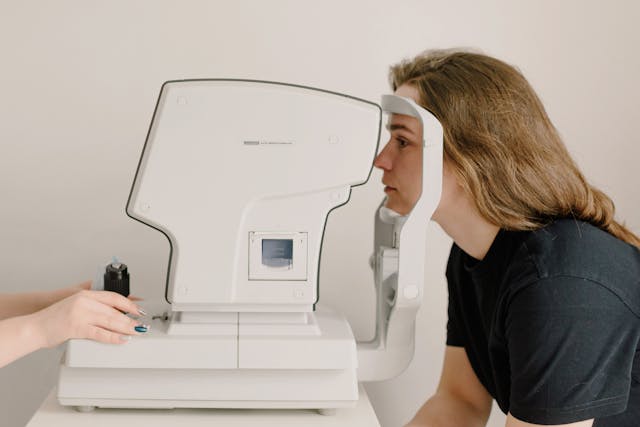
Exercises do not reverse presbyopia, since the lens stiffens with age, not the muscles. However, simple routines can reduce eyestrain and keep focusing and teaming responses flexible and comfortable. Use the 20-20-20 rule during screen work to relax your focusing system regularly. Every twenty minutes, look twenty feet away for twenty seconds, then blink fully several times. Practice near-far focusing: hold text at reading distance, shift focus to a distant object, and alternate. Repeat for one minute, rest, and complete two or three short sets daily. Vergence training helps eye teaming: perform pencil push-ups, bringing a target slowly toward the nose, then refocusing.
Stop before double vision or discomfort, and repeat several slow repetitions with relaxed breathing. Add figure-eight tracking to improve smooth pursuits by following an imaginary sideways eight with your eyes. Good lighting, larger fonts, and regular breaks remain more impactful than exercise for presbyopia’s clarity. Use drops or optical corrections for sharper near vision, and use exercises mainly for comfort. If symptoms persist, see an eye care professional to rule out dry eye or binocular vision problems. Always coordinate any routine with your optometrist when starting new drops, contact lenses, or post-surgical recovery or medications.
The Bottom Line
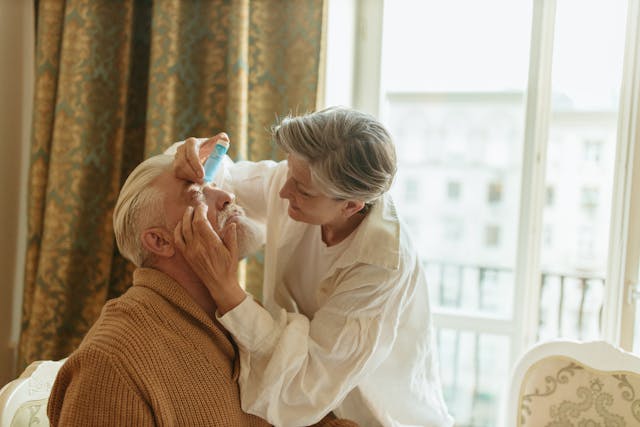
Presbyopia is common as vision changes with age. Vizz is a once-daily drop that sharpens near vision while preserving distance vision. It works by making the pupil smaller, increasing the depth of focus so small print looks clearer. Many users notice improvement within thirty minutes, with benefits often lasting most of the day. Use it exactly as directed, and discard each single-use vial after dosing to prevent contamination. Learn how your eyes feel in different lighting before driving at night or working in dim spaces. Keep readers handy for tiny print or very low light, even when the drops are working well. Combine tools as needed, such as contacts, readers, or Vizz, to match your daily tasks. Discuss a personalized plan with your eye care professional that fits your work, hobbies, and comfort. With good lighting and the right age-related blurry near-vision treatment, most people regain comfortable sight.
Disclaimer: This article was created with AI assistance and edited by a human for accuracy and clarity.
Read More: Can Your Eyes Reveal Diabetes or Cancer? Don’t Miss the Signs