
Your bathroom scale can tell you how much you weigh. For decades, doctors have used that number, translated into BMI, to fill in the rest of the picture. A large new study suggests that approach has been leaving millions of people with a false sense of security. A single added measurement can change the risk calculation entirely. You can take it at home with a tape measure.
The study came out in Nature in November 2026. It was led by scientists at King’s College London. They analyzed medical records from 844,108 adults across the United Kingdom, United States, China, and Spain. The team tracked outcomes for up to 15 years. They asked whether a newer way of diagnosing obesity could do what BMI alone has struggled to do. Could it reliably predict who is at serious health risk, and who isn’t? When scientists used BMI alone to classify people, the higher death signal disappeared from the data entirely. A clear and large difference in death risk emerged only when waist measurements were added.
BMI alone also got the classification wrong in both directions. It missed obesity in up to 8.6% of people in the study. It overcounted it in up to 3.1%. That points to real-world misclassification at scale.
Why did waist measurement show a health risk where BMI didn’t?
The diagnostic framework tested in the study is called the combined anthropometric definition of obesity. It goes beyond BMI by pairing it with measures such as waist circumference and waist-to-height ratio. Those measures are linked directly to excess body fat. BMI uses height and weight to estimate body composition. But it can’t tell fat mass from muscle mass. It also can’t identify where in the body fat is being stored.
The 2026 study tested a diagnostic framework proposed by The Lancet Diabetes & Endocrinology Commission in January 2025. Francesco Rubino helped develop it as senior author. He is a professor and chair of metabolic and bariatric surgery at King’s College London. Rubino has argued that BMI gives doctors a blunt tool when precision is what patients need.
As Rubino put it: “Body mass index alone cannot tell us whether someone is already ill or at risk of illness”. Higher death rates appeared only when obesity was identified using waist measurements alongside BMI.
Read More: What’s Your Ideal Weight According To Your Height?.
Clinical obesity vs. preclinical obesity: why does the difference matter?
BMI is paired with measures such as waist circumference and waist-to-height ratio to confirm excess body fat. Clinicians then separate clinical obesity from preclinical obesity. Clinical obesity is an active disease state in which fat impairs organ function or daily life. In preclinical obesity, health risk is higher, but the body still functions normally. The framework evaluates 18 different signs of organ or bodily dysfunction. Those signs include sleep apnea, joint pain, and heart disease. Doctors use them to decide which category applies.
About 5% to 11% of people in the general population were found to have clinical obesity. Their risk of dying during the study was 69% higher than people without excess fat. That gap applies only to people whose excess fat is already measurably affecting their health. It is not simply extra weight on a scale. It is extra body fat that has begun disrupting how organs work.
For those with preclinical obesity, the death risk was 19% higher than that of people without excess fat. Preclinical obesity is a real risk factor. It often doesn’t require the same intensity of treatment. Between 77% and 91% of people with preclinical obesity at the start did not progress to clinical obesity over a 10-year follow-up. That suggests that for many people, the condition is manageable. It doesn’t have to get worse.
Distinguishing clinical from preclinical obesity “allows doctors to triage and treat people differently, because the two groups are meaningfully different and the difference in mortality is quite obvious,” according to Rubino.
What numbers should you know, and how can you measure them at home?
The waist-to-height ratio is the main measure in this framework. It is one most people have never calculated. Combining BMI with these added measures can greatly improve doctors’ ability to tell whether a person’s extra weight is a real health concern. That is what the Nature research found.
Under the new framework, a BMI of 40 or above on its own qualifies as obesity. A BMI of 30 or above also meets the threshold if it is combined with an elevated waist circumference or waist-to-height ratio. For people with a BMI between 25 and 29.9, both an elevated waist circumference and an elevated waist-to-height ratio are required.
For the waist-to-height ratio, a 2023 editorial in Frontiers in Nutrition summarizes the guideline clearly. A healthy ratio is below 0.5. That means your waist circumference should be less than half your height. So if you’re 5’8″ (172 cm), your waist should ideally measure less than 86 cm, or about 34 inches.
For waist circumference alone, the widely used thresholds come from data from the CDC. They flag higher risk at above 102 cm (40 inches) for men. For women, the flag is above 88 cm (35 inches).
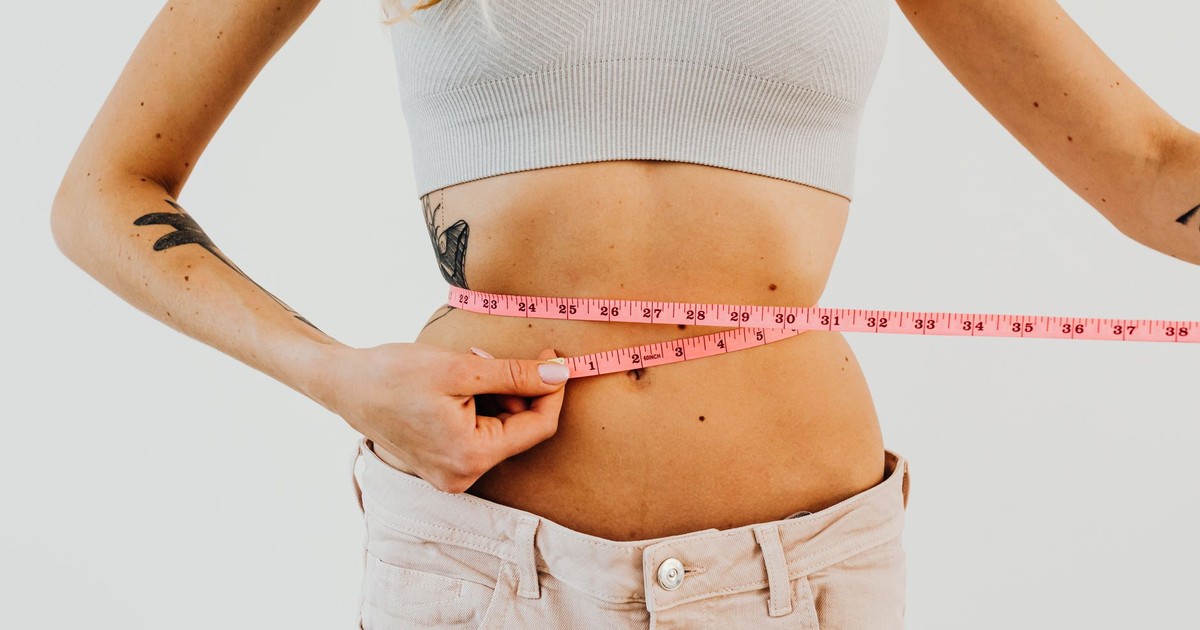
Measuring at home takes about two minutes. It requires only a flexible tape measure. The Heart Foundation recommends placing the tape midway between the bottom of your ribs and the top of your hip bones. That is roughly in line with your belly button. Breathe out naturally before reading the measurement. Don’t hold your breath or pull the tape tight. The tape should sit level around your waist. It should touch the skin but not compress it. Take the reading and divide your waist measurement by your height in the same unit. Use centimeters or inches for both. That gives you your waist-to-height ratio.
Why does where fat sits matter more than how much you carry?
Waist measurements add predictive power where BMI doesn’t because of fat location. Visceral fat is the fat that surrounds internal organs. It is hormonally active and pro-inflammatory. It is strongly linked to cardiometabolic disease and death risk, independent of total body weight.
Not all extra weight carries the same heart risk. The fat stored deep inside the abdomen, wrapped around organs, is metabolically active. Fat under the skin, called subcutaneous fat, is not active in the same ways. A person can have a BMI in the normal range and still carry a dangerous load of visceral fat around their abdominal organs. Equally, a person with a higher BMI due to muscle mass or subcutaneous fat may face far less internal metabolic disruption.
Waist measurements capture this distribution in a way that height-to-weight calculations simply can’t. An approach that measures waist circumference and focuses more closely on excess body fat proved better than BMI at predicting a person’s risk of death, according to the Nature paper.
What should you do with this information?
The 69% higher risk of death found in this study applies to a specific group. It applies to people with clinical obesity. That means excess body fat that is already measurably affecting their organ function or daily health. If you’ve been told you’re overweight or obese based on BMI alone, that label may not reflect your actual risk level. It may be wrong in either direction. As Rubino said: “This misclassification can account for tens of millions of people, so the inaccuracy of BMI is a big problem at scale and also for individuals”. BMI remains a useful screening tool. Waist circumference and waist-to-height ratio add information your doctor currently may not be collecting.
Take two minutes to measure your waist and calculate your waist-to-height ratio. If your ratio is 0.5 or above, bring that measurement to your next medical appointment. Do the same if your waist circumference exceeds 102 cm for men or 88 cm for women. Ask your doctor whether a fuller obesity assessment makes sense. The study was a follow-up study. It shows a link between clinical obesity and death risk. It is not proof that excess fat directly caused each death. Preclinical obesity carries a 19% higher death risk. But most people in this category don’t progress to full clinical obesity within a decade. That represents a real chance for lifestyle change. Talk to your doctor about whether your waist measurement should factor into how your health is being monitored.
Disclaimer: The author is not a licensed medical professional. The information provided is for general informational and educational purposes only and is based on research from publicly available, reputable sources. It is not intended to constitute, and should not be relied upon as, medical advice, diagnosis, or treatment. Always consult a licensed physician or other qualified healthcare provider regarding any medical condition, symptoms, or medications. Do not disregard, avoid, or delay seeking professional medical advice or treatment because of information contained herein.
AI Disclaimer: This article was created with the assistance of AI tools and reviewed by a human editor.