
Few moments in modern business history are as prescient as a single Q&A session at a Midwestern university in the spring of 1991. A student stood up and posed a deceptively simple question to one of the world’s most respected investors. The answer that came back was brief, calm, and, as history would eventually confirm, almost prophetically accurate. It didn’t make the front pages that day. There were no breaking-news alerts. But the diagnosis delivered in that university lecture hall would prove to be one of the most precise autopsies of a business career ever recorded, delivered while the patient was still operating.
The investor was Warren Buffett. The subject of his analysis was Donald Trump. And the single word at the center of Buffett’s explanation, leverage, would go on to define not just Trump’s early business failures in the 1990s, but a pattern of financial behavior that would later be scrutinized in a New York courtroom three decades later, producing one of the largest civil fraud penalties in American history.
What Buffett said that day was simple enough for a college student to understand. What it revealed about the mechanics of financial failure was something business schools have been teaching ever since.
The 1991 Lecture That Became a Masterclass
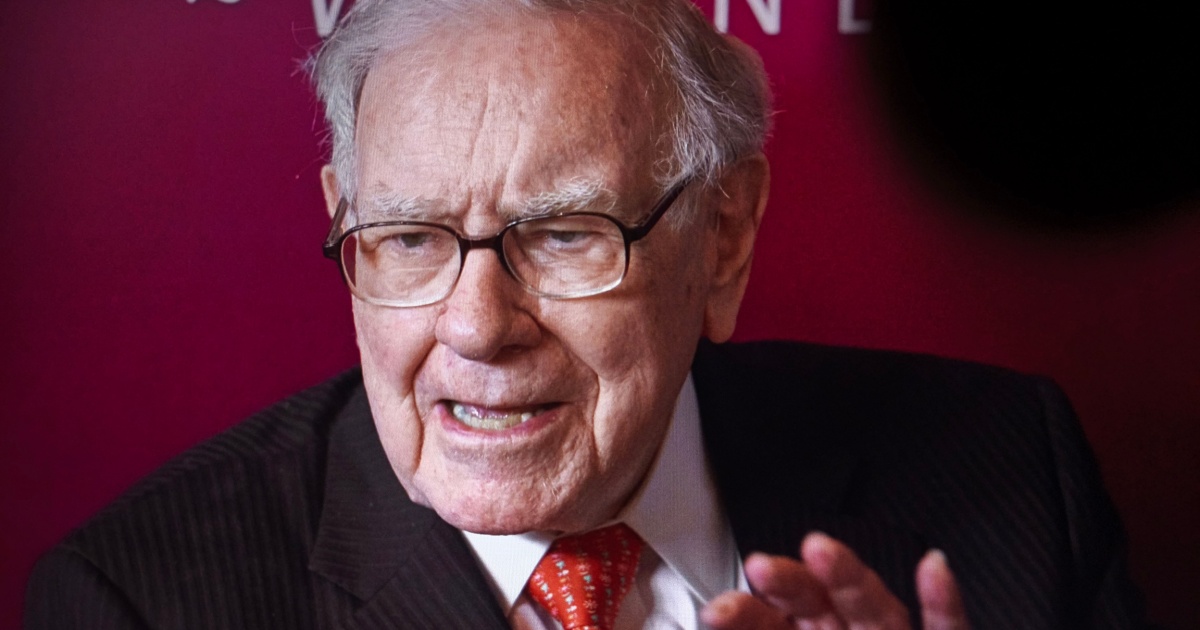
Buffett cautioned students to avoid borrowed money during a question-and-answer session at Notre Dame in 1991, using Donald Trump’s troubled casino investments to explain the life lesson.
The question, as posed by the Notre Dame student, was direct: where did Donald Trump go wrong?
Buffett’s answer cut straight to the core. “The big problem with Donald Trump was he never went right,” Buffett said. “He basically overpaid for properties, but he got people to lend him the money. He was terrific at borrowing money. If you look at his assets, and what he paid for them, and what he borrowed to get them, there was never any real equity there.”
That final sentence is worth pausing on. Equity, in financial terms, is the difference between what an asset is worth and what is owed on it. It is the genuine ownership stake, the real value that belongs to you after the debts are stripped away. Buffett recounted how Trump made his assets appear to be worth much more than they really were. Trump’s approach was to lock in property loans at prices far higher than their true value, which meant he also incurred significant debt to acquire them in the first place. The assets looked impressive on the surface. The numbers underneath told a different story.
At that 1991 lecture, Buffett estimated Trump owed “perhaps, $3.5 billion now, and, if you had to pick a figure as to the value of the assets, it might be more like $2.5 billion.” Trump was “a billion in the hole,” which, Buffett noted, was actually better than being $100 in the hole. “If you’re $100 in the hole, they come and take the TV set. If you’re a billion in the hole, they say ‘hang in there, Donald.'”
The Warning Buffett Had for Every Investor
What made the lecture memorable was not only Buffett’s dissection of Trump’s finances. It was the broader principle he drew from it. “I’ve seen more people fail because of liquor and leverage – leverage being borrowed money. Donald Trump failed because of leverage. He simply got infatuated with how much money he could borrow, and he did not give enough thought to how much money he could pay back,” Buffett said.
His advice to the students was unambiguous. “You really don’t need leverage in this world much. If you’re smart, you’re going to make a lot of money without borrowing. I’ve never borrowed a significant amount of money in my life. Never. Never will. I’ve got no interest in it.”
This wasn’t simply a personal preference. It was a principle embedded deep in Buffett’s entire investment philosophy. In Berkshire Hathaway’s own owner-related business principles, the company states plainly that it uses debt sparingly and will reject interesting opportunities rather than over-leverage its balance sheet. That conservatism has sometimes limited returns. It has also kept Berkshire solvent through every market crisis of the past six decades.
In his 2017 annual letter to Berkshire shareholders, Buffett wrote that the strongest argument he could muster against ever using borrowed money to own stocks was that there is simply no telling how far stocks can fall in a short period. He added that even modest borrowings could be dangerous: “Even if your borrowings are small and your positions aren’t immediately threatened by the plunging market, your mind may well become rattled by scary headlines and breathless commentary. And an unsettled mind will not make good decisions.”
The Taj Mahal: The Clearest Case Study
Of all Trump’s real estate ventures, none illustrated Buffett’s warning more starkly than the Trump Taj Mahal casino in Atlantic City. In 1988, Trump purchased the unfinished Taj Mahal property from Resorts International for $230 million. The casino would eventually cost almost $1 billion by the time it opened in 1990. Trump completed the project using junk bonds, a decision that hurt the company afterward as the gambling industry struggled in a recession and interest rates became unmanageable.
The financing structure was precarious from the start. The Trump Taj Mahal was heavily financed with $675 million in high-interest junk bonds to complete the unfinished casino, and the Taj Mahal declared bankruptcy by 1991. Paying off those high-interest rates swamped the whole project. Junk bonds, formally known as high-yield bonds, are debt instruments issued by borrowers with lower credit ratings, and they carry higher interest rates precisely because the risk of default is elevated. Locking in $675 million at those rates left almost no margin for error.
The casino recorded a $14 million loss in its first three months, and there were days when its bank balance reportedly approached zero. Securities analysts at the time warned that the combination of extravagant opening costs and insufficient operating margins would doom the project. One analyst, Marvin Roffman, publicly predicted failure. Trump was not happy. He faxed a letter to Roffman’s boss demanding the firm dismiss Roffman immediately or issue a public apology. If not, Trump threatened “a major lawsuit against your firm.” Roffman was fired. His prediction, however, proved correct.
The project’s financing included high-yield bond instruments that carried interest costs about 50% higher than Trump had told regulators he would incur. This reliance on expensive junk-bond capital converted what might have been a manageable short-term operating loss into an immediate solvency issue. Within 15 months of opening, the debt structure was untenable, forcing a Chapter 11 filing.
The 1991 Chapter 11 reorganized roughly $675 million of high-yield bond financing, converting creditor claims into a mix of reduced cash obligations, lower interest rates, and equity in the property. In the prepackaged bankruptcy, Trump gave a 50% stake in the business to its bondholders in exchange for lowered interest rates and a longer payoff schedule.
The Taj Mahal was not an isolated incident. Trump Entertainment Resorts and its predecessors filed for Chapter 11 bankruptcy protection multiple times, with the Trump Plaza Hotel also filing for bankruptcy around the same time as the Taj Mahal, indicating a recurring theme of financial overextension. By 2004, the parent company Trump Hotels and Casino Resorts had accrued approximately $1.8 billion in debt, prompting another Chapter 11 that restructured corporate borrowing and ownership stakes.
What the Casino Control Commission Found
The problems were well-documented in real time, not just in hindsight. Trump already had other Atlantic City casinos before the Taj Mahal opened, and a report issued by the New Jersey Casino Control Commission in August 1990 found they were “generating an insufficient level of cash flow” that was pushing the Trump Organization toward “financial collapse.” By that point, the Trump Organization was approximately $3.4 billion in debt, $832.5 million of which was personally guaranteed by Trump, according to the 1990 Casino Control Commission report.
When the economy and real estate market plummeted in 1990, real estate attorney Alan Pomerantz said Trump owed $4 billion to his debtors, including almost a billion for which he was personally responsible. “I think he borrowed more than most other prudent real estate people,” Pomerantz told CNN.
The banks chose not to push Trump into personal bankruptcy for a specific reason. They decided that Trump should not be allowed to go bust because he was the best salesman to sell off his own properties, and hammered out a five-year plan to allow him to repay his personal debts. His name, even in crisis, had commercial value. That reality kept him afloat when the math alone would not have.
The Fraud Trial: Buffett’s Diagnosis Confirmed in Court
Buffett’s lecture identified a pattern of behavior in 1991. Thirty-three years later, a New York courtroom would attach legal consequences to that same pattern.
Following a three-year investigation, in September 2022 New York Attorney General Letitia James filed a lawsuit against Donald Trump, a number of Trump Organization companies, and senior executives for engaging in years of financial fraud. In September 2023, before the trial began, Justice Engoron issued a ruling granting Attorney General James’ motion for partial summary judgment, finding that Donald Trump and the defendants committed fraud by falsely inflating the value of his assets.
A New York judge ordered the defendants to pay more than $450 million in total, representing $363.8 million in disgorgement and pre-judgment interest. Judge Arthur Engoron delivered the verdict after the trial in New York. Attorney General James’ lawsuit punished Trump, his company and executives, and his two eldest sons, for scheming to dupe banks, insurance providers, and others by inflating the former president’s wealth on financial statements. Manhattan Supreme Court Judge Arthur Engoron also barred Trump for three years from serving as an officer or director of any New York corporation, or applying for loans from any New York chartered or registered financial institution.
Engoron found that Trump’s inflated wealth claims were critical to his success, affording him lower loan interest rates and allowing him to build projects he wouldn’t have otherwise been able to finish. In effect, the court found that Trump had been borrowing against a fiction, securing cheap credit on the basis of assets that were, by the judge’s determination, systematically overstated.
In February 2024, Engoron concluded that the defendants failed to accept responsibility or to implement internal controls to prevent future submissions of blatantly false financial data to borrow more and at lower rates.
In the decision, Judge Engoron excoriated Trump, saying the president’s credibility was “severely compromised,” that the frauds “shock the conscience,” and that Trump and his co-defendants showed a “complete lack of contrition and remorse” that he said “borders on pathological.”
A significant legal development followed: after the trial that ran from October 2023 to January 2024, an appeals court in August 2025 voided the financial penalty while upholding Trump’s liability. The appeals court confirmed the underlying finding of fraud but ruled the penalty itself was excessive. The legal debate over the amount does not undo the court’s central finding on the facts.
Buffett’s Philosophy vs. Trump’s Strategy: A Structural Contrast
The contrast between these two men’s approaches to money is not merely a matter of temperament. It reflects fundamentally opposed theories of how wealth is built and sustained.
Warren Buffett compounded Berkshire Hathaway’s shareholder returns at a compound annual growth rate of 19.8% from 1965 to 2023, compared to a 10.2% rate for the S&P 500 over the same period. That track record was not built on market timing or complex derivatives. It was built on principles rooted in business analysis, patience, and discipline. Central to that discipline is a deep suspicion of debt as a tool for growth.
Buffett is well known for his conservative views on finance. He dislikes leverage and opaque financial structures, and his conglomerate, Berkshire Hathaway, has rarely used excessive leverage or derivatives. His core lesson: leverage magnifies losses as much as gains. When an investment financed with borrowed money goes wrong, the losses are amplified. The lender still gets paid. The borrower absorbs the difference.
Trump’s approach worked in the opposite direction. As Buffett summarized it: “The big problem with Donald Trump was he never went right. He basically overpaid for properties, but he got people to lend him the money. He was terrific at borrowing money. If you look at his assets, and what he paid for them, and what he borrowed to get them, there was never any real equity there.”
In his 2017 shareholder letter, Buffett warned that even small leverage and debt can rattle your mind during a market downturn, and an unsettled mind will not make good decisions. He and Charlie Munger built Berkshire with minimal leverage because they refused to risk what they had for what they didn’t need. Most investors only learn this after a downturn amplifies their loss, turning a temporary setback into a permanent one.
As Buffett wrote in that same letter: “When major declines occur, they offer extraordinary opportunities to those who are not handicapped by debt.” Debt, in other words, doesn’t just hurt you when things go wrong. It prevents you from capitalizing when things go right for others.
Why Smart People Go Astray
Buffett raised a question at the end of his 1991 remarks that is still relevant today. “It’s interesting why smart people go astray. That’s one of the most interesting things in business.”
The answer, in Trump’s case, appears rooted in what Buffett identified as an infatuation with the act of borrowing itself. Trump failed because of leverage. He simply got infatuated with how much money he could borrow, and he did not give enough thought to how much money he could pay back. The ability to borrow enormous sums became, for Trump, a goal in its own right, a demonstration of market confidence, a proxy for prestige. The question of what happened after the borrowed money arrived seems to have received less rigorous attention.
Buffett’s first rule of investing is “don’t lose money,” and his second is to “never forget the first rule.” That isn’t a cliché. It is a structural commitment to protecting capital that shapes every decision downstream. Trump’s model, by contrast, required near-perfect outcomes to avoid collapse. When the real estate market turned, when interest rates refused to cooperate, when gambling revenues fell short of forecast levels, there was no buffer. Only debt.
Read More: Trump Wants to Kill the Gas Tax. Here’s What That Actually Means for You
What This Means for You
The Warren Buffett and Trump story is, at its core, a case study in the difference between the appearance of wealth and its substance. Buffett saw the distinction clearly in 1991. The court record, completed across multiple trials and restructurings over three decades, has since filled in the details.
First, borrowed money amplifies both gains and losses in equal measure. The investor who borrows to buy an asset that rises looks like a genius. The same investor who borrows to buy an asset that falls may not survive long enough to try again. The aggregate evidence portrays the Trump Taj Mahal as a heavily leveraged venture whose debt service obligations outstripped early operating cash flow, producing acute liquidity distress and a negotiated Chapter 11 reorganization in 1991. The financing structure created a leverage trap that turned revenue shortfalls into insolvency.
Second, overvaluing assets to secure financing is not just financially dangerous. It carries legal risk. For years, Donald Trump engaged in massive fraud to falsely inflate his net worth and unjustly enrich himself, his family, and his organization, according to the New York Attorney General’s findings. The court’s conclusion was that the fraudulent inflation of asset values was not incidental to Trump’s business model. It was integral to it.
Third, Buffett’s long-term record offers the clearest counterargument available. Greg Abel succeeded Buffett as CEO at the beginning of 2026, inheriting a company built without the shortcuts that leverage promises and rarely delivers. Buffett’s investment success is not built on secret formulas or high-frequency trading. Sustainable wealth is achieved by owning great businesses, not chasing quick gains. Compounding works best when left undisturbed over decades.
For any investor, whether managing a personal portfolio, a real estate purchase, or a business acquisition, the practical implication is the same. Ask not only whether you can borrow the money, but what happens if the investment underperforms. Ask whether there is genuine equity in the deal or merely the appearance of it. Ask whether the debt service is manageable when conditions are bad, not just when they are favorable. These are not abstract questions. They are precisely the ones Buffett was raising in a university lecture hall in 1991, and they are the ones the New York courts were still trying to answer more than three decades later.
AI Disclaimer: This article was created with the assistance of AI tools and reviewed by a human editor.
Read More: 590,000 People Paid $100 for a Trump Phone – and Got This Email Instead