
Weird science facts are not rare. They show up in the middle of normal life. For example, did you know that your brain starts actions before you notice the urge? Your senses run a fraction of a second behind, so your mind fills in the gaps. Trees can swap resources through fungal networks under the soil. Your body carries tiny amounts of natural radioactivity. Even your memories can shift each time you replay them. These facts sound fake, yet they keep turning up in real research. Once you see them, everyday life stops looking as simple as it seems. The surprise is not that science is strange, but rather that it is familiar. Science does not remove wonder from life, yet it shows why the ordinary can look like a magic trick. Let’s take a look at several examples of unbelievable scientific truths that may likely blow your mind.
Forests share resources through fungal wiring

A forest looks like separate trunks competing for light. Underground, many plants connect through fungi. Mycorrhizal fungi wrap or enter roots and extend threads into the soil. Those threads collect water and minerals, and they trade them for plant sugars. In some systems, the fungal threads also link multiple plants. Researchers call these links common mycorrhizal networks. In 1997, ecologist Suzanne Simard and colleagues tested whether carbon moves across such links. They used isotope labelling to track carbon between paper birch and Douglas-fir seedlings. Their Nature paper reported, “Carbon transfer between B. papyrifera and P. menziesii occurred in both directions.” That sentence describes measured movement, not metaphor. It shows that connected trees can exchange resources, depending on conditions like light. Simard’s team worked in the field, not only in pots. They labelled one species, then detected an isotope in the partner species.
They also tested whether severing fungal links reduced transfer. This helped separate fungal pathways from simple soil leakage. The findings vary with season and light. In shade, a plant may receive more carbon than it gives. In strong light, the direction can reverse. The network works like a market with changing prices. It moves what is useful in that moment. The key point is physical connection. Hyphae can bridge centimetres and metres. They create routes that roots alone cannot build. Nutrients are only part of the story. Plants also send chemical warnings and defence signals. A scientific review on mycorrhizal networks described rapid signalling between neighbours. It reported that “broad beans (Vicia faba) responded to aphid attack by swiftly transferring defence signals via the MN to neighbouring bean plants.”
The neighbours changed their own defences after the signal arrived. That result supports a simple idea. A plant can react to danger it has not met yet. The network gives it a head start. These exchanges do not make the forest a single organism. Different species still compete for space and light. Fungi can also favour some hosts over others. Yet the network can buffer stress. Older trees can supply carbon to shaded seedlings. Connected plants can share water during drought. When you hike past a stand of trees, you may be walking over an active trade system. It runs without sound, and it runs without attention. That makes it a perfect example of weird science facts that are actually common.
Signal transfer can involve many chemicals. Plants release defensive compounds and hormones into roots. Fungi can carry or trigger responses across connected hosts. Researchers still debate how specific these messages are. Some signals may be general stress cues. Others may be more targeted. Either way, the outcome can change insect success and plant growth. This also changes how ecologists view replanting and logging. Removing a large tree can remove a hub of fungal links. That can slow recovery for seedlings. It can also change which fungal species dominate the soil. The underground network is therefore part of forest resilience, not a side detail. It also shapes plant diversity across decades.
Your mind can build worlds, and it rewrites them during recall
Your brain can generate a full world without outside input. Dreams prove it each night. Hallucinations show it in waking life. The NHS defines them with clinical clarity. “Hallucinations are where you hear, see, smell, taste, or feel things that appear to be real but only exist in your mind.” These experiences can appear with psychosis, neurological illness, sleep deprivation, grief, or certain drugs. They can also occur with sensory loss, where the brain fills gaps. The important truth is simple. Perception is an active construction. The brain combines signals, expectations, and attention into a scene. When the balance shifts, the brain can produce vivid images or voices that have no external source. In rare syndromes, belief can also detach from physical evidence. Cotard’s syndrome is one example.
A clinical review by S. Grover and colleagues described it as a condition “in which the patient denies the existence of one’s own body.” That denial can lead to self-neglect, because the person rejects basic needs. Hallucinations can also be brief and situational. Some people see shapes during a fever. Some hear a voice when falling asleep or waking. Clinicians look at timing, stressors, and safety risks. They also look for medical causes that need urgent care. This separates a transient symptom from a dangerous spiral. The larger lesson remains. The brain can run its perception engine in standalone mode. When it does, the output can be convincing enough to guide behaviour.
Memory adds another twist, because it also runs as construction. Many people imagine memory as storage, then playback. Research suggests a more dynamic process. A 2018 review by J. Haubrich and colleagues stated, “Apparently stable memories may become transiently labile and susceptible to modifications when retrieved due to the process of reconsolidation.” When you recall an event, the brain can open the file and edit it. New emotion, new context, and new information can change what gets stored next. Over time, the edited version can replace the earlier one. This explains why confident recall can still be wrong. It also explains why therapy can work. If recall makes a memory flexible, guided recall can reduce fear responses. Scientists continue to map the limits of reconsolidation. Some memories resist change.
Some change only under specific conditions. Yet, everyday experience supports the main point. You tell a story, then it shifts with retelling. You remember a face, then you blend it with another face. The brain aims for meaning and prediction, not perfect archiving. That is why facts that sound fake but are true can apply to your own mind. You can protect memories by recording details early. Write down dates, names, and key actions. Courts and police now train interviewers to avoid leading questions, because suggestions can alter recall. In daily life, you can pause before declaring certainty. Ask what evidence you have beyond the memory itself. That habit reduces confident errors. The goal is not to distrust your mind. The goal is to understand its normal operating rules over time.
Your “choice” starts before you notice it
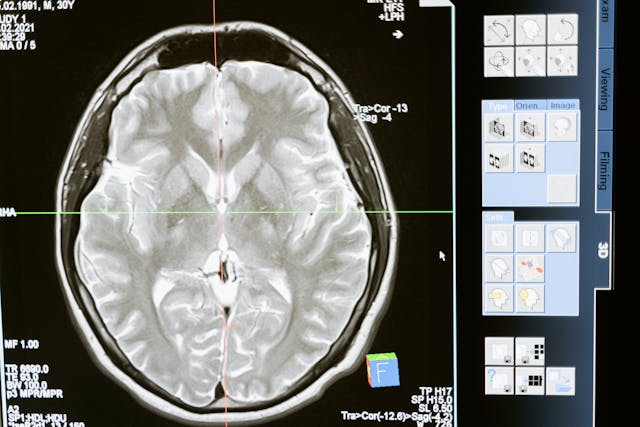
You often experience choice as a single moment. The body prepares earlier. In the 1980s, neurophysiologist Benjamin Libet measured brain signals before simple actions. Volunteers watched a fast clock and moved a finger whenever they wanted. Electrodes recorded brain activity, and people reported when intention appeared. Libet wrote, “Freely voluntary acts are preceded by a specific electrical change in the brain (the ‘readiness potential’, RP) that begins 550 ms before the act.” In the same paper, he noted that people became aware of intention after the signal started. Awareness arrived about 200 ms before the movement. Libet argued that conscious thought can interrupt an act that is already underway. He described a veto window, where you can stop the movement before it fires. He wrote that the conscious function “can veto the act.”
This view keeps responsibility in the picture. It also shifts the timeline. The brain drafts the action, then awareness checks it. Other researchers tested similar questions with newer tools. Some debate the meaning of the readiness potential. Some focus on how the task shapes results. Yet many experiments still find measurable preparation before awareness. That pattern matches everyday behaviour. You often start typing, then revise mid-sentence. You reach for a snack, then stop after a second thought. The brain runs fast routines and lets awareness supervise. Timing also affects perception, not only action. Neural processing takes time, so raw sensory data arrives late. Life still demands quick reactions. A 2023 report by Daan Koevoet and colleagues described a compensation strategy. The abstract states, “The brain can predict the location of a moving object to compensate for the delays caused by the processing of neural signals.” Prediction helps perception stay useful.
The brain forecasts likely outcomes, then updates the forecast. It uses learned physics and context cues. You experience a stable present because the brain stitches inputs into a workable timeline. That stitching keeps life safe, yet it hides the lag. Your conscious story arrives after a stream of weird science facts. That delay also explains some visual tricks. Motion can appear ahead of where it lands on the retina. Sound and sight can desync, then the brain aligns them. The system prefers coherence over perfect timing. It also explains why you can change your mind fast. The veto does not require a long debate. It can work like a brake pedal.
You notice an impulse, then stop it. Training strengthens that braking loop. Athletes rehearse starts and stops for this reason. Drivers build habits that trigger before conscious fear. In daily life, you can design cues that help the veto. Put the phone out of reach. Use friction for habits you want to cut. Use easy access for habits you want to keep. Science does not remove choice. It shows where to place support so the choice wins more often. You can also pause before replying in anger. That pause gives the veto time to act. A small delay can protect relationships and decisions in real life.
Your immune system can misread you, and it can remember the error
The immune system works like a border agency. It checks proteins and decides what belongs. Most days it gets the call right. When it fails, the result can be brutal. MedlinePlus explains the core problem in one line. “If you have an autoimmune disease, your immune system attacks the healthy cells of your organs and tissues by mistake.” That mistake can target the thyroid, joints, skin, nerves, or the gut. Some diseases flare, then calm down. Others keep attacking for years. Scientists link risk to genes, infections, hormones, and environmental triggers. Yet the exact cause for many conditions remains unclear. The strange part is not that the body defends itself. The strange part is that the defence can redirect toward self tissue with no outside invader. In many autoimmune disorders, the body produces autoantibodies that bind to its own proteins.
Those signals recruit more immune cells and amplify damage. Researchers study tolerance mechanisms that usually prevent this. During development, the immune system deletes or restrains many self-reactive cells. Some escape that screening. Later, inflammation can activate them. Tissue injury can also expose hidden antigens. When that happens, the immune system may treat familiar proteins as new. Doctors look for patterns across blood tests, imaging, and symptoms. Early treatment can limit organ damage for some diseases. Lifestyle factors like sleep and stress can also affect flare frequency, even when they do not cause the disease. The same system also stores a record of past threats. That memory is why vaccines can work for decades. The American Society for Microbiology defines it this way. “Immunological memory is the adaptive ability of the immune system to recognize pathogens encountered previously and respond effectively upon re-exposure.”
Memory cells expand after the first exposure, then persist. On re-exposure, they respond faster and stronger. This is usually a benefit, yet it can backfire. In allergies, the immune system can treat pollen or food proteins as dangerous. It then launches an exaggerated response each time the trigger returns. Some asthma and eczema patterns involve similar misdirected responses. The body is acting on stored information that is no longer useful. Treatment often aims to reduce inflammation or block specific pathways. Clinicians also stress diagnosis and monitoring, because symptoms can mimic many other conditions. Autoimmune disease and immune memory show the same theme.
A protective system can harm you when its recognition rules drift. Scientists build memory through both B cells and T cells. B cells can refine antibodies after exposure, then store improved versions. T cells can also persist as long-lived responders. This is why booster shots can restore protection when immunity wanes. Allergy treatment sometimes uses controlled exposure to retrain responses. That approach tries to shift immune signalling over time. It can reduce symptoms for some people, yet it requires medical supervision. The broader point is that immune memory stores decisions. If those decisions are wrong, the body repeats them fast. That repetition explains why reactions can appear sudden, even after years of tolerance for some.
You are radioactive, and your genome keeps viral leftovers
Radioactivity sounds like a crisis word, yet it is also ordinary biology. You cannot live without elements that have unstable isotopes. Your body contains them because you eat, drink, and breathe in a natural environment. The Health Physics Society answers the question, stating, “Yes, our bodies are naturally radioactive because we eat, drink, and breathe radioactive substances that are naturally present in the environment.” The source explains that these substances enter tissues and bones and are replenished through normal life. One well-known example is potassium-40. Potassium supports nerve and muscle function, so you keep a steady supply. A tiny fraction of natural potassium is potassium-40, so the isotope tags along. As it decays, it releases radiation. The levels are low, and regulators treat them as background exposure. Yet the fact remains. You are a small radiation source from birth to death.
Read More: Why Do We Get Electric Shocks When We Touch? Science Explains
You can even measure it with sensitive detectors. Hospitals use whole-body counters for research and safety work. Security scanners can sometimes detect strong medical isotopes, not normal body levels. Natural carbon-14 is another contributor. You take in carbon through food, and a small fraction is carbon-14. The isotope decays slowly, so the signal is faint. Nothing about this is new. It is part of being made from Earth chemistry. The key is context and dose. Every day, internal radiation stays within ranges the body has always handled. Most people never think about it daily. Your DNA carries another hidden inheritance. It contains sequences from viruses that infected ancestors long ago. Retroviruses copy their genetic material into a host cell’s DNA. If that copy lands in egg or sperm cells, it can pass to the offspring. Over many generations, these sequences can spread through a population.
A 2025 review by C. Chen and colleagues described the scale. It states, “Approximately 8% of the human genome comprises sequences derived from endogenous retroviruses (ERVs).” Many of these sequences are broken by mutations. They can no longer form an infectious virus. Yet they remain in the genome as fragments and repeats. Scientists study them because they can influence gene regulation and immune activity. Some have been repurposed for human biology, including parts of placental development in mammals. The big surprise is the time depth. Your genome carries records of ancient infections, stored as code. You walk around with that code in every cell, and you never notice it.
These viral remnants often include long terminal repeats, which can act like switches. Cells usually silence them through epigenetic controls. That keeps random expression low. In some diseases, scientists see higher expression of certain families, yet causation can be hard to prove. Researchers also map where insertions sit near human genes. An insertion can provide a promoter or enhancer in rare cases. Evolution can then keep the useful effects. This is how old viral tools can become part of normal physiology. The process is messy and slow, yet it leaves a readable record. When people say humans are “purely” human, genetics offers a humbler view.
A.I. Disclaimer: This article was created with AI assistance and edited by a human for accuracy and clarity.
Read More: 20+ Surprising Facts About Pizza Hut You Probably Didn’t Know