
What the Color Yellow Can and Cannot Tell You
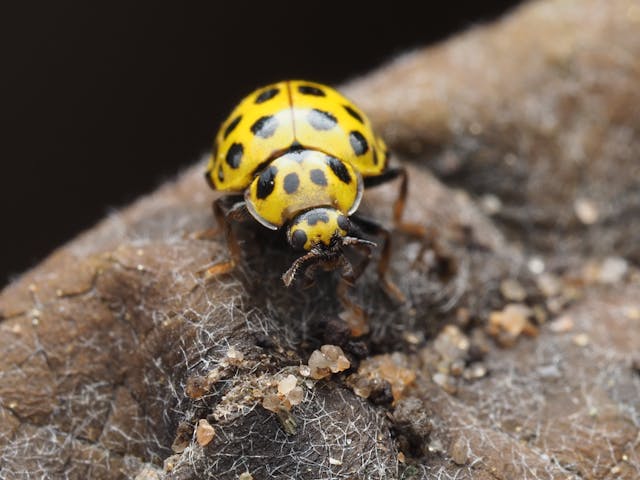
Yellow can tell you something, but not everything. It can point toward a certain species or color form. It can also hint at a shared defensive strategy. Kentucky Entomology explains it this way: “The bright body coloration helps some predators to remember the encounter.” It says predators then avoid insects with similar markings. In practical terms, yellow, orange, and red often function as warning colors. They tell predators the insect may taste bad or defend itself with chemicals. That warning system helps explain why bright colors repeat across many lady beetle species. The color is functional, not decorative.
What yellow cannot do is deliver one universal meaning. On an Asian lady beetle, yellow may simply reflect normal variation within the species. However, on a 22-spot ladybird, bright yellow helps identify a distinct mildew-feeding species. Yet on a squash beetle, yellow may mark a plant-feeding pest. So the same color can signal 3 very different roles. That is why the smartest reading is always ecological. Color matters most when it is paired with spot count, body shape, plant choice, and season. The insect’s setting usually settles the question quickly. Context gives color its practical meaning.
Bright colors also connect with another well-known defense. Illinois Extension says lady beetles may release a smelly, bad-tasting liquid from their leg joints when disturbed. Nebraska Extension describes this as bright yellow hemolymph that is distasteful to many predators. That fluid helps explain why handling lady beetles can leave an odor on your fingers. It also explains why birds and other predators learn caution around boldly colored species. Color and chemistry work together in the same warning system. That combination also explains why predators do not need many bad experiences to learn. One sharp lesson can be enough.
So the yellow color has a real biological meaning, but it is not mystical. It points to defense, identity, or ordinary variation. Then the setting fills in the rest. A yellow ladybug on aphid-covered growth suggests feeding. One on a mildew-coated leaf suggests a fungus eater. One on your curtains in late autumn suggests shelter-seeking behavior. The color begins the story, but the insect’s actions finish it. That approach gives a better answer than any fixed superstition. It also produces better decisions in homes and gardens. Clear observation beats folklore every time.
The yellow color also fits a wider survival strategy that scientists call warning coloration. University of Georgia notes that bright yellows, oranges, reds, and blacks can signal distasteful defenses. Ohio State explains that disturbed lady beetles may release yellow-orange hemolymph from their leg joints. Predators learn quickly from that combination of color, smell, and taste. So, yellow is not a random decoration on these beetles. It helps advertise that grabbing one may be a bad decision. That does not tell you the exact species on sight. Yet it does explain why bright lady beetles often stand out so strongly against leaves, bark, or siding.
Read More: Natural Pest Control: Does Rice Work Against Rats and Cockroaches?