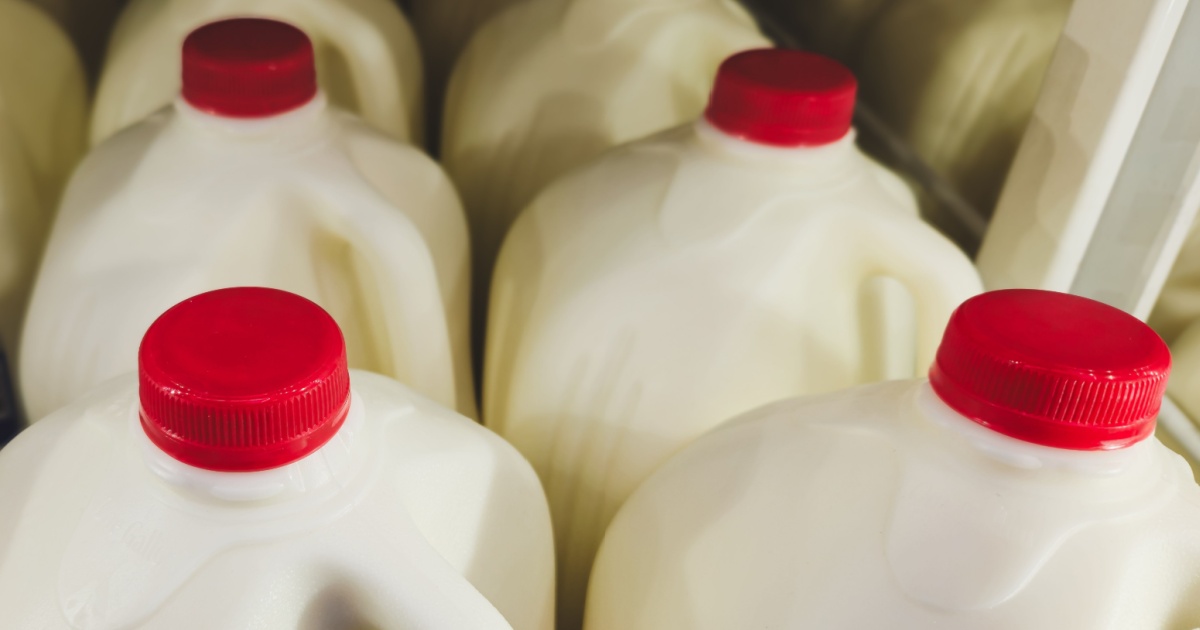

For the first time in over a decade, whole milk is federally permitted again in school cafeterias. Alison Ruffin, director of clinical nutrition and lactation at Dayton Children’s Hospital in Dayton, Ohio, summed up the public mood well: “Selecting the right milk has never been more confusing.” That’s a remarkable statement for a food that’s been a daily staple in American households for generations.
The confusion stems from a genuine shift in federal policy, and the science underneath it is more complicated than either its champions or critics tend to admit. In January 2026, the Trump administration moved aggressively on dairy, signing new legislation to return whole milk to school lunches and releasing updated dietary guidelines that call out full-fat dairy by name. The move reversed a policy that had been in place for more than four decades. Whether the science supports that reversal is a question the research hasn’t fully resolved.
Whole milk health benefits are real. They also don’t cancel out everything that made health authorities cautious in the first place. The long version requires understanding what the research actually says, what it doesn’t say, and where your personal health picture fits in.
The Policy Shift That Changed School Lunches
Beginning in 1985, U.S. dietary guidelines began recommending low-fat or fat-free dairy as the preferred choice for most Americans. That principle was baked into federal school nutrition rules in 2010, when the Healthy Hunger-Free Kids Act restricted school meals to low-fat and skim milk options as a measure to address rising childhood obesity rates.
On January 14, 2026, President Trump signed the Whole Milk for Healthy Kids Act, according to the USDA, allowing schools to serve whole and 2% milk for the first time in over a decade. Health Secretary Robert F. Kennedy Jr. described the new law as a long-overdue correction to school nutrition policy. The law contains a notable technical provision: milk fat will not be counted as part of federal requirements that average saturated fat make up less than 10% of calories in school meals. In other words, whole milk gets a structural exemption from the saturated fat caps that govern everything else on the school lunch tray.
The 2025-2030 Dietary Guidelines for Americans place strong emphasis on full-fat dairy as part of a recommended eating pattern, though they retain the limit on saturated fat at no more than 10% of daily calories. Researchers at the Harvard T.H. Chan School of Public Health noted that with the high emphasis on meat and full-fat dairy in the new guidelines, it would be difficult for most people to stay within that 10% saturated fat ceiling. The math creates a genuine tension at the center of the policy.
What the Research Actually Says About Dairy Fat and Heart Health
The science on whole milk and cardiovascular disease has shifted considerably over the past decade, but not in a single clean direction. Two large studies published in the American Journal of Clinical Nutrition in 2025 reached different conclusions, and both are worth understanding.
One review found that dairy consumption is a “neutral” cardiovascular disease risk irrespective of fat content, meaning it does not raise the risk of heart attack or stroke more when compared with other foods. That finding, drawn from data on milk, yogurt, and cheese across fat levels, was widely cited in support of the new guidelines.
The other study pulled in a different direction. Norwegian researchers tracked 73,860 individuals over 33 years in a separate American Journal of Clinical Nutrition study, recording 26,393 deaths including 8,590 from cardiovascular disease, using data from surveys conducted between 1974 and 1988. Their findings indicated that full-fat milk consumers had a higher risk of death from all causes, particularly cardiovascular disease, compared to low-fat milk consumers. Critically, though, the study noted that whole-fat milk drinkers more frequently reported being current smokers, while low-fat milk consumers tended to be more highly educated, less likely to smoke, and predominantly female. Those differences make a direct comparison difficult to interpret.
A 2025 study in Nature Communications added a third layer of complexity. Researchers used data from the China Kadoorie Biobank and the UK Biobank and found that among Chinese participants, regular dairy consumption, primarily whole milk, was associated with a 9% increased risk of coronary heart disease, while among British participants, total dairy consumption was linked to lower risks of cardiovascular disease. Geography, baseline diet, and the type of dairy being consumed all appear to shape the outcome. As a 2026 systematic review published in Frontiers in Nutrition noted, dairy products’ health effects appear highly heterogeneous, varying by product type, fat content, and processing methods.
The cardiologist most frequently cited in coverage of the new guidelines offers a measured take. Dr. Dariush Mozaffarian, director of the Food is Medicine Institute at Tufts University, told NPR in January 2026 that “both low-fat and whole-fat dairy versions of milk, cheese and yogurt have been linked to lower cardiovascular risk,” adding that “the fat content doesn’t seem to make a big difference.” In a separate interview with The Hill, Mozaffarian noted that “evidence has accumulated that dairy fat is not harmful, and in fact, in some cases, could be beneficial.”
Mozaffarian also pointed out that dairy fat compared to processed snacks or sugar-sweetened beverages looks quite healthy, but compared to olive oil or other unsaturated fats, the picture is less clear.
The Genuine Nutritional Case for Whole Milk Health Benefits
The fat in whole milk isn’t just calories – it actively enables the absorption of several key nutrients. Vitamins A, D, E, and K are fat-soluble vitamins, meaning they are absorbed in a manner similar to that of dietary fats. When milk is skimmed, those fat-soluble vitamins don’t dissolve and absorb as efficiently without a fat vehicle. Whole milk provides that vehicle naturally.
Fat also slows gastric emptying, the process by which food leaves your stomach, which means whole milk keeps you fuller for longer than skim. For children who need caloric density to support growth, or for adults managing appetite as part of overall calorie balance, that distinction has practical value.
Alison Ruffin, a registered dietitian nutritionist and director of clinical nutrition at Dayton Children’s Hospital, noted that whole milk is already the standard recommendation for children aged 12 to 24 months, as well as for kids and adults who need extra calories from fat to gain or maintain weight. Her concern isn’t about moderate whole milk consumption – it’s about misreading the new guidelines as a green light to dramatically increase intake.
Fermented dairy products, specifically cheese and yogurt, sit in a slightly different category. An umbrella review published in Nutrients in 2025 found that dairy consumption, particularly milk and yogurt, is modestly associated with reduced cardiovascular risk. The fermentation process appears to modify how dairy fat interacts with the body, which may explain why cheese and yogurt consistently perform better in studies than liquid whole milk.
Where the American Heart Association Stands
The American Heart Association has not shifted its position on saturated fat alongside the federal guidelines. The organization recommends keeping saturated fat below 6% of total daily calories, a threshold stricter than the federal dietary guidance’s 10% cap.
In a January 2026 statement, the American Heart Association expressed concern about the full-fat dairy emphasis in the new guidelines, encouraging the consumption of low-fat and fat-free dairy products instead. The AHA’s concern centers on LDL cholesterol, the type most closely associated with arterial plaque buildup. Saturated fat raises LDL, and the evidence for that mechanism remains solid even as debate continues about whether whole dairy raises cardiovascular disease risk in practice.
The tension between the two positions reflects a real methodological divide in nutrition science. Studies that track what foods people actually eat and measure what happens over decades (observational studies) sometimes produce different answers than studies that swap specific nutrients in controlled settings. The neutral-to-favorable findings for whole dairy come mostly from the former; the LDL-raising mechanism comes largely from the latter.
For people already at elevated cardiovascular risk, the practical implication is clear: low-fat or nonfat dairy remains the safer choice based on current evidence. That’s the recommendation from both Alison Ruffin and other clinicians cited in recent coverage.
What Whole Milk Doesn’t Do – And Who Should Be Cautious
A cup of whole milk contains 8 grams of total fat and 4.6 grams of saturated fat, according to USDA FoodData Central. A cup of nonfat milk, by comparison, contains less than 1 gram of total and saturated fat. That gap is meaningful for anyone managing cardiovascular risk or watching their overall saturated fat load across the day.
All cow’s milk – whole, 2%, and skim – contains vitamin D and calcium in similar quantities. For calcium, nonfat milk provides 325mg per cup, whole milk 306mg, and 2% milk 309mg. The bone health argument for whole milk over skim, in other words, doesn’t hold up under the numbers.
The Congressional Research Service has noted that there are no nationally representative studies that have directly compared health outcomes between children who consume higher-fat versus lower-fat dairy. The evidence base for the school lunch policy change, while suggestive, is not as definitive as the policy push implies.
For the general healthy adult population, Hope Barkoukis, chair of the nutrition department at Case Western Reserve University in Cleveland, told HuffPost that dairy – including products with different fat levels – has a place in a healthy dietary pattern. The operative word is pattern. Whole milk as one part of a diet built around vegetables, fruits, whole grains, and lean protein behaves very differently than whole milk as a daily addition to a diet already heavy in red meat and processed foods.
What to Do With All of This
Whole milk is neither the nutritional villain it was portrayed as for 40 years nor the straightforward health food the current administration’s messaging sometimes implies. The research is genuinely mixed, and the right choice depends on the full picture of your diet and your individual health risk.
Whole milk is the standard recommendation for children aged 12 to 24 months, and for anyone who needs extra calories from fat to support weight gain or maintenance. For people at elevated risk for cardiovascular disease or stroke, low-fat or nonfat dairy remains the clinically preferred choice.
For most healthy adults eating a balanced diet, the practical question isn’t whether to switch to whole milk – it’s whether your overall saturated fat intake stays within a reasonable range across the full day. If you move toward whole milk, the nutritional logic suggests displacing other saturated fat sources, specifically processed baked goods, ice cream, and fatty processed meats, rather than simply adding it on top of your existing intake. A one-cup serving of whole milk fits comfortably within a day built on minimally processed foods. Two cups plus a diet heavy in red meat and full-fat cheese starts testing the limits of what current evidence can endorse.
Your doctor or a registered dietitian is the right person to weigh in if you have elevated LDL cholesterol, a family history of heart disease, or any active cardiovascular conditions. For everyone else, whole milk is back on the table – just not necessarily on every shelf of the fridge.
Disclaimer: This information is not intended to be a substitute for professional medical advice, diagnosis, or treatment and is for information only. Always seek the advice of your physician or another qualified health provider with any questions about your medical condition and/or current medication. Do not disregard professional medical advice or delay seeking advice or treatment because of something you have read here.
AI Disclaimer: This article was created with the assistance of AI tools and reviewed by a human editor.
Read More: 9 Whole Grains That Can Help Improve Your Cholesterol Levels