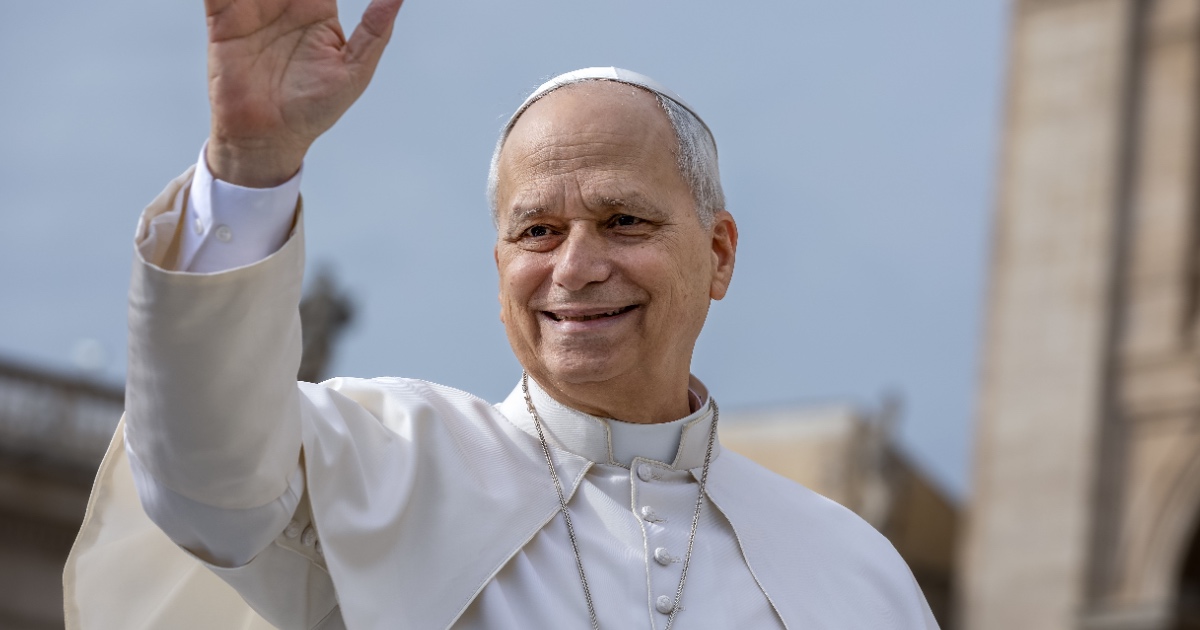

There is no American pope who has ever faced a situation quite like this. Robert Francis Prevost, born in Chicago in 1955, became Pope Leo XIV on May 8, 2025, making history as the first US-born leader of the Catholic Church. American Catholics waited for what seemed an inevitable homecoming. Then, in an act as symbolically loaded as any statement from the pulpit, the Vatican made clear it wasn’t coming – at least not yet.
The Holy See Press Office confirmed that Pope Leo XIV has no plans to visit the US this year, with director Matteo Bruni stating plainly that “no U.S. trip is planned for 2026.” That sentence, spare as it was, landed with the weight of a full diplomatic communiqué. There was no softening language, no open door left ajar for speculation. The Vatican chose to close the question early, and clearly.
Cardinal Robert F. Prevost, the Chicago-born prefect of the Dicastery for Bishops, was elected the 267th pope on May 8, 2025, taking the name Pope Leo XIV – the first North American ever elected to the position. For a country that responded to the white smoke over the Sistine Chapel with genuine national pride, watching its first pope decline to return home is more than a footnote. It is a statement that requires explanation.
The story of why Leo won’t come home, at least while Donald Trump occupies the White House, is built from multiple layers – theology, geopolitics, immigration, war, and a rift between two men who represent two very different visions of what America owes the world.
Comunicado oficial: El Cardenal Carlos Aguiar Retes se reunió con el Papa León XIV para compartir el caminar sinodal de la Iglesia en México. pic.twitter.com/MnXKRNxrl6
— Arquidiócesis Primada de México (@ArquidiocesisMx) January 14, 2026
Who Is Pope Leo XIV?
Robert Francis Prevost was born on September 14, 1955, in Chicago, Illinois, to Louis Marius Prevost, of French and Italian descent, and Mildred Martínez, of Spanish descent. He became a friar in the Order of Saint Augustine in 1977 and was ordained as a priest in 1982. His formation was not that of a careerist climbing Vatican corridors. At age 30, Prevost went to work in Peru, serving there until 1999, with a brief stint back in Chicago in 1987 to work as pastor for vocations and director of missions for its Augustinian province.
Those years in Peru were formative. He encountered the realities of violence, inequality, and political instability firsthand – not as a visiting dignitary, but as a working priest. The experience did not push him toward political ideology. It reinforced a conviction that power must be accountable to moral limits.
Elected on May 8, 2025, he used his first public address to call for dialogue, unity, and what he described as an “unarmed and disarming peace.” That phrase was not rhetorical decoration. In the months that followed, it became the animating principle of a papacy that would place Leo in direct conflict with the most powerful government on Earth.
The First Cracks: Immigration and the Trump Administration
The rift between Pope Leo XIV and the Trump White House did not begin with bombs over Iran. It began with something that has defined US domestic politics since Trump’s first term: immigration enforcement.
Leo XIV and American Catholic officials had a growing history of criticism aimed at the Trump administration over the treatment of migrants under its second-term immigration policies, as well as benefit cuts tied to the One Big Beautiful Bill Act and the 2025 federal government shutdown. According to NPR, while many had hoped Pope Leo would visit his homeland, the trip seemed unlikely given that growing divide.
Speaking with journalists outside Castel Gandolfo in late 2025, the pope said Catholic politicians should be judged by their overall policy positions, not just a single issue. “Someone who says I’m against abortion but is in favor of the death penalty is not really pro-life,” the pope said. “And someone who says I’m against abortion, but I’m in agreement with the inhuman treatment of immigrants in the United States, I don’t know if that’s pro-life.”
The White House was not amused. White House Press Secretary Karoline Leavitt rejected the pope’s characterization, telling reporters at a briefing: “I would reject there is inhumane treatment of illegal immigrants in the United States under this administration,” adding that the government is “trying to enforce our nation’s laws in the most humane way possible.”
Pope Leo gave Vice President JD Vance an icy reception when Vance attended his inaugural mass in May 2025. Vance was caught in the middle after the pope condemned the Department of Homeland Security’s harsh immigration raids. According to reporting from multiple outlets, Assistant Homeland Security Secretary Tricia McLaughlin implied the pontiff was not telling the truth in a post on X, and a White House spokesperson said the pope “doesn’t know what he’s talking about” – a remark that prompted Vance to demand to know who had made the statement.
Prior to the wider rift, Leo was not known for political confrontation, in contrast to his predecessor Pope Francis. By the end of 2025, however, he had repeatedly criticized the Trump administration’s treatment of undocumented migrants. Before becoming pope, on his account on social media platform X, he had criticized Trump and Vance’s policies, especially over immigration.
The War in Iran and the Point of No Return
Tensions escalated sharply following US military action against Iran on February 28, 2026. Leo responded with unusually direct moral warnings about restraint and escalation – remarks widely interpreted as aimed squarely at President Trump’s leadership.
Pope Leo strongly condemned US actions in Iran in his Easter message, stating that God “does not listen” to world leaders who wage war. He had already criticized Trump’s actions on Venezuela, and his threats against Greenland and Canada, in a speech on January 9, stating: “a diplomacy that promotes dialogue and seeks consensus among all parties is being replaced by a diplomacy based on force.”
The response from the Pentagon was swift and, by any diplomatic measure, extraordinary. According to reporting by The Free Press, later covered by the National Catholic Reporter, days after Pope Leo delivered his State of the World address, Undersecretary of Defense for Policy Elbridge Colby met with Cardinal Christophe Pierre, then the Vatican’s US representative, at the Pentagon on January 22. The Free Press reported that Colby warned the Vatican that “the United States has the military power to do whatever it wants in the world,” and that “the Catholic Church had better take its side.” One US official at the meeting was also reported to have raised the Avignon papacy – a period in the 14th century when the French monarchy bent the Catholic Church into submission.
Both the Pentagon and the Vatican disputed this account. The Defense Department called the story “exaggerated and distorted,” stating the meeting was “substantive, respectful, and professional.” Vatican spokesman Matteo Bruni issued a formal statement on April 10 saying that “the narrative offered by some media outlets about this meeting is completely untrue,” and that Cardinal Pierre confirmed the encounter “was part of the Papal Representative’s regular mission.” Pierre himself, according to the US Ambassador to the Holy See, described the reporting as “fabrications” that were “just invented.” However, Catholic outlet The Pillar reported that at least one senior Vatican official described the meeting as having moments of tension, with some US officials being “aggressive,” though “there was no question of anybody threatening anyone.”
Many Vatican observers saw the Avignon reference in the original report – disputed or not – as precisely the kind of pressure the Holy See takes seriously. Pope Leo’s subsequent decision to cancel his planned US visit later that year was widely read in that context.
Trump’s Public Attacks on the Pope
The conflict became an open feud on April 12, 2026, when Trump launched direct personal attacks on Leo via his Truth Social account, questioning the pope’s authority to criticize US policy and transforming a policy disagreement into a public confrontation.
Trump wrote that “Pope Leo is WEAK on Crime, and terrible for Foreign Policy,” going on to say he doesn’t want a pope who thinks it’s OK for Iran to have a nuclear weapon, or who thinks it “terrible that America attacked Venezuela.” “I don’t want a Pope who criticizes the President of the United States,” Trump added. He also claimed that Leo “wasn’t on any list to be Pope, and was only put there by the Church because he was an American, and they thought that would be the best way to deal with President Donald J. Trump.”
This was not a normal diplomatic row. The ongoing war of words between President Trump and Pope Leo XIV is, as historians of religion have noted, unparalleled in modern history. It’s not new for popes to speak out on political issues. Trump’s attacks on a sitting pope, however, are without precedent.
Both Trump and Defense Secretary Pete Hegseth invoked God in public messaging during the conflict, with Hegseth framing the war effort as divinely supported and using scriptural justification in briefings. Leo repeatedly pushed back against this, saying: “Jesus is the king of peace, who rejects war, whom no one can use to justify war.”
Elise Ann Allen, a Rome-based correspondent for Crux, said Trump’s comments were a sign he was “feeling threatened that Leo was emerging as a stronger figure on the international scene.” She told CNN that Trump “has to be careful, because he has to remember that it’s the moderate Catholics who got him elected in both elections.”
Leo’s response was measured but unambiguous. Aboard his plane as he began a 10-day trip to Africa, the pontiff told reporters: “I have no fear of the Trump administration or speaking out loudly of the message of the Gospel, which is what I believe I am here to do, what the church is here to do.” He added: “We are not politicians, we don’t deal with foreign policy with the same perspective he might understand it. But I do believe in the message of the Gospel, as a peacemaker.”
The Religious Framing Battle
Beneath the political conflict runs a genuine theological disagreement. Both sides have invoked God. The dispute is about which invocation is legitimate.
Trump told reporters that he believes God supports US military action in Iran because “God is good and God wants to see people taken care of.” The White House also posted an image of Trump as the pope on social media.
Leo’s opposition to the Iran war is not political in origin. It is moral and theological. It rests on a consistent claim: power must be judged, violence must be restrained, and invoking God to justify destruction is a distortion of both religion and public life. From the beginning of his pontificate, Leo XIV has made this clear.
Margaret Thompson, a professor of history and political science at Syracuse University, noted: “We have an administration, not just a president, but an administration that is speaking out in more overtly religious terms than even somebody like Jimmy Carter.”
According to Time magazine, in an April 10 post on social media, the pope wrote: “God does not bless any conflict. Anyone who is a disciple of Christ, the Prince of Peace, is never on the side of those who once wielded the sword and today drop bombs.” In his Palm Sunday homily in March, he added that God “does not listen to the prayers of those who wage war.”
The practical effect of this theological confrontation is real: any US visit by Leo would immediately be consumed by this framing battle. Every word from the pulpit, every moment at a microphone, would be cross-examined for its implications in the ongoing conflict between the White House and the Vatican.
The Deliberate Signal of Where Leo Is Going Instead
Tensions grew so severe that Pope Leo, the first-ever US-born pontiff, refused to accept Trump’s invitation to celebrate the nation’s 250th anniversary. Instead, on July 4, 2026, the American pope plans to visit Lampedusa, a tiny island in the Mediterranean that serves as a gateway for North African migrants risking everything to reach Europe.
His trip to Africa – which includes stops in Algeria, Angola, Equatorial Guinea, and Cameroon – is focused on promoting unity, peace, and stronger interfaith relationships. The pope opened the journey in Algiers, where he was welcomed by President Abdelmadjid Tebboune, marking the first-ever papal visit to the country and underscoring the symbolic importance of engaging with predominantly Muslim nations. According to CBC News, any US trip before early November would also be viewed through a political lens, given midterm elections scheduled for that month.
Bishops in Angola, Algeria, and Spain have confirmed that Pope Leo will visit their countries this year. Pope Leo has also expressed his desire to visit Latin America, citing Argentina, Uruguay, and Peru.
The Lampedusa choice, in particular, reads as a pointed rejoinder. Rather than standing in Washington or Chicago for America’s 250th birthday, the US-born pope will be on a small island famous as the first landfall for migrants crossing the Mediterranean – the same migrants whose treatment in the United States he has described as “inhuman.”
In Cameroon, Leo delivered striking remarks condemning global leaders who, he said, are “ravaging the world” by spending billions on war. In a speech in St. Joseph’s Cathedral in the Cameroonian city of Bamenda, the pope sharply criticized those who use religion to justify military actions. “The masters of war pretend not to know that it takes only a moment to destroy, yet often a lifetime is not enough to rebuild,” he stated.
Leo’s Strategy: Reshaping the US Church From Rome
If Pope Leo XIV will not come to America, he is finding other ways to make his presence felt there. According to PBS NewsHour, Pope Leo XIV has named new bishops in the United States, several of whom have been vocal critics of President Trump.
Evelio Menjivar-Ayala, a formerly undocumented immigrant, will be the new bishop for the Diocese of Wheeling-Charleston in West Virginia, and Gary Studniewski and Robert Boxie III will be auxiliary bishops in Washington, DC.
Menjivar-Ayala, 55, fled El Salvador’s civil war as a teen in the late 1980s, eventually crossing illegally into the United States in 1990. Within a short period, he gained humanitarian protection, later received a visa as a religious worker, and became a US citizen two decades ago.
Elevating bishops who have publicly challenged Trump’s policies signals that Pope Leo is not retreating from confrontational moral positions despite rising political tensions. Menjivar-Ayala had criticized the Trump administration’s immigration policies, writing that “the federal government has pursued a ‘shock and awe’ campaign of aggressive threats and highly visible operations of questionable legality that go far beyond mere immigration ‘enforcement.'” He warned that aggressive enforcement tactics were instilling fear across immigrant and refugee communities, including among people with legal status and US citizen family members.
The Washington Post characterized Leo’s move as another effort to “elevate” American clergy relevant to tension points with the Trump administration. The signal is not subtle: the pope cannot enter the US, but his appointees are already there.
Read More: Why Pope Leo Won’t Travel to the US While Trump Is in Office
The Election Year Factor and the Politics of Papal Timing
Beyond the substantive disputes, there are also structural reasons why the Vatican was never going to send Leo to America in 2026. The National Catholic Reporter noted that several factors likely contributed to the decision to skip the US, including that it is a midterm election year, which Vatican correspondent Justin McLellan said the Vatican typically tries to avoid when scheduling the pontiff’s trips.
The Vatican’s historical caution about appearing to influence elections is well documented. The decision looked even sharper because it came against a long modern pattern. John Paul II visited the United States seven times. Benedict XVI made a major six-day American trip in 2008. Francis visited in 2015 and became the first pope to address a joint session of Congress.
Leo departing from that precedent is not simply a scheduling quirk. It reflects a calculation about what a US visit would actually mean in the current environment. A visit would place an anti-war pope, already at odds with Trump, into a media environment built to turn moral disagreement into constant combat. It would invite every network and campaign surrogate to treat church teaching as electoral ammunition.
The Polls: Where Catholic Americans Stand
The political calculus around the Leo-Trump rift is not as straightforward as either side might assume. Pope Leo is viewed favorably within the US. Among 14 prominent US figures polled in 2025, he ranked as the most favorable, viewed favorably by 57% and unfavorably by just 11%. NBC News also gave Leo a +34 net favorability rating in a 2026 poll, compared with Trump’s -12. Some observers have suggested that this popularity gap is precisely why Trump has been so aggressive in his attacks.
A Verasight survey conducted among 2,000 US adults found an almost even national split on whether it is appropriate for the pope to publicly criticize a president’s policies. Overall, 50% said such criticism was appropriate, while 39% said it was inappropriate. Among Catholic respondents, the division leaned slightly toward acceptance: 48% of Catholics said it was appropriate for Leo to criticize Trump’s policies, compared with 45% who said it was inappropriate.
Opinions hardened significantly when the direction of criticism was reversed – suggesting that, among Catholic voters, attacks on the pope carry a political cost that attacks from the pope do not.
The Catholic Church today numbers more than 1.4 billion faithful worldwide. In the United States alone, there are more than 70 million Catholics, roughly 20-22% of the population. As analyst Elise Ann Allen observed, Trump “has to be careful, because he has to remember that it’s the moderate Catholics who got him elected in both elections.”
Where This Leaves the Relationship Now
The absence of Pope Leo XIV from American soil is not a passive oversight or a scheduling inconvenience. It is the visible result of a sequence of events – a disputed Pentagon meeting, a war in Iran, public attacks on the pope from the Oval Office, and a theological confrontation with no obvious resolution.
One Vatican official put it bluntly: “The Pope may well never visit the United States under this administration.”
Speaking to reporters as he began his African tour, the first American pope stressed that global conflicts are causing immense human suffering and insisted that moral leadership requires advocating for alternatives to violence. “I will continue to speak out loudly against war, looking to promote peace, promoting dialogue and multilateral relationships among states to find just solutions to problems,” he said.
Italian Prime Minister Giorgia Meloni called Trump’s attacks on Leo “unacceptable” and said it was “right and normal that the Pope calls for peace and condemns all forms of war.” That response – from a conservative Catholic head of government with strong ties to the American right – illustrates how isolated the Trump administration’s position has become, even among leaders who might have been expected to side with it.
What this episode clarifies, more than anything else, is that for Pope Leo XIV, the role of the papacy is not to be a mirror for the nation that produced him. Visiting a country whose government has publicly attacked him, summoned his ambassador for a meeting that both sides characterize very differently, and canceled grants to Catholic charities serving migrant children would blur the lines of his office beyond recognition. The first American pope is choosing, deliberately, to be a global pope first.
What This Means for You
For American Catholics – and for anyone trying to understand one of the most unusual diplomatic standoffs in modern history – the practical meaning of this story is this: a conflict that began over immigration policy has expanded into a full dispute over the role of religion in public life, the limits of political power, and who gets to invoke God’s name in a time of war.
If you follow American Catholic life, pay attention to who Leo appoints next. His selection of immigrant bishops and outspoken clergy is shaping the US church in ways that a papal visit would accomplish far more slowly. The pope may not be coming to America, but his vision for American Catholicism is already taking shape in dioceses from West Virginia to Washington, DC.
And if you are trying to understand where this heads next: Secretary of State Marco Rubio is expected to meet with Leo in Rome in what observers describe as an attempt to patch up ties with the Vatican. Whether that produces any meaningful shift depends on whether the administration is willing to moderate its position on the issues – immigration, war, and religious authority – that created the rift in the first place. For now, the homecoming waits.
AI Disclaimer: This article was created with the assistance of AI tools and reviewed by a human editor.
Read More: Pope Leo Calls Out Extreme CEO Pay, Cites Elon Musk as Example