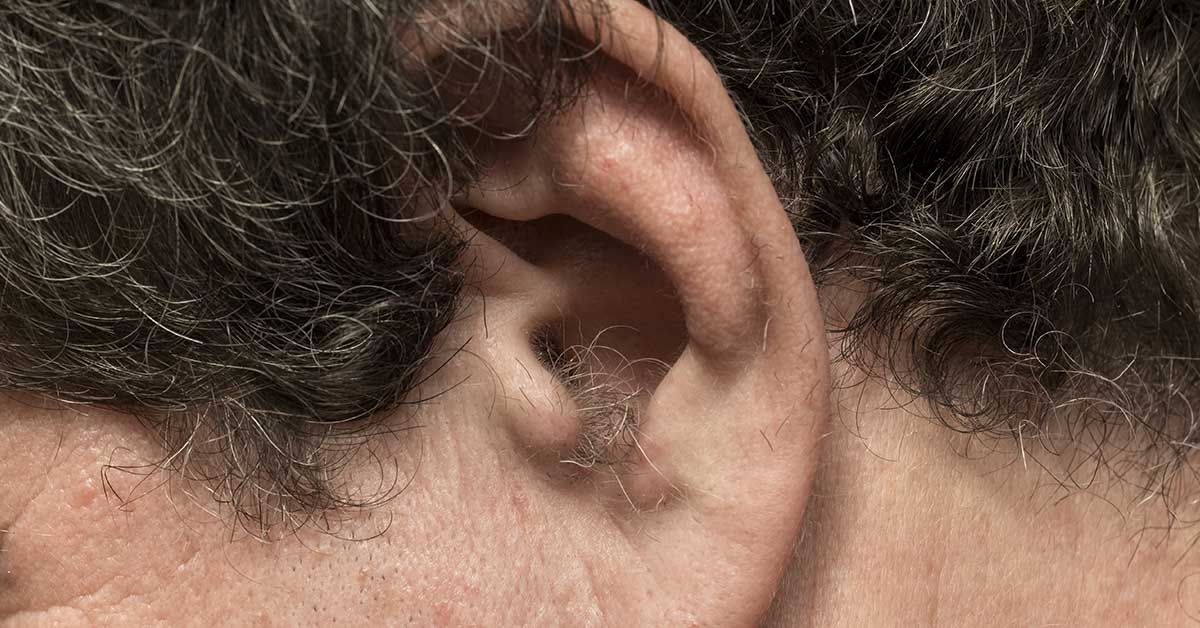

It can seem like ear hair simply appeared overnight, yet it is usually a slow change that only becomes obvious much later. In fact, most people had fine hair there for years. Then one day, brighter lighting, a fresh haircut, or a close selfie makes them obvious. For some, the strands also change over time. They turn darker, thicker, and longer, so they stand away from the skin. Ear hair is not a sign of poor hygiene. It is usually a normal shift in how hair follicles behave with age. Hormones can influence that shift, especially in men, and genetics can decide how noticeable it becomes.
Some hairs stay soft and pale, while others become coarse terminal hairs near the canal entrance. The ear’s structure can also change over time, exposing areas that were once inward-facing. Hair at the ear opening has a practical job. It can trap dust and tiny debris before they move deeper. Earwax adds another layer of defense and carries particles outward. Trouble starts when grooming gets aggressive. The ear canal skin is thin, and it can become inflamed quickly after plucking or digging. This article breaks down common causes, age effects, and safe removal options. It also explains what to avoid and when symptoms need medical care.
What Ear Hair Is and Why It Exists
The phrase “ear hair” covers more than one type of hair in more than one place. The Cleveland Clinic notes that “Hairy ear (auricular hypertrichosis) is hair growing on or in your outer ear, the part of your ear you can see.” This includes hair on the helix and outer rim, the lobe, and the small region near the canal entrance. Some people notice mostly pale fuzz that lies close to the skin. Others notice darker hairs that stand outward and curl. That difference comes down to hair type and follicle behavior. The Cleveland Clinic explains this split as vellus hair versus terminal hair, and it notes that terminal hair “is stiff and dark” and may “stick out of your ear canal.” The same source describes what people usually spot first: “In general, hairy ear symptoms include tufts of dark hair sticking out of your ear canal or strands of dark hair growing on your outer ear.” When people complain about “so much ear hair,” they often mean those visible tufts. They catch light and show up in photos. They also regrow fast, which can make trimming seem pointless.
Ear hair also has a protective side, even when it is annoying. The Cleveland Clinic states, “Ear hair doesn’t affect your hearing, and it helps to protect your inner ear from debris.” This matters because the canal is a narrow tunnel with delicate skin. Dust, dead skin, and tiny fibers can drift inward during the day. Hair near the canal opening can reduce that movement. It can also work alongside earwax, which traps particles and moves outward. Hair biology also explains why the strands can look suddenly “coarser.” Each visible hair has a shaft above the skin and a root below it. Follicles surround the root and feed it through small structures at the base. Over time, some follicles produce thicker shafts, so the hair stands out more. People sometimes react by removing everything deeply. That approach can backfire because canal skin tears easily.
A safer mindset is simple. Hair on the visible outer ear is cosmetic. Hair deeper inside the canal can be protective and needs caution. Many people also confuse ear hair with earwax buildup, but they are separate issues. Hair can trap wax at the entrance, so it becomes easier to notice. That does not mean the ear is producing “extra” wax. It often means the wax has more to cling to. The outer ear skin also sheds constantly, and tiny flakes can collect around hairs. When people scrape or dig to “clean,” they irritate the canal. That irritation can trigger more itching, which leads to more digging. The safest boundary is simple. Keep grooming on the visible outer ear and the canal entrance only. Avoid pushing tools into the canal to chase a “clean” look. The Cleveland Clinic notes that ear hair protects against debris, so removing everything deep inside is not necessary.
Why Ear Hair Often Increases With Age
Age changes hair across the body, but the face and ears often get the most attention. One reason is visibility. Another reason is hormone exposure over time. The Cleveland Clinic notes, “Men may develop hairy ears as they age. Women rarely develop hairy ears.” That difference does not mean women never get ear hair. Many do, but it tends to be finer, lighter, or less concentrated. In men, some follicles in the ear and nose may behave more like androgen-responsive follicles. The Cleveland Clinic adds a common theory, stating that “One theory behind hairy ears is that as men grow older, hair follicles in their ears and nose become more sensitive to testosterone.” Sensitivity is the keyword. A follicle can respond more strongly even if hormone levels are not dramatically higher. Over decades, that response can lengthen the growing phase of the hair cycle or increase shaft thickness. The result is a few hairs that become stubborn, visible, and quick to return.
Hair-cycle language helps explain why a strand suddenly looks wild. Hair grows, pauses, sheds, then repeats. If the growing phase lasts longer, hair can grow longer before it falls out. Cleveland Clinic’s Health Essentials describes a similar effect for nose hair, noting that “Nose hairs naturally get longer and thicker as you get older.” The same article ties the change to “anagen sensitivity,” describing it as “long-term exposure to hormones in your body.” Ear hair can follow the same general logic. Genetics also plays a role. Some families produce more terminal hair in specific areas, including the outer ear. That is why two people of the same age can have completely different “ear hair” experiences. Finally, the ear itself changes with age in ways that make hair easier to spot. A Hofstra medical news explainer quotes surgeon Alan Matarasso, MD: “Your ears and nose are fully developed by your 20s.” Even so, cartilage support and skin elasticity shift with time. Slight drooping and changed angles can expose hairs that used to face inward. So the “increase” can be real follicle change, visual change, or both at once.
WebMD notes that “Some people get more hair in and on their ears as they age – especially men.” That simple line matches what many barbers notice in real life. A few strands become obvious first, and then grooming turns them into a recurring task. Follicles do not all “age” the same way, even on the same person. Some stay quiet for decades, and others switch on more aggressively later. The switch often shows up as faster growth, thicker shafts, or hairs that keep growing longer before they shed. Dermatologist Matthew Stephany, MD, explains the wider hormone picture using androgen receptors. He notes that these receptors “are unique in different areas of your body.” That detail helps explain the strange trade-off many people notice. Scalp hair can thin, while ear and nose hair becomes more stubborn. It is not one rule across the body. It is a set of local rules driven by follicle sensitivity.
When Ear Hair Is Just Cosmetic and When It Can Cause Trouble

In most cases, ear hair is harmless. It does not mean the ear is dirty, and it does not mean the body is “out of balance.” Dermatology sources reserve medical terms like hypertrichosis for excessive growth beyond typical variation. DermNet notes that “Hypertrichosis is excessive hair growth over and above the normal for the age, sex, and race of an individual.” StatPearls, hosted on the NCBI Bookshelf, gives a broad definition too, stating, “Hypertrichosis is defined as excessive hair growth anywhere on the body in either males or females.” Most people with visible ear hair do not have a disease. They have localized, age-linked terminal hair changes. Still, ear hair can create practical annoyances. Long canal-edge hairs can tickle, trap moisture, and catch tiny particles. Some people also notice that wax clings to the hairs, which makes the ear look messier than it is. That can lead to over-cleaning, which is where the real problems begin. Cotton swabs and sharp tools can scratch the canal. Scratches can swell, sting, and invite infection. Even minor scratches can start a chain reaction.
The canal skin swells, then itches, then people scratch again. That cycle can set the stage for otitis externa, especially after water exposure. The CDC gives blunt guidance, stating “Don’t put objects in the ear canal.” The same CDC advice warns against cotton-tip swabs and other items people grab without thinking. Mayo Clinic also flags ear cleaning itself as a risk factor, noting that cleaning with cotton swabs or fingernails can cause “scratches or sores.” If hair makes wax look messy, it is better to trim the outer hair than to chase wax deep inside. If itching persists, it can point to eczema or another skin issue that needs treatment, not more cleaning. There is also a specific complication that clinicians mention. The Cleveland Clinic states, “Having a lot of ear hair may increase your risk of swimmer’s ear (otitis externa).” Swimmer’s ear is an outer canal infection, often linked to trapped moisture and irritated skin. Ear hair alone does not cause it, but hair can help hold moisture near the canal opening, especially after showers or swimming.
People who wear earbuds for long hours can also trap warmth and humidity. If ear hair traps wax and water together, the skin can become itchy and inflamed. Symptoms that deserve attention include increasing pain, drainage, swelling, fever, or reduced hearing from blockage. Those signs point to inflammation or infection, not just a cosmetic issue. In those cases, grooming fixes are not enough. A clinician can check for otitis externa, wax impaction, or skin conditions like eczema. The safest rule is simple: if the ear becomes sore, wet, or repeatedly itchy, stop plucking and stop digging. Treat the ear canal like skin that bruises easily, because it does. Also watch for tenderness when the outer ear is pulled, or pain when chewing. Those signs can suggest canal inflammation. If discharge smells bad or looks yellow, seek care quickly. Early treatment can prevent swelling that narrows the canal and worsens hearing.
Removal Options That Work and Options That Cause Problems
Ear hair removal works best when it stays boring and consistent. People often want a permanent solution, but regrowth is expected. The Cleveland Clinic states, “Like all hair, ear hair comes back, even if you use hair removal treatments that uproot your hair shaft, follicle, and hair bulb.” That means the smartest plan is the one you can repeat safely. Start with where the hair sits. Hair on the outer rim and lobe can be trimmed with small scissors or an electric trimmer. Electric ear and nose trimmers reduce the risk of nicks, as long as you do not push them deep. Trimming avoids skin trauma and works well for coarse strands. Shaving the outer ear can work too, but it can leave sharp stubble that looks darker for a few days. Chemical depilatories can remove hair from the outer ear skin, but they can also burn and irritate. They should never go inside the canal. Waxing and sugaring can remove hair longer term on the outer ear, but they can also inflame sensitive skin.
If you want a clean framework for the options, the medical literature divides methods into 2 broad categories. A 2021 literature review by CNY Kang and colleagues explains that “Hair removal methods can be divided into two categories: 1) depilation, which involves removing the hair shaft… and 2) epilation, which involves removing the hair shaft, follicle, and bulb.” Depilation includes trimming, shaving, and some creams. Epilation includes plucking, waxing, threading, and light-based methods. For ear hair, plucking is the method that causes the most trouble. It can hurt, and it can inflame the follicle. It can also create tiny wounds in a bacteria-friendly environment. Some people tolerate occasional plucking on the outer rim, but plucking near the canal entrance carries more risk. For longer-term reduction, dermatologist-led laser hair removal may help on the outer ear, depending on hair color and skin tone. It is not usually aimed deep into the canal. If you choose professional treatments, ask directly about ear-area safety and aftercare. Also watch for redness, pimples, or crusting afterward. Those signs mean the skin needs time to recover before the next session.
Read More: New Study Reveals Unexpected Connection Between Hair Graying and Cancer Risk
If you want a routine that stays low-risk, focus on repeatable control, not perfection. WebMD notes that with plucking, “it can take 1-8 weeks for it to grow back.” That timing explains why plucking can feel “worth it” at first. However, the trade-off is irritation, especially near the canal entrance. Trimming regrows faster, yet it avoids tearing skin and inflaming follicles. Clean the trimmer head before each use, because bacteria love warm, oily surfaces. Keep the cutting edge on the visible outer ear only, and stop at the canal entrance. If you wax, expect similar cycles, because WebMD says waxing can keep hair off for “2-8 weeks.” After any removal, watch for redness, small pustules, or worsening soreness. Those signs can point to follicle inflammation that needs a break. Cleveland Clinic also stresses that regrowth is normal, so regular upkeep beats aggressive removal.
A.I. Disclaimer: This article was created with AI assistance and edited by a human for accuracy and clarity.
Read More: What It Means to Let Your Gray Hair Grow and Not Dye It, According to Psychology