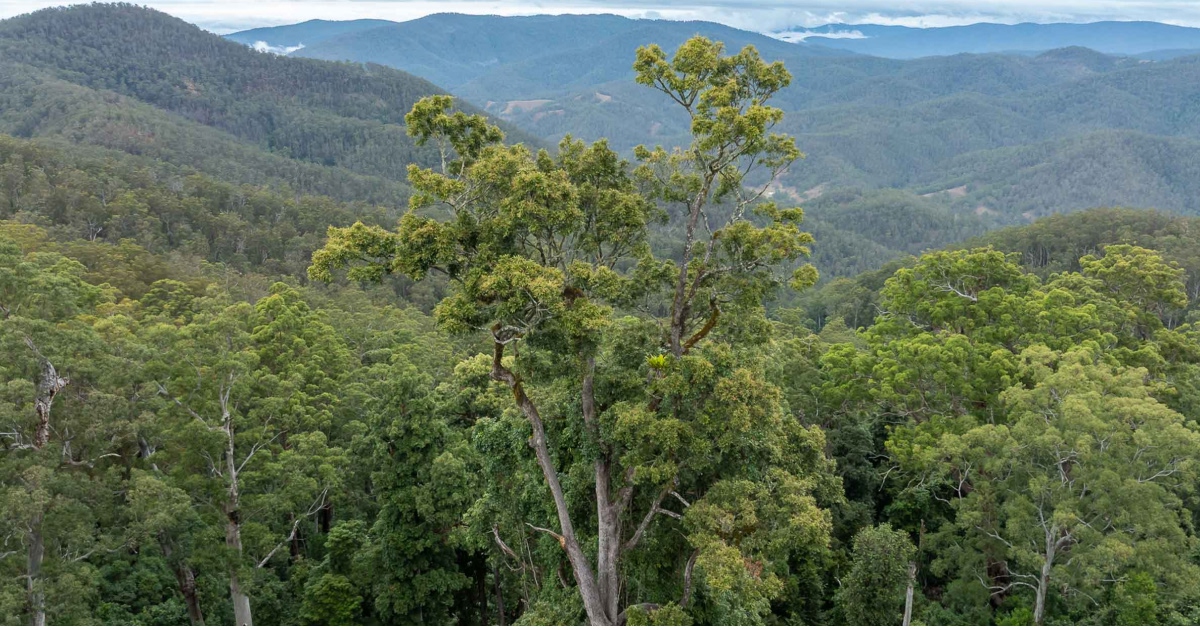

When logging trucks were still hauling giant trees off the property during the final inspections, Mike and Sue Gregg had already decided what was coming next. The purchase would go through. The cattle would leave. And 17,000 acres of New South Wales forest would become one of the most ambitious private wildlife refuge conservation projects in Australian history.
The Greggs aren’t career environmentalists. Mike Gregg is an early investor in software company WiseTech Global. After building considerable wealth through technology, the couple made a decision that had nothing to do with returns on investment. “We found we had made a bit more money than we ever thought we would, and to us that came with responsibility – we’ve got to think about how we’re going to do something with this, and it’s not buying a big yacht,” Mike Gregg said.
Sue Gregg put it plainly: “We found ourselves in the very fortunate position to do some good. We love nature and wildlife.” So they bought the land. And then they built an organization to manage it.
A new kind of conservation organization
The Great Southern Land Conservancy was co-founded by Mike and Sue Gregg alongside conservationist Atticus Fleming AM as a private conservation charity. Its approach is direct: buy land and protect it forever.
The six contiguous properties cover 7,000 hectares (approximately 17,000 acres) southwest of Port Macquarie in New South Wales. The man running day-to-day operations is Atticus Fleming AM, former chief of the NSW National Parks and Wildlife Service, who now leads the conservancy. Before that, Fleming served for 16 years as inaugural CEO of the Australian Wildlife Conservancy. The conservancy’s inaugural directors include journalist Chris Bath and business people Peter Willis and Deanne Stevens, as detailed on the conservancy’s launch announcement. Fleming described its philosophy directly: “What we’re trying to do as an organization is protect really important pieces of land for conservation, but also use the management to be strategic so that we can use each of these properties as a catalyst for broader impact.”
Fleming believes buying land and managing it effectively is still the best way to reverse wildlife decline in Australia. Acquisitions will focus on areas supporting threatened and declining species, biodiversity hotspots, climate refugia, and habitats that contribute to landscape connectivity.
Why this location matters for wildlife refuge conservation
The land southwest of Port Macquarie sits within the NSW Great Dividing Range. By linking six adjoining properties near existing protected areas, the conservancy is creating a connected refuge for wildlife, supporting species survival, wildfire recovery, and climate resilience. The landscape itself is varied: wet forest, rainforest-edged gorges, rivers, and grassy woodlands, each supporting different species that depend on habitat variety for food and breeding.
Australia holds the world’s worst mammal extinction record. Invasive species are the biggest threat to native species and the leading cause of extinction in Australia. The conservancy’s land management plan is built around feral animal and weed control from day one.
The species the reserve protects
The conservancy’s first two properties already protect more than 30 threatened species, including koalas, spotted-tailed quolls, stuttering frogs, glossy black cockatoos, brown treecreepers, dusky woodswallows, and parma wallabies. The full six-property reserve expands that protection considerably.
Koala populations of Queensland, New South Wales, and the Australian Capital Territory were listed as endangered on February 12, 2022, under the Environment Protection and Biodiversity Conservation Act 1999. Fleming expects that an upcoming intensive koala survey will confirm the reserve hosts the largest koala population on privately owned land in New South Wales.
The greater glider, a possum-sized gliding marsupial native to eastern Australia, was listed as endangered in July 2022, having previously been classified as vulnerable, and its populations have declined by 80 percent in just 20 years. The conservancy’s first property, Land’s End, supports one of the highest-density greater glider populations in NSW.
Fewer than 8,000 glossy black cockatoos remain in the wild. The spotted-tailed quoll’s southeastern mainland population is listed as endangered under national environmental law. Both species now have refuge across this newly protected landscape.
How the land will be managed
Buying land is only the beginning. Many privately owned conservation properties fail not from lack of funding but from inadequate ongoing management. The Great Southern Land Conservancy is building its management approach around the threats it knows are present.
The conservancy plans conservation work focused on fire prevention, invasive weeds, and feral animals while also restoring land that was previously cleared. Feral cats, foxes, and pigs are a chronic problem across NSW conservation land, and controlling them requires sustained, active management rather than one-off campaigns.
The conservancy plans to monitor wildlife using 280 camera traps. Camera trap networks at this density allow land managers to track population changes, detect invasive species early, and measure the success of specific interventions over time. Some sections of the property had recently been logged, with trucks still hauling trees away during final inspections before the purchase was completed. Restoring those cleared areas to functional forest habitat is a multi-decade project.
Read More: This Couple Spent Over 20 Years Turning a Dead Piece of Land into Thriving Rainforest
Private money, public stakes
The project prompted discussion about whether wildlife refuge conservation should depend on individual philanthropists. Some argued that a system relying on private wealth to protect public natural assets is structurally flawed, however commendable the individuals involved. Others pointed out that private conservation has consistently moved faster than government processes, especially where land acquisition is concerned.
The Great Southern Land Conservancy’s model draws on organizations like the Australian Wildlife Conservancy, which uses science-based land management across its sanctuaries to protect threatened species. The Gregg project states an intent to make each property a strategic node – a catalyst that influences the broader landscape beyond its own fences.
What this means for conservation donors
Land that is actively managed for wildlife produces better outcomes than land simply left alone, and connected habitat produces better outcomes than isolated patches. For anyone donating to wildlife or conservation causes, organizations that own and actively manage land tend to deliver more direct benefit to threatened species than those focused purely on advocacy.
More than 30 threatened species now have a more secure future across these properties, protected from logging, cattle grazing, and uncontrolled fire. The greater glider population at Land’s End, one of the densest in New South Wales, has a future that was not guaranteed before the purchase. Approximately 2,000 animal and plant species remain at risk of extinction across Australia, so this reserve does not resolve the country’s biodiversity crisis – but the protection of 17,000 acres is a specific, permanent gain in wildlife refuge conservation.
AI Disclaimer: This article was created with the assistance of AI tools and reviewed by a human editor.