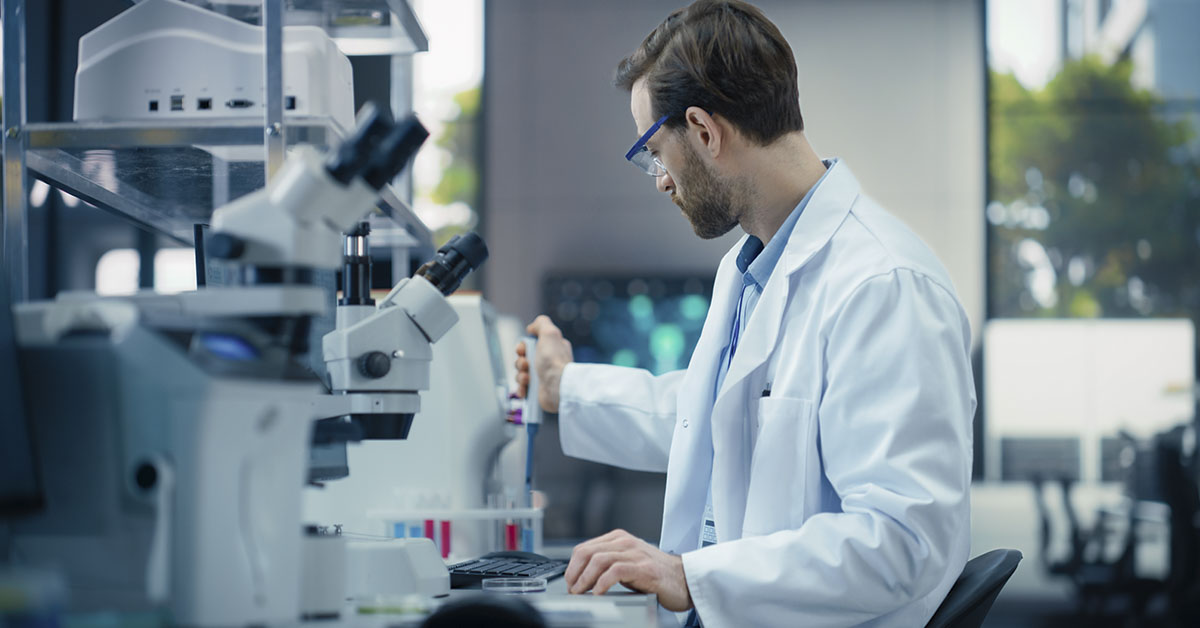

Kidneys do constant behind-the-scenes work. They clean the blood, balance water, and help control blood pressure. Most people only think about them during illness. Drug makers and doctors also worry about them during treatment. Many medicines pass through kidney tissue, so side effects can show up there. Researchers want lab models that warn earlier, using human cells, not guesswork. They call this goal Lab-Grown Kidney research. It aims for kidney cells that behave predictably in a dish.
In late August 2025, scientists at USC Stem Cell reported two linked studies in Nature Communications. The work comes from the laboratory of Nils O. Lindström. One paper, led by MaryAnne A. Achieng, shows how early kidney “tubes” choose their direction. A second paper, led by Jack Schnell, pushes lab-grown proximal tubule cells toward stronger function. Together, the studies outline a practical roadmap for kidney organoids with preclinical potential.
Better kidney models matter for drug safety
Many medicines leave the body through the kidneys. That puts kidney cells on the front line during treatment. A compound can look safe in early screens and still irritate kidney tubules later. The risk can rise with dehydration, age, or other medicines. Animal tests help, yet they do not always match human transport proteins. Developers, therefore, want human kidney models that react in human-like ways. If a model shows early stress signals, teams can change dose plans or redesign molecules. Tubule cells can concentrate chemicals as they reclaim water from fluid. Kidney injury can also be missed because early symptoms are vague. Blood tests may stay normal until the damage is advanced. A human cell model can show stress signals before that point. It can also reveal whether cells recover after a rest period.
Kidney failure also brings long-term consequences. Dialysis can keep people alive, yet it changes daily routines. Transplants can restore function, but the donor supply remains limited. Lab models will not replace those treatments soon. However, they can reduce avoidable harm by catching toxicity earlier. Schnell’s paper offers a plain summary. It says, “The kidney maintains fluid homeostasis by reabsorbing essential compounds and excreting waste.” Reliable Lab-Grown Kidney cells could give earlier warnings in preclinical studies. A model must give similar readouts when different teams run the same assay. The Schnell study tracks injury readouts after toxic exposure. It reports changes in HAVCR1, also called KIM1, after injury. Readouts like that can help labs compare batches. They can also help teams rank drug candidates by kidney risk.
A kidney is harder to copy than most organs

A kidney is not a flat sheet of cells. It is a dense set of tiny filters connected to tiny tubes. Each kidney contains about 1 million nephrons, and each nephron has several segments. Those segments do different jobs as fluid moves along the tube. Organoids can form nephron-like structures, yet the structures often stay immature. They can also vary between batches, which makes results harder to trust. A dependable roadmap must produce similar tissues each time, across many stem cell lines. Organoids can also include off-target cells that release confusing signals. Even when kidney cells appear, they may not line up into clear tubes.
The USC release describes the central obstacle as shape and direction. It says, “simple balls of cells” are easier than “complex asymmetrical structures with two distinct ends.” A nephron has a blood-facing start and a drainage end. If that direction blurs, segments can form in the wrong places or fail to appear. Then a drug test can give a confusing answer. The new studies focus on building direction first. They then use that direction to guide cell identity. When the axis forms, segments can line up in a more predictable order. That makes results easier to compare between batches. The USC release also says the work “makes it possible to generate specific kidney cell types on demand.” A roadmap helps because it turns organoid building into a set of choices. You can choose which segment to enrich, then test the result.
A simple guide to “proximal” and “distal.”
Picture a nephron as a short plumbing run with checkpoints. Near the start, blood pressure drives fluid into a filter. Next, the first tube sections pull back water and nutrients. Farther along, later sections adjust salts and final volume. Finally, urine drains into the collecting ducts. Drug effects differ by segment because transport proteins are not evenly shared. If an organoid lacks the relevant segment, a test can look falsely safe. Proximal segments sit near the start, so they see fresh filtrate. They reabsorb valuable molecules, and they also take up many drugs. Distal segments sit later, so they fine-tune the remaining fluid. They respond to different hormones and electrical gradients. Because tasks differ, vulnerability differs too. Some drugs enter through transporters found mostly in proximal tubules. Other drugs disrupt salt handling in later segments. A segment mismatch can distort a safety signal.
During development, this tube must pick a clear direction. Achieng and colleagues describe that early step. They write, “the early nephron generates a proximal-to-distal (PD) axis.” Proximal means close to the blood-facing end. Distal means farther along, closer to the drain. Once the axis appears, cells start making segment-specific choices. If researchers can control that axis in organoids, they can plan segment balance. For Lab-Grown Kidney work, that planning reduces batch surprises. Axis control also supports better labeling of each segment in microscopy. That helps researchers trace where injury starts and how it spreads. It also supports cleaner comparisons between proximal-enriched and distal-enriched organoids. In organoids, a disorganized tube can blur these differences. A toxic effect can look widespread, even when it targets one segment. Axis control helps keep segments in their places. It also helps researchers compare results across plates and weeks. That reliability is essential for preclinical decisions.
The first study shows that the axis can be tuned
In the August 25, 2025, paper, Achieng’s team used iPSC-derived kidney organoids that generate hundreds of synchronized nephron-like structures. Synchrony helps because samples are at similar stages, so comparisons are fair. The team also compared their organoids with human kidney development using single-cell and spatial transcriptomic approaches. Those methods create a detailed map of cell states and locations. With a map, protocol tweaks become easier to interpret. The authors describe their platform as an engineering system for nephrons. It produces similar structures in one culture. That scale helps average out rare odd structures.
The abstract describes the control logic. It says, “We show that human nephron patterning is controlled by integrated WNT/BMP/FGF signaling.” These are messages that cells send and receive during development. The team adjusted signals during a timed window. They then measured which identities appeared. The abstract also states the aim. It says their system “paves the way for generating nephron cells on demand.” A roadmap like this links signal changes to predictable outcomes. In practice, they asked a simple question about fate control. Can signals move cells along the axis? They treated organoids with defined signal states, then profiled outcomes. They also checked their organoids against in vivo reference data. That step reduces the risk of calling an immature state “mature”. It also shows other labs what each stage should look like.
Steering organoids toward distal segments
Distal nephron segments shape the final chemistry of urine. They include parts of the loop of Henle, which help handle salt and water balance. These cells use different transport routes than early tubule cells. Yet many organoid protocols underproduce distal segments, as the Achieng paper notes. When distal tissue is scarce, some disease models become hard to build. Some drug questions also become harder to answer. Distal segments also play key roles in urine concentration. Some inherited disorders target these later segments. Without distal tissue, those diseases are hard to model. A distal-enriched organoid can also help test how drugs affect electrolyte balance.
Achieng’s team developed a timed approach to push distal identity. The abstract states, “Imposing a WNT^{ON}/BMP^{OFF} state established a distal nephron identity.” In simple terms, they increased one message and reduced another at a key moment. The paper reports maturation toward thick ascending loop of Henle-like cells. It ties that maturation to internal activation of FGF. This stepwise control can help labs create distal-enriched batches when needed. For Lab-Grown Kidney screening, segment-targeted comparisons can sharpen safety decisions. The key is that the intervention is defined and timed. That makes the method easier to transfer between laboratories. It also reduces endless media tweaking. A consistent distal output supports head-to-head testing across compounds. If effects differ, the difference points to segment-specific biology.
Switching back toward proximal identity
Proximal tubule cells handle much of the kidney’s reabsorption work. They also face high exposure to drugs and their breakdown products. That combination makes the proximal tubules a frequent injury site in toxicity. If a model lacks strong proximal identity, it can miss common harm signals. A useful roadmap, therefore, needs a way to enrich proximal fates, not only distal ones. Proximal tubules are also central in acute kidney injury. They can lose structure quickly after toxic stress. Because of that, they are a common focus for safety pharmacology. It can also support transporter uptake studies, since proximal cells face the highest exposure inside the tube. Proximal cells also face many reactive drug metabolites. That can trigger oxidative stress and cell death. A strong proximal model helps test protective strategies.
The Achieng abstract reports a return path. It says, “Simultaneous suppression of FGF signaling switches cells back to a proximal cell-state.” The USC release explains the same idea in everyday language. Achieng said, “precursor cells are not locked into adopting a certain identity or fate.” A lab can begin with one early organoid protocol. It can then choose its endpoint for each project. The abstract also notes that the switch depends on BMP signal transduction. That gives labs a checkpoint to monitor during replication. If proximal recovery fails, teams can confirm whether BMP signaling stayed active. That makes the roadmap easier to troubleshoot in practice.
A second study improves proximal tubule-like organoids
The August 30, 2025, paper, led by Jack Schnell, takes aim at proximal tubule maturity. The PubMed abstract notes this vulnerability. It says proximal tubule cells are“highly susceptible to injury, often leading to pathologies necessitating dialysis or transplants.” Many organoids include proximal-like cells, yet those cells can stay stuck in an early state. That limits how well they model adult transport and injury responses. Schnell’s group looked for a developmental bottleneck they could adjust. Schnell’s group wanted a method that shifts fate early, then lets cells mature. Their motivation is practical. If proximal cells stay immature, drugs can look safer than they are. A better model reduces that blind spot.
Their key intervention is short and timed. The abstract states, “Transient PI3K inhibition during early nephrogenesis activates Notch signaling.” They briefly changed an internal signal, and the precursor identity shifted. The abstract reports a move toward epithelial and proximal precursor states. Those precursors then mature toward proximal convoluted tubule cells. The abstract says the shifted cells express physiology-imparting solute carriers. It gives examples from the organic cation and organic anion families. For Lab-Grown Kidney models, stronger transport machinery supports realistic drug handling. The abstract also notes maturation toward proximal convoluted tubule cells. It reports a broader expression of solute carriers after the intervention. These are the molecular “doors” for drug entry and exit. The study also tracks a proximal transcription factor called HNF4A. Labs can use markers like that to qualify batches before screening.
Function and injury testing in the lab-grown cells

Image Credit: Pixabay
Cell identity markers can be misleading if cells do not perform their expected jobs. A proximal tubule model should show selective uptake and clear stress responses. Schnell’s team tested whether their “proximal-biased” organoids behave in these ways. They checked the uptake of test substances, then challenged organoids with a nephrotoxic injury. These tests help connect lab readouts with clinical risk. Albumin and dextran probes test selective uptake, not just survival. If uptake works at baseline, injury effects become clearer. Albumin and dextran are useful test molecules because they probe selective uptake. A model that takes them up can reflect real proximal tubule handling. This also helps separate transport problems from general cell stress. If uptake works at baseline, injury effects become easier to interpret. That is a practical advantage for labs that run many compounds.
The USC release reports a simple functional readout. It says the organoids “absorbed sugar (dextran) and protein (albumin).” The PubMed abstract adds injury details. It reports the organoids “display tubular collapse and DNA damage.” It also reports rises in injury response markers after exposure. Together, these results suggest a stronger platform for toxicity screening. A Lab-Grown Kidney system cannot predict every outcome. However, better function makes results easier to interpret. It also supports studies of protection and recovery after injury. Cisplatin is a meaningful benchmark because its kidney toxicity is well described. A batch that responds as expected can be used with more confidence. Cisplatin is a common chemotherapy with well-known kidney toxicity. So a cisplatin response is a meaningful benchmark for organoids. When organoids show collapse and DNA damage after exposure, the signal is clear. It gives teams a way to validate a batch before using it for screening.
Conclusion
These two studies do not promise a transplant-ready kidney. They do offer clearer control over what kinds of nephron cells grow in organoids. Achieng and colleagues show that early nephron cells can be guided toward distal identity. They also show a route back toward proximal identity by changing signals. Schnell and colleagues add a timed method that improves proximal tubule-like behavior. Together, the work turns kidney organoid building into a more planned process. Both studies also keep expectations realistic. They focus on organoids as preclinical tools, not replacement organs. The roadmap idea is useful because it links signals to outcomes. That supports repeatable manufacturing and clearer quality checks for labs and research teams.
Organoids still miss features of real kidneys, including full blood flow. So teams should treat results as strong clues, not final proof. Even so, better control makes each clue easier to compare. Lindström described the progress in the USC release. He said, “We are starting to get an idea of how genetic signals control the spatial organization of the early human nephron.” As control improves, Lab-Grown Kidney models can support safer drug pipelines. They can also support sharper disease studies. Further advances will likely focus on better maturation and more realistic flow. Until then, these organoids can act as early warning tools in preclinical work.
A.I. Disclaimer: This article was created with AI assistance and edited by a human for accuracy and clarity.
Read More: 8 Surprising Things That Could Be Harming Your Kidneys (And It’s Not Salt)