

The phrase ‘anti-anxiety vaccine’ travels fast because it sounds novel, simple, and futuristic. Yet, what we are going to talk about, an experimental compound called PA-915, would not behave like a true vaccine in the medical sense. The CDC explains that vaccines work by “imitating an infection” and training immune defenses for future protection. PA-915 does not work that way. It is a small-molecule experimental inhibitor that blocks the PAC1 receptor, a stress-related signaling target in the brain, producing drug-like effects rather than immune training. In a 2025 Molecular Psychiatry study, researchers tested it in mice, not people. That distinction should be clear from the first sentence onward. This research points toward a possible long-acting treatment, not an immune shot that prevents anxiety from ever appearing. Like most vaccines, this compound could eventually be administered as an injection with lasting effects, but that is where the similarities end.
The excitement still makes sense because anxiety disorders place a huge burden on daily life. WHO says they were the world’s most common mental disorders in 2021, affecting 359 million people. WHO also says that only about 1 in 4 people with anxiety disorders receive treatment. NIMH notes that, for many people, anxiety “does not go away” and can worsen over time. Effective care exists, including therapy and medications, yet access barriers and side effects still leave major gaps when the response remains incomplete. That is why early PA-915 data matters, even while it remains far from the clinic.
Why The Word Vaccine Seems Right, But Misses The Mark
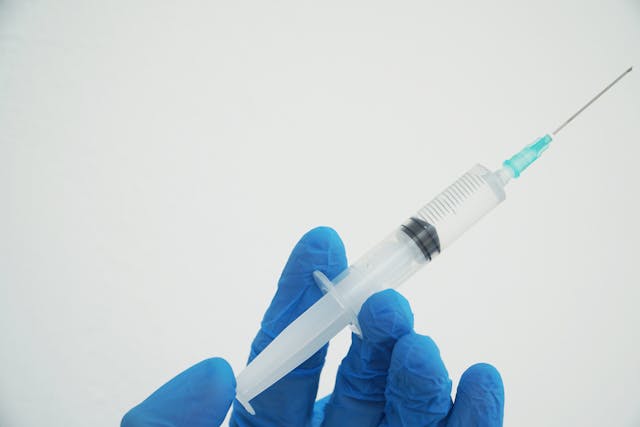
The easiest place to start is the label itself. Vaccine is the wrong word for PA-915. The CDC explains that vaccines contain antigens and help the body build immunity. They prepare immune memory for a later encounter with a germ or toxin. PA-915 does something else. Shintani and colleagues called it a “small-molecule, non-peptide, high-affinity PAC1 antagonist.” That description sounds specialized, yet the point is plain. The compound blocks a receptor linked to stress signaling. It does not teach the immune system or prime antibodies. It does not create classic immunization. That difference is more than technical housekeeping. It changes what readers should expect from the research. A true vaccine aims to prevent disease through immune preparation. However, like most vaccines, this is administered as an injection and its effects last.
PA-915 was studied as a treatment-like intervention after stress-related abnormalities had already appeared in animals. The shorthand headline may feel catchy. It does not describe the mechanism. It also blurs the difference between prevention and symptom reduction. Those are not interchangeable goals in medicine. A label can clarify, or it can distort. Here, it distorts. It can also make the public think the work is farther along than it is. Vaccine language carries a built-in sense of readiness, scale, and familiarity. That is useful in public health. It is misleading in early psychiatric drug development. The CDC also notes that many vaccines require more than one dose. It defines immunization as being made resistant to an infectious disease. That language shows why PA-915 does not fit the category. The molecule has no infectious target.
It is not building disease-specific immunity. It is not part of the public health framework that people already understand from flu, measles, or COVID-19 vaccination. The study team itself avoided the vaccine label. Osaka University said PA-915 “rapidly improved anxiety-like behavior, depression-like behavior, and cognitive impairment” in chronic stress mouse models. The journal paper used careful language. It described PAC1 antagonism as a “promising treatment option.” Neither source framed the molecule as an immune product. That restraint matters because language shapes public expectation. Readers hear the word vaccine and often imagine durable prevention. They imagine protection before symptoms begin. They imagine a mature platform with familiar rules.
None of those ideas fits the present evidence. The 2025 paper did not test whether healthy mice received PA-915 and then stayed protected from future stress months later. It tested whether stressed mice improved after receiving the compound. That is treatment research. It could still lead to a long-acting injection one day. It could also end up as an oral medicine, or it could fail before either route matters. Even if a future version came as a shot, route alone would not make it a vaccine. Mechanism defines the class, and this mechanism belongs to experimental drug development. A long-lasting injection is not automatically a vaccine. Many injected medicines are simply medicines. PA-915 belongs in that second category unless future evidence shows otherwise. That precision protects readers from hype and keeps the focus where it belongs: on experimental pharmacology, not borrowed vaccine language.
What The New Mouse Study Actually Found
The 2025 study attracted notice because it moved beyond one brief stress model. Shintani and colleagues used repeated corticosterone exposure, social isolation rearing, and repeated social defeat stress. These models are common in preclinical work on stress-related disorders. In the repeated social defeat model, mice were sorted with a social interaction test. Animals with a ratio below 1 were classified as susceptible. The researchers then tested whether PA-915 could improve abnormalities in those susceptible animals. The paper says PA-915 improved “anxiety-like and depression-like behaviors and cognitive dysfunction” in repeated social defeat stress mice. In the light-dark, open field, and elevated plus maze tests, stressed mice shifted back toward control behavior after one dose. In the Y-maze and novel object recognition tests, the researchers also saw normalized cognitive performance.
The paper, therefore, did more than report one favorable score on one day. It built a pattern across several behavioral domains. That makes the signal harder to dismiss as a narrow artifact. The methods also add some confidence. The paper says behavioral tests were run blind to experimental conditions. It also says mice were randomly assigned numbers before testing. Those steps do not eliminate every weakness in animal research. They do show that the team tried to reduce bias in the way the experiments were conducted. The study also spread its findings across more than one stress condition. In mice given corticosterone for 21 consecutive days, a single dose of PA-915 lowered immobility in the forced swim test. Additionally, in social isolation-reared mice, the same treatment also lowered immobility.
In the social defeat model, the compound normalized lower sucrose preference and reduced elevated plasma corticosterone. In the oral dosing section, the researchers reported a benefit after a single oral dose. They saw normalized outcomes in the Y-maze, elevated plus maze, sucrose preference test, and forced swim test. That matters because it shows the signal did not depend on only one delivery route. The most striking result involved duration. The sucrose preference effect lasted for “8 weeks,” according to the paper. That effect followed a single dose of PA-915. Fluoxetine improved sucrose preference on day 14 in that experiment. It did not show a significant benefit on days 0, 7, 28, or 56. Ketamine improved sucrose preference on days 0, 7, and 14. PA-915, however, normalized sucrose preference throughout the full observation period, including day 56.
The paper also reported improvement in stress-reduced dendritic spine density in the medial prefrontal cortex on days 1 and 56. The researchers noted that these prolonged effects stood out despite a plasma half-life of 2.28 hours. A drug can leave the bloodstream quickly and still trigger longer changes downstream. The authors suggested that possibility, while stopping short of a firm mechanistic claim. That does not prove lasting healing in people. It does suggest more than a brief chemical pulse. It also helps explain why the results looked unusual next to standard expectations for short-acting compounds. Even so, none of these findings can predict patient benefit until human trials test safety, dosing, durability, and symptom relief.
Why Researchers Keep Returning To The PACAP And PAC1 Pathway
A new compound only becomes compelling when its target has a believable biological story. In this case, the target is the PACAP-PAC1 pathway. PACAP stands for pituitary adenylate cyclase-activating polypeptide, a neuropeptide involved in stress signaling. The Molecular Psychiatry paper says stress-related disorders such as depression and anxiety remain major medical issues. It also says accumulating evidence links PACAP and the PAC1 receptor to the stress axis. The paper links that pathway to stress-related disorders. The authors note that psychological stress can increase PACAP expression. They also cite older animal work showing that PACAP infusion can induce anxiety-like behavior and cognitive deficits in mice. On the other side of that story, mice deficient in PACAP show greater tolerance to certain psychological stresses.
That combination gives the target a real biological shape. Researchers are not poking at an arbitrary receptor because it sounds novel. They are following a pathway that already looks tied to stress reactivity in both experimental and clinical literature. The paper also says high-affinity, small-molecule, non-peptide PAC1 antagonists were developed only recently. That timing helps explain why this target did not appear earlier in treatment headlines. The biological idea has existed for years. The practical toolset to test it has been slower to arrive. That timing helps explain why the current paper landed with unusual force. It finally paired a plausible target with a drug-like antagonist and broad behavioral testing. The human clues also helped keep interest alive.
The paper says clinical studies have linked PACAP-PAC1 signaling to major depressive disorder and PTSD. Additionally, the authors cited evidence that serum PACAP levels were higher in women with PTSD than in healthy control women. They also cited reports on circulating PACAP and PAC1 receptor genotypes. Those markers may act across anxiety disorders in women. That does not prove PA-915 will help a patient in practice. It does show that the pathway has human relevance signals behind it. The earlier 2022 paper from many of the same researchers strengthened the case from another angle. That study reported reduced anxiety-like behavior after a “single acute dose.” The model used restraint-stressed mice. It also said PA-915 showed a statistically significant anxiolytic effect while fluoxetine did not in that model. The newer paper then asked a harder question.
Would the signal survive chronic stress, longer follow-up, and broader testing? The answer, at least in mice, was yes. The team also noted that related PAC1 antagonists had shown activity in neuropathic pain models. In the discussion, they also reported that PA-915 appears specific for PAC1. They said it does not inhibit PACAP signaling through VPAC1 and VPAC2. Receptor selectivity matters in early drug development because it affects how cleanly a hypothesis can be tested. A selective antagonist gives researchers a clearer read on whether PAC1 itself drives the observed behavioral change. That broader pharmacology suggests the program did not appear overnight. It has been building step by step across linked experiments. Together, those findings make PAC1 a credible target, yet only human studies can show whether that promise survives clinical reality.
Why Anxiety Care Still Leaves Room For New Medicines

Interest in PA-915 also reflects the limits of current care. WHO says there are “several effective treatments” for anxiety disorders. It also says psychological interventions are “essential treatments.” Cognitive behavioral approaches have strong evidence. Exposure-based work does too. WHO adds that SSRIs can help adults with anxiety disorders. So the field is not empty. Existing care helps many people. The deeper problem is that benefits do not arrive equally, quickly, or cleanly for everyone. WHO says only about 1 in 4 people who need anxiety treatment receive any treatment at all. It lists barriers that include lack of awareness, underinvestment in mental health services, too few trained providers, and stigma. WHO also notes that symptoms often begin in childhood or adolescence and continue into adulthood.
NIMH adds that anxiety disorders can interfere with school, work, relationships, and routine daily activities. That gap between available knowledge and lived care creates space for new medicines. Researchers are not only looking for something novel. They are also looking for something that might help when access is patchy. The same is true when the response is incomplete or the current options fit badly. That is one reason durable effects attract attention. Fewer doses could matter in the real world if the benefit proves reliable. Yet that practical appeal still depends on human evidence, and that evidence does not exist yet for PA-915. The search for better medicines also reflects trade-offs in older drug classes. WHO says benzodiazepines are generally not recommended for anxiety disorders because of dependence risk and limited long-term effectiveness.
The FDA strengthened that concern in 2020. It required boxed warnings that describe the risks of “abuse, misuse, addiction, physical dependence, and withdrawal reactions” across the class. The PA-915 paper spoke directly to that backdrop by testing for unwanted behavioral effects in non-stressed mice. The authors reported that PA-915 did not induce hyperlocomotion, cognitive dysfunction, or dependency in the tests they ran. They also found that ketamine and fluoxetine changed locomotor activity in opposite directions, while PA-915 did not. The researchers went further. They reported that ketamine affected radial maze performance, conditioned place preference, and prepulse inhibition, while PA-915 did not. They also wrote that PA-915 did not induce head-twitch responses, while DOI did. In the discussion, the authors said: “analyses are needed.”
They also said more work is required. It is needed to define safety and efficacy. That caveat is important. Animal reassurance is never the same as clinical reassurance. Still, these findings help explain why PAC1 antagonism has drawn interest. Researchers want an anti-anxiety medication that does more than mute symptoms for a few hours. They want something that could act rapidly and avoid obvious abuse signals. They also want benefits that last beyond a brief window. PA-915 is interesting because the mouse work at least points in that direction. It is not interesting because it has already delivered that standard in people. That gap keeps research moving because better treatment must combine real symptom control with tolerable side effects and practical access.
What Has To Happen Before Anyone Should Get Carried Away
The biggest caution is also the most basic one. PA-915 is still in preclinical research. The National Cancer Institute defines a preclinical study in simple terms. It is animal research done before any testing in humans begins. The FDA says drugs undergo laboratory and animal testing in preclinical research to answer basic safety questions. Another FDA page gives the practical reason. Before testing a drug in people, researchers must ask whether it can cause serious harm. NIH makes the same sequence clear. It says preclinical research in animals may be performed before clinical trials in humans begin. That means even a strong mouse paper sits near the front of the development process. It can justify more work. It cannot tell doctors how the compound will behave in patients with mixed diagnoses, long treatment histories, or medical complications.
The current paper did not include Phase 1 dosing, volunteer safety data, or patient outcomes. It offered a rationale for moving forward. It did not offer a basis for clinical use. The next stages would still need to ask ordinary but crucial questions. What dose is tolerated? How long does the drug stay active in people? Does it help anxiety, depression, or both? Do benefits outweigh harms over time? None of those answers exists in the current literature. That gap is why careful reporting still matters more than clever framing. Readers should come away informed, not overpromised. The authors were careful about the unknowns. Near the end, they wrote that the prolonged action may “remain unclear.” They suggested lasting changes in neural circuits.
Read More: Top Natural Supplements and Vitamins to Help Relieve Anxiety and Stress
They also pointed to possible gene expression effects. The same discussion section says PA-915 appears specific for the PAC1 receptor. It also suggests PACAP-PAC1 signaling may help maintain behavioral abnormalities. Those are meaningful ideas, yet they are still hypotheses being worked through. The paper also says further behavioral and pharmacological analyses are needed to ensure safety and efficacy. That restraint is worth preserving when the work enters public discussion. Many compounds impress in rodents and then fail in humans. Sometimes the dose does not translate well, and sometimes metabolism changes the picture. Sometimes side effects appear, and sometimes the animal model does not capture the full human disorder. The honest conclusion, then, is strong without becoming inflated.
PA-915 looks like a promising new lead for stress-related disorders. It may eventually help shape a long-acting anxiety treatment. It may also stall long before the clinic. Today, it is best described in direct terms. It is an experimental PAC1 receptor antagonist with notable mouse data, a plausible biological target, and a long road ahead. Calling it an anti-anxiety vaccine still overshoots the evidence. A more honest headline would say early animal research suggests a possible new route for anxiety treatment. That wording is less flashy. It is also closer to the truth. That is why the next phase matters so much. Researchers still need toxicity data, human dosing studies, and clear evidence that any benefit extends beyond narrow laboratory models into the complexity of clinical care, where symptoms rarely appear in isolation.
Disclaimer: The author is not a licensed medical professional. The information provided is for general informational and educational purposes only and is based on research from publicly available, reputable sources. It is not intended to constitute, and should not be relied upon as, medical advice, diagnosis, or treatment. Always consult a licensed physician or other qualified healthcare provider regarding any medical condition, symptoms, or medications. Do not disregard, avoid, or delay seeking professional medical advice or treatment because of information contained herein.
A.I. Disclaimer: This article was created with AI assistance and edited by a human for accuracy and clarity.
Read More: People Struggling with Anxiety Often Lack Key Brain Nutrient, Research Shows