
The email arrived on a Friday afternoon. No phone call, no explanation, no discussion. Just a terse message from the Presidential Personnel Office informing each recipient, in nearly identical language, that their service had been “terminated, effective immediately.” The people receiving those emails weren’t government bureaucrats accused of waste or misconduct. They were some of the most accomplished scientists and researchers in the United States – astronomers, chemists, aerospace engineers, mathematicians – and they had just been removed, all at once, from the body that has quietly shaped the direction of American science for 76 years.
The National Science Board, or NSB, is not exactly a household name. But for anyone who cares about medical research, public health breakthroughs, the future of AI, or simply whether the United States remains a leader in global science, what happened in late April 2026 deserves serious attention. The firing was sudden, total, and offered no reason. And it didn’t happen in a vacuum.
To understand why scientists across the country are alarmed, you first have to understand what the NSB actually does, what has already been stripped away from American science over the past year, and what might come next now that one of its last independent guardrails is gone.
What the National Science Board Actually Does
The National Science Board was created in 1950 to advise the president and Congress on science and engineering policy, approve major funding awards, and guide the NSF’s future. Think of it as the board of directors for the agency that funds American science. According to the NSF’s own website, the agency’s investments account for about 25% of federal support to America’s colleges and universities for basic research – the kind of discovery-driven science that doesn’t always have an immediate commercial application but forms the foundation for future breakthroughs.
The reach of that funding is enormous. In a typical fiscal year, NSF funding provides 50% or more of federal support for academic basic research in computer science, biology, environmental sciences, mathematics, and the social sciences. About a third of all identified federal funding for STEM education comes from NSF in a typical budget year. The NSB is typically made up of 25 members appointed by the president who serve staggered six-year terms. The fired scientists hail from academia and industry and specialize in areas including astronomy, math, chemistry, and aerospace engineering.
The staggered terms were by design. Members are appointed by the president and serve six-year terms that are staggered, avoiding complete turnover. That structure ensures continuity and protects the board’s institutional memory from being wiped out in a single political moment. What happened in April 2026 bypassed that protection entirely.
What Happened and How It Was Done
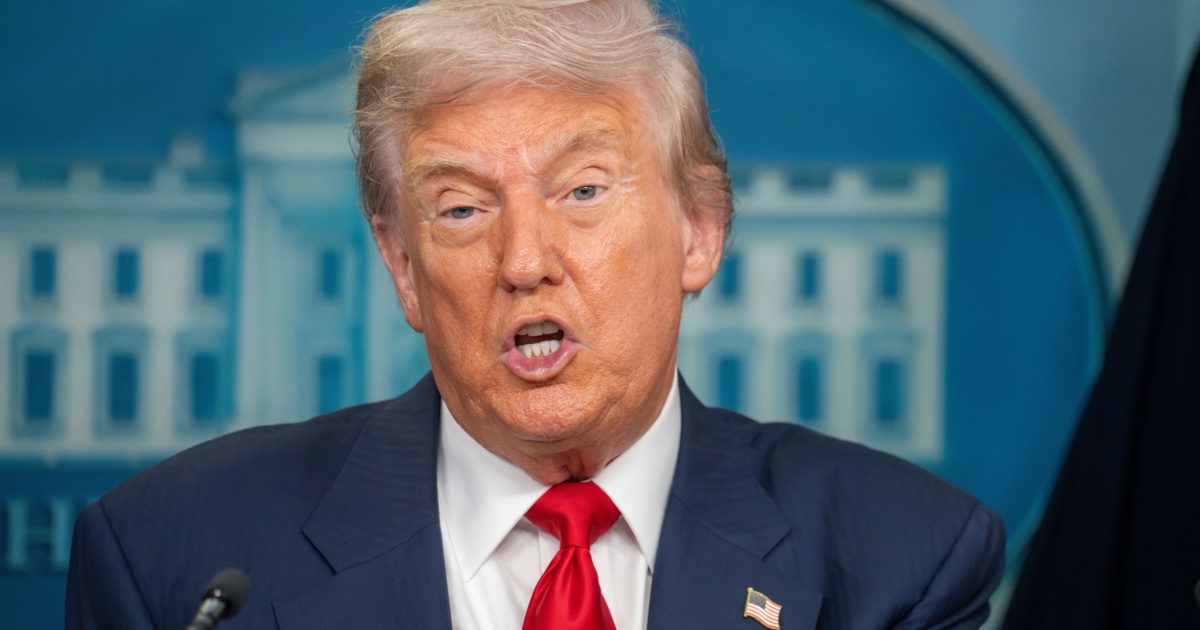
All 22 members of the advisory board that oversees the National Science Foundation were fired on April 24 without explanation. Every member received an email saying that “on behalf of President Donald J. Trump,” their positions were “terminated, effective immediately.”
Roger Beachy, who was reappointed to a second six-year term on the science board by Trump in 2020, said he and his colleagues were not given a reason for their dismissal. “The termination email was brief and to the point, with a ‘thank you for your service,'” Beachy, an emeritus biology professor at Washington University in St. Louis, told Al Jazeera.
When pressed for an explanation, a White House spokesperson pointed to a 2021 Supreme Court decision. A spokesperson said that the 2021 Supreme Court decision United States v. Arthrex, Inc. “raised constitutional questions about whether non-Senate confirmed appointees can exercise the authorities that Congress gave the National Science Board.” Members of the NSB were initially confirmed by the Senate, but have not been since 2012.
Legal scholars were skeptical. Legal scholars contacted by NPR were mostly confused by the White House statement. Duke University law professor Jeff Powell, a leading expert on the appointments clause of the Constitution, said there is “a puzzling disconnect between firing the Board members and the [White House] statement,” adding that if Arthrex applies, “eliminating the [NSB] members leaves it unaddressed.”
There is also the question of whether the firing is even constitutional. Because the NSB was established by an act of Congress, the board can officially be dissolved only by Congress. Furthermore, its members are required to be “eminent” in scientific fields, according to the founding legislation.
A Pattern, Not an Isolated Event
The firing of the National Science Board did not come out of nowhere. This is not the first time the Trump administration has ousted federal science advisors en masse. Last year, the administration fired all 17 members of the Advisory Committee on Immunization Practices, which played a critical part in US vaccine policy, and eliminated 14 advisory committees at the NSF.
At the NSF itself, the pressure has been building since the start of the administration’s second term. Beginning in mid-April 2025, DOGE personnel arrived at NSF headquarters and initiated a review of the agency’s grant portfolio. On April 18, 2025, NSF published a statement announcing terminations of grants deemed misaligned with administration priorities. By late May 2025, the agency had terminated 1,752 grants with a combined value of approximately $1.4 billion.
NSF Director Sethuraman Panchanathan resigned on April 24, 2025, in the fifth year of his six-year appointment. Reports suggested that White House orders to accept a 55% budget cut and eliminate half of NSF’s approximately 1,700-person workforce may have precipitated his departure.
The agency has been without a permanent director since. President Trump has nominated science and technology investor Jim O’Neill as the NSF’s new director, but he has not yet been confirmed by the Senate. Former board member Roger Beachy summed up the situation bluntly: “Without a board or permanent director, the NSF is in a tough spot. It is more rudderless now than it ever was in the past.”
The grant slowdown is showing up in the data. So far in 2026, the National Science Foundation has awarded far fewer grants compared to the last few years, awarding just 613 grants this fiscal year, at about 20% the level at this time in each of fiscal years 2021 through 2024, according to Grant Witness, a watchdog project that tracks research funding data. The amount of funding awarded is at similarly low levels, about one-third that of previous years.
What Scientists Are Actually Saying
The reaction from the scientific community has been sharp, and it goes beyond partisan politics. Many of the people speaking out are scientists who have served under administrations of both parties.
Willie May, vice president for research and economic development at Morgan State University, says he is “deeply disappointed” but not surprised. “I have watched the systematic dismantling of the scientific advisory infrastructure of this government with growing alarm, and the National Science Board is simply the latest casualty,” says May, a chemist and former director of the National Institute of Standards and Technology.
May is also concerned about what the cuts to science funding and chaos at the NSF signal to America’s rivals. “At a moment when the United States faces intensifying global competition in science and technology, when other nations are investing aggressively in the research and the STEM workforce that will underpin innovation for the next century, we are systematically undermining the institutions and the people dedicated to keeping our country at the leading edge,” he wrote.
Dan Reed, a computer scientist at the University of Utah and chair of the NSB from 2022 to 2024, called the action unprecedented. “We need a vibrant, independent NSB, one representative of the broad science and engineering enterprise,” he said.
The concern about what comes next is also shared by former NSF leaders. Neal Lane, a physicist who served as science adviser to President Bill Clinton and previously as director of the NSF, is urging Congress to act. “Firing all 24 members at once is unprecedented in NSF’s history,” Lane said. “Coming on top of large staff reductions, attempts to cut the budget by over 50%, politicize the peer review process, and kick the staff out of the building, firing the board looks like another effort to erase NSF’s independence or, perhaps the agency itself.”
One fired board member also raised a point about lost timing. The board’s next meeting was set for May 5, and members say a report about the United States ceding scientific ground to China was set to be released. That report will now not be released under the current board.
The Budget Picture Is the Bigger Story
The board firing is dramatic, but the budget trajectory is arguably the more consequential long-term threat. Trump’s budget request for 2026, released last year, proposed slashing NSF’s funding by 55%. Congress headed off the worst of those cuts and the agency’s budget fell by only 3%. But earlier this month, the administration proposed another 55% budget cut for the NSF for financial year 2027.
The White House is requesting to limit the NSF’s budget to $4 billion, a 54.5% reduction from the agency’s $8.8 billion budget in fiscal year 2026. The cuts would fall unevenly across research fields. The proposal would cut funding for mathematical and physical sciences to $515 million in fiscal year 2027, compared with $1.562 billion spent in 2025. Funding for biological sciences would be cut to $225 million (compared with $801 million in 2025), and engineering to $185 million (compared with $749 million in 2025).
Critics note that this kind of disinvestment has real-world consequences that extend well beyond university labs. A well-known example: Google was born from a $4.5 million NSF grant to two Stanford graduate students who developed an internet search engine. Basic research, the kind the NSF funds, is where most consequential technologies begin, long before any company sees a reason to invest.
The private sector cannot feasibly fill this gap, as experts have noted. The private sector has an incentive to invest in R&D activities that generate near-term profit, rather than the basic research funded by the government that is not immediately commercializable but leads to future innovation.
The global competition angle is also pressing. Analysis from the Information Technology and Innovation Foundation shows that while US R&D spending reached $823 billion in 2023 compared to China’s $781 billion, American growth is slowing significantly, averaging just 4.7% annually from 2019 to 2023, compared to China’s 8.9%. Reducing resources at a time when China is forging ahead in certain emerging technologies risks US science and technology leadership. Against this backdrop of increased competition, the US is abandoning its advantages in basic research, higher education, and the ability to attract international talent.
Why the Independence of Science Funding Matters
For readers who don’t work in research, it can be hard to see why the composition of a federal advisory board affects their daily lives. But the NSB’s independence has a practical function. Its role in approving major NSF grants, through a peer review process driven by scientific merit rather than political preference, is what keeps research funding from becoming a patronage system.
Without an advisory board in place, fired board member Keivan Stassun warned, further budget cuts may be easier to execute. It could “eviscerate investments in fundamental research and in the training of the next generation of scientists and engineers for our nation,” Stassun said.
There are also direct health consequences to consider. Some cancer drugs relied heavily on NIH-supported basic science discoveries. Without that early publicly supported work, development timelines lengthen and costs increase, which can translate into higher prices for patients. When public funding shrinks and companies shift toward expensive products instead of lower-cost improvements, overall health spending can rise. What looks like a budget saving in the near term can therefore have the opposite effect, with Medicare and Medicaid ultimately shouldering higher costs.
The cascading effects on the research workforce are also real. In 2025, the total number of new grants funded by the NSF dropped by 25% relative to the average of the previous ten years. For graduate students and early-career researchers, that translates directly into fewer opportunities to enter the field, and a talent pipeline that, once disrupted, takes years to rebuild.
Read More: Trump Just Reclassified Marijuana. What It Means For You
What to Do Now
The firing of the National Science Board is a civic and scientific story, but it also has practical meaning for anyone whose health, livelihood, or community depends on publicly funded research. That is most of us.
On social media, scientists shared their concerns about the termination of NSB members, but some also criticized the board for not protesting more forcefully as the NSF was targeted by the Trump administration. NSB member Marvi Matos Rodriguez, who was among those dismissed, put it plainly: “I think that the scientific community and NSF employees and people who wanted the board to speak up were right. We should have been speaking up all along.”
Congress has already shown it can push back when pressure is applied. The administration’s 2026 budget proposed slashing NSF’s funding by 55%. Congress headed off the worst of those cuts, and the agency’s budget fell by only 3%. Lawmakers rejected many of Trump’s proposed cuts to federal science funding for fiscal year 2026. According to the AAAS, the CEO of the American Association for the Advancement of Science urged them to do the same again: “Funding should be driven by scientific opportunity and possibility, not politics.”
The most direct thing ordinary people can do is contact their congressional representatives and make clear that federal science funding, including the independence of the NSF, is something they expect lawmakers to defend. The NSB was created by Congress in 1950. Congress alone has the authority to dissolve it. That distinction matters, and lawmakers need to hear that their constituents know it.
AI Disclaimer: This article was created with the assistance of AI tools and reviewed by a human editor.
Read More: Trump Insider Trading Scandal: What the Oil Trades Reveal