
Most presidents spend their time in office shaping policy, building coalitions, and – if they’re lucky – hoping future generations name something after them. Donald Trump is not waiting. Since returning to the White House for his second term, the 47th president has put his name on federal buildings, warships, savings accounts, immigration visas, prescription drug websites, and the dollar bills in your wallet. Some of these moves are already law. Others are tied up in federal courts. A few are still being announced.
The sheer breadth of what has been renamed, relaunched, or rebranded in one man’s name is genuinely striking, whatever your politics. No sitting president has ever had their signature on U.S. currency, their name on a class of warships, and their brand on a children’s investment account – all at once. Whether you see this as bold legacy-building or something more troubling depends on your point of view. But the facts themselves are worth knowing.
Here is a clear-eyed look at seven things Donald Trump has named after himself since returning to the Oval Office, what each one actually does, and what the controversy around each tells us.
1. The Trump-Kennedy Center
In December 2025, the White House announced its decision to change the name of the John F. Kennedy Memorial Center for the Performing Arts to the Donald J. Trump and the John F. Kennedy Memorial Center for the Performing Arts. The change was voted on unanimously by the Kennedy Center board of trustees, which was handpicked by Trump. Workers installed Trump’s name on the building’s facade the very next day.
The legal battle started almost immediately. A Democratic congresswoman sued the Kennedy Center’s board of trustees to stop it from adding the president’s name to the building, arguing that only Congress has the power to do so. Rep. Joyce Beatty of Ohio, an ex-officio member of the center’s board, claimed that a vote by the board to rename the institution exceeded its statutory authority. The lawsuit argues that because Congress named the center by statute, changing the Kennedy Center’s name requires an act of Congress.
The Washington National Opera, which had been in residence at the Kennedy Center since 1971, also severed its ties after ticket sales dropped. On February 27, 2026, the newly appointed president of the center Richard Grenell announced that the annual event known as the Kennedy Center Honors would be renamed the “Trump Kennedy Center Honors.” As of April 2026, the center is being closed by Trump this summer for a renovation expected to last about two years.
The practical takeaway: if you had tickets to an event at the Kennedy Center after July 2026, check whether your show is still happening. The ongoing dispute over Trump’s name and the building’s closure have cascading effects on performers, employees, and audiences across Washington.
2. The Donald J. Trump Institute of Peace
President Donald Trump’s name has been installed on the building and signage around the U.S. Institute of Peace, an independent agency that the administration gutted earlier in the year. The president’s moniker appeared on the Washington, D.C., headquarters ahead of a peace agreement signing ceremony between Rwanda and the Democratic Republic of Congo due to take place there.
The USIP had operated for decades as a congressionally funded, nonpartisan think tank focused on conflict resolution. It was operating in 26 conflict zones, including Pakistan, Afghanistan, Mali, and Burkina Faso, when DOGE shut the operation down. In February 2025, President Donald Trump signed an executive order announcing his intention to dismantle the USIP. In March, he ordered that most of the USIP’s board of directors be fired.
Counsel for former USIP leadership and staff said the renaming “adds insult to injury.” “A federal judge has already ruled that the government’s armed takeover was illegal. That judgment is stayed while the government appeals, which is the only reason the government continues to control the building,” the lawyer said. The institution has bounced back and forth between the administration and the courts, with a final ruling still pending.
For those following this closely, NPR’s reporting on the name change tracks the legal back-and-forth in detail. The practical reality is that an institution created by Congress to prevent conflict around the world was effectively shuttered before it was renamed in honor of its dismantler.
3. Trump-Class Battleships
On December 22, 2025, U.S. President Donald Trump announced the Trump-class, with two ships to be initially constructed of 10 planned, and eventual plans for “between 20 and 25” as part of a “Golden Fleet.” The first ship is planned to be named USS Defiant.
The vessel would be enormous. According to Navy materials, the Trump-class will displace roughly 35,000 tons, measure between 840 and 880 feet long, and have a top speed of more than 30 knots. The battleship will carry nuclear-armed sea-launched cruise missiles, hypersonic weapons, electromagnetic railguns, and directed energy weapons. The U.S. industrial base has not delivered a battleship to the Navy since 1944, when the 60,000-ton USS Missouri was turned over to the Navy.
This appears to be the first time a class of Navy ships has been named after a sitting U.S. president. The Navy has often drawn criticism in the past for naming ships after living individuals, in general. Military analysts at USNI News note that construction is not slated to begin until the early 2030s, and the ships have not yet received formal cost estimates. Some defense experts also question whether reviving a battleship class makes strategic sense in an era of anti-ship missiles and drone warfare.
4. Trump Accounts
A Trump Account is a new type of IRA established as part of the One Big Beautiful Bill Act. The account features a pilot program contribution of $1,000 for children born between January 1, 2025, and December 31, 2028, and who are U.S. citizens with a valid Social Security number. Parents can also deposit up to $5,000 per year to maximize growth.
The One Big Beautiful Bill Act and the associated section of the Internal Revenue Code that it created refer to the children’s investment accounts as “Trump accounts.” To avoid the political overtones of the official name, the accounts have sometimes been referred to as 530A accounts, in reference to the section of the IRC that defines the accounts.
The One Big Beautiful Bill Act created a new tax-advantaged savings and investment account for children, called the Trump Account, that could give families a new way to save for their children’s futures. You could almost think of a Trump Account as a cross between a traditional individual retirement account and a 529 savings account. Funds during the growth period are restricted to U.S. stock index funds only. Unlike 529 plans, distributions are taxed as ordinary income.
If you have a child born between 2025 and 2028, this is worth paying attention to. With Trump Accounts launching July 5, 2026, the IRS recommends signing up for updates at trumpaccounts.gov. You can also check the official IRS Trump Accounts page for eligibility and enrollment details. The $1,000 seed is free government money, regardless of your opinion about the name.
5. The Trump Gold Card
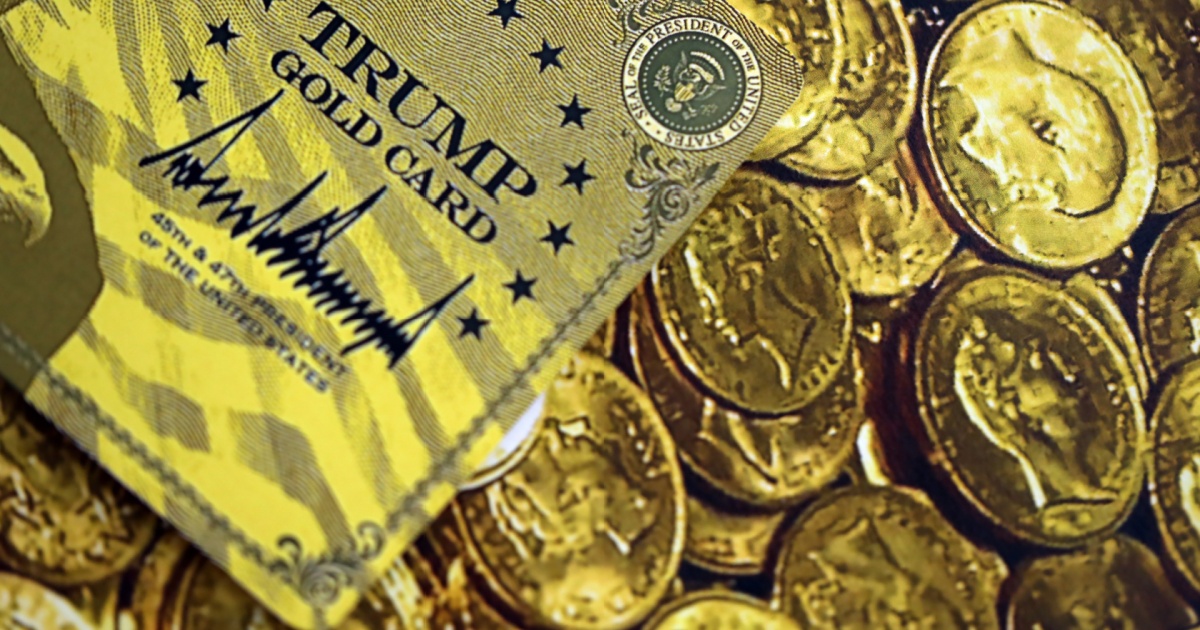
President Donald Trump officially launched his “Gold Card” visa, a new immigration pathway that will allow foreigners to pay $1 million to expedite their visa application, or have companies pay $2 million to sponsor a foreign worker they want to bring into the U.S. Applicants must pay a $15,000 fee that will cover the cost of processing and conducting a background check, along with a 1% annual maintenance fee.
Unlike the EB-5 program, which mandates an investment in a commercial project that creates or preserves 10 U.S. jobs, the Gold Card removes any direct job-creation requirement; instead, candidates simply contribute $1 million directly to the government in exchange for permanent residency after security vetting. A “Trump Platinum Card” is also in development, which would permit investors a visitor visa allowing them to visit the United States for up to 270 days per year without being liable for federal income tax on income earned outside the U.S., for a $5 million donation.
President Donald Trump’s “gold card” visa, where a foreigner can shell out at least $1 million to legally live and work in the U.S., has been approved for one person so far, according to Commerce Secretary Howard Lutnick. Though only one person has been approved, “there are hundreds in the queue that they are going through,” said Lutnick. “They’ve just set it up, and they wanted to make sure they did it perfectly,” he said.
Read More: Trump’s Viral Speech Prompts Online Debate Over His Cognitive Fitness
6. TrumpRx
TrumpRx, the Trump administration’s direct-to-consumer drug platform, went live in February 2026. A key pillar of President Donald Trump’s effort to lower prescription drug costs, the website serves as a clearinghouse that connects patients with drugmakers selling certain products to those willing to pay cash and forgo insurance.
At least 16 drug manufacturers have negotiated agreements with the administration to participate in the TrumpRx portal. Some 43 drugs are currently available on the portal, although the administration said more will be added. The offerings include Eli Lilly’s Zepbound starting at $299 a month and Novo Nordisk’s Wegovy pill for as little as $149 a month.
The catch: TrumpRx offers discounts only on brand-name drugs, which are generally far pricier than generic versions and far less commonly prescribed. The discounts are also available only for people who aren’t using insurance. About 84% of the U.S. population has prescription drug coverage, according to the Department of Health and Human Services. Analysts at KFF, the health policy research organization, note that for most insured Americans, their existing copays will likely beat TrumpRx’s cash prices. Where the site may genuinely help is for uninsured patients or those taking GLP-1 weight loss drugs that many plans don’t yet cover.
7. Trump’s Signature on U.S. Currency
In honor of the 250th anniversary of the United States of America, President Donald J. Trump’s signature will appear on future U.S. paper currency along with the Secretary of the Treasury, marking the first time in history for a sitting president. The first $100 bills with Trump’s signature and that of U.S. Treasury Secretary Scott Bessent will be printed in June, followed by other bills in subsequent months.
Before 2026, the Register of the Treasury and the Treasurer signed bills dating back to when Congress authorized the first “greenbacks” in 1862 to fund the Civil War. Presidents have simply never been part of the signing tradition, not because a law explicitly bans it, but because no administration has ever attempted it. At launch, a YouGov survey found far more support for the new website, TrumpRx, if it was not called TrumpRx – a pattern that may apply to other Trump-branded programs as well. When the name TrumpRx was included, approval dropped 16 points to 41%.
A YouGov survey found 59 percent of U.S. adults disapprove of replacing the U.S. treasurer’s signature with Trump’s on new currency. That includes 48 percent who strongly disapprove and 11 percent who somewhat disapprove. The U.S. Treasury Department’s official announcement frames it as a tribute to the nation’s 250th birthday. Critics, including some members of Congress, have introduced legislation to block it.
8. Trump Silver Dollar
The Trump Silver Dollar is one of several branded collectibles tied to Donald Trump. Unlike official U.S. Mint currency, these coins are privately produced memorabilia marketed to supporters, often featuring Trump’s likeness and patriotic imagery. Critics argue the branding reflects a break from long-standing norms around political symbolism. Donald Scarinci, member of the Citizens Coinage Advisory Committee, said, “Only those nations ruled by kings or dictators display the image of their sitting ruler on the coins of the realm.” The coins have no legal tender status but are promoted as keepsakes—part of a broader pattern of monetizing political identity and personal branding.
What This Means for You
This list is longer than most people realize, and it keeps growing. Some of these programs, like Trump Accounts, are now federal law and could genuinely benefit your family regardless of your politics. If you have a child born in 2025, 2026, 2027, or 2028, claim that $1,000 government seed. File IRS Form 4547 with your next tax return and visit trumpaccounts.gov to register. That money belongs to your child either way.
For everything else on this list, the underlying question is worth thinking about as a citizen. While it is common in the United States to use former presidents’ names for memorials to honor past service, it is unusual to do so for a sitting president. This activity has been described as engendering a cult of personality in Trump. Trump is the first sitting president to have a building named after himself. Whether the Kennedy Center’s name change, the USIP renaming, or a presidential signature on your $100 bill sits comfortably with you is a matter of values and perspective. But understanding exactly what has changed, and what legal challenges are still in play, keeps you informed in a moment when the pace of change in Washington is hard to track.
AI Disclaimer: This article was created with the assistance of AI tools and reviewed by a human editor.
Read More: Trump Dementia: What’s Behind the Health Concerns in 2026