
Most people living with high blood pressure have heard the same short list of causes: too much salt, too little exercise, weight gain, stress. Those factors are real, and managing them matters. But for a substantial portion of people, even doing everything right – eating well, taking prescribed medications, cutting sodium – the numbers on the blood pressure monitor refuse to cooperate.
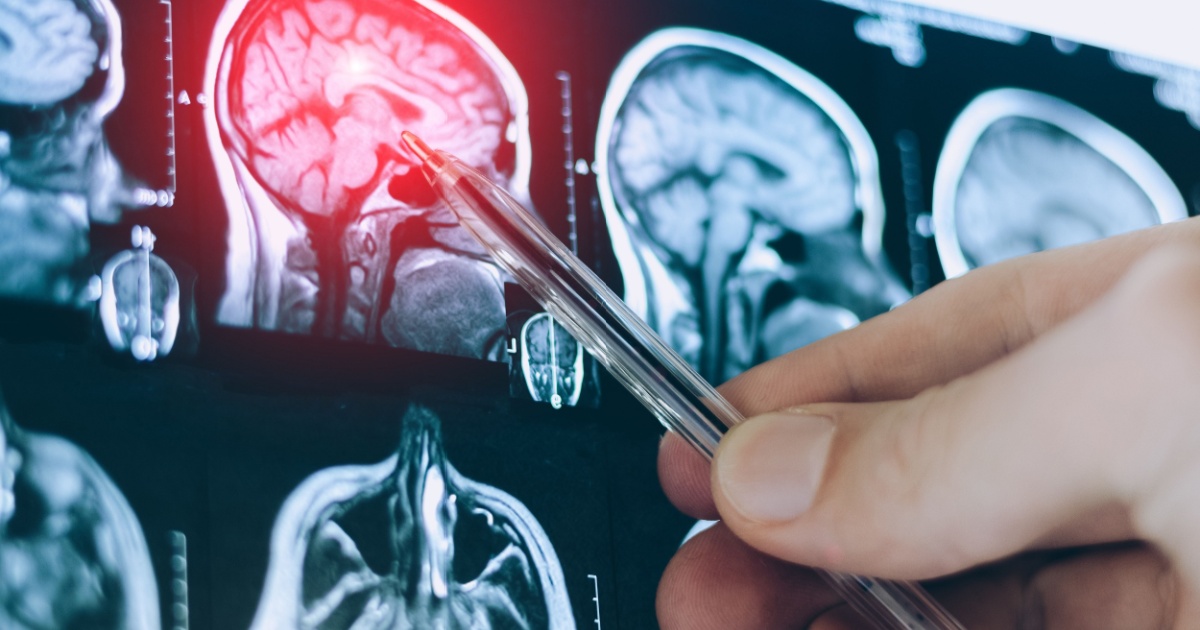
That stubborn gap between what medicine currently offers and what patients actually need has long frustrated cardiologists. A new line of research is now pointing to an explanation that few saw coming. For some people, the root problem may not be in the heart, the kidneys, or the blood vessels at all. It may be happening in the brain – specifically, in a tiny region of the brainstem that most people have never heard of, one that scientists themselves didn’t associate with blood pressure until very recently.
The findings are early-stage, conducted in animals rather than humans. A direct leap to clinical practice would be premature. But the mechanisms they describe are compelling enough that cardiovascular researchers are paying close attention, and the team behind the work says a potential treatment path is already in development.
The Scale of a Stubborn Problem
The hypertension problem is large, and it is not getting smaller. According to the WHO’s Global Report on Hypertension, released in 2023, 1.4 billion people were living with hypertension, yet just over one in five had it under control. Two-thirds of affected adults live in low- and middle-income countries, and the total number has doubled since 1990.
Hypertension is a leading cause of heart attack, stroke, chronic kidney disease, and dementia. In the United States alone, a 2024 CDC data brief drawing on the National Health and Nutrition Examination Survey found that nearly 47.7% of American adults meet the criteria for high blood pressure.
Current treatment options – which include drug classes such as ACE inhibitors, calcium channel blockers, and beta-blockers, alongside lifestyle interventions – work well for many people. But a meaningful percentage of patients do not respond adequately. Elevated blood pressure that is initiated and maintained by the brain is defined as neurogenic hypertension, and it accounts for nearly half of all hypertension cases. A significant proportion of hypertensive individuals remain uncontrolled despite treatment, and this population tends to show elevated or inappropriate levels of sympathetic nervous activity.
That neurological component is precisely what the new research set out to examine more closely.
Discovering the Lateral Parafacial Region
The lateral parafacial region sits in the brainstem, the oldest part of the brain, which controls automatic functions such as digestion, breathing, and heart rate. Prior to this research, the region was understood mainly for its role in a very specific type of breathing. As lead researcher Professor Julian Paton, director of Manaaki Manawa, Centre for Heart Research at the University of Auckland, explains: “The lateral parafacial region is recruited into action causing us to exhale during a laugh, exercise or coughing. These exhalations are what we call ‘forced’ and driven by our powerful abdominal muscles. In contrast, a normal exhalation does not need these muscles to contract – it happens because the lungs are elastic.”
What the research team uncovered is that this breathing-related region has a second function, one with far more systemic consequences. Researchers found that this area also connects to nerves that tighten blood vessels, a mechanism that raises blood pressure. A region the body uses to power a laugh or a cough also has the capacity to squeeze blood vessels and drive up arterial pressure.
What Happened in the Experiments
In their experiments in rats, the researchers used genetic engineering techniques to turn pFL neurons on or off, then observed the effects. Breathing-related nerve activity, sympathetic nerve activity, and blood pressure were all monitored. When the team activated pFL neurons in some rats, this triggered other brain circuits that ultimately raised the animals’ blood pressure. They then mapped out brainstem and nerve activity in detail, including the other neurons the pFL region was communicating with, and compared the data with readings from control rats without hypertension.
The result when the process was reversed was equally striking. “We discovered that, in conditions of high blood pressure, the lateral parafacial region is activated and, when our team inactivated this region, blood pressure fell to normal levels,” says Paton.
In hypertensive rats, pFL neurons weren’t just helping with breathing. They were also acting to constrict blood vessels. This dual role, part of the breathing network and part of the vascular regulation network, had not been identified before.
The Breathing-Blood Pressure Connection
Changes in breathing patterns, especially those involving strong abdominal muscle contractions, can trigger high blood pressure. Identifying abnormal abdominal breathing in patients with high blood pressure may point toward the cause and direct more appropriate treatment.
The study suggests that pFL neurons may link changes in breathing rhythms to increased activity in the sympathetic nervous system, the body’s “fight-or-flight” response, which helps control blood pressure. This fits with previous research linking hypertension to the brain and nervous system. When the sympathetic nervous system is chronically overactivated, blood vessels stay constricted and the heart works harder, producing sustained high blood pressure over time.
Research over the past three decades in patients with essential hypertension has found consensus that there is activated sympathetic outflow to the skeletal muscle vasculature, heart, and kidneys in 40 to 65% of patients. This well-established body of evidence gives additional weight to the new findings: the lateral parafacial region may be one of the upstream sources feeding that chronic sympathetic overdrive.
The Neurogenic Hypertension Context
The concept of neurogenic hypertension – blood pressure elevated primarily by nervous system activity rather than by peripheral factors like kidney function or fluid volume – is not new. A neurogenic component to primary hypertension is now well established, and the chronic activation of the sympathetic nervous system in this context produces a diverse range of pathophysiological consequences independent of any increase in blood pressure itself.
What has remained elusive is a clear, targetable mechanism. Identifying which brain circuits generate the excess sympathetic output has been an ongoing challenge. As the researchers write in their published paper: “Given that around 50 percent of patients with hypertension have a neurogenic component, the challenge is to understand mechanisms generating sympatho-excitation in hypertension. Such a revelation would provide much-needed clinical orientation for new therapeutic strategies.”
The lateral parafacial region may be one piece of that puzzle. In Paton’s words: “We’ve unearthed a new region of the brain that is causing high blood pressure. Yes, the brain is to blame for hypertension!”
For those managing patients with treatment-resistant or unexplained hypertension, this framing is clinically meaningful. Neurogenic hypertension is most likely in patients with labile or paroxysmal (sudden, short-burst) hypertension, but evidence of increased sympathetic tone also points to a neurogenic component in patients with severe or resistant hypertension, chronic renal disease, and related comorbidities. The new research begins to explain how the brain may generate that sympathetic tone through a respiratory circuit.
The Sleep Apnea Connection
One of the more immediately practical aspects of this research involves sleep apnea, a condition where breathing repeatedly stops and starts during sleep, often for seconds at a time. Research published in Hypertension Research in 2024 confirmed that obstructive sleep apnea and hypertension have a high rate of co-occurrence, with sleep apnea acting as a causative factor for hypertension. Sympathetic activity driven by intermittent hypoxia is among the most important mechanisms triggering blood pressure elevation in this context.
The new findings offer a plausible neurological explanation for why this link exists. While pFL neurons aren’t involved in normal breathing, they fire up in response to high CO2 or low oxygen levels – precisely what happens during sleep apnea. When breathing stops repeatedly during the night, oxygen levels drop and carbon dioxide accumulates. That chemical shift activates the pFL region, which in turn activates sympathetic nervous output, which constricts blood vessels and raises blood pressure. This may explain why blood pressure elevations in sleep apnea patients can persist even during waking hours.
Research published in Clinical Hypertension in 2024 noted that the overactivation of the sympathetic nervous system during repeated episodes of apnea results in episodic blood pressure surges, and that this pathway is a central mechanism linking the two conditions. The new study connects those peripheral sensors directly to the pFL region, providing a more complete picture of the pathway.
For readers who have both a hypertension diagnosis and sleep-disordered breathing, this convergence of findings is worth discussing with a physician, particularly if blood pressure has remained difficult to control.
The Carotid Bodies: An Accessible Treatment Target
The most practically significant aspect of the new research may be where it points for treatment. Researchers acknowledged a central problem early on: even if the pFL region is a driver of elevated blood pressure, getting drugs to act on a specific, small area of the brain without affecting surrounding tissue is extraordinarily difficult. “Targeting the brain with drugs is tricky because they act on the entire brain and not a selected region such as the parafacial nucleus,” says Paton.
The breakthrough came when the team traced which signals were activating the pFL region in the first place. They discovered that this region is activated by signals from outside the brain, from the carotid bodies, tiny clusters of cells in the neck near the carotid artery that sense oxygen levels in the blood. Because they sit outside the blood-brain barrier, these sensors can be targeted with medication far more safely than brain tissue itself.
The carotid bodies are not a new concept in hypertension research. Researchers at the University of Bristol found that the carotid bodies appear to be a cause of high blood pressure, and their clinical team demonstrated that removing one carotid body from some patients with resistant hypertension caused an immediate and sustained fall in blood pressure.
What the new study adds is the mechanistic link: the carotid bodies appear to be upstream of the lateral parafacial region. By quieting the carotid bodies, researchers may be able to dial down pFL activity without ever touching the brain directly. “Our goal is to target the carotid bodies, and we are importing a new drug that is being repurposed by us to quench carotid body activity and inactivate ‘remotely’ the lateral parafacial region safely, i.e., without needing to use a drug that penetrates the brain,” says Paton.
This approach remains in development and will require extensive human testing before any clinical application. But the conceptual value of targeting a peripheral sensor to regulate a central brain circuit is exactly the kind of thinking that generates new drug development pathways.
Critical Limitations and Scientific Context
Any responsible reading of this research has to take its limitations seriously. The study used only animal models. It is likely, but not certain, that the same circuitry exists in people. Physiology in rats and physiology in humans share many features, but they are not identical. What works in a controlled animal experiment does not automatically translate to a complex human clinical environment.
The path from a rat model to a human clinical trial is long, expensive, and often ends without the hoped-for result. The history of neuroscience and cardiovascular medicine is full of promising preclinical findings that did not survive rigorous human testing.
Additionally, neurogenic hypertension is almost certainly not a single, uniform condition. The primary cause of most hypertensive cases remains unclear, and even among those with a clear neurogenic component, the specific mechanisms may differ from person to person. The lateral parafacial region may be a significant contributor for some patients, particularly those with abnormal breathing patterns or sleep apnea, while being far less relevant for others whose hypertension is driven by different pathways.
What the study does accomplish, even accounting for these limitations, is open a specific, testable hypothesis: that breathing pattern dysregulation in the brainstem can drive sympathetic-mediated hypertension through the pFL region, and that the carotid bodies are a key relay point in that circuit. That is a well-defined question that human research can now begin to answer.
You can also explore some of the lifestyle and dietary strategies supported by current evidence when it comes to managing blood pressure, including foods that naturally bring down high blood pressure, while the science of brain-targeted therapies continues to develop.
What the Research Means for Resistant Hypertension
Resistant hypertension, defined as blood pressure that remains elevated despite being on three or more antihypertensive medications at appropriate doses, is a major clinical challenge. Patients with true resistant hypertension are characterized by high sympathetic activity, making them candidates for treatments that reduce sympathetic nervous system outflow.
Existing device-based approaches to that problem, such as renal denervation (ablating the sympathetic nerves around the kidneys) and carotid baroreflex activation therapy (electrically stimulating pressure sensors in the neck to reduce sympathetic output), have shown variable results in clinical trials. Increasing evidence has confirmed the potential of baroreflex amplification to improve blood pressure control in patients with resistant hypertension, with a limited side-effect profile. But no single approach has proven universally effective, reinforcing the idea that resistant hypertension is heterogeneous in its origins.
The pFL pathway represents a distinct mechanism that current therapies do not specifically target. If human studies confirm that overactive pFL neurons contribute to resistant hypertension in a meaningful proportion of patients, the carotid body drug approach could eventually offer a new option for exactly those patients who have exhausted conventional choices. The key word, though, is “if.” This is hypothesis-generating science at this stage, not proven treatment.
Read More: Study Finds 2 Exercises Most Effective for Lowering Blood Pressure
What This Means for You
This research, published in Circulation Research in late 2025, marks a meaningful step forward in understanding why high blood pressure is so difficult to treat in a substantial minority of patients. The core finding is that a small region of the brainstem, the lateral parafacial area, can function as a driver of elevated blood pressure by activating nerves that constrict blood vessels. This mechanism appears to operate through the sympathetic nervous system, the same “fight-or-flight” network that has long been implicated in neurogenic hypertension.
The connection to carotid bodies is particularly significant from a treatment perspective. Those tiny oxygen-sensing structures in the neck appear to activate the pFL region, and they sit outside the blood-brain barrier, making them more accessible to pharmacological intervention than brain tissue itself. A repurposed drug designed to suppress carotid body activity without entering the brain is already in development by the research team.
For people currently managing high blood pressure with medication, nothing in this study changes clinical recommendations today. Standard antihypertensive therapies, regular blood pressure monitoring, dietary salt reduction, physical activity, and sleep quality remain the cornerstones of management. For those with treatment-resistant or unexplained hypertension, particularly if sleep-disordered breathing is also present, the emerging understanding of neurogenic pathways may eventually inform a more targeted approach to their care. Asking your physician whether a neurogenic component could be contributing to difficult-to-control readings is a reasonable conversation to start, even now.
AI Disclaimer: This article was created with the assistance of AI tools and reviewed by a human editor.
Read More: 3 Morning Habits to Avoid if You Have High Blood Pressure or Cholesterol