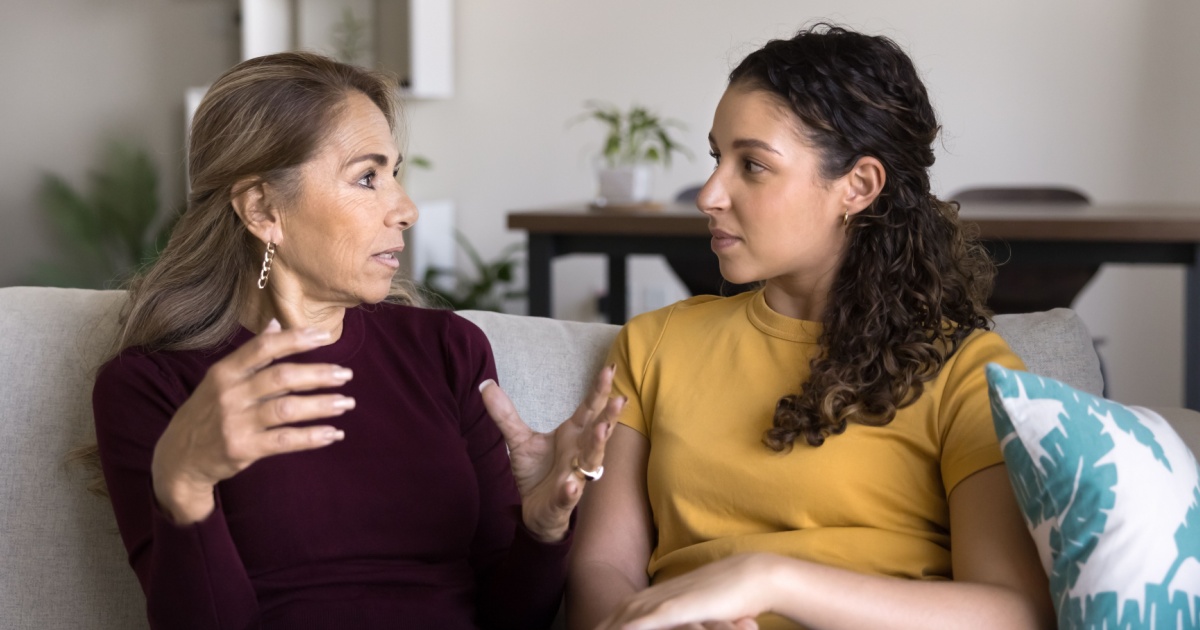

There’s a version of your mother you’ve never met. She existed long before you did – a young woman with her own fears, her own ambitions, her first heartbreak, her first real taste of freedom. Somewhere between the school runs and the Sunday dinners, that woman got quietly tucked away. And most of us never thought to ask her back out.
It’s not that we don’t love our mothers. It’s that the relationship has always been set up a certain way. She was the adult; we were the children. She managed our chaos; we rarely thought to wonder about hers. Even as we grew into adults ourselves, the dynamic held. She asks about our lives. We answer. And somehow, we never quite flipped the script.
There is now a growing body of evidence showing that the process of sharing family stories between generations is critical not just to a person’s identity, but to their mental health. That’s not a small thing. Children who have what researchers call an intergenerational identity – a genuine sense of where they come from – feel more in control of their lives, according to research by Dr. Marshall Duke and Dr. Robyn Fivush from Emory University. And that benefit doesn’t stop when you turn 18. The stories your mother carries are part of your story too. You just haven’t heard them yet.
The good news is it’s never too late to ask. The questions below are not a quiz or a formal interview. They’re conversation starters – the kind that can turn a quiet Sunday afternoon into something your family talks about for years. Some are light. Some go deep. A few might surprise you – and her.
1. Who Were You Before You Were Mom?
Ask her: What did you want to be when you were young? Did you have a dream you never pursued?
This is the question most of us skip because we assume we know the answer. We don’t. We’re only children for a very short period of time, and we know our mothers as adults for the vast majority of our lives. While the role of a mother can be a significant one, she had a whole life before you were born and after you left home. So ask about it directly.
Follow it up: Who were your closest friends growing up? What did you do for fun? You might discover a version of your mother who was far more adventurous, or far more uncertain, than you ever imagined. These conversations give you a unique chance to see your mom as more than just a parent – as a woman with her own dreams, struggles, and triumphs.
Also ask: What were you most proud of before you had kids? That last one tends to open doors. A lot of mothers set aside personal milestones because the story of the family took over. Asking directly gives her permission to bring those things back into the light.
2. What Was Your Childhood Really Like?
Ask her: What was your home like growing up? What’s the memory you return to most often from being a kid?
Most adults have only a surface-level picture of their mother’s childhood. You might know the city she grew up in and the name of her school, but do you know what her house felt like? Whether she felt safe there? What she was afraid of? Understanding her early years helps you appreciate her journey and the experiences that shaped her into who she is today.
Press a little further: What was your relationship with your own mother like? Was there tension, or were you close? This question can be illuminating in two directions. It tells you something about her – and it often explains patterns you might recognize in your own relationship with her. One important type of family story is when parents share accounts of their own childhood with their children. These stories create intergenerational connections between grandparents, parents, and children, weaving threads across the generations.
Also worth asking: Were there things your parents did that you swore you’d never do yourself? And if she did them anyway – which is more common than people admit – that conversation alone could be one of the most honest ones you’ve ever had.
3. What Was It Like When You Were Young and in Love?
Ask her: How did you meet the person you loved most before you settled down? What were your early relationships really like?
This one requires a little courage to ask – and maybe a little courage for her to answer. But the truth is, your mother had a romantic life that existed entirely outside of your awareness. She fell for people, got her heart broken, made choices that didn’t work out, and eventually found her way to wherever she is now.
Follow up with: What did you learn from your biggest heartbreak? and Was there someone you almost chose instead? These aren’t gossip questions. They’re questions about how she understands love, loyalty, and commitment – and those values likely shaped how she raised you.
You can also ask: What was your wedding day like, if she was married? Most people assume they know this story. Few have actually heard the full version – including the nerves, the mishaps, and the specific moment she remembers most clearly.
4. What Was the Day I Was Born Like?
Ask her: What do you remember most about the day I came into the world?
This sounds simple. It almost always leads somewhere unexpected. Asking your mother what she would tell her younger self often uncovers powerful wisdom about relationships, family life, and personal growth. Her responses may reveal lessons she learned the hard way or choices she would approach differently today. But the birth question does something different – it hands her back a moment she lived entirely as a woman, not just as a parent-in-waiting.
Follow with: Were you scared? What was the first thing you felt when you saw me? and What were you hoping for – what kind of life did you imagine for me in those first hours? The gap between what she hoped for then and what actually unfolded is often a conversation in itself.
If you were adopted, ask her: What was the day you knew I was yours? What did that feel like? Adoption stories are often rich, complicated, and deeply loving – and they’re frequently left unasked because people worry about the emotions involved. Ask anyway.
5. What Was the First Year of Motherhood Really Like for You?
Ask her: Was becoming a mother what you expected? What surprised you most?
This is one of the most underasked questions in family conversations, and it’s also one of the most revealing. New parenthood is overwhelming in ways that nobody fully prepares for, and your mother’s experience of it was her own – shaped by her age, her circumstances, the support she had (or didn’t have), and her own sense of who she was becoming.
Research shows that reminiscing can offer significant benefits for older adults, including preserving personal and family history, enhancing overall quality of life, and even helping reduce symptoms of depression. Giving your mother space to revisit the harder parts of early motherhood isn’t dredging up old pain – it’s honoring the full truth of what she went through.
Also ask: Did you ever feel like you were doing it wrong? What kept you going? and Was there something you wish someone had told you before you became a mom? These questions tend to create the kind of mutual vulnerability that shifts a relationship. She stops being just your mother for a moment, and becomes a person who was figuring things out, same as you.
6. What Has She Sacrificed That She’s Never Mentioned?
Ask her: Is there something you gave up for us that you’ve never said out loud?
Many mothers never frame the things they set aside as sacrifices. They just did what needed doing, and moved on. But most of them gave up something – a career path, a move they wanted to make, a creative pursuit, a relationship, or simply years of their own time – without being asked to name it.
The process of talking with a parent about their life often builds and strengthens relationships among family members. Oral history, as one expert put it, is very bonding – it creates a sense of oneness between the people sharing and listening.
Follow up with: Do you have any regrets about how you raised us? That’s a loaded question, and it should be asked with care – not to assign blame, but to genuinely understand her perspective. And then: Is there something you always wished I knew about how hard you worked? The answers to these questions don’t just change how you see your mother. They often change how you see yourself.
7. Who Were Her Role Models?
Ask her: Who did you look up to when you were young? Was there a woman in your life who changed how you saw the world?
Role models tell you a great deal about a person’s values – what they admired, what they were reaching toward, and what kind of woman they wanted to become. Your mother may point to a grandmother, a teacher, a public figure, or a friend. She might surprise you entirely.
Then ask: Who do you look up to now? The answer is often very different from the one she’d have given at 20, and that gap is interesting. It shows you how her sense of what matters has shifted over a lifetime.
Also worth asking: Is there a book, a movie, or a piece of advice that genuinely changed you? This question tends to open up conversations about her inner life – the ideas she’s carried, the words she’s returned to – in a way that feels less like an interview and more like a discovery.
8. What Does She Know About Our Family History?
Ask her: Where did our family come from? Is there something about our history I should know?
Intergenerational narratives about parents – the stories children hear about their parents growing up – help frame a sense of connection between parent and child that reinforces family identity and values across generations. But those stories only survive if someone asks for them.
Questions to explore here: Were there family members who faced real hardship – illness, displacement, loss – that shaped who we are? and Are there traditions or values that were passed down that I might not even know came from somewhere specific? Asking about family history is a great way to connect with your roots and learn more about your familial heritage. Questions about the names and origins of grandparents and great-grandparents, or notable family traditions passed down through generations, can spark discussions that go far deeper than you expect.
You might also ask her: Is there a story about our family that you think I should be the one to pass down someday? That question does something specific – it tells her that her history matters enough to preserve, and it invites her to choose what gets carried forward.
If you want to understand why these conversations with the older generation matter so much, the insights on grandparents and family memory on The Hearty Soul explore that same theme from a different angle.
9. What Does She Know About Our Family’s Health History?
Ask her: What medical conditions run in our family that I should know about?
This is the one question on this list that isn’t just about emotional connection – it’s also practical health information that could protect you. You share more than eye color and personality traits with your family. You also share genes that influence your risk for certain diseases. Your family history might be one of the strongest influences on your risk of developing heart disease, stroke, diabetes, or cancer, and knowing it can help you take steps to reduce your risk of developing health problems.
According to the National Institutes of Health, a complete family health record includes information from three generations of relatives, including children, brothers and sisters, parents, aunts and uncles, nieces and nephews, grandparents, and cousins. Your mother may be the only person who holds pieces of this picture.
Assessing your family’s risk of various health conditions starts with getting to know relatives’ health backgrounds. Ask whether any immediate family members have had a heart attack or stroke, whether there’s diabetes in the family, and whether colon cancer or breast cancer have occurred. Knowing your family health history allows you to take steps to reduce your risk, and for those at increased risk of certain cancers, healthcare professionals may recommend more frequent screening starting at an earlier age. This is also a conversation worth having well before a health crisis forces it.
Read More: 7 Parenting Mistakes Everyone Should Try to Avoid
10. What Does She Want You to Know Before It’s Too Late?
Ask her: Is there something you’ve always wanted to tell me but never found the right moment?
This is the hardest question on the list, and also the most important. Once someone is gone, their stories become irreplaceable treasures, more precious than any heirloom. Understanding your mom goes beyond curiosity – it’s about deepening your bond, finding inspiration from her experiences, and preserving family history before it’s too late.
Other questions to close with: What do you want your life to be remembered for? and What’s the one thing you hope I carry with me? and What’s the best piece of advice you never gave me? These aren’t morbid questions. They’re the most loving ones you can ask. They say: your story matters. I want to hear it while I still can.
Finally, ask her: What’s your favorite photo of yourself? It’s lighter, yes – but it almost always leads somewhere real. She’ll reach for an image that shows her as a full person, not just as someone’s mother. And in that moment, you might catch a glimpse of the woman she’s been all along.
Start the Conversation Today
You don’t need a special occasion to ask your mother any of these questions. You don’t need a recording device or a structured sit-down. What you need is a quiet moment, some genuine curiosity, and the willingness to listen to the answer – not just the version you expected.
Carve out some quality time, perhaps over a shared activity or a quiet cup of tea, and listen with an open heart. The stories you uncover and the bond you strengthen through these conversations will likely become some of your most treasured memories. In learning more about your mom’s life, you might just discover new dimensions of yourself as well.
Research from Emory’s Family Narratives Lab found that children in families who shared more coherent family stories had better self-esteem, higher levels of social competence, higher quality friendships, and less anxiety and stress. Your mother is one of the few people alive who can give you that anchor. Some topics may be difficult or emotional. Give her time to process and don’t push if she’s not ready to discuss something. Accept her stories and perspectives without criticism. This is about understanding her life, not evaluating it. Go slow, stay curious, and let the conversation take you where it wants to go.
Disclaimer: The information provided here is for educational and informational purposes only and is not a substitute for professional psychological, psychiatric, or mental health advice, diagnosis, or treatment. Always seek the guidance of a licensed mental health professional, therapist, psychologist, or psychiatrist with any questions or concerns about your emotional well-being or mental health conditions. Never ignore professional advice or delay seeking support because of something you have read here.
AI Disclaimer: This article was created with the assistance of AI tools and reviewed by a human editor.
Read More: 8 Things Only Someone Raised by an Emotionally Abusive Mom Will Understand