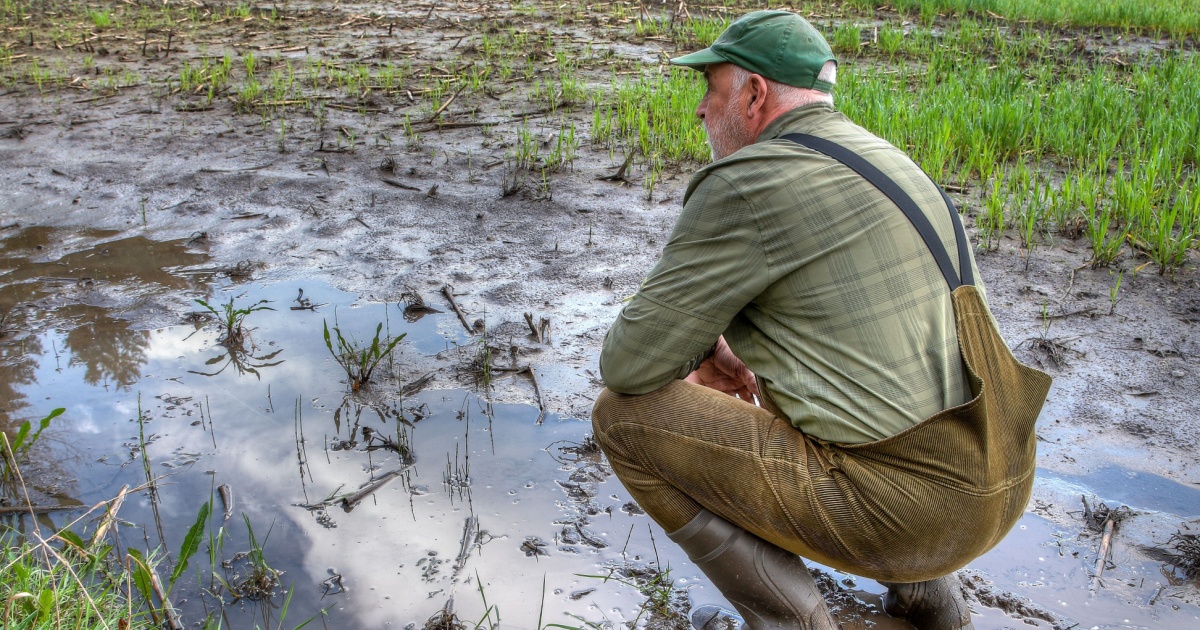

The rain is still falling. In many parts of the world, it’s actually falling more than it used to. So why are scientists sounding an alarm?
The answer sits at the intersection of a paradox that most people have never been asked to think about: more rain does not necessarily mean more water. That distinction, as dry and technical as it sounds on paper, has enormous consequences for how billions of people will access fresh water over the coming decades. And a major new study published this month has, for the first time, put hard observational numbers on exactly how large those consequences are.
The research arrives at a moment when the global water picture was already grim. According to a 2025 report by WHO and UNICEF, 2.1 billion people globally still lack access to safely managed drinking water. Separately, the World Bank’s first Global Water Monitoring Report, released in November 2025, found that the world is losing 324 billion cubic meters of freshwater every year. Into that backdrop, the new findings land with considerable force. The problem, it turns out, isn’t only how much water exists. It’s how, when, and where it falls.
The Study: What Researchers Found
Corey Lesk, a postdoctoral researcher at Dartmouth’s Climate Modeling and Impacts Group, and Justin Mankin, an associate professor of geography at Dartmouth, analyzed global precipitation records from 1980 to 2022 and found that annual rainfall has become more concentrated, regardless of whether the local climate is wet or dry, publishing their results in Nature. The paper, titled “More concentrated precipitation decreases terrestrial water storage,” is the first to provide observational evidence for something climate scientists had theorized but not yet directly demonstrated at a global scale.
Until this study, it was unknown how daily-scale precipitation concentration into fewer, heavier events affects how water is partitioned and stored across the land surface. The research now shows observationally that more concentrated precipitation decreases land water availability across all climates globally, with a drying effect as strong in magnitude as the wetting effect of increased total precipitation.
That last point is the critical one. Higher total rainfall and lower land water storage are happening simultaneously, and for the same underlying reason: the timing and intensity of rain, not just the volume, determines how much of it actually stays in the ground, in rivers, and in aquifers (underground water reservoirs).
The findings are the first to show that a year’s worth of rainfall packed into bigger and wetter storms means less water for aquifers and ecosystems, even if total precipitation increases, because soil can absorb only so much water at once, and what is not soaked up collects on the surface where it is more readily evaporated.
The Methodology: Borrowing From Economics
To measure this phenomenon, the researchers used an unconventional tool. Lesk and Mankin employed a Gini coefficient, an economic metric typically used to measure wealth inequality, to capture how evenly precipitation fell for a region during a given year. The scale ranged from zero, representing equal daily precipitation, to one, meaning all annual precipitation fell in a single day.
The logic is elegant. In economic terms, a Gini coefficient of zero means wealth is perfectly evenly distributed; in precipitation terms, it means rain falls in small, steady amounts every day of the year. A coefficient approaching one means everything is packed into a single catastrophic event. The higher a region’s Gini coefficient, the less evenly distributed its precipitation is.
Using a combination of statistical analysis and satellite imagery, the researchers then mapped how projected changes in rainfall patterns would affect how water accumulates across the landscape, including river and reservoir levels, soil moisture, and groundwater.
Why More Rain Produces Less Water
The mechanism behind the paradox is rooted in basic hydrology (the science of how water moves through the environment). Soil, like a sponge, can only absorb water at a certain rate. When moderate rain falls over several hours or days, the ground has time to draw it in. When the same volume of water falls in a single intense downpour, the surface becomes overwhelmed. Water pools, sits on top of the soil, and then evaporates back into the atmosphere before it can penetrate into aquifers or reach root systems.
As Lesk explained, the more precipitation gets concentrated into stronger events, separated by longer dry spells, the less of that rain tends to stick around on the land, making that water less available to ecosystems that have evolved to take it up slowly, and leading to flooding, erosion, and water pooling on the land’s surface, where it’s more likely to evaporate at a faster rate due to warmer temperatures driven by climate change.
Mankin put it more bluntly. “If you’re asking the land to drink from a fire hose, whether that’s through highly concentrated precipitation falling from the sky or rapid snowmelt, you’re going to lose water,” said Mankin, the study’s senior author.
Among the key findings, Mankin noted, is that when and how frequently rain falls is as big a cause of drought as how much precipitation a place sees overall. That overturns a foundational assumption of water resource science: that total annual precipitation is the primary driver of land wetness.
As Lesk put it, “Rainfall concentration is almost as important to land wetness as how much rainfall you get in a year.”
The study also identified a second driver of drying beyond evaporation. Intense rainfall leads to flooding, erosion, and water pooling on the land’s surface, where it evaporates more rapidly. “That’s why you can have a flood, owing to very heavy rain days, even if it sets up a drought later in the summertime,” Mankin noted.
The implications for aquifer recharge are significant. Rainfall can sometimes flow too quickly into deeper soil layers, bypassing natural purification processes and transporting large amounts of dissolved substances from the surface into groundwater aquifers, a problem that is particularly acute following extreme rainfall and after drought periods. So concentrated storms don’t just reduce how much water reaches the water table. They can also degrade its quality when it does.
Regional Hotspots: Where the Trend Is Most Severe
The concentration trend is not uniform. Some regions are being hit far harder than others. The United States west of the Mississippi River experienced some of the world’s highest levels of rain consolidation, with yearly rainfall for the Rocky Mountains becoming 20% more compacted into heavier downpours, while rainfall in South America’s Amazon River basin grew 30% more concentrated into heavy storms and longer dry spells, the largest change recorded worldwide since 1980.
Lesk identified two global hotspots with the strongest consolidation trends since 1980: the Amazon and adjacent regions, and the area over Wyoming and Colorado.
River basins across the American West have been drying out under a “megadrought” that has gripped the region for the better part of the 21st century, forcing Western states to cut back their water use and renegotiate dwindling resources. The new data on rainfall consolidation adds another layer of pressure on a region already at its limits.
California illustrates the dilemma acutely: during long-term droughts, atmospheric rivers have drenched the state, forcing water managers to decide whether to release precious reservoir storage to collect freshly fallen rainwater, with no certainty about how long the new supply will last.
The American West’s century-old water infrastructure compounds the problem. Since the early 20th century, the region has relied on federal and state dams and canals built to impound and transport water. That infrastructure and the economies it supports could be “potentially maladapted to this rapidly changing climate,” in which the same amount of moisture packed into a few heavy storms yields less usable water.
Not every region follows the same pattern. The Arctic, Northern Europe, and Canada exhibited as much as a 20% decrease in rain consolidation, meaning precipitation became more evenly distributed between 1980 and 2022. Southeast Asia also experienced less concentrated rainfall over the same period, though the reason remains unclear to the researchers. However, this apparent good news comes with a warning attached.
Southeast Asia and the northern latitudes could see a reversal back to more sporadic rain and longer periods of dryness, and climate models project that these regions will see the highest increases in rain consolidation with each additional degree of global warming.
The same risk could extend to regions such as the northeastern United States that have historically relied on a relatively equitable distribution of year-round precipitation. The Nature study shows that expectations for future water supply are increasingly uncertain.
This concern is already playing out at local scales. In Vermont, the consolidation trend is leading to more flooding and more frequent “flash” droughts between storms. According to the U.S. Drought.gov September 2025 update, numerous wells ran dry across Vermont and New Hampshire during the fall 2025 drought, with well drillers no longer taking new customers due to the volume of requests.
For readers wanting a broader context on how climate trajectories may reshape daily life in the coming decades, this report on where climate change is heading by 2050 covers the systemic pressures being built into our infrastructure and communities right now.
The Climate Change Connection
The researchers were careful to distinguish between observed trends and attribution. Lesk told reporters, “We did not specifically test to what extent recent trends towards more concentrated precipitation are caused by climate change, but they are consistent with what we would expect from the theory of how warming shapes how rainfall is distributed in time.”
The physics behind the link is well-established. A warmer atmosphere holds more water vapor (moisture in the air), which means that when conditions are finally right for rain, more of it falls at once, and in between those events, the atmosphere continues drawing moisture away from the land surface through evaporation. The result is a cycle that intensifies both floods and droughts simultaneously, often in the same location across the same year.
Moisture consolidation, which Mankin and Lesk believe is a logical result of a warming atmosphere, represents “a new mode of volatility, a new way in which precipitation and the water cycle in a warmer climate is harder to predict and harder to manage.”
The researchers’ models project that rainfall will grow more consolidated as global temperatures rise, and that an increase of just 2 degrees Celsius could lead to abnormally dry land conditions for 27% of the world’s population, offsetting any rise in total rainfall.
That figure of 27% represents roughly 2.2 billion people pushed into drier land conditions purely because of how rain is delivered, regardless of whether total annual precipitation goes up or down. It arrives on top of an already severe baseline: according to UNICEF, approximately 4 billion people, nearly half the global population, currently live with severe water scarcity for at least one month a year.
Mankin drew a pointed analogy. There are many reasons, he said, both physical and socioeconomic, to expect that a world with global warming is going to be a much more unequal world. Precipitation, like wealth, exhibits a highly unequal distribution in the present day, and the expectation is that with global warming, inequality in both the economy and precipitation will increase.
Independent Assessment: How Strong Is the Evidence?
Independent scientists reviewed the methodology favorably. Bryan Shuman, a paleoclimatology professor at the University of Wyoming who was not involved in the study, said of the approach: “The methods represent a strong combination of direct observations and tests of the relationships using computer simulations. These are not patterns that can be dismissed as untrustworthy computer predictions. They show that this pattern has been happening and can be observed.”
Shuman, who has previously studied precipitation concentration himself, said the dynamics described paint a sobering picture, particularly for the West: “The challenges raised here highlight how the future could involve both dangerous flooding but that that can come along with much worse droughts than in the past.”
The study itself acknowledges the need for further investigation. The researchers note that more work is needed to understand the impact of more precipitation falling as rain rather than snow, and they are already looking into whether consolidating rain is leading to more frequent flash droughts. Flash droughts (sudden and rapid-onset dry periods that develop over days or weeks rather than months) are an emerging concern that existing monitoring systems are not well-designed to detect.
The study also presents an important caveat about the water it cannot account for. “There are only so many days of the year when rain can fall, and if more of it is going back into the atmosphere, there’s not much we can do to recapture it,” Lesk noted.
Infrastructure and Water Management: The Policy Dimension
The findings pose direct challenges to water management systems built for a different climate. Most water infrastructure, including reservoirs, canals, irrigation networks, and municipal supply systems, was designed around historical precipitation patterns that are now shifting. Some climate models have long projected that warming increases precipitation variability, meaning there will be more periods of both extreme precipitation and drought. This creates the need for expanded water storage during drought years and increased risk of flooding and dam failure during periods of extreme precipitation.
The new research makes that tension more concrete. As Mankin put it, “The acceleration of rainfall consolidation raises the imperative to conceive of ways to deal with the simultaneous flood and long-term drought risks. Places we don’t typically think of as needing reservoir storage may need it in the future.”
Mankin also noted that consolidated rainfall could mean it takes longer for groundwater to recharge after a dry spell, necessitating deeper wells and larger reservoirs.
Lesk added that declining land water availability, including a decrease in the amount of water in lakes and waterways, “can affect agricultural productivity, degrade ecosystems, and increase pressure on drinking water supplies, which could have major consequences on human life.”
Global water use has already risen 25% since 2000, according to the World Bank, with a third of that increase occurring in areas already drying out. Stacking a new structural drying pressure on top of rising demand creates a compounding risk that water planners in many regions have not yet fully incorporated into their long-term models.
Read More: New Study Predicts Grim Future for the Arctic by 2100 if Climate Change Persists
What This Means for You
This study does not simply confirm that climate change is making the world drier. Its contribution is more specific and, in some ways, more unsettling: it demonstrates that even regions receiving more total rainfall are not protected from the drying effects of how that rainfall is delivered. Total precipitation and timing of precipitation have historically been treated as separate variables in water science. The Dartmouth research shows they must now be considered together.
As Mankin concluded, “Consolidation of rainfall under global warming will lead to a drier land surface.” That is an honest statement of uncertainty from a senior author: the models are clear on the direction of change, but the magnitude of what increased total rainfall might offset remains genuinely unknown.
For most readers, that uncertainty carries a practical meaning. The water systems your community depends on, whether municipal reservoirs, private wells, or agricultural irrigation, were designed around rainfall patterns that are now shifting in ways that total precipitation figures alone won’t capture. The clearest action is pressure: advocate for updated water infrastructure planning in your region, support groundwater protection policies, and watch for how your local water authority is accounting for precipitation timing in its long-term models, not just total annual rainfall. As Lesk put it, “Drought is often measured by what is lacking, the total amount of rainfall, but how precipitation falls is just as important. This new type of rainfall regime leads to increased evaporation at the land surface, limiting the soil’s ability to retain moisture, and thus reducing the amount of water available on land for human populations and ecosystems.” The water is still falling. The challenge is making sure it stays.
AI Disclaimer: This article was created with the assistance of AI tools and reviewed by a human editor.
Read More: Scientists Discover Clues in Hailstones That Could Change What We Know About Weather