

Some kids are naturally the life of the birthday party. Others hang back, watching the room. Most parents have learned to tell the difference between the social butterfly and the quiet observer – but what about the child who seems like a social butterfly on the surface, yet somehow always ends up on the outside of the flock looking in? They’re friendly, curious, often well-liked. And yet, something about group settings doesn’t quite fit them the way it fits everyone else.
That disconnect – the gap between being liked and actually feeling like you belong – has a new name. And while researchers are still debating whether it counts as a true personality type, a growing number of parents are recognizing the pattern in their own children and finding it surprisingly clarifying. Knowing what to look for doesn’t put a label on your child – it helps you stop misreading their behavior and start supporting who they actually are.
So what exactly is an “otrovert,” and how do you spot otrovert signs in children before those tendencies get dismissed as shyness, social anxiety, or just being a difficult kid? The answer starts with understanding where this concept came from and why so many people are connecting with it right now.
What Is an Otrovert, Exactly?

New York psychiatrist Dr. Rami Kaminski brings over four decades of clinical experience to the concept of otroversion, with expertise spanning mood disorders, anxiety, addiction, and neurocognitive conditions. He introduced the term in his 2025 book The Gift of Not Belonging: How Outsiders Thrive in a World of Joiners, combining the Spanish otro, meaning “other,” with the suffix “-vert,” borrowed from psychological language describing orientation.
An otrovert is typically described as someone who can socialize just fine but doesn’t really care about fitting in – someone who doesn’t feel tied to group identity or approval. Unlike introverts, they are not shy or quiet, and do not quickly tire from one-on-one socializing – yet in large groups they feel uncomfortable, alienated, and alone.
The concept is generating real interest, but it comes with an important caveat. Unlike introversion, extroversion, or ambiversion, otroversion isn’t a recognized personality type. It’s a new concept and not yet backed by much research, but that hasn’t kept many people from musing on this emerging personality type – including Cleveland Clinic health psychology fellow Dr. Alivia Murdock-Frazier, who has explained the origins of otroversion and what science knows about it so far. According to Dr. Murdock-Frazier, “There’s a well-researched extroversion-to-introversion spectrum. Otroversion is likely somewhere on that spectrum, but we don’t have enough research to know exactly where.”
The scientific caution extends beyond the Cleveland Clinic. Colin DeYoung, a professor of psychology at the University of Minnesota, specializes in personality psychology and personality neuroscience. His research holds that five broad domains – the “Big Five” – can be used to organize most aspects of personality: Neuroticism, Extraversion, Agreeableness, Conscientiousness, and Openness/Intellect. From that framework, the idea of a wholly separate personality type sits uneasily. Research into otroversion is quite limited, with peer-reviewed studies remaining rare, and some critics believe the label may be too vague and possibly lump experiences stemming from anxiety and cultural differences together. One physician reviewer also noted that the book “lacks references, peer review, and relies entirely on anecdotes.”
That scientific caution doesn’t make the concept useless to parents. In his psychiatric work, Kaminski has seen countless young people sent to him by parents anxious because their child didn’t fit in, and adults also confused about why they seem different – some of whom had been treated unsuccessfully for social anxiety. Recognizing otrovert tendencies early can change how a parent responds entirely.
1. They’re Popular but Still Feel Like the Outsider

According to Kaminski, “Otroverts discover very early in life that they feel like outsiders in any group – this is despite the fact that they are often popular and welcome in groups. That discrepancy may cause emotional discomfort and a sense of being misunderstood.”
In children, this shows up as a puzzling pattern. The child gets invited to parties. Classmates genuinely like them. Teachers praise their social skills. But if you ask them how they felt at the school picnic or the birthday party, their answer is oddly flat – present, but not part of it. They watched everything happen around them without feeling pulled into the center of it.
Unlike those who have been excluded or marginalized, otroverts are embraced and often quite popular – yet they never feel like they truly belong. In a culture that puts a premium on joining, many otroverts have gone through life feeling misunderstood. Recognizing this early means you can reassure your child that something isn’t wrong with them and stop projecting a problem onto what may simply be a trait.
2. They Prefer One-on-One Connection Over Group Settings

Group playdates, team sports, birthday parties with twelve kids – these aren’t just tiring for an otrovert child. They’re genuinely confusing. The child isn’t withdrawing from people. They’re withdrawing from the group as an entity.
While otroverts enjoy deep and fulfilling one-on-one relationships, within groups they feel alienated and uncomfortable. Unlike introverts, who crave solitude and are easily drained by social interactions, otroverts can be quite gregarious and rarely tire from one-on-one socializing. An otrovert child can get along well with each friend separately – it’s when those friends merge into a group that something disconnects.
Otroverts often lean toward deeper, one-on-one connections instead of large group dynamics. This is a key distinction from introversion. Your child isn’t antisocial – they’re highly social in the right context, and their context is simply one person at a time. Plan playdates accordingly, and resist the pressure to force group settings just because that’s what other families are doing.
3. They Resist Joining Clubs, Teams, or Group Traditions

Otroverts are not natural-born joiners. They don’t gravitate toward organized groups – whether that’s a sports league, a school club, or a collective tradition. Given the choice, they’d rather spend an afternoon with one friend than join a structured team activity.
Kaminski traces his own recognition of the trait to childhood. Wearing a scout uniform and repeating the pledge, he wrote, he “felt nothing” while other children were visibly moved – a small moment that, in hindsight, marked emotional detachment from the group rather than indifference. In children, this shows up as repeatedly declining to join the soccer team, losing interest in group activities once the novelty wears off, or sitting out class rituals that other kids participate in enthusiastically.
Kaminski’s concept describes otroverts as people who don’t conform to group or social norms and are often highly eccentric, creative, and independent – not wanting or willing to conform their beliefs and values to fit into a social group. If your child keeps opting out of extracurriculars, ask whether they’re bored, anxious, or simply wired to find solo or pair-based activities more fulfilling.
4. They Gravitate Toward Adults and Older Companions
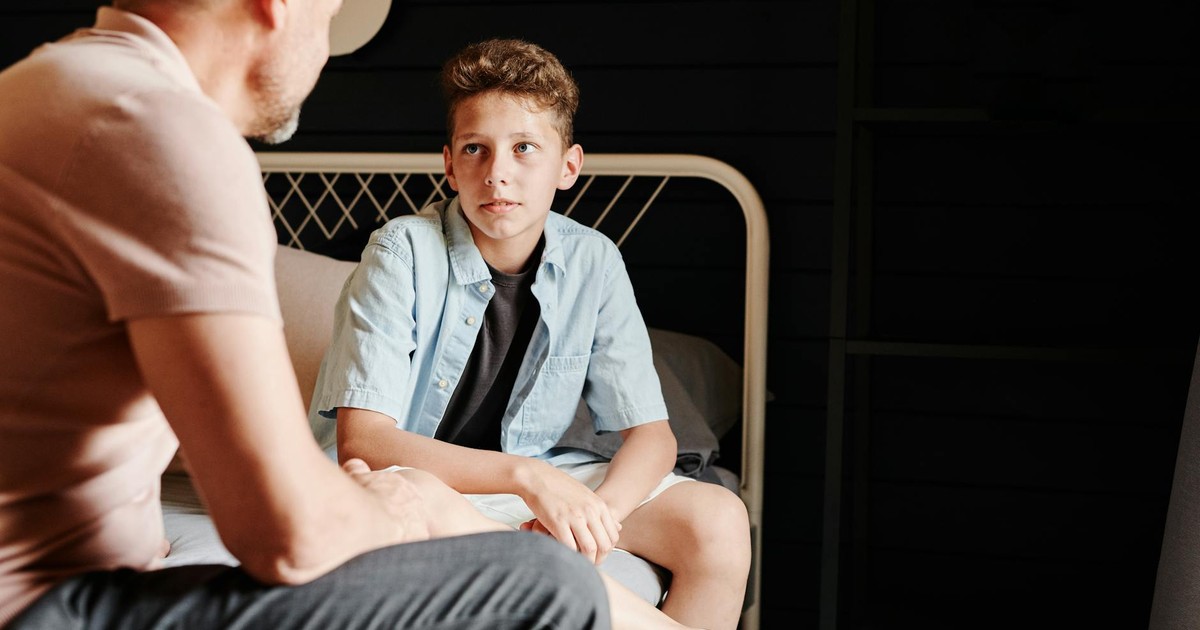
Unlike shy children who may seek comfort from parents in unfamiliar settings, otrovert children show a strong affinity for engaging with adults. Kaminski is described as a psychiatrist with over four decades of experience treating patients across the spectrum, and his observations of the otrovert’s sophistication emerged across that clinical work. Parents often describe these children as seeming far more comfortable around adults than peers.
You might notice your child hanging around the edges of adult conversation at family gatherings, asking their teacher unusually probing questions after class, or choosing to spend time with an older sibling’s friends rather than their own age group. Otroverts tend to be happiest in their own company, although they can shine socially and love the limelight when they have a specific role. Adult conversation often provides exactly that – a defined role, genuine exchange, and freedom from the social performance that peer groups demand.
Rather than steering them back toward age-appropriate peer groups at all costs, try honoring this preference while also gently creating some one-on-one peer connections. A single close friendship matters more to an otrovert child than a wide social circle.
5. They’re Independent Thinkers Who Resist Peer Pressure

One of the most consistent threads running through otrovert behavior in children is a striking indifference to what everyone else is doing. This isn’t rebellion for its own sake. It’s a genuine lack of pull toward the group’s opinions, trends, or consensus.
Otroverts tend to buck conventional beliefs, and are often highly critical thinkers – their ability to think freely and creatively means they frequently arrive at independent ideas. In a child, this might look like wearing the same unfashionable shoes season after season, refusing to watch the show everyone else is obsessed with, or holding a firmly different opinion in class discussion without apparent anxiety about it.
When otroverts have no affinity for a particular group, their self-worth is not conditioned on the group’s approval – and they can enjoy deep connection in individual relationships without the obligation to follow the rules the group follows. This quality, which can frustrate parents who want their child to “just fit in a little,” is actually one of the more resilient traits an otrovert carries. They are genuinely difficult to manipulate through social pressure, a strength worth naming out loud. Praise their independence explicitly rather than framing it as stubbornness.
6. They Feel Like Observers, Not Participants

Otroverts don’t identify with the group. They tend to be happiest in their own company, although they can shine socially when they have a specific role – but they don’t have a communal impulse. In children, this shows up as a quality that can be hard to name – present, but slightly separate, watching the room with quiet precision rather than losing themselves in it.
Parents sometimes describe this as their child seeming “older than their age” or “like a little philosopher.” This is especially true of otrovert children, who tend to question convention and traditionally accepted information more than children with other personality styles. They can describe social dynamics accurately, but they rarely feel absorbed by those dynamics the way their peers do.
This observer quality is an asset in the long run. It feeds curiosity, perceptiveness, and emotional intelligence. But in childhood, it can feel lonely. Talk to your child openly about the difference between watching life and participating in it – not to fix anything, but to make sure they know that the way they experience social situations is valid and worth understanding.
7. They Thrive in Solitude and Don’t Get Bored the Way Others Do

While otroverts enjoy deep one-on-one relationships, they are also comfortable spending time alone – and unlike introverts who are easily drained by social interactions, otroverts can be quite gregarious and rarely tire from one-on-one socializing before retreating to recharge independently.
A child who is lonely will often seek company even when it doesn’t feel right, anxiously filling solitude with screens or restless activity. An otrovert child, by contrast, will retreat to their room after school with genuine relief, engage deeply with independent projects, or spend hours absorbed in a book or creative pursuit without appearing distressed. Solitude isn’t empty for them – it’s where they regenerate.
Kaminski has called for more research to identify the trait’s developmental origins and underlying mechanisms, noting that recognizing the pattern could change how therapists and educators respond to children who don’t fit neatly into existing personality molds. For parents, the practical takeaway is clear: don’t force the social schedule. If your child finds solitude restorative rather than isolating, that’s not a problem to solve.
Read More: Signs You Were a Chronically Lonely Child
What This Means for You as a Parent

Otroversion likely doesn’t replace other existing personality frameworks – it’s not a formally recognized category of its own. Instead, it may sit alongside other well-known personality frameworks, like the Big Five traits. Whether the science ultimately validates the term fully is an open question. What’s less open is the reality that many parents recognize these behaviors in their children and have spent years misreading them as social anxiety, shyness, or defiance. Having a framework – even a preliminary one – makes it easier to respond with curiosity rather than correction.
The most useful thing a parent can do right now is stop treating their child’s social preferences as a problem that needs fixing. When a child has no affinity for a particular group, their self-worth isn’t conditioned on the group’s approval – and they can enjoy deep connection in individual relationships without the obligation to follow the rules the group follows or care about what the group cares about. Best of all, they know no other way to think or be than for themselves. That’s not a deficit. In a world that rewards conformity, it might be one of the most durable things a child can carry into adulthood.
Your job isn’t to make your child a better joiner. It’s to understand the kind of child you actually have, and build an environment where that child can feel seen rather than managed. For a child who naturally resists group belonging, that support starts with you deciding to trust what you’re observing – and to stop waiting for them to outgrow something that may never have been a problem.
Disclaimer: This information is not intended to be a substitute for professional medical advice, diagnosis, or treatment and is for information only. Always seek the advice of your physician or another qualified health provider with any questions about your medical condition and/or current medication. Do not disregard professional medical advice or delay seeking advice or treatment because of something you have read here.
AI Disclaimer: This article was created with the assistance of AI tools and reviewed by a human editor.
Read More: Toss Your Salmon Immediately if You Notice These Signs