
Something unusual is unfolding right now that has no real precedent in modern American history. The U.S. government has always brought its sick citizens home. That has been the unspoken promise at the heart of American public health policy, upheld through wars, pandemics, and outbreaks in some of the world’s most remote places. Today, that principle is being tested in a way that is making global health experts catch their breath.
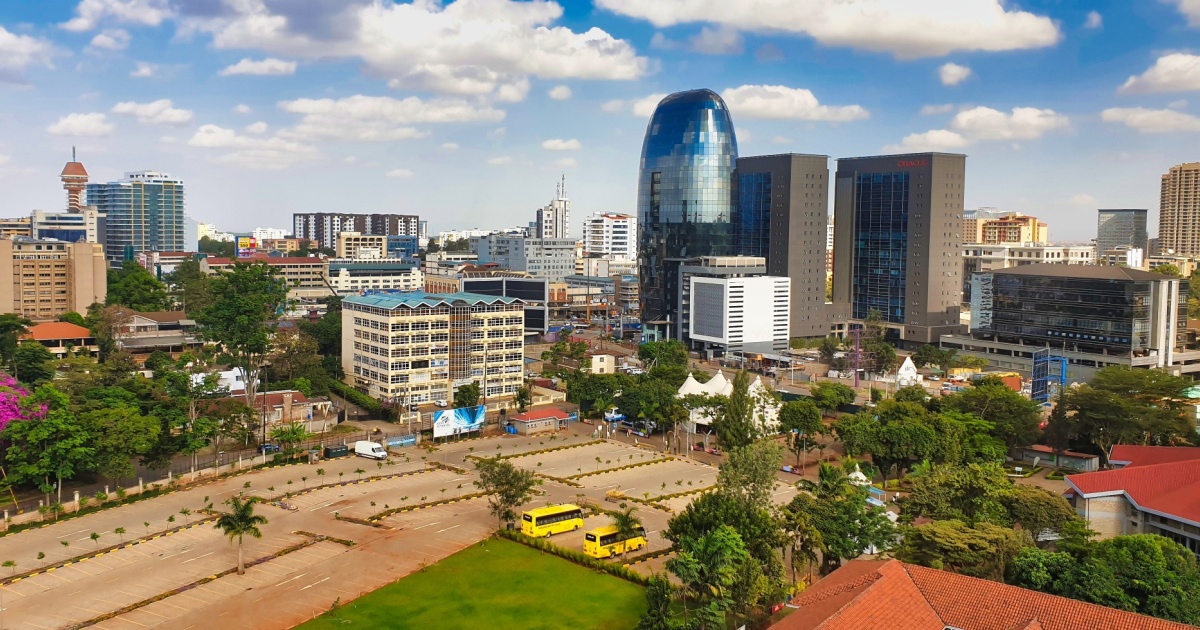
An Ebola outbreak is spreading across central Africa. An American doctor has already contracted the disease. And the Trump administration has proposed sending any further Americans exposed to the virus not home, but to a quarantine facility in a third country: Kenya. That plan, however, has now run into legal resistance after a Kenyan court temporarily blocked the facility pending further hearings.
To understand why so many health professionals are alarmed, you need to understand what is actually happening on the ground in central Africa right now, and what the U.S. response says about where American public health priorities stand in 2026.
The Outbreak by the Numbers
As of May 27, 2026, the outbreak had produced 1,205 suspected and confirmed cases and at least 264 deaths. Those numbers are almost certainly an undercount. Experts consider it likely that the true number of infections considerably exceeds the suspected cases, partly because the virus spread for weeks before it was officially recognized.
On May 15, a national laboratory in the DRC confirmed the outbreak was caused by the Bundibugyo virus – a much rarer strain than the one most people associate with Ebola. Three days later, on May 17, the WHO declared the outbreak a Public Health Emergency of International Concern. That same week, the CDC, DHS, and other federal agencies implemented enhanced travel screening, entry restrictions, and public health measures. Those restrictions initially barred non-U.S. passport holders who had been in Uganda, the DRC, or South Sudan in the previous 21 days from entering the United States.
What makes this outbreak particularly dangerous is the strain driving it. This is only the third outbreak caused by the rare Bundibugyo virus, for which there are no approved vaccines or therapeutics. The vaccines developed during the 2014-2016 West African epidemic, which most people associate with Ebola preparedness, target a completely different strain. There are no approved vaccines or treatments for the Bundibugyo species, and most rapid diagnostic tests used in the field are designed to detect the more common Zaire ebolavirus. The Bundibugyo virus has a reported fatality rate of between 25% and 50%.
According to the CDC, this is the 17th recorded Ebola outbreak in DRC since the virus was first identified in 1976. As of late May 2026, the outbreak had spread to Ituri, Nord-Kivu, and Sud-Kivu provinces in DRC, with additional cases reported in Uganda’s capital of Kampala.
An American Doctor, and a Policy Shift
On May 18, Serge, an international Christian missions organization, confirmed that Dr. Peter Stafford had tested positive for the Bundibugyo ebolavirus variant in Bunia, DRC, where he had been serving with Serge since 2023. By the time he was flown to Germany for treatment, he was barely able to stand on his own, according to two leaders of the Christian missionary group with which he worked. His wife, Dr. Rebekah Stafford, who is also a doctor and treated the same patient, and their four young children were also sent to Germany for monitoring. Another physician, Dr. Patrick LaRochelle, 46, thought to have been exposed through a second patient, was flown to Bulovka Hospital in Prague, in the Czech Republic. The Czech Health Ministry confirmed that hospital has “specialized facilities for highly dangerous infections.” Stafford, who at one point was barely able to stand and developed symptoms including chills and fever, has since expressed optimism about his recovery.
The CDC confirmed it was working with other U.S. government agencies and international partners to move the American who tested positive and other Americans at high risk out of DRC for care. That confirmation came alongside news of a policy decision that broke sharply from any previous U.S. government response to Ebola.
The Trump administration is preparing a quarantine facility in Kenya for Americans who have been exposed to Ebola amid the escalating outbreak in the Democratic Republic of the Congo, an administration official said. The facility, developed through a coordinated effort involving the departments of State, Defense, and Health and Human Services, would be equipped to treat “the full spectrum” of Ebola, including patients who need intensive or critical care. According to CNN’s reporting on the Kenya facility, the facility is designed to provide Americans rapid access to care, avoiding the risk of a lengthy transport back to the U.S.
An administration official said the Kenya facility is intended to get Americans access to care faster and avoid lengthy medical evacuation flights, which can take more than 12 hours. Patients who require more advanced treatment could still be transferred elsewhere on a case-by-case basis.
It remains unclear where in Kenya the facility will be built. Kenya’s Ministry of Health issued a statement noting “ongoing discussions with US government and other global partners regarding international collaboration on strengthening preparedness and response mechanisms for Ebola Virus Disease.”
Since then, the proposal has faced a significant obstacle. On May 29, Kenya’s High Court issued temporary orders blocking the establishment of the U.S.-backed Ebola quarantine facility after legal challenges argued that the arrangement raised constitutional and public health concerns. The court’s order remains in effect pending further proceedings, leaving the future of the facility uncertain.
What Health Experts Are Saying
The move is a departure from previous Ebola outbreaks, which often involved flying Americans exposed to the virus back to the U.S. for quarantine or treatment. During the 2014-2015 West Africa Ebola outbreak, more than a half dozen infected Americans were brought back to the United States, an experience that prompted the establishment of a U.S. network of quarantine and isolation facilities across the country.
Lawrence Gostin, director of the WHO Collaborating Center for National and Global Health Law and a professor of global health law at Georgetown University, said it’s “unprecedented” to quarantine Americans overseas without bringing them home. “I think it’s potentially a life sentence for Americans,” Gostin said. He pressed further: “If a hospital in a major U.S. city is insufficient, how are we going to rapidly stand up a facility in a foreign country? The chances of risking severe health problems or death is much higher than state-of-the-art medicine that we can provide here in the United States.”
Jeremy Konyndyk, who worked as a senior USAID official and is now president of Refugees International, said: “Rather than having confidence in the capabilities we’ve built up here, we’re sending them just literally anywhere else.” He added: “One of the things that I just find so viscerally offensive about the administration’s posture right now is they’re saying basically, if you’re an American who gets infected, we don’t have your back; you’re not welcome in your own country.”
There is also a notable historical wrinkle here. During that earlier 2014 outbreak, Trump, then a private citizen, repeatedly criticized President Obama for bringing infected Americans home for care, writing that the U.S. “cannot allow EBOLA infected people back” and that those who contracted the disease abroad “must suffer the consequences.”
You can learn more about how the dismantling of global health infrastructure affects outbreak response, and what it means for Americans who deploy abroad, later in this article.
The Title 42 Expansion
The Kenya facility is only one part of a broader set of restrictions the Trump administration has rolled out under the banner of the Trump deportation policy apparatus, repurposed here as a public health tool. Title 42 is a section of U.S. law that gives federal health authorities the power to restrict entry into the country during communicable disease emergencies. It became widely known during the COVID-19 pandemic as a mechanism to turn back migrants at the southern border.
The CDC invoked Title 42, a public health law that restricts entry into the U.S. during outbreaks of communicable diseases, for at least 30 days. The move includes entry restrictions on non-citizens who have been in the DRC, Uganda, or South Sudan in the previous 21 days, as well as screening and monitoring of people arriving from these countries.
Four days later, that changed. A revised rule extended the suspension of entry to U.S. lawful permanent residents, meaning green card holders who had been in DRC, Uganda, or South Sudan within the last 21 days were prevented from entering the United States. Green card holders have historically been shielded from U.S. entry restrictions. The CDC’s COVID-era Title 42 order did not apply to them, nor have Trump’s various previous travel bans.
This is the first time the U.S. has ever imposed a travel ban in response to an Ebola outbreak. The WHO, for its part, declared the outbreak a “public health emergency of international concern,” but global risks remain low. The WHO explicitly recommended against any ban on international travel or trade.
Airline passengers traveling to the U.S. who have been in the DRC, Uganda, or South Sudan in the previous 21 days are directed to land at international airports in Atlanta and Houston, as well as Dulles airport outside Washington. The updated orders were posted by U.S. Customs and Border Protection. JFK in New York was added to that list as of late May.
The Funding Gap That Made This Worse
The U.S. response to this outbreak cannot be understood without the context of what happened to the country’s global health infrastructure over the previous 18 months. The Trump administration’s cuts operated on four fronts: it withdrew funding from the WHO, dissolved USAID, made cutbacks at the CDC, and is in the process of reducing health aid to both DRC and Uganda.
Earlier this month, CNN reported that the administration plans to divert $2 billion in global health program funding to cover the cost of closing USAID. Those funds were pulled from money Congress appropriated for programs tackling malaria, tuberculosis, maternal and child health, nutrition, global health security, HIV/AIDS, and more.
Jeremy Konyndyk, who worked as a senior official at USAID under Presidents Obama and Biden and is now president of Refugees International, said the outbreak had already reached an “explosive” level of transmission and described it as “about as urgent as any Ebola response has ever been,” adding that the 1,000 suspected cases were “almost certainly the tip of the iceberg.” In an interview with ABC News, Konyndyk said: “We’re kind of fighting this one with several hands tied behind our back. When we have fought Ebola in the past on this scale, it has been a combination of the Ministry of Health, WHO, USAID, CDC. USAID is fully gone, CDC is badly weakened. WHO has been badly weakened, the U.S., of course, withdrew from WHO and cut off all funding.”
Former officials at USAID and the CDC told NBC News that the core problem is not having contained the virus earlier. “What we’ve lost is speed, which is the most important thing in an outbreak like this,” said Nicholas Enrich, former acting assistant administrator for global health at USAID.
A model tracking the cumulative impact of these cuts, cited by the University of Minnesota’s Center for Infectious Disease Research and Policy, estimates that more than 762,000 people have died globally as a result of USAID funding cuts since January 2025.
What This Means for You
For most Americans, an Ebola outbreak in central Africa feels distant. The risk of contracting the virus remains low for the general public. The outbreak in Congo has rapidly worsened, with cases climbing to more than 1,000 and deaths topping 200, according to the WHO. But international spread via air travel, while possible, is unlikely to cause a major global outbreak. Ebola requires close physical contact to spread, and airport screening systems help catch cases early.
The policy decisions being made right now, though, have implications that extend far beyond this specific outbreak. The U.S. has spent decades building systems, relationships, and institutional knowledge designed to detect and contain outbreaks before they reach American soil. Chains of communication that previously existed but have now been dismantled would have alerted U.S. health officials sooner to the unfolding Ebola crisis, according to Konyndyk. “We have public health leadership in this country now that have written off most of the institutions with global health,” he said.
Konyndyk said the message sent by the administration’s posture is “insanely counterproductive.” By signaling that the U.S. is prioritizing keeping Ebola outside its borders above all else, the Trump administration is effectively telling “any US health workers that if they get infected trying to contain the outbreak, they won’t be allowed home.” As Konyndyk noted: “In the 2014 outbreak we did the opposite, because we knew that posture would undermine the response and extend the outbreak.”
The current approach – proposing to send potentially infected Americans to a facility in a country where the plan is now facing legal challenges and a temporary court injunction, abandoning coordinated international response infrastructure, and redirecting global health dollars to cover administrative closure costs – is a departure from every model that successfully contained Ebola before.
As the Ebola outbreak in DRC continues to grow, the Trump administration says it is focused on keeping the disease out of the United States. “We cannot and will not allow any cases of Ebola to enter the United States,” Secretary of State Marco Rubio said at a Cabinet meeting on May 27. Whether keeping Americans sick abroad, rather than treating them at home in established facilities, would actually accomplish that goal if the Kenya proposal ultimately moves forward is a question public health experts are answering with increasing concern. Most of them, drawing on decades of direct experience, are arriving at the same answer: no.
Disclaimer: This information is not intended to be a substitute for professional medical advice, diagnosis, or treatment and is for information only. Always seek the advice of your physician or another qualified health provider with any questions about your medical condition and/or current medication. Do not disregard professional medical advice or delay seeking advice or treatment because of something you have read here.
AI Disclaimer: This article was created with the assistance of AI tools and reviewed by a human editor.
Read More: Trump’s Advanced Age and Threats to His Life Serve as Reminders of His Own Mortality