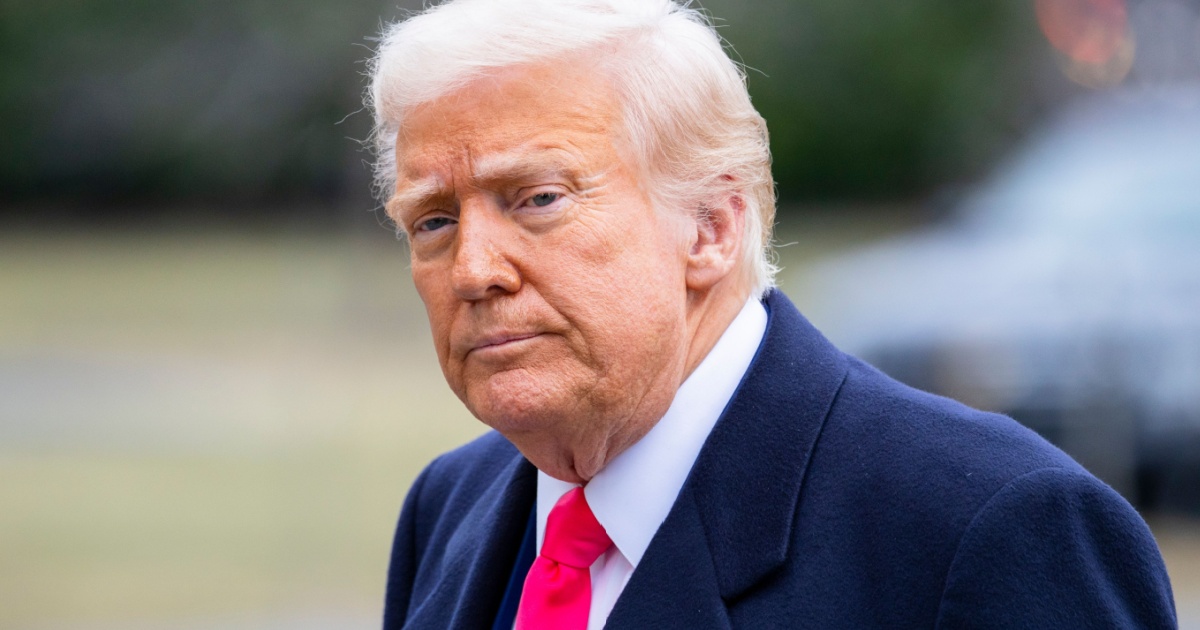

President Donald Trump has a talent for making headlines that stop people mid-scroll. But even by his standards, the statement he made to reporters at the White House earlier this month raised eyebrows – and more than a few medical questions. He spoke about a drug, unnamed, that he said had brought people back from the brink. Not merely improved their condition, not slowed their decline. Back from the dead, in his telling.
The story of how that claim made it into the public conversation – and what it actually means – is more complicated than either his supporters or critics are letting on. Behind the headline-grabbing language is a real piece of legislation, a genuine debate in medicine, and some hard numbers that don’t quite match the story being told.
The remarks didn’t appear out of nowhere. Trump has long championed the Right to Try Act as one of his signature healthcare achievements, a law he signed during his first term that opened a pathway for terminally ill patients to access experimental treatments they couldn’t get any other way. When he spoke about patients who were “given the last rites” and then recovered, the context points squarely to that law. Trump did not mention a specific medication by name, but he appeared to be referring to the Right to Try Act, legislation designed to give terminally ill patients access to experimental treatments that have completed Phase 1 clinical testing but have not yet been fully approved by the FDA.
What the Right to Try Act Actually Does
The Right to Try Act was signed into law on May 30, 2018. The premise is straightforward: patients with life-threatening illnesses who have run out of approved options and can’t join a clinical trial should be able to try experimental drugs that have at least cleared the first stage of safety testing. The Act is one way for patients who have been diagnosed with life-threatening diseases or conditions, who have tried all approved treatment options, and who are unable to participate in a clinical trial, to access certain investigational treatment options.
To understand what Phase 1 actually means, it helps to know what that testing involves. According to the FDA, in most cases 20 to 80 healthy volunteers or people with the disease participate in Phase 1. If a new drug is intended for use in cancer patients, researchers conduct Phase 1 studies in patients with that type of cancer. The goal of these early trials is to answer basic safety questions: can humans tolerate the drug, and what’s a reasonable dose? They are not designed to determine whether the drug works. Because the law requires only that drugs have completed the first of three phases of clinical testing, there is no data on efficacy, especially in very sick people. There is also no safety data on how experimental drugs would affect someone whose body is already under serious strain.
That gap matters. A drug that looks safe in 20 to 80 healthy volunteers may behave very differently in someone whose organs are already compromised by terminal illness. The Right to Try pathway skips the evidence that would tell you whether it helps or harms that person.
Trump: "We've taken people that were dead. We had a person given the last rites — gone, the kids are crying and everything — and started them on this drug. And the person became better. It works." pic.twitter.com/1QMzj8sDH8
— Aaron Rupar (@atrupar) May 11, 2026
The Gap Between the Claim and the Record
Trump has described the law in sweeping terms for years. During the Republican National Convention, Trump called Right to Try “a big deal,” claimed it helps terminally ill patients “use our new space-age drugs,” suggested the law is “saving thousands and thousands of lives,” and indicated it was an accomplishment others had failed to achieve for more than half a century.
The actual record of use tells a different story. The most recent report shows the Act supported access to only 4 products in 2023 and a total of 12 products from 2018 through 2022. Although the number of people treated with those products has not been publicly reported, it’s likely only in the hundreds. And even that access was narrowly distributed. According to a 2025 analysis, the Right to Try procedure was only invoked 16 times from 2018 to 2023.
Bioethicists have also raised a structural concern that often gets lost in the political coverage. Scholars have pointed out that the laws do not require physicians to prescribe experimental therapies, do not require insurance companies to pay for them, and do not require manufacturers to provide them. Because the laws do not actually provide a right to receive experimental therapies, they could be considered toothless legislation that offers only false hope to dying people.
There’s also the question of liability. Right to Try created a liability shield barring anyone involved in the provision of experimental products under the law from being held accountable for bad outcomes, except under narrow circumstances, even when patients are treated negligently. That means if someone is harmed by an untested drug accessed through this pathway, they may have very little legal recourse.
The Science of “Bringing Someone Back”
There is currently no scientific evidence showing that any experimental medication can revive someone who has died. But that statement requires some precision, because the word “dead” covers more than one medical reality.
When Trump described patients who had been “given the last rites,” he was almost certainly describing people who were critically ill – not people who had experienced biological death. Clinical death describes a potentially reversible state where circulation and breathing have stopped, which can often be reversed with CPR, defibrillation, or other emergency interventions. This is meaningfully different from biological death, where the situation is permanent. Biological death, also known as cellular or molecular death, refers to irreversible cessation of all vital functions. Brain cells can begin to suffer irreversible damage within about four minutes without oxygen. Once that window closes, no drug on earth changes the outcome.
So when Trump speaks about a patient “given the last rites” who then recovered after receiving an experimental treatment, the honest interpretation is that a critically ill person responded to a drug in a way that their family and doctors found remarkable. That can genuinely happen. It is not the same as reversing death. The distinction matters enormously, and blurring it doesn’t serve patients who are desperately looking for accurate information about what’s possible.
Was There Already a Path Before This Law?
One argument that critics of the Right to Try Act have consistently made is that it didn’t solve a problem that didn’t already have a solution. The FDA’s expanded access program, sometimes called “compassionate use,” has existed for decades and functions with a meaningful level of oversight. One study conducted over a 10-year period found that the FDA approved 99% of all expanded access requests for almost 9,000 investigational drugs. That approval rate suggests the barrier to access wasn’t the FDA’s willingness to say yes – it was other hurdles, like manufacturer reluctance and the cost burden on patients.
The Right to Try Act merely repackaged the existing expanded access option under a flashier name while stripping out valuable oversight from the FDA that protects vulnerable people facing life-threatening diseases from exploitation, and requires prompt reporting of serious harms resulting from a product’s use.
Research from a 2017 Government Accountability Office review found that the FDA had taken significant steps to streamline the expanded access program and improve patient access to experimental drugs, suggesting the barrier to access wasn’t regulatory resistance but other systemic hurdles.
Major patient advocacy groups weren’t universally supportive of the law either. According to CPR News, The American Cancer Society Cancer Action Network and the American Lung Association both raised concerns about the bill, arguing it could do more harm than good by weakening the safeguards designed to protect vulnerable patients from exploitation and serious harm.
The Bigger Picture on Experimental Drugs
The frustration Trump is tapping into is real, even if the specific claims don’t hold up to scrutiny. Drug development is slow, expensive, and brutal in its attrition rates. Most experimental drugs that enter clinical testing never make it to patients. That’s not a failure of regulation – it’s the reality of how hard it is to find something that works safely in human biology.
There are genuine reasons to want the process to move faster. That’s why actual progress on the experimental drug front deserves attention. Pancreatic cancer is one of the deadliest cancers and among the hardest to treat, with most patients surviving less than a year after diagnosis. A new drug developed at Northwestern University may soon help patients live longer, according to a study published in Nature Medicine. In a randomized Phase 2 clinical trial, patients who received the experimental drug elraglusib, alongside standard chemotherapy, were twice as likely to be alive after one year of treatment compared to those receiving chemotherapy alone. The drug also reduced the risk of death by 38 percent. That result required going through the rigorous trial process, not around it.
What This All Means
If you or someone you love is facing a terminal diagnosis and exploring every possible option, the key question isn’t whether a politician has called a law life-saving. The key question is whether legitimate pathways exist to access treatments that might help. The answer is yes, and more than one pathway is available.
The Right to Try Act is one way for patients who have been diagnosed with life-threatening diseases or conditions, who have tried all approved treatment options, and who are unable to participate in a clinical trial, to access certain investigational treatment options. The FDA’s expanded access program is another, with FDA review ensuring there’s sound medical reasoning behind each request. The practical starting point for either route is a conversation with your doctor, who can help determine whether any experimental treatment is genuinely relevant to your specific situation and whether the potential benefit justifies the unknown risks.
What Trump’s remarks revealed, beneath the theater, is that the tension between urgency and evidence in medicine is not going away. Terminally ill patients deserve access to promising treatments. They also deserve honest information about what those treatments can and can’t do. Calling a critically ill patient’s remarkable recovery proof that a drug “brings people back from the dead” doesn’t help anyone making a real medical decision under real pressure. The science matters. The record matters. And patients deserve both.
Disclaimer: This information is not intended to be a substitute for professional medical advice, diagnosis, or treatment and is for information only. Always seek the advice of your physician or another qualified health provider with any questions about your medical condition and/or current medication. Do not disregard professional medical advice or delay seeking advice or treatment because of something you have read here.
AI Disclaimer: This article was created with the assistance of AI tools and reviewed by a human editor.
Read More: Trump’s Advanced Age and Threats to His Life Serve as Reminders of His Own Mortality