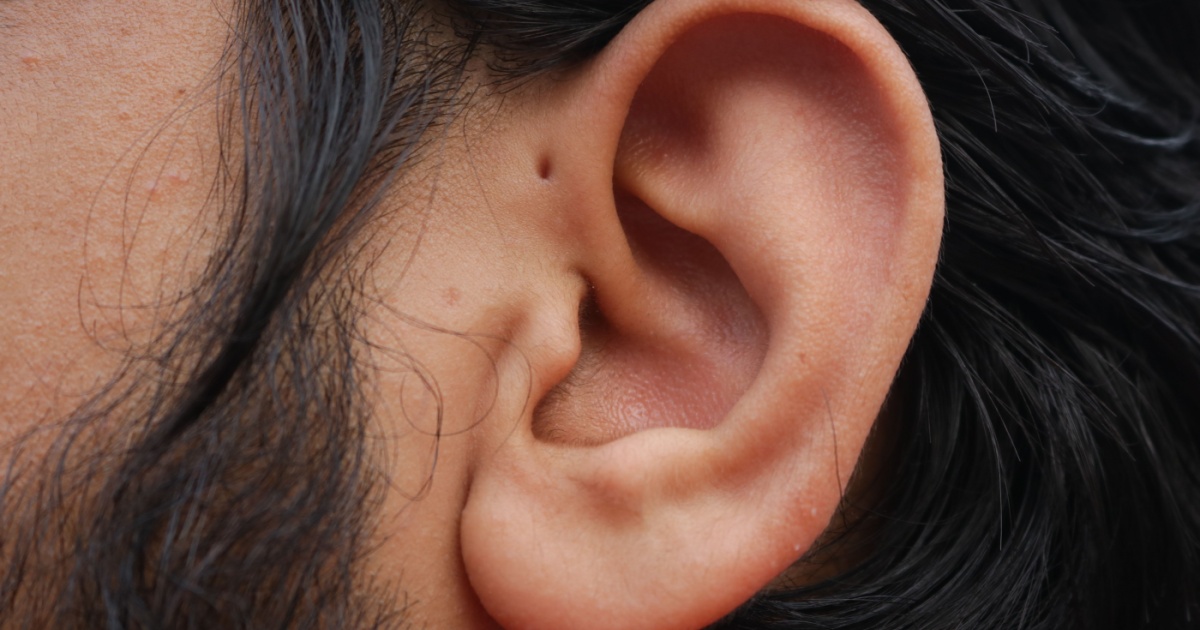

Look at the tiny spot just above your ear, right where the cartilage of the ear meets the side of your face. Most people have nothing there. But a small number of people – and depending on where in the world you were born, that could be quite a small number indeed – have a pinprick-sized opening in the skin. So small you could easily mistake it for a pore. So easy to miss that many people live their entire lives without knowing what it actually is.
That little hole has a name, a medical history going back over 150 years, and a surprisingly fascinating origin story rooted in the earliest days of human development. And for some, it’s even been linked to theories about our ancient evolutionary past. If you or someone you love has one, you’ve probably wondered what it means. Whether it matters. And why some people have it and most don’t.
The answer starts before you were born, in the sixth week of pregnancy, when your ears were still being assembled from scratch. Here’s what science actually knows about this strange and genuinely uncommon trait.
1. It Forms During a Critical Week in the Womb

During embryogenesis, the outer ear (called the auricle) forms from the first and second branchial arches during week six of gestation. Branchial arches are temporary structures present in every human embryo that eventually develop into the face, neck, and ear structures we’re born with. The term “branchial” itself derives from the Latin word for gills, and the same term is used to describe gill development in fish and amphibians.
The formation of a preauricular sinus occurs during embryogenesis and is closely associated with the development of the auricle during the sixth week of gestation. The auricle develops from six mesenchymal proliferations, known as the hillocks of His – three from the first branchial arch and three from the second – and these hillocks fuse to form the definitive auricle. A preauricular pit forms when that fusion doesn’t quite complete. Preauricular sinuses are formed from incomplete or defective fusion of the six auditory hillocks during embryological development of the auricle at the sixth week.
The result is a benign congenital abnormality affecting the soft tissues in the preauricular region. “Congenital” simply means present from birth. The pit itself is the visible surface opening of a narrow channel that runs beneath the skin, and its existence is entirely determined by what happened during that brief developmental window decades before any symptoms appear.
2. It Has Been Studied Since 1864

Preauricular cysts, pits, fissures, and sinuses are benign congenital malformations of the preauricular soft tissues first described by Van Heusinger in 1864. That’s not a typo. According to Radiopaedia, in 1864, Van Heusinger described the preauricular sinus for the first time. Doctors have been aware of these small openings for well over a century, which means there’s a meaningful body of knowledge about what they are, how they behave, and when, if ever, they need attention.
Despite that long history, preauricular pits remained mostly a clinical curiosity until researchers began investigating their genetics and population patterns more systematically in the late twentieth century. The finding that they run in families, appear at different rates across different ethnic groups, and occasionally signal deeper medical conditions gave them renewed medical relevance. Preauricular sinuses are frequently noted on routine physical examination as small dells adjacent to the external ear, usually at the anterior margin of the ascending limb of the helix; however, they have also been reported to occur along the lateral surface of the helicine crus and the superior posterior margin of the helix, the tragus, or the lobule.
Understanding the history matters here because it means what doctors know about these pits is not based on speculation. It’s grounded in a century and a half of clinical observation, increasingly backed by genetics research.
3. It’s Rarer in Some Countries Than Others

Where you were born plays a surprisingly large role in how common this trait is. According to Wikipedia’s entry on preauricular sinus, the frequency of preauricular sinus differs depending on the population: 0.1 to 0.9% in the US, 0.9% in the UK, and 4 to 10% in Asia and parts of Africa. That means someone living in parts of West Africa or Southeast Asia is potentially 10 to 100 times more likely to have one than someone in the United States.
Researchers believe this variation is largely genetic rather than environmental, which fits with the broader picture of the trait as an inherited feature. If a preauricular pit has roots in the ancestral gene pool of a particular population, you’d expect it to cluster geographically, and that’s exactly what the data shows.
For most Americans and Europeans, the trait is genuinely uncommon enough to catch attention. In some parts of the world, though, it barely raises an eyebrow. Knowing this helps explain why you might go your whole life without meeting anyone else who has one, or why a friend who grew up in a different country seems completely unbothered by it.
4. It Runs in Families, and Both Ears Can Be Affected

Preauricular sinuses are inherited features, and frequently appear next to both ears. If you have one, there’s a reasonable chance at least one of your parents or grandparents has or had one too. A preauricular sinus occurs either sporadically or is inherited. Over 50% of cases overall are unilateral, and most often sporadic. It occurs more commonly on the right side. Bilateral cases are more likely to be inherited.
According to Medscape, the sinus may be bilateral in 25 to 50% of cases, and bilateral sinuses are more likely to be hereditary. Research published in a 2014 study on PubMed found a strong association between parents and their children for bilateral cases, with the odds of a child having bilateral pits rising dramatically when a parent also has them bilaterally.
The fact that it tends to appear on the right side when unilateral is one of those peculiarities of human development that researchers have documented but not fully explained. The asymmetry in how the ears develop, even in the same embryo, appears to leave the right side slightly more susceptible to incomplete fusion.
5. It’s Slightly More Common in Women

This is one of the less-discussed findings in the research on preauricular pits, but it’s statistically real. The 2014 study on PubMed found that female gender was statistically associated with preauricular sinus, with an adjusted odds ratio of 1.401. That’s not a dramatic difference, but it’s consistent enough across study populations to be considered a genuine pattern rather than a fluke.
Why women might have slightly higher rates is not definitively established. The hormonal and developmental differences between male and female embryos during the critical period of ear formation may play a role, but this hasn’t been pinned down conclusively. What the data does confirm is that if you’re a woman who has a preauricular pit, it’s slightly less of a statistical outlier than you might think. And if you’re a father who has one and wonders whether your daughter might inherit it, the research suggests the female line may carry a marginally higher susceptibility.
For people curious about the genetics of their own family, this sex-related association is worth knowing. It doesn’t change management or outcomes, but it adds texture to how the trait moves through generations.
6. Most People Never Need Treatment

The majority of people with preauricular pits are asymptomatic and don’t require any treatment unless infection occurs. The pit simply sits there, doing nothing, causing no discomfort, no hearing issues, and no functional problems. Many people are unaware they even have one.
According to the Children’s Hospital of Philadelphia, preauricular pits are congenital, meaning children are born with this malformation when ear development goes awry early in gestation. However, the malformation is not associated with hearing impairments, and only rarely associated with a genetic syndrome involving other problems. So if you found out you have one and immediately started worrying about your hearing, you can largely set that concern aside. The pit and your hearing are, in the vast majority of cases, unrelated.
The practical takeaway for anyone with a preauricular pit and no symptoms is straightforward: leave it alone. Clean around it like you would any other part of your skin, don’t probe it, and keep an eye out for any redness or swelling. That’s genuinely all the management most people will ever need.
7. Infections Are Manageable But Need Prompt Attention

When a preauricular pit does cause trouble, it’s usually through infection. Infection symptoms include redness, swelling, pain, and discharge of foul-smelling fluid from the pit. The channel beneath the skin can trap bacteria and dead skin cells, creating conditions for an abscess to develop. If you notice any of those signs, see a doctor quickly. Early treatment is much easier than waiting.
According to Medscape’s overview of preauricular cysts, pits, and fissures, preauricular pits mark the entrance to a sinus tract that may travel under the skin near the ear cartilage. These tracts are lined with squamous epithelium and may become infected, leading to cellulitis or abscess. When the pit shows early signs of infection, oral antibiotics are typically the first line of treatment, with common choices including cephalexin, amoxicillin-clavulanate, and erythromycin.
Complete surgical excision of a preauricular sinus tract or cyst is indicated in the setting of recurrent or persistent infection. And for anyone who keeps getting repeat infections, this surgical removal of the entire tract is recommended as the definitive solution.
8. It Could Be a Throwback to Our Aquatic Ancestors

This is the part that tends to stop people mid-scroll. Evolutionary biologist Neil Shubin, author of Your Inner Fish, has proposed a compelling idea: that preauricular pits might be an evolutionary remnant of fish gills, a theory he connects to the shared branchial arch architecture that underlies ear development in humans and gill development in fish.
Preauricular sinuses are malformations that result from incomplete fusion of two of the six hillocks that arise from the first and second branchial arches, three from the first arch and three from the second. The term “branchial” derives from the Latin word for gills, as it is also used to describe gill-bearing development in fish and amphibians. This is why the structures are sometimes alternatively called pharyngeal arches in human anatomy. The incomplete fusion that creates a preauricular pit, in Shubin’s framing, is a momentary echo of an ancient structural arrangement.
Shubin’s theory is more speculative than established fact, and other scientists argue that human embryos never develop anything approaching actual gills. The first gill arch gives rise to jaws. Bones that support the upper and lower jaw in sharks are the same bones that allow us to hear and swallow, which are formed from the second gill arches. As for the last two gill arches, muscles that we use to swallow and talk are supportive muscles of gills in sharks. Pharyngeal arches in human embryos become parts of the jaw, face, ear, middle ear bones, and voice box, not gill-related structures. But the evolutionary framing captures something genuinely interesting: the fact that the same developmental architecture that produces gills in fish is repurposed, in humans, to build our ears. A preauricular pit is, at minimum, a tiny artifact of that ancient construction process going slightly off-script.
9. It Can Occasionally Signal a Deeper Condition

For the overwhelming majority of people, a preauricular pit is an isolated trait with no broader medical significance. But there’s a small exception worth knowing about. Branchiootorenal (BOR) syndrome is a rare autosomal dominant inherited disease with a prevalence of approximately 1 in 40,000 newborns. This disease is characterized by hearing loss, preauricular pits, branchial fistulas or cysts, and renal dysplasia.
The most common gene mutated in BOR patients is EYA1, the human homolog of the Drosophila “eyes absent” gene, according to research published in PMC. The major clinical signs are hearing loss, branchial fistulae and preauricular pits, malformations of the external ear, auditory canal and middle or inner ear, and renal anomalies ranging from hypoplasia to bilateral renal agenesis. In some cases, end-stage renal disease can develop later in life.
If a preauricular pit appears alongside other features, such as unusual ear shape, branchial cysts in the neck, or a family history of kidney problems or significant hearing loss, a conversation with a doctor is warranted. A baby born with a preauricular pit will be examined for other abnormalities to rule out these syndromes. The connection to BOR is rare, but it’s real, and it’s exactly the kind of thing that can be caught early with a thorough family history and basic evaluation.
Read More: 6 Surprising Physical Traits More Common in Autistic People
What This Means for You
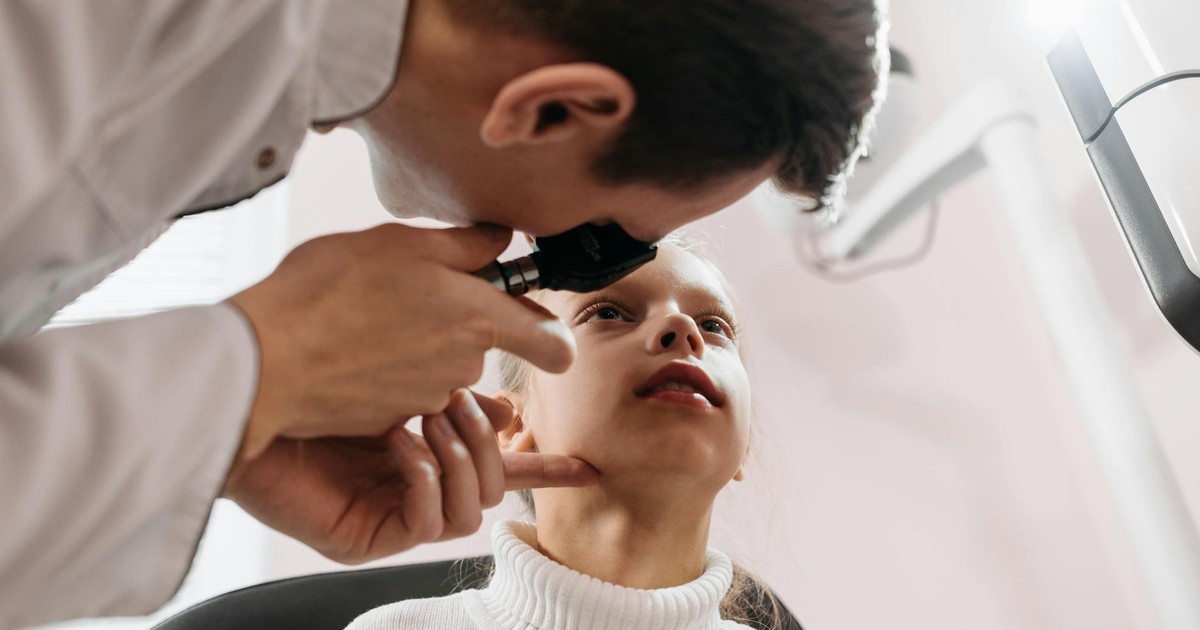
If you have a preauricular pit, the most important thing to know is that you almost certainly don’t need to do anything about it. Asymptomatic preauricular sinuses do not require treatment, and routine excision is not recommended. As long as it doesn’t become infected, leaving it alone is entirely appropriate. Clean the skin around it, avoid squeezing or probing it, and treat any redness or swelling promptly if it arises.
Where it gets more relevant is if you have children, or if you notice the pit alongside other physical features that seem unusual. Given what we know about BOR syndrome and the genetic patterns around bilateral cases, a brief mention to your doctor during a routine visit costs nothing and can rule out a lot. An otolaryngologist (a doctor specializing in ear, nose, and throat conditions) is the best type of specialist to recommend and perform treatment for a preauricular pit, since treatment can vary according to a complex set of factors. Most of the time, though, you’ll be told exactly what you already know: it’s a harmless quirk of early development, a small leftover from a very busy week in the womb, and one of the more fascinating footnotes in the story of how human ears are made.
Disclaimer: This information is not intended to be a substitute for professional medical advice, diagnosis, or treatment and is for information only. Always seek the advice of your physician or another qualified health provider with any questions about your medical condition and/or current medication. Do not disregard professional medical advice or delay seeking advice or treatment because of something you have read here.
AI Disclaimer: This article was created with the assistance of AI tools and reviewed by a human editor.
Read More: 9 Traits of People Who Love To Be Alone, Backed By Science